
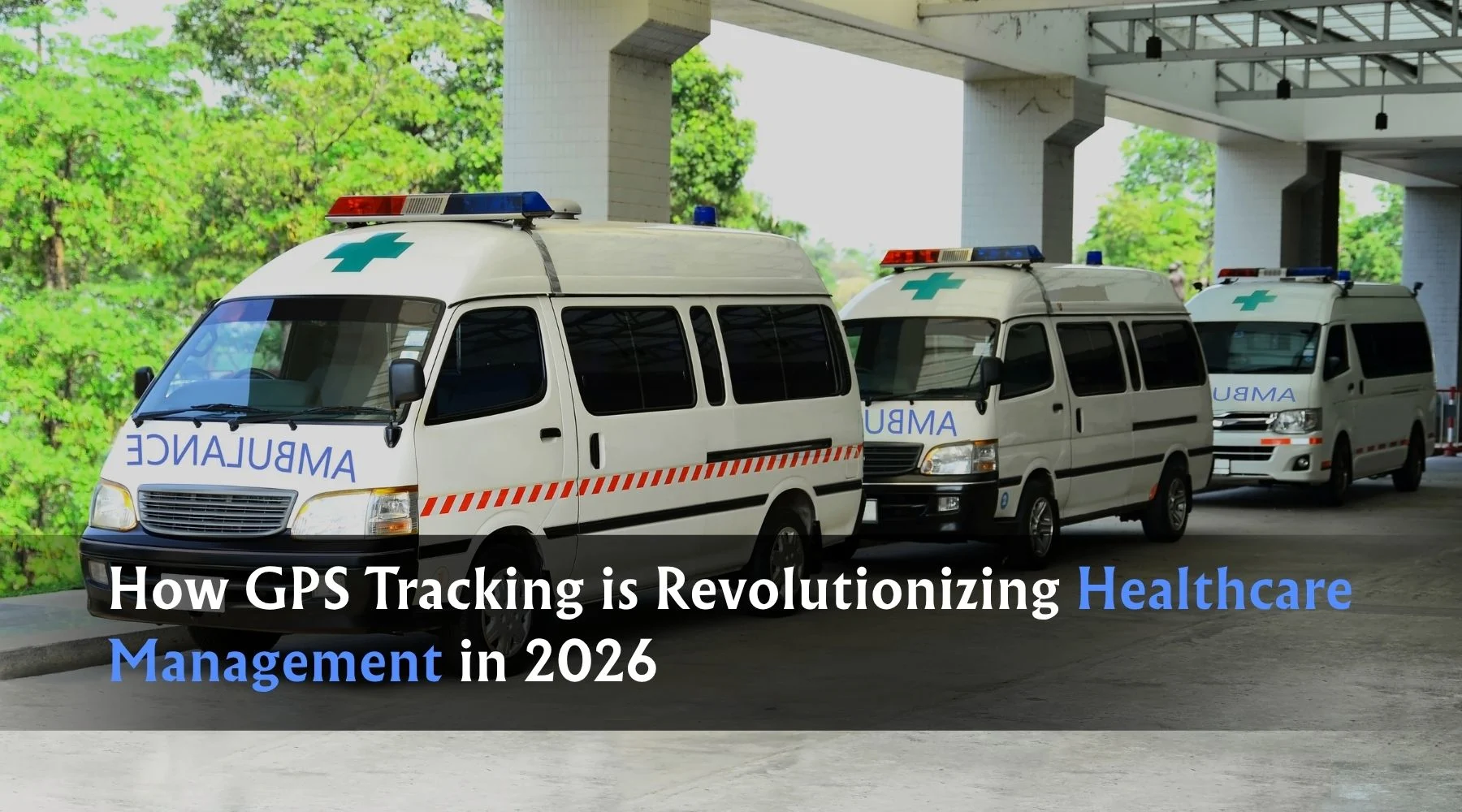
The healthcare industry is evolving faster than ever. Hospitals, clinics, ambulance services, diagnostic centers, and home healthcare providers are under constant pressure to deliver faster, safer, and more efficient patient care. At the same time, managing healthcare staff, emergency response teams, and field operations has become increasingly complex.
Traditional management methods are no longer enough to handle modern healthcare demands. Delayed communication, manual reporting, attendance fraud, route inefficiencies, and lack of real-time visibility can directly affect both operational efficiency and patient outcomes.
This is where GPS tracking and intelligent workforce management systems are transforming healthcare operations.
From real-time ambulance tracking to employee monitoring and patient visit verification, GPS-enabled technology is helping healthcare organizations improve coordination, reduce operational delays, and provide better patient experiences.
According to information available on the healthcare solutions page of Sahaj GPS, modern tracking systems are helping healthcare businesses automate field operations, improve accountability, and streamline workforce management.
Why Healthcare Organizations Need Smart Tracking Solutions
Healthcare operations involve multiple moving parts every day. Hospitals and healthcare providers manage doctors, nurses, field staff, ambulances, medical representatives, lab technicians, and home healthcare workers across different locations.
Without a centralized monitoring system, it becomes difficult to track employee productivity, verify patient visits, or ensure quick emergency responses.
Some common challenges healthcare organizations face include:
- Delayed ambulance dispatch
- Lack of visibility over field employees
- Inaccurate attendance records
- Communication gaps
- Manual reporting errors
- Route inefficiencies
- Difficulty managing remote healthcare teams
- Poor patient coordination
These issues not only reduce operational efficiency but can also impact patient trust and healthcare quality.
GPS tracking technology addresses these problems by providing real-time visibility and automated workflows that help healthcare organizations function more effectively.
Real-Time Employee Tracking Improves Accountability
Healthcare professionals often work beyond hospital premises. Nurses, caregivers, lab collection agents, and medical field executives travel regularly to serve patients at different locations.
Tracking field staff manually through phone calls or reports is inefficient and time-consuming.
Real-time employee tracking allows healthcare organizations to monitor staff movement live while improving transparency and productivity.
With smart tracking systems, healthcare managers can:
- Monitor employee locations in real time
- Assign tasks instantly
- Verify field visits
- Track route completion
- Reduce unnecessary travel delays
- Improve coordination between teams
Healthcare organizations using digital employee tracking systems can make faster operational decisions while ensuring field employees remain accountable throughout the day.
Geo-Fencing Ensures Genuine Patient Visits
One major concern for healthcare providers is ensuring that field staff actually visit assigned patient locations.
Geo-fencing technology solves this issue effectively.
Geo-fencing creates a virtual boundary around a healthcare facility or patient location. Employees can only mark attendance or complete tasks once they physically enter the designated area.
This helps healthcare organizations:
- Eliminate fake patient visit claims
- Improve service transparency
- Maintain accurate records
- Build trust with patients
- Ensure quality healthcare delivery
Geo-fencing is especially useful for home healthcare services, diagnostic sample collection teams, and field medical staff.
Modern healthcare platforms offered by Sahaj GPS include geo-fencing and real-time employee verification systems that help healthcare businesses improve operational control.
Ambulance Tracking Saves Critical Time
In emergency healthcare situations, every minute matters.
Ambulance tracking systems help healthcare organizations respond faster during emergencies by providing real-time vehicle location updates.
GPS-enabled ambulance management systems allow hospitals and emergency response teams to:
- Locate the nearest ambulance instantly
- Optimize travel routes
- Avoid traffic-heavy areas
- Improve patient response times
- Track driver behavior
- Monitor emergency vehicle movement live
This level of visibility improves operational efficiency and enhances patient safety during emergencies.
Healthcare providers can also monitor fuel usage, route deviations, and vehicle maintenance schedules through centralized dashboards.
Modern ambulance tracking technology has become an essential part of emergency healthcare infrastructure.
Digital Attendance Management Reduces Administrative Burden
Managing healthcare staff attendance manually can create serious challenges, especially in organizations operating across multiple shifts and locations.
Paper-based attendance systems often result in:
- Payroll errors
- Buddy punching
- Time theft
- Attendance manipulation
- Delayed reporting
Digital attendance systems eliminate these problems through location-based attendance and automated reporting.
Healthcare organizations can now implement:
- GPS attendance tracking
- Facial recognition attendance
- Mobile-based check-ins
- Shift scheduling systems
- Automated attendance reports
This reduces administrative work while improving accuracy and compliance.
Digital attendance systems also help healthcare managers monitor workforce availability in real time, which is critical during emergencies and high-demand periods.
Better Patient Experience Through Real-Time Coordination
Modern patients expect faster service and better communication from healthcare providers.
GPS-enabled tracking systems improve patient experiences by enabling healthcare organizations to provide live updates about staff arrival times and service schedules.
For example:
- Patients can receive notifications when healthcare staff are nearby
- Ambulance ETA can be shared in real time
- Home healthcare visits become more transparent
- Delays can be communicated instantly
This improves trust, reduces patient anxiety, and creates a smoother healthcare experience.
Real-time communication also helps healthcare organizations improve coordination between departments and reduce operational confusion.
Smart Reporting Improves Healthcare Operations
Healthcare organizations generate large amounts of operational data every day.
Manually analyzing this data can be difficult and time-consuming.
Modern tracking systems provide automated reports and analytics that help healthcare businesses make smarter decisions.
Managers can monitor:
- Employee productivity
- Patient visit completion
- Travel efficiency
- Attendance records
- Task performance
- Response times
- Operational bottlenecks
These insights help organizations improve workforce planning, optimize resources, and increase efficiency.
Automated reporting also reduces paperwork and allows healthcare professionals to focus more on patient care rather than administrative tasks.
Expense Management Becomes Easier
Field healthcare teams frequently incur travel and operational expenses while visiting patients or conducting field activities.
Managing reimbursements manually often leads to delays and confusion.
Digital expense management systems simplify this process by allowing employees to:
- Upload bills instantly
- Submit reimbursement requests online
- Track approval status
- Categorize expenses automatically
Healthcare managers can approve claims faster while maintaining complete transparency in expense reporting.
This helps organizations reduce administrative delays and improve financial accountability.
Employee Safety Features Support Healthcare Workers
Healthcare professionals often work in challenging environments and high-pressure situations.
Ensuring employee safety is becoming increasingly important for healthcare organizations.
Modern workforce management systems include SOS emergency alert features that allow employees to instantly notify management during emergencies.
This is especially useful for:
- Night-shift healthcare workers
- Ambulance drivers
- Home healthcare providers
- Field medical staff
SOS features improve employee confidence and help organizations respond quickly during emergencies.
Safety-focused technology creates a more secure and supportive work environment for healthcare professionals.
Integration with Existing Healthcare Systems
Healthcare organizations already use multiple digital systems, including patient management software, CRMs, scheduling platforms, and billing systems.
Modern GPS tracking platforms can integrate with these systems to create a centralized operational ecosystem.
Integrated systems help healthcare organizations:
- Reduce duplicate data entry
- Improve departmental coordination
- Access information quickly
- Streamline workflows
- Improve operational visibility
This creates a more connected healthcare environment where data flows efficiently between departments.
According to information available on the official website of Sahaj GPS, healthcare organizations can integrate workforce tracking solutions with existing operational systems to improve efficiency and field coordination.
The Future of GPS Tracking in Healthcare
The future of healthcare is becoming increasingly technology-driven.
Artificial intelligence, automation, cloud-based monitoring, and GPS-enabled systems are expected to play a major role in improving healthcare operations over the next decade.
Healthcare organizations are gradually adopting:
- AI-powered route optimization
- Smart ambulance dispatch systems
- Automated workforce monitoring
- Cloud-based reporting
- IoT-enabled healthcare tracking
- Predictive operational analytics
These technologies will continue to improve operational efficiency while helping healthcare providers deliver better patient care.
Organizations that invest in smart healthcare technologies today will be better prepared to handle future operational demands.
Why Healthcare Providers Are Choosing Smart Workforce Solutions
Healthcare organizations are now prioritizing digital transformation because manual operations can no longer support growing patient expectations and workforce complexity.
Smart workforce and GPS tracking systems help healthcare businesses:
- Improve patient satisfaction
- Reduce operational delays
- Enhance employee accountability
- Increase workforce productivity
- Improve emergency response
- Reduce administrative workload
- Strengthen operational transparency
Technology is no longer just a support system in healthcare — it has become an essential operational necessity.
Conclusion
The healthcare industry is experiencing a major digital transformation, and GPS-enabled workforce management solutions are becoming a critical part of that change.
From ambulance tracking and geo-fencing to employee monitoring and digital attendance systems, modern technology is helping healthcare organizations improve efficiency, transparency, and patient care quality.
Healthcare providers that embrace smart tracking systems can reduce operational inefficiencies, improve communication, and deliver faster, more reliable healthcare services.
Sahaj GPS continues to support healthcare organizations with advanced GPS tracking and workforce management solutions designed to simplify operations and improve healthcare service delivery across India.
FAQs
1. How does GPS tracking help the healthcare industry?
GPS tracking helps healthcare organizations monitor ambulances, field staff, and patient visits in real time. It improves operational efficiency, reduces delays, and enhances patient care coordination.
2. What are the benefits of ambulance tracking systems?
Ambulance tracking systems help hospitals locate the nearest emergency vehicle, optimize routes, reduce response time, and improve emergency healthcare services.
3. Why is geo-fencing important in healthcare operations?
Geo-fencing ensures healthcare staff physically visit assigned patient locations before marking tasks complete. This improves transparency, accountability, and service quality.
4. Can GPS tracking improve healthcare employee productivity?
Yes, real-time employee tracking helps healthcare organizations manage field staff more effectively, reduce unnecessary travel time, monitor task completion, and improve workforce productivity.
5. How do digital attendance systems benefit hospitals?
Digital attendance systems reduce manual errors, prevent fake attendance, simplify shift management, and provide accurate attendance records for healthcare staff.