
Quick Summary
Geo-fencing is a GPS-based technology that creates virtual boundaries for field locations. It helps businesses track employees in real time, automate attendance, improve route efficiency, and increase productivity. By ensuring employees are physically present at assigned locations, it reduces time theft, improves accountability, and strengthens field operations.
Introduction
Field-based businesses operate in a fast-moving environment where employees are constantly on the move. Sales executives, delivery staff, technicians, and service agents spend most of their time outside the office, making it difficult for managers to track performance and attendance accurately.
Traditional methods like manual reporting, phone calls, and spreadsheets often fail because they depend on human input. This leads to delays, errors, and lack of real-time visibility.
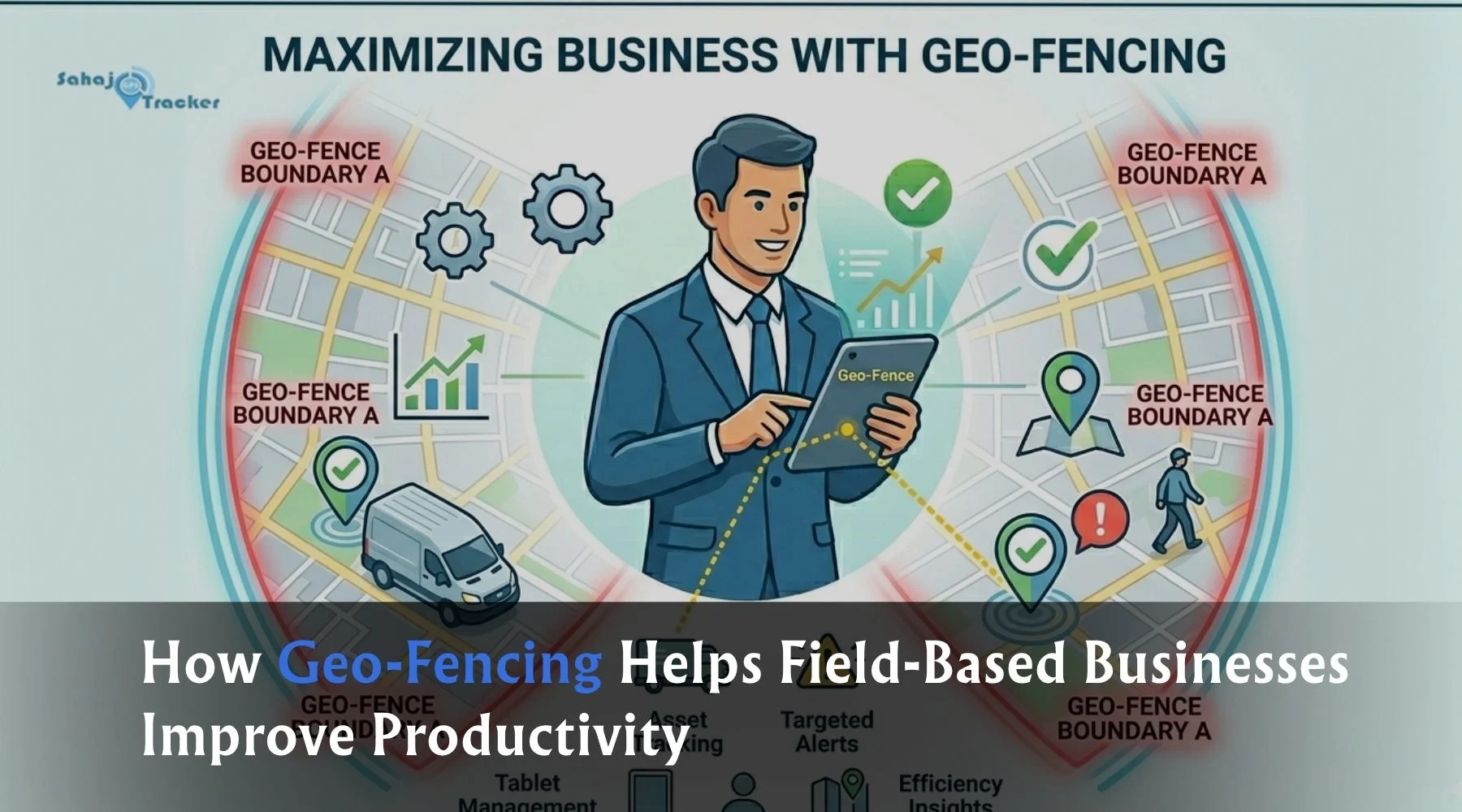
Geo-fencing solves this problem by using GPS technology to create virtual boundaries around work locations. Whenever an employee enters or exits these boundaries, their activity is automatically recorded. This helps businesses manage field teams more efficiently while improving productivity and transparency.
What Is Geo-Fencing?
Geo-fencing is a location-based system that defines a virtual boundary around a physical area using GPS, Wi-Fi, or mobile signals.
When an employee enters this defined area, the system automatically marks attendance or logs activity. When they leave, the system records exit time and updates reports.
This removes manual effort from attendance and field tracking. It ensures that every recorded activity is based on actual location data, not self-reported information.
Why Field-Based Businesses Need Geo-Fencing
Field businesses face unique challenges because employees work outside direct supervision. This makes it difficult to verify whether work is being done properly and on time.
Without proper tracking systems, businesses often struggle with fake attendance, delayed reporting, and inefficient route planning. These issues directly affect productivity and increase operational costs.
Geo-fencing provides real-time visibility and automation, helping businesses maintain control over distributed teams. It ensures employees are working from assigned locations and completing tasks as expected.
How Geo-Fencing Improves Productivity
Eliminates Fake Attendance
One of the most common issues in field operations is attendance manipulation. Employees may mark attendance without reaching the actual work location, leading to inaccurate payroll and productivity loss.
Geo-fencing prevents this by allowing attendance only when employees are physically inside the defined work zone. This ensures every logged hour is genuine and verified through GPS.
This improves discipline, reduces time theft, and ensures fair payroll processing across the organization.
Provides Real-Time Employee Visibility
Managers often lack visibility into where field employees are during working hours. This creates communication gaps and delays in decision-making.
Geo-fencing provides live updates of employee location and activity. Managers can see when employees arrive at client sites, how long they stay, and where they move next.
This real-time visibility helps businesses respond faster and manage field operations more effectively.
Improves Route Efficiency
Field employees often travel inefficient routes, wasting time and fuel. This reduces the number of daily visits and impacts overall productivity.
Geo-fencing helps optimize routes by tracking employee movement and assigning tasks based on location. This reduces unnecessary travel and improves efficiency.
As a result, employees can complete more tasks in less time, improving both productivity and cost savings.
Automates Attendance and Reporting
Manual attendance systems require continuous effort from employees and HR teams. This creates delays and increases administrative workload.
Geo-fencing automates the entire process by recording check-ins, check-outs, and working hours automatically. It also generates daily reports without manual input.
This reduces paperwork, eliminates errors, and allows managers to focus on higher-value tasks instead of administrative work.
Ensures Accurate Client Visit Verification
Field businesses often struggle to confirm whether employees actually visited assigned clients or job sites.
Geo-fencing solves this by using GPS-based verification and geo-tagged check-ins. Each visit is recorded with location, time, and duration.
This ensures transparency in field operations and improves service quality. It also builds trust between businesses and clients.
Increases Employee Accountability
When employees know their movement is tracked in real time, they naturally become more responsible.
Geo-fencing encourages punctuality, proper time usage, and honest reporting. It reduces unproductive behavior and improves discipline across field teams.
Over time, this leads to a more efficient and performance-driven workforce.
Enhances Customer Satisfaction
Faster response times and accurate field execution improve customer experience significantly.
Geo-fencing allows businesses to assign the nearest available employee to a task. This reduces delays and improves service speed.
Customers also receive accurate updates about service timing and completion, which increases trust and satisfaction.
Supports Remote and Hybrid Field Teams
Modern businesses often operate with remote and hybrid teams working across multiple locations.
Geo-fencing makes it easier to track and manage distributed employees without physical supervision. Attendance, tasks, and movement can be monitored from anywhere.
This flexibility helps businesses scale operations without losing control over field performance.
Key Features That Drive Productivity
Geo-fencing systems come with multiple features that directly improve field operations:
- Real-time GPS tracking
- Automated attendance system
- Geo-fencing alerts and notifications
- Task assignment and monitoring
- Route history tracking
- Geo-tagged reporting
- Mobile workforce management
These features work together to create a fully automated and efficient field tracking system.
Industries That Benefit from Geo-Fencing
Geo-fencing is widely used in industries where employees work outside the office.
- Sales and marketing teams use it for client visit tracking
- Logistics companies use it for delivery monitoring
- Healthcare services use it for field staff tracking
- Construction companies use it for site attendance
- Service businesses use it for technician management
Any business with mobile or field employees can benefit from this technology.
Challenges Without Geo-Fencing
Businesses that do not use geo-fencing often face serious operational challenges.
- Inaccurate attendance records
- Lack of real-time visibility
- Delayed reporting
- Poor route planning
- Low employee accountability
- Higher operational costs
As teams grow, these problems become harder to manage manually and directly affect business performance.
Why Businesses Prefer Smart Tracking Solutions
Businesses are now shifting from manual tracking to automated workforce systems because they offer better accuracy and control.
Modern platforms provide real-time tracking, automated reports, and better productivity insights compared to traditional methods.
Solutions like Sahaj GPS help businesses manage field employees efficiently by combining attendance tracking, GPS monitoring, and reporting in one system. This simplifies operations and improves overall productivity.
Final Thoughts
Geo-fencing is no longer just a tracking feature—it is a complete productivity solution for field-based businesses.
It helps companies eliminate fake attendance, improve real-time visibility, optimize routes, and increase employee accountability. At the same time, it reduces operational costs and improves customer satisfaction.
In today’s competitive market, businesses that adopt geo-fencing gain a clear advantage in efficiency, transparency, and scalability.
For any organization managing field employees, geo-fencing is not optional anymore—it is essential for growth.
FAQs
1. What is geo-fencing used for in field employee tracking?
Geo-fencing is used to track employee attendance and location using GPS. It ensures employees are present at assigned work locations and helps businesses monitor field activity in real time.
2. How does geo-fencing improve productivity in field businesses?
Geo-fencing improves productivity by automating attendance, reducing travel time, improving route efficiency, and increasing employee accountability through real-time tracking.
3. Can geo-fencing help reduce fake attendance?
Yes, geo-fencing prevents fake attendance by allowing check-ins only when employees are physically present within the defined work location.
4. Is geo-fencing useful for small field businesses?
Yes, geo-fencing is useful for both small and large businesses because it improves attendance accuracy, reduces manual work, and increases field efficiency.
5. Which industries benefit the most from geo-fencing technology?
Industries like sales, logistics, delivery services, healthcare, construction, and field service businesses benefit the most from geo-fencing because they rely heavily on mobile employees.