
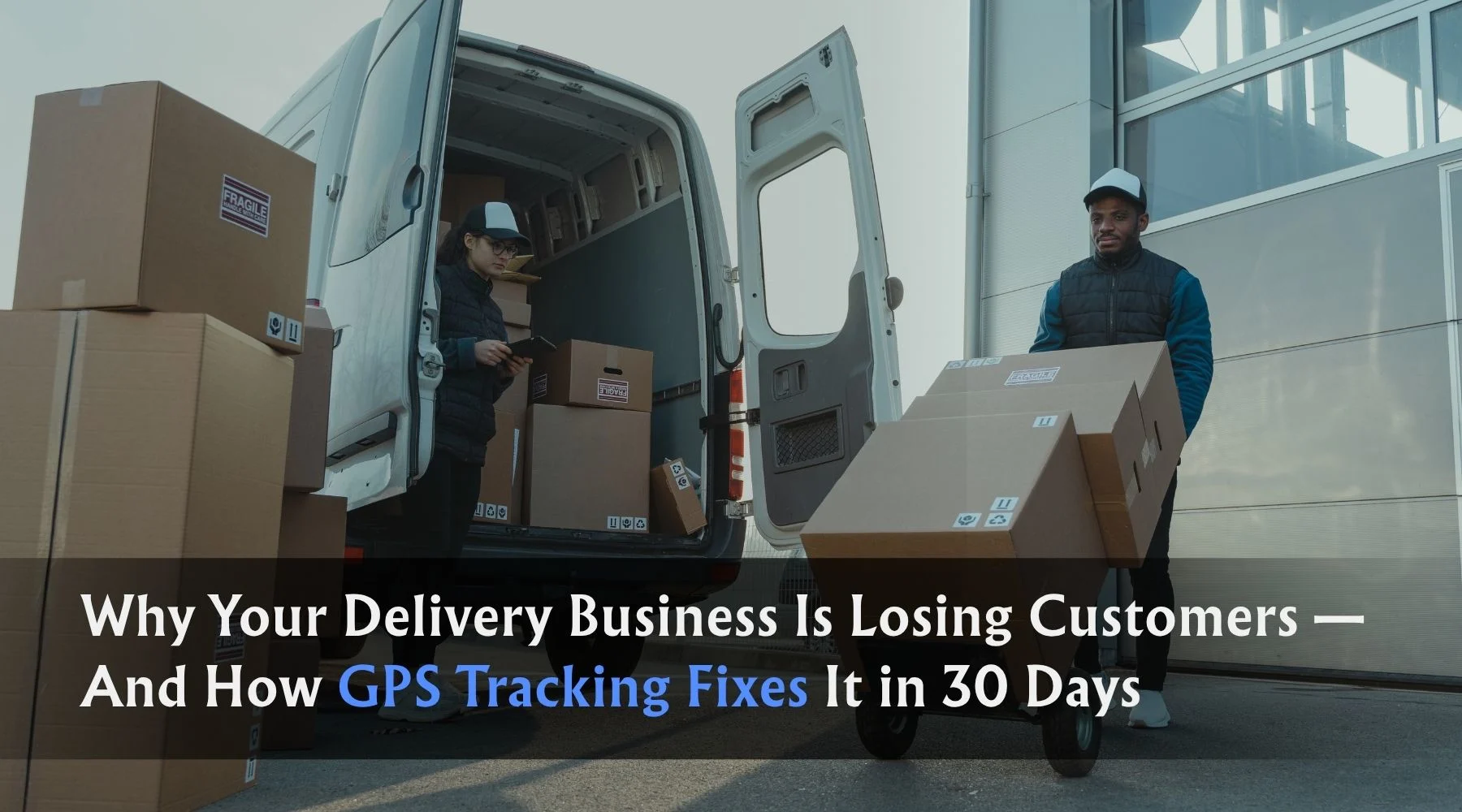
Customer loyalty in the delivery industry isn’t built by one perfect delivery—it grows through consistent service. Every successful order reassures customers that they can rely on your business the next time. But when deliveries are delayed, updates are missing, or drivers cannot provide accurate ETAs, that confidence starts to fade. Over time, many customers simply switch to another provider without ever explaining why.
Behind these problems, the issue is often not a lack of vehicles or delivery staff. It’s a lack of operational visibility. Without a GPS tracking system, businesses struggle to monitor delivery executives in real time, optimise routes, verify completed deliveries, or respond quickly when unexpected delays occur. As delivery volumes grow, these small inefficiencies begin affecting customer satisfaction, operating costs, and overall business performance.
Whether you’re running a courier company, an e-commerce delivery network, or a regional logistics operation, understanding these challenges is the first step towards solving them. Let’s look at the most common reasons delivery businesses lose customers—and how GPS tracking helps eliminate them.
You Don’t Know Where Your Delivery Agents Are
One of the biggest operational challenges for delivery businesses is limited visibility into field operations. Many dispatch teams still rely on phone calls, messaging apps, or manual updates to find out where delivery executives are. This slows down decision-making and makes it difficult to respond when customers request delivery updates.
A GPS tracking system provides a live view of every delivery vehicle and executive through a centralized dashboard. Managers can instantly monitor locations, active trips, delivery progress, and route movement without interrupting drivers during their work.
This level of visibility helps businesses:
- Monitor delivery executives in real time
- Improve dispatch planning
- Respond quickly to urgent deliveries
- Reduce communication delays
- Strengthen fleet visibility
With accurate operational data available throughout the day, businesses can make faster decisions while improving last-mile delivery efficiency.
Failed Deliveries Cost More Than Most Businesses Realise
Every unsuccessful delivery creates expenses that extend far beyond a single missed order. Repeat delivery attempts increase fuel consumption, add extra travel time, reduce the number of deliveries completed each day, and place additional pressure on drivers.
In many situations, failed deliveries occur because customers were unavailable, delivery executives followed inefficient routes, or deliveries reached customers much later than expected. Without proper planning, these issues continue to increase operating costs without offering any long-term solution.
A delivery management system combines live tracking, customer notifications, and route optimisation to improve first-attempt delivery success. Customers receive updates before the driver arrives, while optimized routes help executives complete deliveries faster and more efficiently.
Businesses benefit from:
- Higher first-attempt delivery success
- Lower fuel consumption
- Reduced delivery delays
- Better customer communication
- Improved operational efficiency
With smarter planning, delivery teams can complete more orders every day while maintaining consistent service quality.
No Delivery Proof Leads to Customer Disputes
Customer complaints become much harder to resolve when there is no reliable proof that a delivery was completed. If a customer reports that an order never arrived, businesses often have little evidence beyond the driver’s statement.
Modern delivery tracking systems solve this challenge through digital proof of delivery. Every completed order can be supported with GPS coordinates, timestamps, customer signatures, delivery photographs, and driver remarks that are automatically recorded and securely stored.
This provides several operational advantages:
- Verify completed deliveries quickly
- Resolve customer disputes faster
- Reduce false delivery claims
- Improve customer confidence
- Strengthen delivery accountability
For businesses handling Cash on Delivery (COD) orders, digital verification also improves payment records and minimizes cash collection disputes.
Poor Attendance Management Delays Daily Operations
Efficient delivery operations begin before the first vehicle leaves the depot. When attendance depends on manual reporting, delivery executives may mark themselves present before reaching their assigned reporting location, delaying departures and affecting delivery schedules.
Geo-verified attendance eliminates this issue by allowing employees to check in only after reaching their designated hub or depot. GPS verification, geo-tagging, and timestamp validation ensure attendance records remain accurate while improving workforce discipline.
This helps businesses achieve:
- Accurate attendance records
- Faster route departures
- Improved workforce accountability
- Better shift management
- More reliable delivery planning
When delivery executives begin their routes on time, businesses improve first-delivery performance while creating a more dependable customer experience.
You Can’t Measure Delivery Team Performance Accurately
Completing a large number of deliveries each day doesn’t always mean the operation is running efficiently. Two delivery executives may finish the same number of orders, yet one could consume more fuel, spend longer on the road, or take less efficient routes. Without meaningful performance data, managers have no clear way to identify these differences or improve overall productivity.
A GPS-enabled delivery management system converts daily activities into useful business insights. Instead of depending on manual reports, businesses can analyse delivery performance using real-time operational data collected throughout the day.
Some of the most valuable performance metrics include:
- Deliveries completed per executive
- Average delivery time
- Route efficiency
- Idle time between deliveries
- On-time delivery percentage
- Vehicle utilisation reports
These insights help managers identify high-performing delivery executives, improve route planning, and eliminate operational inefficiencies before they begin affecting customer satisfaction.
What Changes During the First 30 Days?
Businesses often assume that improving delivery operations takes several months. In reality, the biggest improvements usually begin once managers gain visibility into what’s actually happening on the road. With accurate operational data available every day, businesses can identify bottlenecks quickly and start making informed decisions almost immediately.
Week 1: Better Operational Visibility
The first week focuses on understanding existing operations. Managers can monitor attendance, delivery routes, idle time, trip history, delivery completion rates, and overall fleet movement from a single dashboard. This creates a clear baseline for measuring future improvements.
Week 2: Improved Workforce Discipline
Once delivery executives know their routes, attendance, and delivery activities are being monitored accurately, daily operations become more organised. Reporting times improve, unnecessary route deviations decrease, and customer updates become more consistent.
Week 3: Smarter Route Planning
Using actual route history and delivery data, dispatch teams begin optimising delivery schedules more effectively. Nearby deliveries can be grouped together, unnecessary travel is reduced, and routes are adjusted based on traffic conditions and delivery priorities.
Week 4: Measurable Business Improvements
By the end of the first month, many businesses begin seeing improvements across multiple operational areas, including:
- Higher first-attempt delivery success
- Faster delivery completion
- Lower fuel consumption
- Reduced customer complaints
- Better workforce productivity
- Improved customer satisfaction
As more operational data becomes available, businesses can continue refining their delivery processes and improving overall efficiency.
Why GPS Tracking Has Become Essential for Delivery Businesses
Customer expectations continue to rise, and businesses can no longer depend on manual delivery management methods alone. Customers want accurate delivery updates, reliable arrival times, and complete transparency throughout the delivery process.
A modern GPS tracking system brings these capabilities together by combining live vehicle tracking, route optimisation, workforce monitoring, delivery verification, and performance reporting into one platform. Rather than increasing fleet size or hiring additional delivery executives, businesses can improve efficiency by making better use of their existing resources.
How Sahaj GPS Helps Delivery Businesses
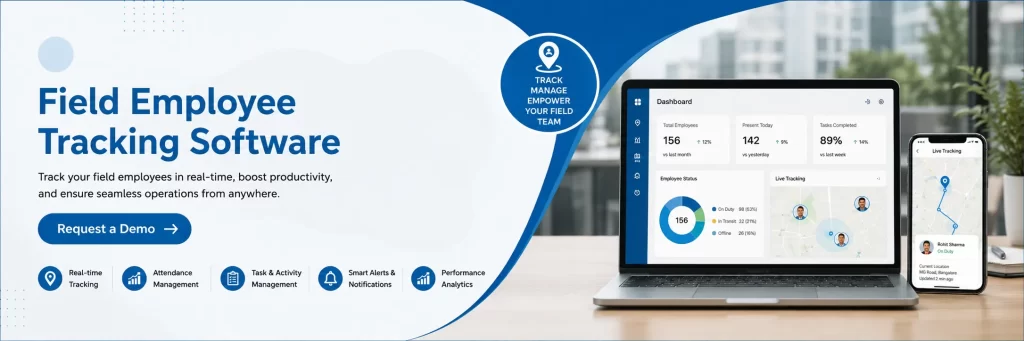
Managing last-mile deliveries becomes much simpler when every movement is visible in real time. Sahaj GPS offers an advanced delivery workforce management platform that combines live GPS tracking, route optimisation, geo-verified attendance, digital proof of delivery, task management, and performance reporting through a single dashboard.
The platform enables businesses to monitor delivery executives, optimise routes, reduce delays, improve workforce accountability, and strengthen customer communication. Whether managing local deliveries or large multi-city distribution networks, it helps organisations improve operational efficiency while delivering a more reliable customer experience.
Final Thoughts
Keeping customers satisfied is no longer just about delivering orders quickly. Consistency, transparency, and efficient communication play an equally important role in building long-term customer trust.
Businesses that invest in better visibility across their delivery operations are better equipped to reduce delays, improve workforce productivity, optimise routes, and provide accurate delivery updates. With the right technology in place, delivery teams can work more efficiently while creating an experience that encourages customers to return again and again.
Frequently Asked Questions
Why do delivery businesses lose customers?
The most common reasons include delayed deliveries, poor communication, inaccurate delivery updates, missed delivery windows, and limited visibility throughout the delivery process.
How does GPS tracking improve customer satisfaction?
GPS tracking provides live delivery updates, accurate estimated arrival times, better route planning, and greater transparency, helping businesses deliver a more reliable customer experience.
Can GPS tracking reduce delivery delays?
Yes. By monitoring vehicles in real time and optimising routes, businesses can reduce unnecessary travel, improve dispatch planning, and increase first-attempt delivery success.
How quickly can businesses see results after implementing GPS tracking?
Many organisations begin noticing improvements within the first few weeks as they gain better visibility into routes, workforce performance, delivery efficiency, and operational planning.
Is GPS tracking suitable for small delivery businesses?
Yes. Businesses of all sizes can benefit from improved route planning, better workforce management, enhanced delivery visibility, and more efficient day-to-day operations.