
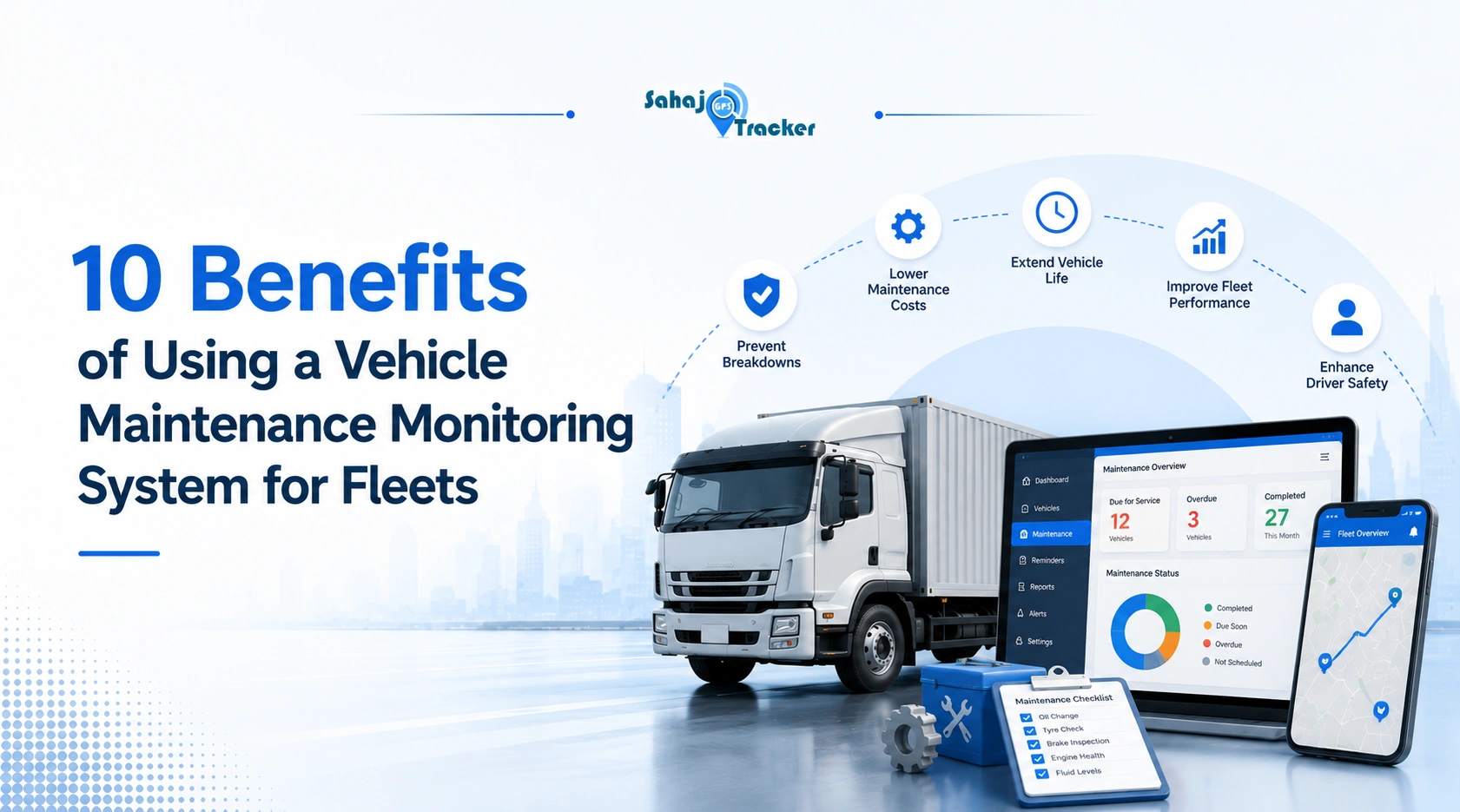
Most fleet owners think about maintenance the same way most people think about dental appointments-something to schedule eventually, deal with when something hurts, and otherwise not think about until absolutely necessary. The problem with that approach in a commercial fleet is that the consequences of waiting too long aren’t just expensive.
They show up at the worst possible time, on the worst possible road. A proper vehicle maintenance system connected to real-time GPS data changes this from a reactive fire-fighting exercise into something that actually runs in the background, quietly preventing the problems before they happen.
Here are 10 ways that actually plays out in practice.
Why Reactive Maintenance Is Costing Indian Fleets More Than They Realise
Before getting into the benefits, it’s worth being clear about what the alternative actually costs. An emergency breakdown on NH-48 at 2 AM-towing fees, repair at a roadside workshop with limited parts availability, cargo delivery delay, driver waiting overnight, customer complaint the next morning-costs somewhere between ₹15,000 and ₹80,000 depending on the vehicle and what failed.
The scheduled service that could have prevented that breakdown costs ₹8,000 to ₹20,000. Done at a depot, during planned downtime, with the right parts available.
The math isn’t complicated. It’s just not visible until you have the monitoring system that shows you the pattern.
10 Benefits of a Vehicle Maintenance Monitoring System for Fleets
1. Prevents Unexpected Breakdowns Before They Happen
This is the headline benefit and it’s genuinely the most impactful. A vehicle maintenance system integrated with GPS and OBD diagnostics tracks engine health indicators-fault codes, temperature patterns, oil pressure, battery voltage-continuously. When something starts developing, it shows up in the data before it shows up as a breakdown.
A truck whose coolant temperature is running 8% higher than its historical baseline on a Tuesday morning is probably developing a cooling system issue. That’s a workshop visit this week. Not a breakdown on a state highway on Friday.
2. Reduces Total Maintenance Costs Over 12 Months
Preventive maintenance costs less than emergency repair. Always. Not just in the direct repair cost-which is almost always higher when a failure happens rather than when a developing issue is caught-but in parts availability, labour rates, and vehicle condition. A component replaced before it fails is cheaper than the same component replaced after it’s damaged something else on its way out.
Indian fleet operators implementing GPS-based maintenance monitoring typically see total maintenance spend drop 20–35% within the first year. Not by doing less maintenance, but by doing it at the right time rather than the most expensive time.
3. Extends Vehicle Lifespan Significantly
A fleet vehicle that’s consistently serviced on time, with fault codes addressed before they compound, simply lasts longer than one that’s maintained reactively. An extra 2–3 years of useful life from a commercial vehicle worth ₹15–40 lakhs is a significant financial benefit that doesn’t show up in any single month’s maintenance report.
4. Automates Service Scheduling Based on Actual Usage
Calendar-based maintenance is imprecise. A vehicle that ran 12,000 km in two months shouldn’t be on the same service schedule as one that ran 4,000 km in the same period.
A safety monitoring system with GPS odometer tracking triggers service reminders based on actual distance traveled and engine hours logged-not calendar dates. The vehicle that’s working hard gets serviced when it actually needs it. The one that’s been running lightly doesn’t get unnecessary early service. Both outcomes save money.
Sahaj GPS generates automated maintenance alerts at configurable odometer thresholds-advance warning at 80% of the interval, a due alert at 100%, and an escalation if service is overdue-so the maintenance schedule actually gets followed rather than being a document that exists and gets ignored.
5. Real-Time Fault Code Monitoring That Reaches the Right People
Modern commercial vehicles generate OBD fault codes when engine systems develop issues. These codes illuminate a dashboard warning light-which drivers may or may not report promptly depending on how it affects their immediate workload.
GPS integration with vehicle diagnostics captures these codes centrally and transmits them to the fleet management dashboard the moment they appear. A fault code on a vehicle in Rajasthan gets seen by the fleet manager in real time-before the driver has decided whether to mention it at the day’s end.
6. Reduces Vehicle Downtime That Affects Revenue
Unplanned downtime doesn’t just cost the repair-it costs the revenue that vehicle would have generated. A truck earning ₹12,000 daily in freight, sitting for three days waiting for an emergency repair part to be sourced, has created ₹36,000 in lost revenue plus the repair cost.
Planned maintenance downtime is scheduled during low-demand periods, completed faster because the workshop is prepared, and doesn’t cascade into missed deliveries and client relationship damage.
7. Improves Fleet Safety Through Proactive Vehicle Health Management
A vehicle with worn brakes, degrading tyres, or a developing suspension issue is a safety liability. Not eventually-immediately. On the next trip it makes.
A vehicle maintenance system that surfaces these developing issues before the vehicle goes back on the road is directly reducing accident risk. This isn’t a stretch-it’s why AIS 140 Certified GPS Tracker systems were designed to include vehicle diagnostics alongside location tracking. The government mandated these devices partly because monitored vehicles are safer vehicles.
Sahaj GPS AIS 140 certified devices include diagnostic monitoring that feeds both compliance data to MoRTH’s VLT platform and vehicle health alerts to the fleet manager’s dashboard. One device, serving both regulatory and operational purposes.
8. Supports AIS 140 Compliance Documentation
For commercial fleet operators, AIS 140 compliance isn’t optional. And vehicle maintenance records are increasingly becoming part of what transport authorities examine alongside GPS compliance during permit renewals and inspections.
A GPS-integrated maintenance system automatically generates service logs with odometer readings, fault code history, and maintenance completion records for each vehicle. That documentation is available in digital form for compliance purposes without anyone having to manually compile records from workshop invoices and handwritten logs.
9. Enables Data-Driven Fleet Replacement Decisions
This is one of those benefits that sounds abstract until you’re actually facing a decision about whether to keep investing in an aging vehicle or replace it.
A maintenance monitoring system creates a complete cost history per vehicle-every service event, every fault code, every emergency repair, with dates and odometer readings attached. When Vehicle 14 has cost ₹2.8 lakhs in maintenance over the last 18 months while running 60,000 km, and Vehicle 22 has cost ₹0.9 lakhs running 65,000 km, that’s a data-based case for prioritising replacement of Vehicle 14 in the next budget cycle.
Sahaj GPS vehicle performance reports surface this kind of comparative data across the fleet-giving fleet managers the evidence they need to make replacement decisions based on actual cost history rather than impression and sentiment.
10. Creates a Culture of Accountability Around Vehicle Care
This last one is a bit less tangible but genuinely matters over time. When drivers know that vehicle fault codes get reported to fleet management, and when maintenance history is tracked and reviewed, the overall treatment of vehicles tends to improve.
Drivers who know that harsh driving patterns-the kind that accelerate brake and engine wear-are visible in the GPS data make different decisions than those operating with no monitoring at all. Small things change. The engine that gets switched off at the loading dock instead of left idling. The gear change that happens at the right RPM rather than the convenient one.
None of these are dramatic. All of them compound over a fleet’s lifetime into meaningful differences in vehicle condition and maintenance cost.

FAQs
Q1. What does a vehicle maintenance monitoring system actually track?
It tracks odometer readings, engine fault codes, service intervals, battery voltage, oil pressure, and temperature patterns-alerting fleet managers to developing issues before they become breakdowns or expensive emergency repairs.
Q2. How is GPS-based maintenance scheduling better than calendar-based servicing?
GPS maintenance systems trigger service alerts based on actual mileage and engine hours-not fixed calendar dates-ensuring each vehicle gets serviced at the right time based on real usage rather than an arbitrary time interval.
Q3. How does an AIS 140 Certified GPS Tracker help with vehicle maintenance?
AIS 140 certified GPS devices monitor vehicle diagnostics alongside compliance tracking-delivering maintenance alerts and fault code data to the fleet dashboard while simultaneously transmitting location data to MoRTH’s VLT platform.
Q4. What does unexpected fleet vehicle breakdown actually cost Indian operators?
Emergency breakdowns typically cost 3–5x more than scheduled maintenance-including towing, elevated workshop rates, parts sourcing delays, cargo delays, and damaged client relationships from missed delivery commitments.
Q5. How much can GPS-based maintenance monitoring reduce fleet maintenance costs?
Most Indian fleet operators see maintenance cost reductions of 20–35% within 12 months-through fewer emergency repairs, better service timing, extended vehicle lifespans, and proactive fault resolution before components fail.