
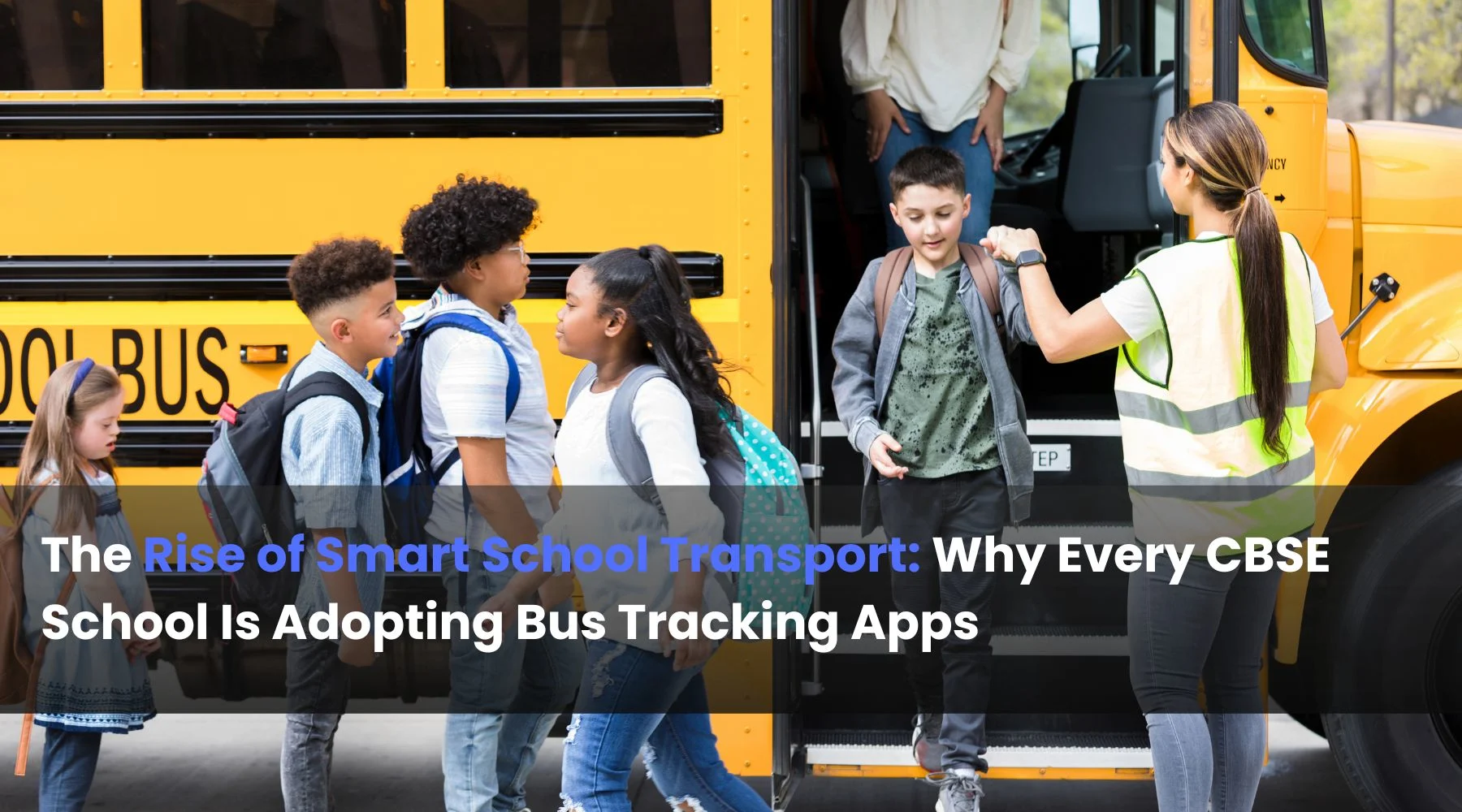
If you’ve got a kid in a CBSE school anywhere in India right now, chances are the school’s either already using School Bus Tracking Software or actively shopping for one. I’ve noticed this shift happening fast, like genuinely fast, over the last couple years.
Parent WhatsApp groups used to be filled with “bus kaha hai” messages every single morning. Now? Half the schools have just solved that problem entirely with an app.
Let’s get into why this is happening so quickly and what’s actually driving it.
Why Schools Suddenly Care So Much About Bus Tracking
It wasn’t always like this, you know. A decade back, school transport was basically a black box. Bus left at 7 AM, arrived whenever it arrived, and parents just… waited. Sometimes anxiously, especially if traffic was bad or weather turned ugly.
Then a few incidents happened — buses breaking down with no way for parents to know, kids missed because drivers took different routes, occasionally worse situations that made headlines. CBSE itself started pushing schools toward better safety compliance, partly because parent complaints were piling up, partly because liability concerns were growing too. Schools realized pretty quickly that “trust us, the bus is fine” wasn’t going to cut it anymore.
So now you’ve got this rush toward proper tracking systems, and honestly, most schools are catching up rather than leading. The ones still without any tracking solution are starting to feel the pressure from parents directly asking, “why doesn’t this school have an app like the other one down the road?”
The WhatsApp Group Problem (We’ve All Been There)
I want to dwell on this for a second because it’s such a relatable mess. Before proper tracking apps, parent communication happened through chaotic WhatsApp groups. Fifty different parents asking the same question — “bus aa gaya kya,” “bus late hai kya,” “koi update?” — and some poor transport coordinator trying to manually reply to all of it while also actually managing the buses.
That’s just not sustainable once a school crosses a certain size. A live gps tracker built into a proper app solves this overnight, basically. Parents check the app instead of flooding a group chat. Coordinator’s life gets dramatically easier. Everyone wins, really.
What a Good School Bus Tracking App Actually Offers
Not all tracking apps are created equal, and schools sometimes get this wrong by picking whatever’s cheapest without checking if it actually delivers the features that matter.
Real-Time Location Visibility for Parents
This is the headline feature, obviously. Parents open the app, see exactly where the bus is on a map, get an estimated arrival time. No more guessing, no more standing at the gate for twenty minutes wondering if today’s the day the bus finally shows up late.
Good apps update location every 30 seconds or so. Cheaper, poorly built ones update every five-ten minutes, which honestly defeats half the purpose. If the bus is two minutes from your stop but the app’s still showing it ten minutes away because of a stale update, that’s not exactly the reliability parents are looking for.
Geofencing and Stop Notifications
This feature genuinely changes the morning routine for a lot of families. Once the bus enters a defined radius around your specific stop, the app sends an automatic notification. “Bus arriving in 5 minutes.” Parents don’t need to obsessively refresh the map anymore — they just wait for that ping, then walk their kid down.
Small thing, sure, but multiply that small convenience across thousands of parents doing this every single school day, and the cumulative time saved is honestly massive.
Driver Behavior and Speed Monitoring
Beyond just location, decent systems also monitor how the bus is being driven. Harsh braking, over-speeding, sudden acceleration — these get flagged. For obvious reasons, parents care deeply about this, maybe even more than the location tracking itself if you ask them directly.
Schools using comprehensive vehicle tracking system setups can actually pull reports showing which drivers consistently speed or brake harshly, then address it directly rather than just hoping everything’s fine because nothing’s gone wrong yet.
The Vehicle Tracking System Angle — Beyond Just Location
People sometimes think bus tracking is just about the dot moving on a map. That’s such a small piece of what a proper vehicle tracking system actually provides though.
Maintenance Scheduling and Vehicle Health
Schools running fleets of ten, twenty, sometimes fifty buses need to track maintenance schedules carefully. A breakdown mid-route isn’t just inconvenient, it’s a safety concern, especially if it happens somewhere isolated or during bad weather.
Proper systems track mileage, flag upcoming service requirements, and help transport coordinators stay ahead of mechanical issues instead of reacting to them after something fails.
Attendance Integration
Some of the more advanced setups now integrate RFID or biometric check-ins right at the bus door. Kid taps a card or scans a fingerprint while boarding, parent gets an instant notification — “Riya boarded the bus at 7:42 AM.” Same thing happens at drop-off.
This adds a whole extra layer of accountability, especially for younger kids who can’t really self-report whether they made it onto the right bus or not.
I think this feature alone has probably eased so much parental anxiety, particularly for working parents who can’t physically be at the stop every single morning to personally verify their child boarded safely.
How Schools Across India Are Implementing This
It varies quite a bit depending on city, school size, and honestly, budget too.
In metro areas — Delhi NCR, Mumbai, Bengaluru, Chennai — bigger CBSE schools with large transport fleets have moved aggressively toward comprehensive systems, often working directly with established GPS tracking providers.
We’ve seen platforms like Sahaj GPS get adopted specifically because they offer this kind of integrated dashboard combining live location, driver behavior data, and parent-facing apps all in one package, rather than schools cobbling together separate tools for each function.
Smaller towns and tier-2 cities are catching up too, though sometimes a bit slower given budget constraints. Schools in places like Indore, Jaipur, or Lucknow have started adopting similar tech, often pushed by parent demand more than institutional initiative, which is kind of telling honestly. Parents are driving this shift as much as schools are.
Rural and Semi-Urban Schools Face Different Challenges
This is worth mentioning because network connectivity isn’t uniform across India. Schools operating in semi-rural areas, or routes passing through low-connectivity zones, need systems that handle intermittent signal gracefully — storing data locally and syncing once connection’s restored, rather than just losing tracking information entirely during dead zones.
If your school’s route passes through interior areas with patchy network coverage, this is genuinely worth confirming with whichever provider you’re evaluating, because not every system handles this well.
Choosing the Right Provider — What Schools Should Actually Ask
A lot of schools rush into a decision based on price alone, then regret it within a year when the system proves unreliable or parent complaints continue regardless.
Few things worth clarifying before signing any contract:
- What’s the actual update frequency, confirmed through a live demo rather than marketing material?
- Does the app work smoothly on both Android and iOS, given how many parents use different phones?
- Is customer support responsive, especially during morning rush hours when issues are most likely to surface?
- Can the system integrate with existing attendance or fee management software the school already uses?
- What happens during network dead zones — does data get lost or stored and synced later?
Providers like Sahaj GPS, from what schools have reported, tend to offer decent support specifically around these integration questions, which matters a lot for schools trying to avoid juggling five different platforms for different administrative functions.
The Parent Trust Factor — Why This Matters Beyond Just Convenience
I think there’s something deeper happening here beyond just operational efficiency. When parents can see exactly where their child’s bus is, in real time, it genuinely reduces a specific kind of low-grade daily anxiety that a lot of working parents carry around without even fully realizing it.
A mother I spoke to, works a corporate job in Gurugram, mentioned how she used to mentally track the clock every afternoon around pickup time, wondering if her son’s bus had left on time. Now she just glances at her phone during a meeting, sees the bus is three stops away, and goes right back to work without that nagging worry pulling at her attention. That’s not a small thing. That’s actual mental space being freed up.
Schools adopting this technology aren’t just buying software, in a sense — they’re buying trust, reducing friction with parents, and honestly, protecting themselves too from the kind of complaints and liability concerns that come from operating an opaque transport system in 2026, when basically every other service in our lives offers this kind of real-time visibility already.
Anyway, that’s pretty much the full picture of why this shift is happening so fast across CBSE schools right now. If your child’s school still doesn’t have any tracking system in place, it’s probably worth raising the question at the next PTA meeting — chances are, you’re not the only parent who’s been quietly wondering the same thing.
FAQs
Q1: How does school bus tracking improve daily safety for students?
Real-time tracking lets parents and schools monitor bus location, route adherence, and driver behavior, enabling quick response to delays, breakdowns, or unexpected route deviations immediately.
Q2: What features should parents look for in a bus tracking app?
Look for real-time updates, stop-arrival notifications, driver behavior monitoring, and reliable performance across both Android and iOS devices for consistent daily use.
Q3: Can bus tracking systems work in areas with poor network connectivity?
Quality systems store location data locally during signal loss and sync automatically once connectivity resumes, ensuring tracking continuity even through low-network zones.
Q4: Why are CBSE schools increasingly adopting vehicle tracking systems?
Rising parent expectations, safety compliance pressures, and operational efficiency needs are pushing schools toward transparent, real-time transport monitoring solutions for student safety.
Q5: Does bus tracking software help with student attendance management too?
Yes, many systems integrate RFID or biometric boarding check-ins, sending parents instant notifications when children board or exit the bus for added accountability.