
Introduction
Choosing the right GPS Tracker is no longer just about knowing where your vehicles are. For businesses that rely on transportation, deliveries, field services, or commercial fleets, the right Vehicle Tracking System can improve operational efficiency, reduce fuel costs, enhance driver safety, and strengthen customer satisfaction.
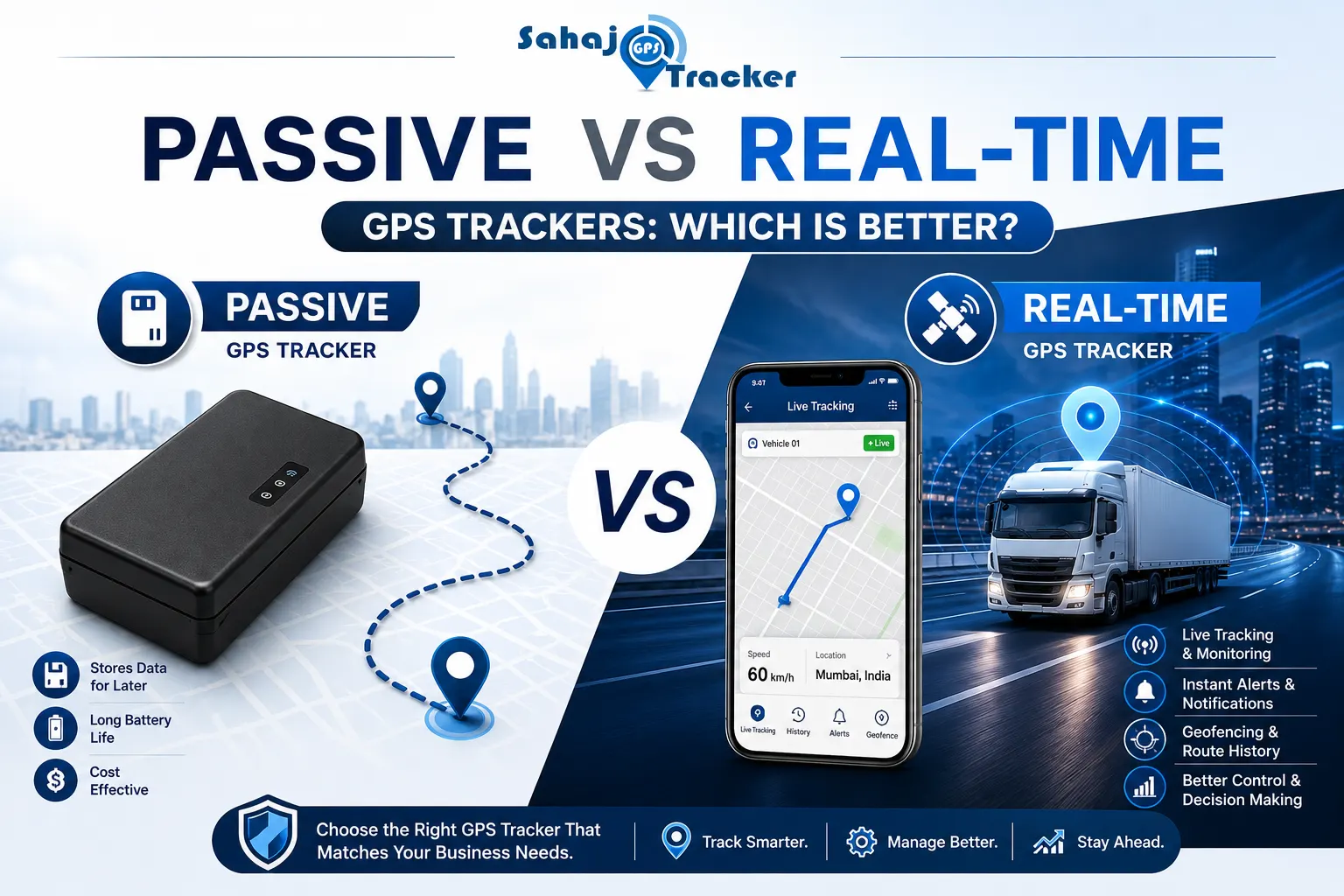
One of the most common questions business owners ask is whether they should invest in a Passive GPS Tracker or a Real-Time GPS Tracker. While both devices use GPS technology to record vehicle movement, they serve different purposes. A passive tracker stores journey data that can be reviewed later, whereas a real-time tracker continuously shares live vehicle location and performance data through a web portal or mobile app.
The right choice depends on your business goals, fleet size, operational requirements, and budget. In this guide, we’ll explain the differences between Passive vs Real-Time GPS Trackers, compare their features, and help you decide which solution delivers the greatest value for your business.
Understanding GPS Tracking Systems
A GPS Tracking System is a technology that uses satellite signals to determine the exact location of a vehicle. Modern tracking systems do much more than display a vehicle’s location. They help businesses monitor routes, analyse driving behaviour, optimise fuel consumption, improve fleet utilisation, and increase overall operational visibility.
Today’s businesses use GPS tracking across industries such as logistics, transportation, construction, mining, school transportation, healthcare, and field services. With increasing competition and rising operating costs, GPS tracking has become an essential part of efficient fleet management rather than an optional investment.
There are two primary categories of GPS trackers available in the market:
- Passive GPS Trackers
- Real-Time GPS Trackers
Although both collect location data, the way they store and deliver information is completely different.
What Is a Passive GPS Tracker?
A Passive GPS Tracker records information such as vehicle location, speed, distance travelled, and route history while the vehicle is in operation. Instead of sending this information instantly, the device stores it in its internal memory. Fleet managers or vehicle owners can access the data only after the journey is complete by connecting the device to a computer or compatible software.
In simple terms, a passive tracker acts like a digital travel diary. It captures every movement throughout the trip but doesn’t provide live updates during the journey.
For businesses that only need historical travel records, this approach can be sufficient. Companies often use passive tracking to verify mileage, review completed routes, or investigate a specific incident after it has occurred. Since these devices don’t require continuous internet connectivity, they are generally less expensive and don’t involve recurring data subscription charges.
However, this affordability comes with limitations. If a vehicle is stolen, diverted from its planned route, or delayed because of traffic or an emergency, the business has no way of knowing until the trip is over and the stored data is reviewed.
For organisations that depend on real-time decision-making, this delay can become a significant operational challenge.
What Is a Real-Time GPS Tracker?
A Real-Time GPS Tracker combines GPS technology with cellular communication to transmit live vehicle information continuously. Instead of storing data for later review, the device sends location updates every few seconds to a cloud-based dashboard or mobile application.
This allows fleet managers to monitor every vehicle as it moves, regardless of where they are. They can instantly see vehicle locations, travel routes, trip progress, speed, idle time, and driver activity from a single platform.
Modern Vehicle Tracking Systems, such as those offered by Sahaj GPS, also provide intelligent features including geo-fencing, driver behaviour monitoring, trip history, speed alerts, and route playback.
Real-time visibility enables businesses to react immediately when something unexpected happens. Whether a driver takes an unauthorised route, a vehicle remains idle for too long, or traffic causes delivery delays, managers receive instant notifications and can take corrective action without waiting until the end of the day.
For businesses that rely on efficient transportation and customer satisfaction, this level of visibility provides a major operational advantage.
Passive vs Real-Time GPS Trackers: Understanding the Difference
The biggest difference between these two tracking systems lies in when you receive the information.
A passive GPS tracker records data during the journey but only makes it available after the vehicle returns. A real-time GPS tracker shares the same information instantly, allowing businesses to monitor operations while they are happening.
Imagine a delivery vehicle breaks down on a highway. With a passive tracker, you’ll discover the problem only after the trip is completed and the stored data is downloaded. With a real-time tracker, you receive an alert immediately, allowing you to arrange assistance, inform customers about delays, or dispatch another vehicle.
This ability to make decisions in real time has become increasingly important for businesses managing commercial fleets.
Benefits of a Passive GPS Tracker
Despite the popularity of live tracking, passive GPS trackers still have their place.
Businesses with only a few vehicles or limited operational requirements may find passive tracking sufficient. It offers reliable route history, accurate mileage records, and travel verification without the cost of ongoing data connectivity.
For organisations that simply need to review completed journeys or maintain travel records for compliance purposes, passive tracking remains an economical solution.
However, businesses should carefully consider whether lower upfront costs outweigh the lack of live visibility, especially if vehicle security, customer communication, or operational efficiency are priorities.
Why More Businesses Are Choosing Real-Time GPS Tracking
As customer expectations continue to grow and fleet operations become more complex, businesses increasingly prefer Real-Time GPS Tracking Systems.
Live vehicle visibility allows managers to monitor fleet operations throughout the day instead of waiting for reports after the journey ends. This improves dispatch planning, reduces unnecessary communication with drivers, and enables faster responses to unexpected situations.
Real-time tracking also strengthens fleet security. If a vehicle moves outside an authorised area or is operated during non-working hours, managers receive immediate alerts. This helps reduce theft risks while improving vehicle accountability.
Another major advantage is improved fuel management. Real-time tracking helps identify unnecessary idling, inefficient routes, and unauthorised vehicle usage, allowing businesses to reduce fuel consumption and lower operating costs.
Solutions from Sahaj GPS combine live tracking with intelligent reporting, helping businesses make informed decisions that improve productivity, reduce expenses, and enhance customer satisfaction.
Passive vs Real-Time GPS Trackers: Feature Comparison
Before choosing a GPS tracking solution, it’s important to understand how both technologies perform in day-to-day business operations.
| Feature | Passive GPS Tracker | Real-Time GPS Tracker |
| Live Vehicle Tracking | No | Yes |
| Trip History | Yes | Yes |
| Live Alerts | No | Yes |
| Driver Behaviour Monitoring | Basic | Advanced |
| Geo-Fencing | No | Yes |
| Fuel Monitoring | Limited | Real-Time |
| Route Playback | Yes | Yes |
| Theft Recovery | Delayed | Immediate |
| Mobile App Access | No | Yes |
| Best For | Personal or Small Fleets | Commercial Fleet Management |
Although passive GPS trackers are suitable for recording completed trips, real-time tracking offers greater operational control. Businesses can monitor vehicles as they move, respond quickly to unexpected situations, and make informed decisions based on live data.
Which Businesses Should Choose a Passive GPS Tracker?
A passive GPS tracker is a practical choice when businesses only need historical travel records and do not require continuous vehicle monitoring.
For example, a company with one or two vehicles that return to the office every evening may simply need to verify mileage, review completed routes, or maintain travel records for internal reporting. In such situations, paying for a real-time tracking subscription may not be necessary.
Passive tracking is commonly used for personal vehicles, mileage verification, occasional business travel, rental vehicles, and small businesses with limited fleet management requirements.
However, as soon as fleet operations become more complex, the limitations of passive tracking become more noticeable.
When Is a Real-Time GPS Tracker the Better Choice?
For most commercial businesses today, a Real-Time GPS Tracker is the more practical and future-ready solution.
If your business depends on deliveries, transportation, field service teams, or customer appointments, waiting until the end of the day to review vehicle movements simply isn’t enough.
Real-time tracking allows fleet managers to monitor every vehicle throughout the day. If a driver takes an incorrect route, stops unexpectedly, or experiences a vehicle breakdown, immediate action can be taken to minimise disruption.
Businesses that benefit the most from real-time tracking include:
- Logistics and transportation companies
- Courier and delivery services
- School bus operators
- Taxi and cab fleets
- Construction companies
- Mining operations
- FMCG distribution networks
- Healthcare and ambulance services
- Utility and field service teams
For these industries, live fleet visibility improves productivity, strengthens customer service, and reduces operating costs.
AIS-140 Compliance and Why It Matters
In India, many commercial vehicles are required to comply with AIS-140 standards, particularly those operating in public transportation and government-regulated sectors.
AIS-140 is designed to improve passenger safety, vehicle monitoring, and emergency response by requiring approved GPS tracking devices with real-time communication capabilities.
A passive GPS tracker alone generally does not satisfy these requirements because it cannot continuously transmit vehicle data.
Businesses operating school buses, public transport vehicles, commercial fleets, or government-contracted vehicles should always verify whether an AIS-140 approved GPS Tracking System is required for compliance.
Choosing the right solution helps businesses avoid regulatory issues while ensuring better fleet safety and operational transparency.
Hybrid GPS Tracking: The Best of Both Worlds
Many businesses assume they must choose between passive and real-time tracking. In reality, modern fleet management systems often combine both technologies.
A hybrid tracking solution stores vehicle data inside the device while simultaneously transmitting live updates whenever a network connection is available.
This approach offers several advantages.
If a vehicle enters an area with weak cellular coverage, the tracker continues recording trip information locally. Once connectivity is restored, the stored data is automatically synchronised with the cloud platform.
For businesses operating in remote mining sites, rural areas, highways, or construction projects, hybrid tracking ensures continuous data availability without losing important journey information.
Solutions offered by Sahaj GPS support this intelligent approach, providing businesses with reliable tracking even in challenging environments.
The Hidden Cost of Choosing the Wrong GPS Tracker
Many businesses focus only on the purchase price when selecting a GPS tracker. However, the real cost often becomes visible much later.
Imagine a delivery vehicle is stolen during working hours. A passive tracker may eventually show where the vehicle travelled, but only after someone retrieves the stored data. By then, valuable recovery time has already been lost.
Similarly, if drivers regularly take unauthorised routes or spend excessive time idling, those inefficiencies may continue for weeks before anyone notices during a routine review.
These seemingly small issues gradually increase fuel expenses, maintenance costs, customer complaints, and operational inefficiencies.
In comparison, a real-time GPS tracking system immediately alerts managers to unusual activity, allowing problems to be resolved before they become expensive.
For growing businesses, this proactive approach often delivers far greater savings than the cost of the tracking subscription itself.
Why Businesses Choose Sahaj GPS
Choosing a reliable GPS tracking provider is just as important as selecting the right technology.
Sahaj GPS offers advanced Vehicle Tracking Systems designed to help businesses improve fleet visibility, driver accountability, and operational efficiency. The platform provides live vehicle tracking, intelligent reports, route playback, geo-fencing, speed alerts, fuel monitoring, and driver behaviour analysis through an easy-to-use web dashboard and mobile application.
Whether you manage five vehicles or five hundred, Sahaj GPS helps simplify fleet operations while supporting informed business decisions.
As businesses continue to adopt digital fleet management, having access to accurate real-time information becomes a competitive advantage rather than an optional feature.
Final Thoughts
Both passive and real-time GPS trackers have their place, but they are designed for different purposes.
If your primary requirement is reviewing completed trips, verifying mileage, or maintaining historical travel records, a passive GPS tracker can provide a simple and affordable solution.
However, businesses that rely on commercial vehicles, customer deliveries, field operations, or time-sensitive transportation benefit far more from a real-time GPS tracking system. Live visibility, instant alerts, improved security, fuel monitoring, and better driver management help businesses reduce costs while improving operational efficiency.
For organisations looking to invest in a scalable and reliable Vehicle Tracking System, Sahaj GPS provides intelligent fleet management solutions that support business growth, improve productivity, and deliver complete fleet visibility.

Frequently Asked Questions
1. What is the main difference between a passive and a real-time GPS tracker?
A passive GPS tracker stores vehicle data internally for later review, while a real-time GPS tracker continuously transmits live vehicle information through a mobile network, allowing businesses to monitor their fleet instantly.
2. Which GPS tracker is better for commercial fleet management?
A real-time GPS tracker is generally the better option because it provides live vehicle tracking, route monitoring, theft alerts, driver behaviour reports, and fuel management features that improve overall fleet efficiency.
3. Are passive GPS trackers suitable for businesses?
Yes. Passive GPS trackers work well for businesses that only need historical trip records, mileage verification, or occasional route analysis. However, they are less suitable for businesses that require live fleet visibility.
4. Do AIS-140 compliant vehicles require real-time GPS tracking?
Yes. Many commercial and government-regulated vehicles in India require AIS-140 approved GPS tracking devices capable of transmitting real-time location data.
5. Why should businesses choose Sahaj GPS?
Sahaj GPS provides advanced vehicle tracking solutions with live GPS monitoring, fuel management, geo-fencing, driver behaviour analysis, detailed reports, and fleet management tools that help businesses improve efficiency, reduce operational costs, and enhance vehicle security.