
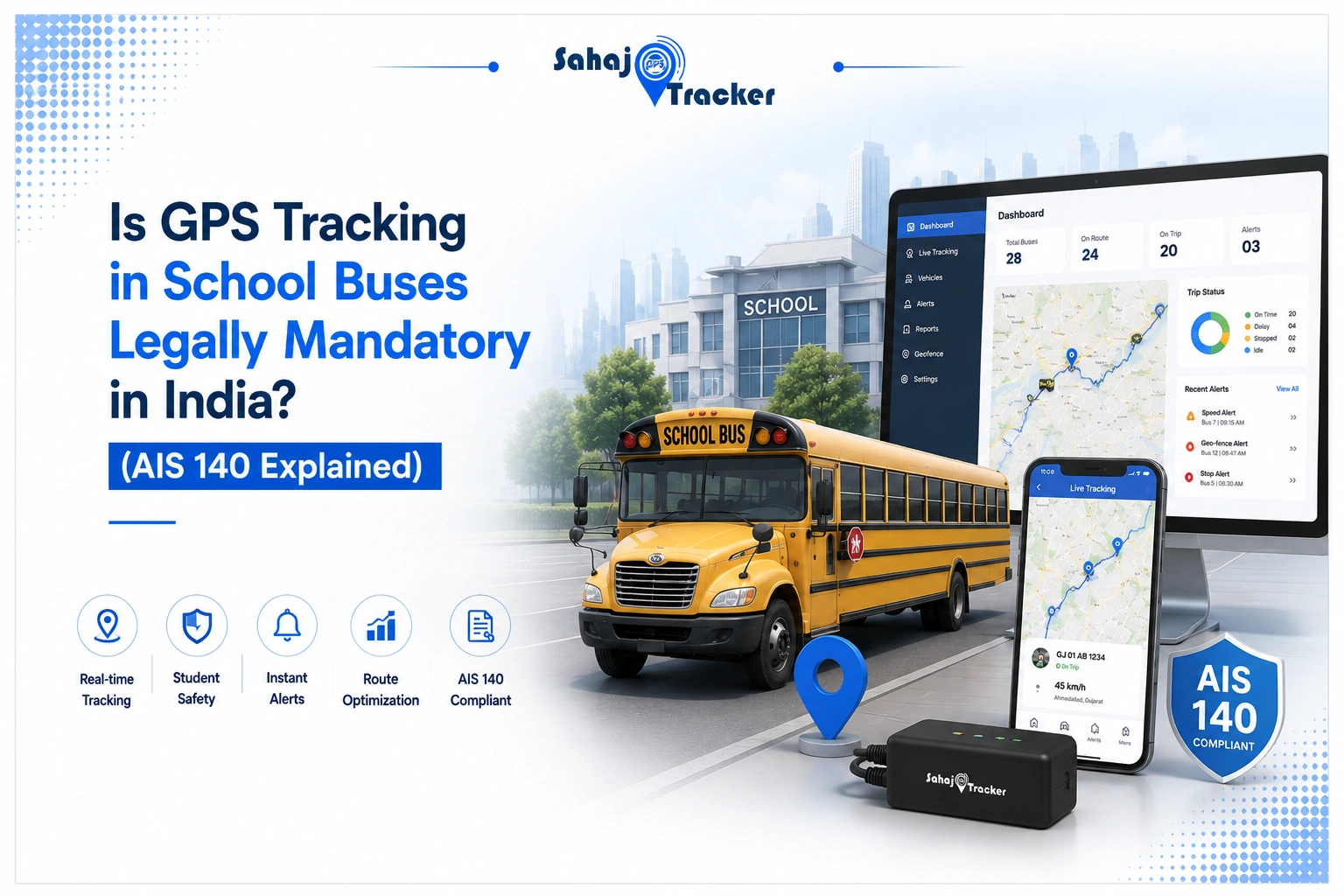
Parents ask this question constantly on school WhatsApp groups, and honestly, the answers floating around are usually half right at best. “Is it compulsory or not?” “My kid’s school doesn’t have GPS, can I complain?” So let’s actually settle this properly – school bus tracking software isn’t some optional nice-to-have anymore in India, it’s genuinely backed by law, court directions, and multiple layers of regulation stacking on top of each other. Confusing? Yeah, a bit. Let’s untangle it anyway.
The Short Answer First, Because Everyone Wants It
Yes. GPS tracking in school buses is legally mandatory in India. Not a grey area, not a “recommended best practice” – it’s a legal requirement rooted in AIS 140, reinforced by Supreme Court directions, CBSE affiliation rules, and various state-level school transport policies. If your child’s school bus doesn’t have it, that’s genuinely a compliance failure worth raising.
What AIS 140 Actually Says About School Buses
AIS 140 – the Automotive Industry Standard developed by ARAI under MoRTH – requires public and commercial passenger vehicles, school buses included, to carry a certified Vehicle Location Tracking Device, or VLTD. This isn’t your average consumer GPS gadget either. We’re talking ARAI-certified hardware that supports NavIC alongside GPS, includes a physical panic button, and transmits data in a standardized format straight to government servers through the Vahan ecosystem.
Why a Regular GPS Tracker Doesn’t Count
Here’s where a lot of confusion creeps in, genuinely. A normal GPS tracker just pings location to some private server somewhere – no government certification, no regulatory oversight, no legal standing whatsoever for compliance purposes. An rto approved ais 140 gps tracker is a completely different animal. It has to be certified, integrated with the national NVLT portal, and built to specific safety protocols that a basic tracker simply doesn’t meet. Schools sometimes get this wrong, installing a cheap tracker and assuming they’re covered. They’re not.
Beyond AIS 140 – The Layers That Make This Even Stricter for Schools
School transport carries the most vulnerable passengers on Indian roads, so naturally, the rules get layered heavier here compared to general commercial vehicles.
Supreme Court Directions and CBSE Rules
The Supreme Court has issued specific directions on school bus safety over the years, and CBSE has made GPS tracking, CCTV, and speed governors mandatory for all its affiliated schools. So even if a particular state’s enforcement felt patchy at some point, CBSE-affiliated schools genuinely can’t skip this requirement without risking their own affiliation status.
State-Level School Bus Policies
Several states have gone further with their own school bus bye-laws, layering additional requirements – female attendants, specific speed limits, mandatory school vehicle tracking system integration with parent-facing apps. Gujarat, Maharashtra, Karnataka, and a handful of others have been particularly active in tightening these rules through 2025 and into 2026.
How a School Bus Monitoring System Actually Works in Practice
For genuine compliance, the panic button needs to be accessible to both the driver and the bus attendant – not buried somewhere inconvenient. Live location data has to be available to school management, traffic authorities, and parents, feeding directly into the state’s NVLT portal. Several states additionally require the tracking data to sync with dedicated school portals or parent apps, so families can check their child’s bus location themselves rather than relying on a phone call to the school office.
Why “Just Any GPS” Isn’t Good Enough Here
This is genuinely where schools trip up most often. They’ll install ais 140 approved gps devices on paper, technically compliant, but skip the actual integration with parent-facing systems that several state policies now expect. Compliance on paper and compliance in practice aren’t always the same thing, unfortunately.
What Happens If a School Skips This Requirement
Non-compliance isn’t a minor slap on the wrist anymore. Fitness certificate renewals can get blocked, route permits can be suspended, and CBSE-affiliated schools risk actual affiliation trouble. Parents, meanwhile, have a genuine legal basis to escalate complaints – to the RTO, the District Education Officer, or even CBSE’s regional office directly – if a school bus is operating without proper tracking in place.
Choosing the Right System – What Schools Should Actually Check
If you’re a school administrator sorting this out, or honestly even a parent trying to verify your child’s school is compliant, there are a few concrete things worth checking rather than just taking someone’s word for it.
Certification Comes First, Always
Confirm the device is genuinely ARAI-certified under AIS 140, not just a generic tracker marketed with confusing language. This is honestly where Sahaj GPS has built solid trust among Indian schools – offering properly certified hardware rather than repackaged consumer trackers dressed up to look compliant.
Parent Visibility Matters Just As Much
A good school bus tracking software setup gives parents real, live visibility – not a vague “your child’s bus left the school” notification once a day. Sahaj GPS, for instance, focuses on this parent-facing transparency alongside the core compliance requirements, which genuinely matters for building trust with families who are, understandably, anxious about their kids’ daily commute.
Support After Installation Shouldn’t Be an Afterthought
Devices fail sometimes, sync issues happen, portals occasionally glitch. A reliable provider sticks around for support rather than disappearing after the sale. Sahaj GPS and similarly established vendors tend to offer ongoing maintenance support, which honestly matters more than people realize until something actually breaks mid-term.
What Parents Can Actually Do If Their School Isn’t Compliant
Ask directly, first. Request to see the device’s AIS 140 certification, or at minimum ask whether the school vehicle tracking system integrates with a parent-visible app. If the answers feel evasive or vague, escalating to the school’s affiliating board or the local RTO is genuinely within your rights as a parent, not an overreaction.
Where This Leaves Us
GPS tracking in Indian school buses isn’t optional, isn’t a “some schools do it” situation – it’s law, reinforced from multiple directions at once. Sahaj GPS and other certified providers exist precisely to close this gap properly, giving schools compliant hardware and giving parents the peace of mind they’re genuinely owed. If your child’s school hasn’t sorted this out yet, honestly, that’s a conversation worth having sooner rather than later.
FAQs
Q1. Is GPS tracking legally required in all school buses in India?
Yes, AIS 140 mandates certified GPS tracking for school buses, reinforced by Supreme Court directions, CBSE rules, and various state-level school transport safety policies.
Q2. What’s the difference between a regular GPS tracker and an AIS 140 device?
AIS 140 devices are ARAI-certified, support NavIC, include panic buttons, and transmit data to government servers, unlike regular trackers with no regulatory standing.
Q3. Can parents demand proof of AIS 140 compliance from schools?
Yes, parents can request certification proof, and escalate to the RTO, DEO, or CBSE regional office if a school bus lacks proper compliant tracking devices.
Q4. Does CBSE require GPS tracking for affiliated school buses?
Yes, CBSE has made GPS tracking, CCTV, and speed governors mandatory safety requirements for all buses operated by its affiliated schools nationwide.
Q5. What happens if a school bus operates without AIS 140 compliance?
It risks fitness certificate denial, route permit suspension, and potential CBSE affiliation issues, alongside genuine safety risks for children onboard daily.