
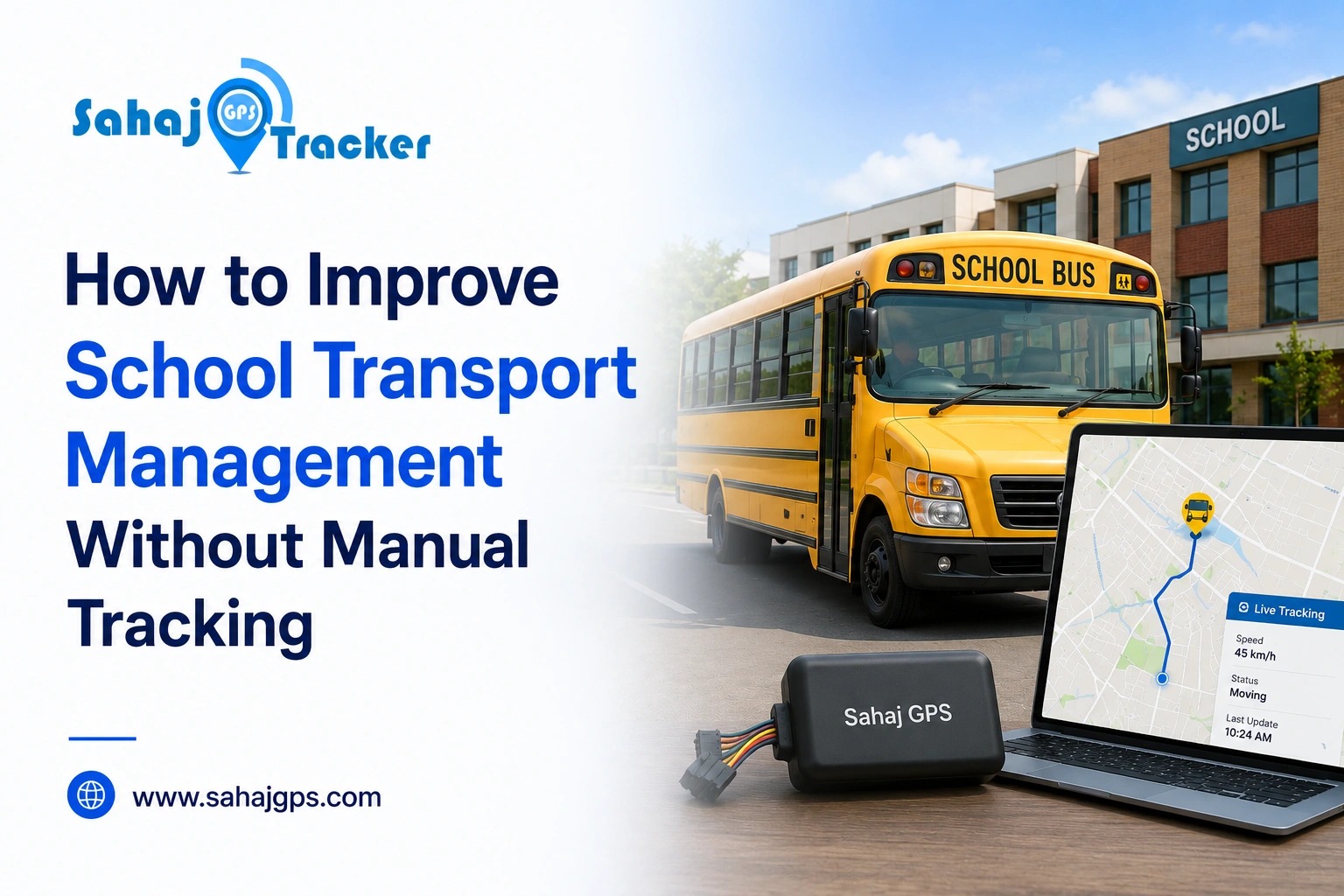
Ask any school transport coordinator what their morning looks like between 7 and 9 AM and the answer involves some version of the same chaos. Phones ringing with parents asking where the bus is. Drivers not picking up. A WhatsApp group with 47 unread messages.
A register that was supposed to track boarding times but actually gets filled in after the route is done, from memory. If you’re managing school transport on a manual system and wondering why it’s so exhausting, the honest answer is that school bus monitoring solutions exist specifically because manual systems weren’t designed for the scale, the speed, or the accountability that modern school transport actually requires.
This isn’t about criticising anyone running things manually. It’s about what becomes genuinely possible when you move away from it.
What Manual School Transport Management Actually Looks Like – And Where It Breaks
Before getting into the solutions, it’s worth naming the specific ways manual systems fail. Because “go digital” is easy to say and the actual pain of staying manual is easy to underestimate until you’ve been in the middle of a morning crisis.
The 7:30 AM Problem That Repeats Every Single Day
A parent calls. Their child hasn’t arrived at the pickup point and the bus is 12 minutes late. The transport coordinator calls the driver. No answer. Calls again. The driver picks up, somewhere on a busy road, trying to explain where they are while driving. The coordinator tries to calculate estimated arrival based on a description of which area the bus is currently passing through. The parent is still on hold.
Meanwhile three other parents are messaging on WhatsApp. Two more have called the front desk. The coordinator is now managing four conversations simultaneously about the location of a bus they have no direct visibility into.
This is normal morning operations for schools running manual tracking. Not exceptional. Not a bad day. Just Tuesday.
Why Registers and Phone Check-Ins Don’t Actually Work
Manual attendance registers on school buses have two problems. First, they depend on the driver or attendant filling them in accurately during what is already a busy, moving, distracted environment. Second, there’s no verification that what’s written in the register matches what actually happened.
A register showing every student marked present at their designated stop time tells you nothing about whether those markings happened in real time or were completed at the end of the route to avoid raising questions. Without GPS timestamps and RFID event logs, there’s no way to distinguish accurate records from retroactively completed ones.
School Bus Monitoring Solutions: What Actually Changes When You Go Digital
The shift from manual to digital school transport management isn’t just about convenience. It’s about replacing a system that depends entirely on human memory, availability, and honesty at every point with one that records automatically and reports in real time.
Replacing Registers With a School Vehicle Tracking System
A school vehicle tracking system generates the attendance record automatically. When a student’s RFID-enabled ID card is scanned on boarding, the system logs the event with a GPS coordinate, a timestamp, and the student’s identity – simultaneously. The same happens at drop-off.
No register. No retroactive filling. No reliance on the driver’s attention during a route. The record exists before the coordinator thinks to check it.
Sahaj GPS school transport deployments create this verified boarding and drop-off record automatically for every trip, attached to a live GPS trail of the exact route taken. If a parent questions whether their child was picked up at the correct time, the coordinator has a documented, timestamped record that resolves the query in under a minute rather than through a reconstruction based on driver recall.
How School Bus Monitoring Software Handles What WhatsApp Can’t
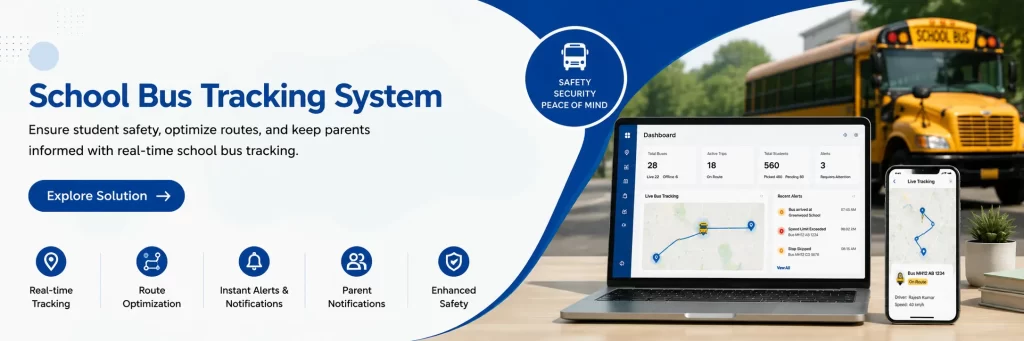
school bus monitoring software centralises everything that’s currently scattered across phone calls, messages, and registers into one dashboard. The transport coordinator sees every bus’s live position on a map. Driver behavior alerts – speeding, harsh braking, route deviation – surface automatically. Student boarding events feed into the dashboard in real time.
The parent-facing component is where the most dramatic improvement in daily experience happens. Instead of calling the school, parents access a live tracking link – a browser URL that shows the bus’s current position and estimated arrival time at their child’s stop. No app installation. No registration. Just a link that the school shares and parents bookmark.
The morning phone calls to the transport coordinator largely stop. Not all of them – there will always be edge cases – but the volume drops significantly because most of the questions those calls were trying to answer are already answered by the tracking link.
Live Parent Tracking: The Part Schools Underestimate Before They Have It
Sahaj GPS clients in the school transport segment consistently report that parent response to live tracking is one of the bigger surprises of implementation. Schools expect parents to appreciate it. They don’t expect parents to respond with the level of relief that many do – particularly parents of younger primary school children for whom the time between the child leaving home and confirmation of school arrival is genuinely anxious.
A parent who can see on their phone that the bus is 7 minutes away and currently on the main road doesn’t call the school. They get their child ready and watch the dot move toward their stop. That small shift, multiplied across hundreds of parents every morning, removes a significant volume of inbound communication that was previously consuming transport coordinator time every single day.
RFID Student Attendance vs Manual Roll Calls
Manual roll calls on a moving bus are unreliable by design. They depend on a driver or attendant counting students accurately while also navigating traffic, managing student behavior, and operating the vehicle safely. Missed students in a manual system often aren’t identified until the end of a route or, worse, until a parent calls asking why their child wasn’t on the bus.
RFID student tracking changes this to an automatic event-based system. Missing a scan because a student didn’t board triggers a “no-show” notification to both the coordinator and the parent immediately – not at end of route, but at the moment the expected boarding window passes without a registered scan.
For schools with students who have irregular attendance, this also provides an automatic notification to parents when a student boards unexpectedly on a day they weren’t expected – or fails to board on a day they were.
Sahaj GPS RFID integration logs every boarding and drop-off event to the cloud in real time, with the GPS position at the moment of the scan attached to each record. The student’s journey from home to school and back is documented with timestamps that serve both operational and safety purposes.
Driver Accountability Without Daily Supervision
Manual transport management relies on drivers to self-report problems – late departures, route changes, passenger incidents. In practice, minor issues often don’t get reported because reporting them requires acknowledging them. Drivers make reasonable calls about what’s worth mentioning and what isn’t.
School Bus monitoring Software removes self-reporting from most operational data. Departure times are GPS-logged. Route adherence is recorded against planned paths. Speeding events fire immediate alerts. Unexpected stops generate automatic flags. driver behavior scores – based on accumulated GPS data across the week – give transport coordinators evidence-based context for performance conversations.
This isn’t about creating an adversarial relationship with drivers. Most drivers respond well to monitoring when it’s introduced transparently and the data is used for coaching rather than punishment. The behavioral improvement that typically follows monitoring implementation usually comes from the awareness that performance is visible – not from any disciplinary action.
What It Actually Takes to Move Away From Manual Systems
The practical transition from manual to digital school transport management is more straightforward than most schools expect. Hardware installation on each bus typically takes half a day per vehicle by an authorized installer. Parent communication about the new system and how to access the tracking link takes one circular. RFID card distribution to students is usually handled at the beginning of a term alongside other administrative setup.
The bigger adjustment is operational – coordinators learning what the dashboard shows and building the habit of checking it rather than calling drivers. That adjustment typically takes two to three weeks to feel natural, after which the question is usually “how did we manage without this” rather than “is this worth the trouble.”
FAQs
Q1. What does school bus monitoring software actually do?
It replaces manual registers and phone check-ins with real-time GPS tracking, RFID student boarding alerts, automated parent notifications, driver behavior monitoring, and route compliance logging – all from one centralized dashboard.
Q2. How does a school vehicle tracking system eliminate coordinator phone calls?
It gives parents a live bus tracking link showing current location and estimated stop arrival time – removing the need to call the school for updates and dramatically reducing inbound communication volume during morning and afternoon transport windows.
Q3. Why do manual school transport systems fail despite best efforts?
They depend on human check-ins that get delayed, registers completed retroactively, and phone calls to drivers who are actively operating a vehicle – creating accountability gaps that GPS and RFID systems eliminate through automatic, timestamped event logging.
Q4. How does RFID student tracking improve on manual roll calls for school buses?
RFID logs each boarding and drop-off with a GPS timestamp automatically – triggering parent notifications immediately rather than at route end, and flagging no-shows when a student doesn’t board within their expected window.
Q5. Is GPS tracking legally required for school buses in India?
Yes. AIS 140-certified GPS devices are mandatory for school buses – requiring ARAI-certified hardware transmitting real-time location to MoRTH’s VLT government platform with a functioning emergency SOS button installed by an authorized service provider.