

Running a fleet isn’t getting any cheaper. Fuel prices fluctuate, delivery schedules are tighter than ever, and every unnecessary expense chips away at profit. That’s one reason How to Stop Diesel Theft in Trucks has become a serious concern for transport businesses across India. Whether you manage five trucks or five hundred, even a small amount of stolen diesel can quietly turn into a major financial loss over time.
The tricky part is that fuel theft doesn’t always happen in obvious ways. Sometimes it’s a few litres taken during an overnight stop. Other times it’s hidden behind inaccurate fuel records or unusual consumption reports. By the time the problem becomes visible, thousands of rupees may already be gone.
Many fleet owners initially blame poor mileage, heavy traffic, or ageing vehicles. That’s understandable because those factors certainly affect fuel consumption. But when the numbers continue to rise without a clear explanation, it’s worth taking a closer look. Modern technology has made it much easier to identify suspicious fuel activity, but understanding how theft happens is still the first step towards preventing it.
Why Diesel Theft Is a Growing Challenge for Fleet Owners
The transportation industry depends heavily on diesel, making it one of the largest operating expenses for logistics companies, construction businesses, mining fleets, and commercial transport operators. As fuel prices continue to remain high, diesel itself has become a valuable commodity. Unfortunately, that also makes trucks attractive targets.
The reality is that diesel theft isn’t limited to one type of business or one particular route. It can happen on highways, inside transport yards, during loading and unloading operations, or even while vehicles are parked outside customer locations. In many situations, theft goes unnoticed simply because the missing quantity seems too small to raise immediate concern. Ten litres today, fifteen tomorrow, another twenty next week—it doesn’t sound alarming until someone calculates the monthly loss. That’s usually when fleet managers realise the issue has been quietly affecting profitability for months.
Another challenge is that businesses often depend on manual fuel records. Drivers submit bills, fuel entries are recorded, and everyone assumes the information is accurate. Most of the time it probably is. But when manual processes are the only source of information, identifying unusual fuel activity becomes much more difficult.
Understanding How Diesel Theft Happens
There’s a common belief that diesel theft only occurs when someone siphons fuel from a parked truck. While that certainly happens, the reality is much broader.
Fuel Siphoning During Overnight Parking
One of the oldest and most common methods is fuel siphoning. Trucks parked overnight at roadside dhabas, warehouses, industrial areas, or isolated parking locations become easy targets. A thief doesn’t need sophisticated equipment. With a simple pipe and container, several litres of diesel can disappear in just a few minutes. Since the vehicle often has enough fuel left to continue its journey, drivers may not notice the theft until much later.
This type of theft is especially common on long-distance transport routes where trucks remain stationary for several hours. Even experienced drivers sometimes struggle to detect small fuel losses because there are no obvious signs of tampering.
Fuel Manipulation Through False Reporting
Not every diesel loss happens outside the vehicle. Sometimes inaccurate fuel records create hidden financial losses that are much harder to identify.
For example, inflated fuel bills, duplicate receipts, or incorrect refill entries can slowly increase operating costs without attracting immediate attention. Everything appears normal on paper, but the actual fuel inside the tank tells a different story. Businesses relying entirely on manual reporting often discover these discrepancies only after conducting a detailed audit.
Small but Repeated Fuel Theft
Large fuel theft incidents attract attention quickly. Smaller ones usually don’t.
A few litres removed from multiple vehicles every week can easily remain unnoticed because the losses blend into regular fuel consumption. That’s exactly why repeated theft is often more damaging than a single incident. It continues quietly while businesses assume higher operating costs are simply part of daily operations.
Early Signs Your Trucks May Be Losing Diesel
One of the biggest mistakes fleet owners make is waiting for obvious proof before investigating fuel losses. Diesel theft rarely announces itself. Instead, it leaves behind small warning signs that gradually become impossible to ignore.
You may notice that certain vehicles require refuelling more frequently despite covering similar distances. Fuel expenses start increasing even though delivery volumes haven’t changed much. Drivers report normal journeys, yet mileage figures don’t quite match expected fuel consumption. Sometimes transport managers see vehicles making unnecessary stops or spending longer than expected at certain locations. On their own, these situations may seem ordinary. Together, however, they often indicate that something deserves closer attention.
Businesses using truck fuel theft Detection technology usually identify these irregularities much earlier because fuel levels and vehicle movements can be compared automatically instead of relying entirely on manual reports.
Why Manual Fuel Monitoring No Longer Works
For years, many transport companies managed fuel using handwritten registers, fuel receipts, and driver declarations. It was a practical approach when fleets were smaller and technology wasn’t easily available.
Today, fleet operations are far more complex. Vehicles travel longer distances, deliveries happen across multiple states, and managers often supervise dozens or even hundreds of trucks simultaneously. Under these conditions, manual monitoring simply can’t provide the visibility businesses need.
Think about it for a moment. A fleet manager cannot physically verify every refuelling event or inspect every truck after each journey. They depend on reports that arrive hours—or sometimes days—later. If diesel disappears during transit, discovering the loss after the vehicle returns offers very little opportunity to investigate what actually happened.
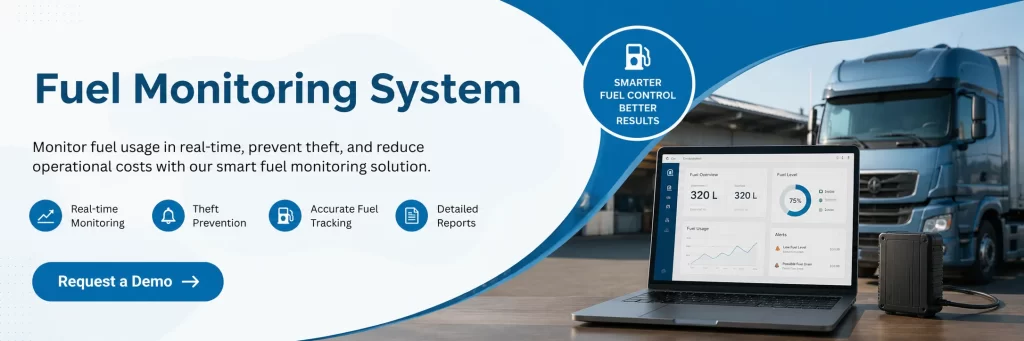
That is one reason businesses are increasingly adopting a GPS fuel monitoring system. Instead of depending solely on paperwork, managers receive continuous fuel-level information directly from sensors installed inside the vehicle. Every refill, every significant fuel drop, and every unusual event is automatically recorded. There is far less guesswork involved, and decisions are based on actual data rather than assumptions.
How GPS Technology Is Changing Diesel Theft Prevention
Technology has transformed fleet management over the past few years, and fuel monitoring is no exception. Modern systems don’t just show where a truck is travelling—they provide valuable insights into how that vehicle is being operated throughout the journey.
A reliable GPS fuel monitoring system combines location tracking with fuel sensor data, allowing fleet managers to monitor both vehicle movement and diesel levels at the same time. If fuel suddenly drops while the truck is parked at an unexpected location, the system records the event immediately. That combination of location history and fuel data makes investigations much faster and far more accurate.
Businesses also benefit from improved transparency. Instead of questioning drivers based on estimates or assumptions, managers can review detailed reports showing fuel usage throughout each trip. This creates accountability while helping identify operational issues that may have otherwise gone unnoticed.
More importantly, visible monitoring itself acts as a strong deterrent. When drivers and operators know that fuel activity is being tracked accurately, opportunities for misuse become significantly lower.
How GPS Tracking Prevent Fuel Theft More Effectively
A lot of fleet owners assume GPS tracking is only useful for knowing where a vehicle is. That’s true, but only partly. The real value comes when location data is combined with fuel monitoring. This is where GPS tracking prevent fuel theft in a much smarter way. If a truck stops at an unauthorised location and fuel levels suddenly fall, the system immediately connects both events. Instead of spending hours trying to understand what happened, managers can review accurate trip history, fuel reports, and location records within minutes.
Real-time alerts make an even bigger difference. Rather than discovering missing diesel after the truck completes its route, fleet managers receive notifications while the incident is happening. That faster response discourages repeat theft and helps businesses take immediate action. Over time, simply knowing that every journey is being monitored creates stronger accountability across the entire fleet.
Building a Strong Diesel Theft Prevention Strategy
Technology is important, but it works best when supported by good operational practices. Businesses that successfully reduce fuel losses usually focus on prevention rather than investigation. Drivers should be trained to park only at secure locations whenever possible and report anything unusual, whether it’s a damaged fuel cap or suspicious activity near the vehicle. Small precautions often prevent much larger problems later.
Regular vehicle inspections also deserve more attention than they usually receive. Fuel tank locks, caps, and seals should be checked during scheduled maintenance because even minor damage can make a truck an easier target. Fuel purchase records should never be accepted at face value either. Comparing fuel bills with actual fuel consumption and trip reports provides an extra layer of verification that helps identify irregularities before they become expensive.
Businesses operating large fleets also benefit from setting fuel consumption benchmarks for different vehicle models and routes. If one truck consistently consumes significantly more diesel than similar vehicles travelling the same distance, it deserves further investigation rather than being dismissed as normal variation.
Why a Fleet Management System Offers Better Control
Managing fuel separately from vehicle tracking often creates gaps in visibility. A modern fleet management system brings everything together on one dashboard, allowing transport managers to monitor vehicles, drivers, routes, maintenance schedules, and fuel usage without switching between multiple reports.
This integrated approach makes day-to-day operations much easier. Fleet managers can compare fuel consumption with route history, identify excessive idling, monitor harsh driving behaviour, and analyse vehicle utilisation from a single platform. When all this information is available together, unusual patterns become much easier to recognise.
It also improves decision-making. Instead of reacting to rising fuel costs after monthly reports are generated, businesses can spot trends much earlier and make operational changes before losses become significant. That level of visibility is becoming increasingly valuable as fleets continue to grow and transportation costs remain unpredictable.
How Sahaj GPS Supports Better Fuel Security
For businesses looking to strengthen diesel theft prevention, Sahaj GPS offers an intelligent combination of vehicle tracking, fuel monitoring, and real-time reporting designed specifically for commercial fleets. Instead of relying on manual fuel records, fleet managers gain continuous visibility into fuel levels, vehicle movement, and important operational events through a single platform.
Whenever abnormal fuel activity occurs, instant alerts help managers respond quickly before losses increase. Detailed reports also make it easier to identify recurring patterns, compare fuel consumption across vehicles, and improve overall fleet efficiency. Rather than simply detecting problems, the system helps businesses understand why they occur and where improvements can be made.
Small Fuel Losses Eventually Become Big Business Losses
One of the biggest misconceptions about diesel theft is that only large incidents matter. In reality, repeated small losses often create a much greater financial impact over the course of a year. Five or ten litres removed from multiple trucks every week may seem insignificant at first, but multiplied across an entire fleet, those losses quickly become difficult to ignore.
The impact extends beyond fuel costs. Delivery schedules may be disrupted when vehicles require unexpected refuelling. Customer commitments become harder to meet, operating costs rise, and managers spend valuable time investigating issues that could have been prevented with better monitoring. Businesses also face challenges when fuel records become unreliable because it becomes difficult to evaluate driver performance or vehicle efficiency accurately.
Investing in preventive measures therefore isn’t just about protecting diesel. It’s about protecting operational efficiency, customer satisfaction, and long-term profitability.
The Future of Fuel Theft Prevention
Fleet operations are becoming increasingly data-driven, and fuel management is following the same direction. Artificial intelligence, predictive analytics, cloud-based reporting, and smarter fuel sensors are making theft detection faster and more accurate than ever before. Instead of reacting after fuel disappears, businesses are moving towards systems that identify unusual behaviour almost instantly.
Solutions like Sahaj GPS continue to evolve alongside these advancements by helping fleet operators improve visibility, strengthen vehicle security, and make better operational decisions through real-time data. As commercial fleets become larger and more connected, intelligent monitoring will no longer be considered an optional upgrade—it will become a standard part of efficient fleet management.
Every litre of diesel represents money that a business has already earned. Protecting it isn’t simply about stopping theft; it’s about building a smarter, more accountable operation that performs consistently every single day. Businesses that invest in the right technology today are far better prepared for tomorrow’s challenges, and Sahaj GPS continues to provide the tools needed to make that possible.
FAQs
1. How can businesses stop diesel theft in trucks?
Installing GPS fuel monitoring, using secure parking, checking fuel records regularly, and monitoring fuel levels in real time help businesses detect suspicious activity early and reduce diesel theft significantly.
2. What is truck fuel theft detection?
Truck fuel theft detection uses fuel sensors and GPS technology to identify sudden fuel drops, unauthorised fuel removal, and unusual fuel consumption, allowing fleet managers to respond quickly.
3. How does a GPS fuel monitoring system work?
A GPS fuel monitoring system combines fuel sensors with vehicle tracking to record fuel levels, monitor refuelling events, detect sudden fuel loss, and generate real-time alerts for better fleet visibility.
4. Can GPS tracking prevent fuel theft?
Yes. GPS tracking, when integrated with fuel monitoring, helps detect suspicious fuel activity, monitors vehicle locations, records route history, and improves accountability across commercial fleets.
5. Why is diesel theft prevention important for fleet businesses?
Preventing diesel theft reduces unnecessary fuel expenses, improves operational efficiency, protects business profits, strengthens fleet security, and helps managers make informed decisions using accurate fuel data.