
Indoor tracking software helps hospitals, factories, and warehouses reduce operational costs by providing real-time visibility into assets, equipment, inventory, and personnel. Using technologies like BLE, RFID, Wi-Fi, and IoT sensors, businesses can minimise equipment loss, reduce search time, improve asset utilisation, and optimise workflows.
These improvements help organisations recover lakhs every year through better productivity, lower operating costs, and smarter resource management.
Every large facility faces the same hidden challenge-valuable time is lost searching for equipment, locating inventory, or coordinating resources across multiple departments. Although these delays rarely appear in financial reports, they gradually increase operating costs, reduce productivity, and affect service quality.
Whether it’s a hospital searching for medical equipment, a manufacturing unit locating production tools, or a warehouse managing inventory, poor asset visibility creates unnecessary operational inefficiencies.
An indoor tracking system eliminates these challenges by providing real-time asset visibility across an entire facility. Businesses can instantly locate equipment, monitor staff movement, and optimise workflows without relying on manual records or constant communication.
Solutions such as Sahaj GPS help organisations improve operational efficiency while reducing hidden costs that impact long-term profitability.
Why Indoor Tracking Requires Different Technology Than GPS
Traditional GPS technology performs exceptionally well for tracking vehicles on roads, but it becomes unreliable inside buildings where satellite signals are weak or unavailable. This limitation makes GPS unsuitable for tracking equipment, inventory, or personnel within hospitals, factories, warehouses, or office buildings.
Modern indoor tracking software uses technologies such as Bluetooth Low Energy (BLE), RFID, Wi-Fi positioning, Ultra-Wideband (UWB), and IoT sensors to deliver highly accurate indoor location tracking. These technologies can locate assets within a few metres—or even centimetres in specialised environments—allowing businesses to monitor equipment and personnel with far greater precision than conventional GPS systems.
How Indoor Tracking Software Reduces Operational Costs
Hospitals and Healthcare Facilities
Hospitals manage hundreds of mobile medical devices every day, including wheelchairs, infusion pumps, ECG machines, ventilators, and diagnostic equipment. Since these assets frequently move between departments, locating them quickly can become a major operational challenge. Nurses and support staff often spend valuable time searching for equipment instead of focusing on patient care.
An indoor asset tracking system provides real-time visibility into the location of every tagged medical device. Staff can instantly locate nearby equipment using a mobile application or central dashboard, reducing search time and improving operational efficiency. Businesses using Sahaj GPS can also monitor equipment utilisation, identify underused assets, and reduce unnecessary purchases caused by misplaced equipment.
Beyond improving productivity, better asset visibility supports preventive maintenance scheduling and ensures critical medical equipment remains available whenever required. This contributes to better patient care while reducing operational expenses across the healthcare facility.
Manufacturing Facilities
Manufacturing plants depend on efficient movement of tools, machinery, raw materials, and production equipment. When essential resources cannot be located quickly, production slows down, employees lose valuable working time, and operational efficiency declines. Manual tracking methods often fail to provide accurate information, making it difficult for supervisors to identify bottlenecks before they affect production.
An indoor positioning system allows manufacturers to monitor equipment movement, production assets, and employee activity from a central dashboard. Managers can identify where tools are located, monitor workflow between production areas, and analyse movement patterns to improve factory layouts. Real-time visibility reduces downtime, eliminates unnecessary equipment searches, and helps businesses maintain consistent production schedules.
Indoor tracking also strengthens workplace safety by monitoring restricted zones and generating alerts whenever unauthorised personnel enter sensitive production areas. This improves compliance while reducing operational risks across the manufacturing facility.
Warehouses and Distribution Centres
Warehouses rely on accurate inventory movement and efficient material handling to maintain smooth operations. As inventory volumes increase, manually locating products, pallets, or handling equipment becomes increasingly difficult. Even small inventory errors can delay dispatch operations, increase labour costs, and affect customer satisfaction.
Indoor tracking software provides complete visibility into inventory, forklifts, pallets, and warehouse equipment through real-time asset tracking. Warehouse managers can identify the exact location of inventory, optimise picking routes, and allocate equipment more efficiently without relying on manual searches. Accurate asset visibility improves warehouse productivity while reducing delays caused by misplaced inventory or unavailable equipment.
Real-time location tracking also helps reduce inventory errors, improve warehouse safety, and support faster order fulfilment. By combining indoor tracking with warehouse management processes, businesses can increase operational efficiency while lowering overall operating costs.
Indoor Tracking Technologies That Deliver Better Results
Choosing the right indoor tracking technology depends on the type of facility, the assets being monitored, and the level of tracking accuracy required. Modern indoor tracking solutions combine multiple technologies to deliver reliable location data while keeping implementation practical and cost-effective.
Some of the most widely used technologies include:
- Bluetooth Low Energy (BLE): Ideal for hospitals, offices, and retail environments where continuous asset tracking is required.
- RFID Asset Tracking: Best suited for warehouses and manufacturing facilities that need fast inventory and checkpoint tracking.
- Ultra-Wideband (UWB): Provides highly accurate positioning for industries requiring precision tracking, such as pharmaceutical manufacturing and high-value production facilities.
- Wi-Fi Positioning: Suitable for large office buildings and corporate campuses where existing wireless infrastructure can support location tracking.
- IoT-Based Tracking Systems: Combine multiple sensors to provide advanced monitoring across complex industrial environments.
Selecting the right technology ensures businesses receive accurate location data while improving operational efficiency without unnecessary infrastructure costs.
Key Benefits of Indoor Tracking Software
Implementing an indoor tracking system provides measurable operational improvements across different industries. Instead of relying on manual searches and paper-based records, businesses gain instant access to accurate location information that supports faster and smarter decision-making.
Some of the most significant benefits include:
- Faster asset and equipment location
- Reduced equipment loss and misplacement
- Improved inventory accuracy
- Better utilisation of high-value assets
- Reduced staff search time
- Improved workflow efficiency
- Enhanced workplace safety and compliance
- Better resource planning using real-time data
These improvements not only reduce operating expenses but also allow employees to focus on productive work instead of time-consuming manual processes.
What Businesses Can Expect After Implementation
The impact of indoor tracking software becomes visible soon after implementation. During the first few weeks, organisations typically gain complete visibility into assets that were previously difficult to locate. Equipment utilisation becomes easier to monitor, while staff spend considerably less time searching for tools, inventory, or medical devices.
As businesses begin analysing movement data, additional opportunities for process improvement emerge. Managers can identify workflow bottlenecks, optimise facility layouts, improve equipment allocation, and strengthen inventory management using real operational insights instead of assumptions. Over time, these improvements contribute to higher productivity, lower operational costs, and better utilisation of existing resources.
How Sahaj GPS Supports Indoor Tracking
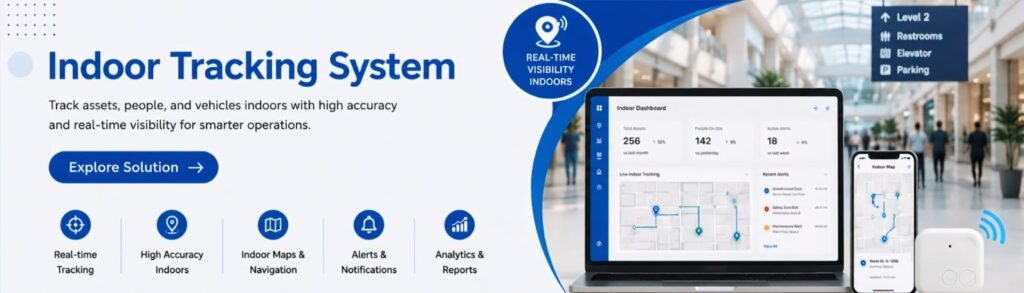
Modern businesses require more than simple asset location—they need a complete operational visibility platform that helps improve productivity across the entire facility. Sahaj GPS provides an advanced indoor tracking solution that combines BLE technology, RFID asset tracking, IoT sensors, and real-time monitoring through a single dashboard.
The platform enables businesses to monitor equipment, inventory, personnel, and critical assets while generating detailed movement reports and location analytics. Whether managing hospitals, manufacturing plants, warehouses, retail stores, or corporate facilities, organisations gain accurate visibility that supports faster decision-making and better operational control.
Final Thoughts
Hidden operational costs often come from activities that businesses rarely measure, such as searching for equipment, locating inventory, or coordinating resources across multiple departments. Although these delays may appear small individually, they gradually reduce productivity, increase operating costs, and affect overall business performance.
An indoor tracking software solution provides complete visibility into assets, equipment, and personnel through real-time location tracking and intelligent analytics. By improving asset utilisation, reducing equipment loss, and streamlining workflows, businesses can significantly lower operating expenses while increasing efficiency. Investing in the right indoor tracking technology enables organisations to build smarter, more productive facilities that are prepared for future growth.
Related Blogs:
Book a Free Facility Assessment and Demo →
Stop Losing Time & Assets: Unlock the Power of Advanced Indoor Tracking
FAQs
1. What is indoor tracking software?
Indoor tracking software uses technologies like Bluetooth, RFID, Wi-Fi, or IoT sensors to track the real-time location of assets, equipment, inventory, or personnel within a facility.
2. How does indoor tracking software help hospitals save money?
It helps hospitals quickly locate critical medical equipment, reduce asset loss, improve staff efficiency, and minimize delays in patient care, leading to significant cost savings.
3. Can factories and warehouses benefit from indoor tracking systems?
Yes. Factories and warehouses use indoor tracking to monitor inventory, optimize workflows, reduce downtime, and prevent misplaced assets, which improves productivity and lowers operational costs.
4. Is indoor tracking software suitable for small businesses?
Absolutely. Modern indoor tracking solutions are scalable and can be customized for businesses of all sizes, helping even small organizations improve efficiency and reduce unnecessary expenses.
5. Why should businesses choose Sahaj GPS for indoor tracking?
Sahaj GPS provides an intelligent indoor tracking platform with real-time asset tracking, BLE technology, RFID integration, IoT-based monitoring, and advanced reporting features that help businesses improve operational visibility, reduce costs, and manage facilities more efficiently.