
Fuel is one of the biggest recurring expenses for businesses that rely on vehicles, heavy machinery, generators, or storage tanks. Even small discrepancies in fuel usage can accumulate into significant financial losses over time.
Unauthorised fuel removal, excessive idling, inefficient driving, and inaccurate manual records are just a few of the challenges that make fuel management difficult. Without a reliable monitoring system, businesses often have no clear way to identify where fuel is being wasted or why operating costs continue to rise.
A fuel monitoring system solves this problem by providing complete visibility into fuel usage from start to finish. Instead of relying on estimates or manual logs, businesses receive accurate, real-time data that shows fuel levels, consumption patterns, refuelling events, and unusual fuel losses. With this information, fleet managers can make informed decisions, reduce unnecessary expenses, and improve overall operational efficiency.
What Is a Fuel Monitoring System?
A fuel monitoring system is an advanced technology solution that continuously measures, records, and analyses fuel levels inside vehicles, machinery, generators, or storage tanks. It combines specialised hardware such as fuel level sensors and GPS tracking devices with cloud-based software that processes the collected information into meaningful reports and alerts.
Rather than simply recording how much fuel is available, the system provides complete visibility into fuel movement throughout daily operations. Businesses can monitor consumption, detect refuelling events, identify unexpected fuel losses, and analyse long-term usage trends from a single dashboard.
Why Businesses Need a Fuel Monitoring System
Fuel expenses represent a major portion of operating costs in industries such as logistics, construction, mining, agriculture, manufacturing, and power generation. When fuel usage is monitored manually, businesses often struggle to identify losses caused by theft, inefficient operations, inaccurate reporting, or poor driving practices.
A fuel monitoring system provides real-time visibility into fuel activity, helping organisations improve operational control while reducing unnecessary expenses. Accurate fuel data also supports better planning, improves accountability, and allows managers to make decisions based on facts rather than assumptions.
How Does a Fuel Monitoring System Operate?
A fuel monitoring system works by combining several technologies that continuously collect, process, and display fuel-related information. Each component performs a specific function, and together they provide complete visibility into fuel usage across the entire operation.
Step 1: Fuel Level Sensors Measure Fuel Continuously
The process begins with a fuel level sensor installed inside the vehicle’s fuel tank or storage container. The sensor measures the fuel level continuously and records even the smallest changes in fuel volume.
Depending on the application, different types of sensors such as capacitive, ultrasonic, or float-based sensors may be used. These sensors are designed to deliver accurate readings across different tank sizes and operating conditions while detecting both gradual consumption and sudden fuel level changes.
Step 2: GPS Tracking Device Collects Operational Data
The fuel sensor is connected to a GPS tracking device that combines fuel information with vehicle movement and location data. This integration provides valuable context by showing where and when fuel is consumed throughout each journey.
Managers can easily determine whether fuel was used during normal driving, while the vehicle remained idle, or after an unexpected stop. Linking fuel data with location information makes it much easier to investigate irregular fuel usage and improve overall fleet efficiency.
Step 3: Data Is Transmitted to Cloud-Based Software
After collecting fuel and location information, the GPS device securely transmits the data to cloud-based fleet management software through mobile communication networks.
The software automatically stores, processes, and organises this information into useful operational insights. Even if network connectivity is temporarily unavailable, the device safely stores the information and uploads it once communication is restored, ensuring that no fuel data is lost.
Step 4: Dashboard Displays Fuel Activity in Real Time
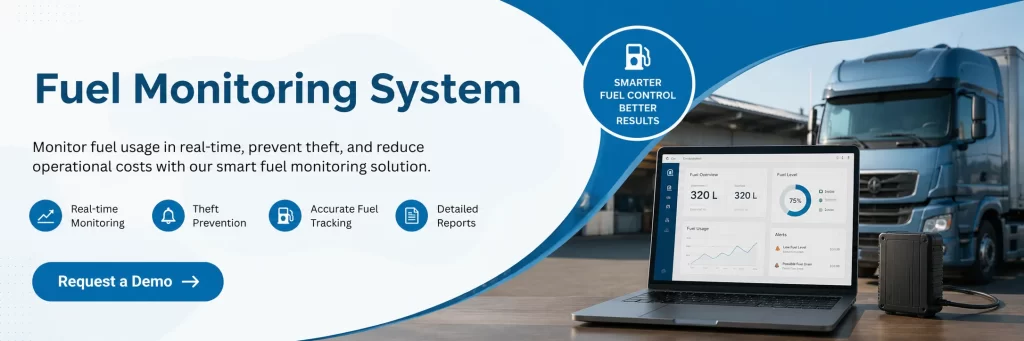
Fleet managers can access all fuel information through a web-based or mobile dashboard that presents data in an easy-to-understand format. Instead of reviewing manual logs or spreadsheets, businesses receive visual reports showing current fuel levels, consumption history, refuelling events, vehicle performance, and overall fuel efficiency.
Interactive charts and graphical reports help managers quickly identify unusual trends while making it easier to monitor multiple vehicles or fuel tanks simultaneously.
Step 5: Automatic Alerts Improve Fuel Control
One of the most valuable features of a fuel monitoring system is its ability to generate instant alerts whenever unusual fuel activity occurs. Instead of discovering fuel losses days or weeks later, managers receive immediate notifications that allow them to investigate and respond quickly.
The system can generate alerts for sudden fuel drops, unexpected refuelling events, excessive fuel consumption, prolonged idling, or abnormal usage patterns. These real-time notifications help businesses minimise losses while maintaining stronger operational control.
What Happens During Fuel Filling and Fuel Theft?
A fuel monitoring system does much more than simply measure fuel levels. It continuously records every significant fuel-related activity, including refuelling events and unexpected fuel losses. By automatically detecting these changes, businesses gain accurate records without relying on manual entries or driver reports.
During Fuel Filling
Whenever fuel is added to a vehicle or storage tank, the fuel level sensor immediately detects the increase. The system records the exact quantity of fuel added along with the date, time, and location of the refuelling event. This information is automatically stored within the software, allowing managers to verify fuel purchases, compare fuel bills with actual refuelling records, and eliminate inaccurate manual reporting.
During Fuel Theft
Fuel theft often occurs unnoticed when businesses rely on manual monitoring. A fuel monitoring system detects sudden or unusual drops in fuel level that do not match normal vehicle operation. As soon as suspicious activity is identified, the system generates an instant alert while recording the exact location and time of the incident. This enables businesses to investigate quickly, prevent repeated losses, and strengthen overall fuel security.
Types of Fuel Monitoring Systems
Different industries require different fuel monitoring solutions depending on the type of equipment they operate. Modern systems are designed to support a wide range of applications while providing accurate fuel data across various environments.
Vehicle Fuel Monitoring
Vehicle fuel monitoring is commonly used in trucks, buses, delivery vehicles, agricultural equipment, and commercial fleets. It tracks fuel consumption during every journey, helping businesses monitor efficiency, reduce wastage, and improve fleet management.
Fuel Tank Monitoring
Fuel storage tanks used at industrial sites, warehouses, farms, and construction projects require continuous monitoring to maintain fuel availability and prevent losses. Tank monitoring systems provide real-time visibility into storage levels while recording every filling and withdrawal event.
Generator Fuel Monitoring
Diesel generators are widely used as backup power sources across factories, hospitals, commercial buildings, and remote locations. Fuel monitoring systems help businesses monitor generator fuel consumption, schedule timely refuelling, and ensure uninterrupted power availability.
Key Components of a Fuel Monitoring System
A reliable fuel monitoring system combines several technologies that work together to provide accurate and continuous fuel management.
Fuel Level Sensor
The sensor measures the amount of fuel inside the tank and continuously tracks changes in fuel level with high accuracy.
GPS Tracking Device
The GPS device records vehicle location alongside fuel information, allowing businesses to understand where and how fuel is being consumed throughout each journey.
Cloud-Based Software
The software securely stores collected data, processes fuel information, and generates detailed reports, charts, and operational insights that support better decision-making.
User Dashboard
Managers can access live fuel information through an intuitive dashboard available on desktop and mobile devices. The dashboard provides complete visibility into fuel levels, consumption trends, refuelling history, alerts, and performance reports.
Benefits of Using a Fuel Monitoring System
Better Fuel Cost Control
Accurate fuel tracking helps businesses understand exactly where fuel is being consumed and where unnecessary losses occur. With complete visibility into fuel usage, managers can identify inefficiencies, improve planning, and reduce overall operating costs.
Stronger Theft Prevention
Real-time monitoring makes fuel theft significantly more difficult by detecting sudden fuel losses immediately. Instant alerts allow businesses to investigate incidents quickly and minimise financial losses before they become recurring problems.
Improved Fuel Efficiency
Detailed fuel reports help businesses compare vehicle performance, analyse driving behaviour, and identify vehicles consuming more fuel than expected. These insights support better maintenance planning and encourage more fuel-efficient operations.
Reduced Administrative Work
Manual fuel logs require continuous record keeping and frequent verification. Automated fuel monitoring records every fuel-related event automatically, improving accuracy while reducing paperwork and administrative workload.
Smarter Business Decisions
Historical reports, fuel trends, and operational analytics provide valuable information that supports long-term planning. Businesses can optimise fleet utilisation, improve route planning, forecast fuel requirements, and make informed operational decisions using accurate data.
Where Are Fuel Monitoring Systems Used?
Fuel monitoring systems are used across numerous industries where fuel plays a critical role in daily operations. Logistics companies, transportation businesses, construction firms, agricultural operations, mining projects, manufacturing facilities, warehouses, and organisations operating diesel generators all benefit from improved fuel visibility and operational control.
Any business that regularly manages vehicles, heavy equipment, or fuel storage can reduce operating costs and improve efficiency through an advanced fuel monitoring system.
Common Challenges and How to Overcome Them
Like any technology, fuel monitoring systems perform best when installed and maintained correctly. Understanding common implementation challenges helps businesses achieve more accurate and reliable results.
Sensor Calibration
Using high-quality sensors and performing proper calibration during installation ensures accurate fuel measurements across different tank sizes and operating conditions.
Network Connectivity
Temporary communication interruptions do not result in lost information because modern devices securely store collected data and automatically upload it once network connectivity is restored.
Professional Installation
Correct installation plays an important role in overall system performance. Professional installation ensures sensors GPS devices, and software work together accurately while minimising future maintenance issues.
How Sahaj GPS Simplifies Fuel Monitoring
Managing fuel efficiently requires accurate information throughout every stage of fleet operations. Sahaj GPS offers an advanced fuel monitoring solution that combines precision fuel sensors, real-time GPS tracking, intelligent reporting, theft alerts, route monitoring, driver behaviour analysis, and comprehensive fleet management through a single platform.
By helping businesses reduce fuel wastage, prevent theft, improve operational visibility, and optimise vehicle performance, Sahaj GPS enables organisations to manage fuel more efficiently while lowering long-term operating costs.
Final Thoughts
Fuel management has become an essential part of efficient fleet operations. Relying on manual records or estimates often leaves businesses vulnerable to fuel theft, inaccurate reporting, and unnecessary operational expenses. A modern fuel monitoring system provides complete visibility into fuel usage, allowing organisations to detect problems early, improve efficiency, and make better business decisions.
By combining real-time monitoring, intelligent analytics, automated alerts, and detailed reporting, businesses can gain greater control over one of their largest operating expenses. Investing in a reliable fuel monitoring solution not only reduces fuel losses but also strengthens overall fleet performance and long-term operational profitability.
Frequently Asked Questions
What is a fuel monitoring system?
A fuel monitoring system is a technology solution that continuously tracks fuel levels, consumption, refuelling events, and fuel losses using sensors, GPS devices, and cloud-based software.
Can a fuel monitoring system detect fuel theft?
Yes. The system identifies sudden or unusual fuel level drops and immediately generates alerts with the exact location and time, allowing businesses to investigate potential fuel theft quickly.
Is a fuel monitoring system suitable for small fleets?
Absolutely. Businesses with small fleets can improve fuel management, reduce operating costs, strengthen accountability, and gain better visibility into daily fuel usage.
How accurate are modern fuel level sensors?
High-quality fuel sensors provide highly accurate measurements when properly installed and calibrated, allowing businesses to monitor fuel usage with minimal variation.
Why choose Sahaj GPS for fuel monitoring?
Sahaj GPS provides accurate fuel monitoring, real-time GPS tracking, intelligent reporting, theft alerts, route optimisation, and comprehensive fleet management features that help businesses improve fuel efficiency while reducing operating costs.