
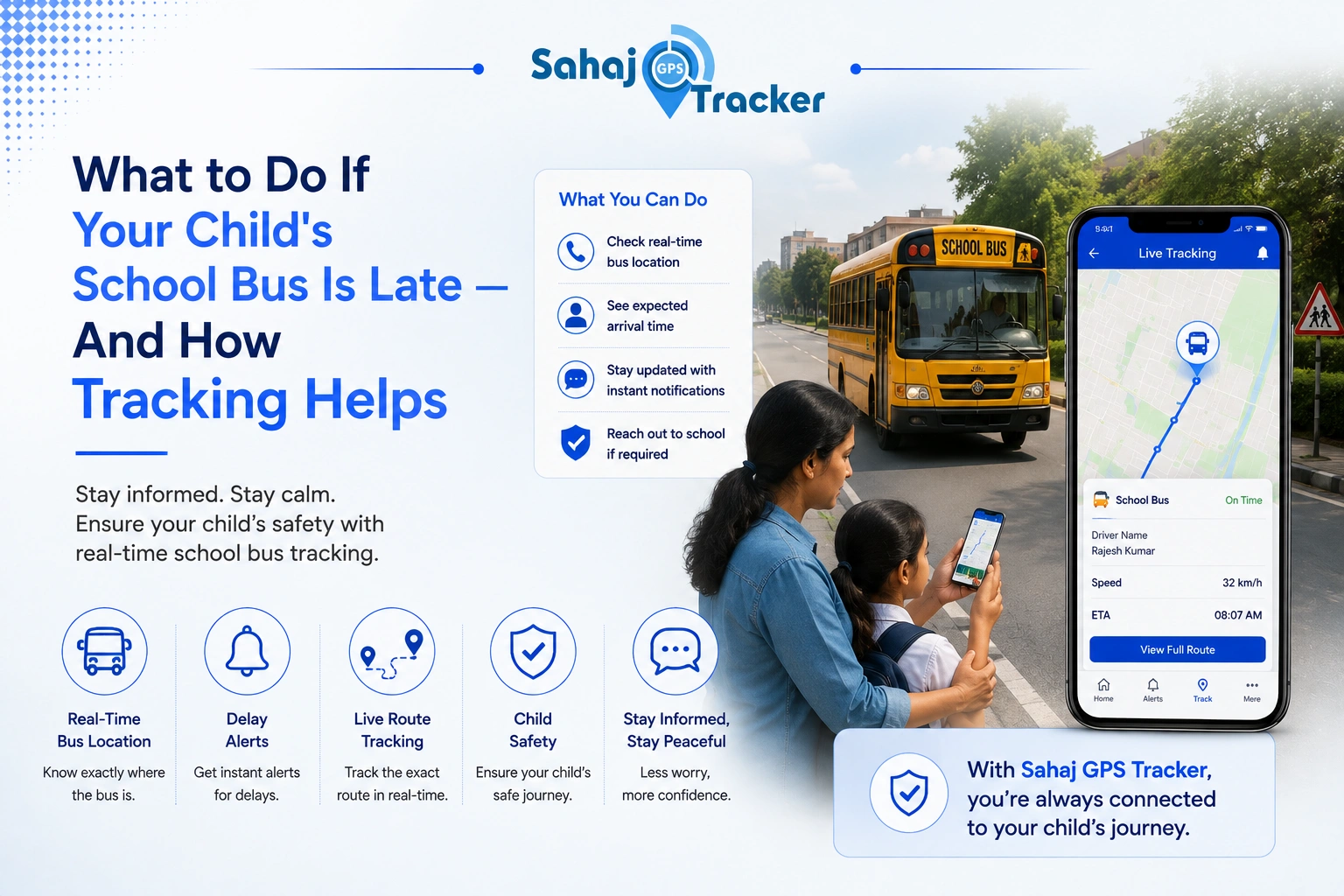
Every parent knows the feeling. You check the time once, then again a minute later. The school bus was supposed to arrive by now, but the road is empty. Your child starts asking questions, your phone stays silent, and suddenly those five or ten extra minutes feel much longer than they really are.
Situations like this happen more often than people realise, especially in busy cities where traffic changes every day. This is one reason GPS tracking for school buses has become an important part of modern school transportation. Instead of worrying about where the bus might be, parents can receive accurate updates and know exactly when it will arrive.
GPS Tracking for School Buses Gives Parents Peace of Mind
School transportation isn’t only about moving students from one place to another. Parents trust schools with something far more valuable-their children’s safety. When a bus is delayed without any information, uncertainty quickly creates stress. Is the bus stuck in traffic? Has the route changed? Did something happen on the way?
Without proper communication, parents often begin calling drivers or school offices for updates. Staff members then spend valuable time answering repeated phone calls instead of managing transportation. A real-time school bus tracking system changes this experience completely by allowing parents and school administrators to view the vehicle’s live location instead of relying on estimates or assumptions.
Knowing where the bus actually is doesn’t remove traffic, but it removes unnecessary uncertainty. Sometimes that’s exactly what parents need.
Why School Buses Sometimes Arrive Late
Many people assume a delayed school bus automatically means something has gone wrong. In reality, delays often happen for perfectly ordinary reasons. Morning traffic becomes heavier than expected, road construction blocks part of the usual route, weather conditions slow vehicles down, or additional time is required while safely boarding younger students.
There are also days when unexpected situations appear without warning. A breakdown ahead, temporary road diversions, local festivals, or emergency traffic restrictions can affect schedules even when drivers leave on time. Unfortunately, parents waiting at bus stops usually have no way of knowing what caused the delay.
That’s where a GPS tracker for school buses becomes genuinely useful. Instead of wondering whether the bus is five minutes away or still across town, families receive live location information that helps them plan accordingly.
What Parents Should Do When the School Bus Is Running Late
The first reaction is usually worry, and that’s completely understandable. Still, rushing into panic rarely helps. If your child’s school already uses a tracking platform, check the live location before making phone calls. Often the bus is simply delayed by traffic and continues following its normal route.
If no live updates are available, wait a few minutes before contacting the transport coordinator or school administration. Calling the driver while the bus is moving isn’t always safe or practical. Most schools also prefer that transport-related questions go through designated staff members who have access to route information.
Parents should also remind children to remain in safe waiting areas instead of walking further down the road trying to locate the bus. A few extra minutes spent waiting safely are always better than unnecessary risks near busy traffic.
How Real-Time Tracking Improves School Transportation
Schools today manage much larger transportation networks than they did a decade ago. Multiple buses operate across different neighbourhoods, hundreds of students travel every morning, and routes often change as admissions increase.
A real-time school bus tracking system gives transport managers complete visibility over every vehicle throughout the day. Instead of depending entirely on driver updates, administrators know which buses are moving normally, which ones are delayed, and whether route adjustments are needed.
Parents benefit just as much. Rather than standing outside wondering when the bus will arrive, they receive accurate location updates based on real-time vehicle tracking. Children spend less unnecessary time waiting at bus stops, especially during extreme summer heat or heavy monsoon rain.
Many educational institutions have started implementing Sahaj GPS because live vehicle visibility improves communication between schools, transport staff, and parents while helping create a more organised school transportation system.
Better Communication Reduces Daily Stress
One of the biggest advantages of modern tracking isn’t simply knowing where the bus is. It’s reducing uncertainty before it turns into frustration.
Imagine receiving a notification saying the bus will arrive eight minutes later because of heavy traffic ahead. That small update immediately answers the question most parents have. There’s no need to repeatedly call the school office or ask neighbours whether they’ve seen the bus.
Schools also benefit because transport teams spend less time responding to individual location requests. Instead, they can focus on keeping routes organised and ensuring students reach school safely.
Many schools using Sahaj GPS have found that better communication strengthens trust between parents and school transport departments while making daily bus operations far more efficient.
How GPS Fleet Management for Schools Helps Everyone
Managing a school transport fleet involves much more than assigning buses and drivers. Schools must ensure every vehicle follows the planned route, reaches each stop on time, and safely transports students every single day. As student numbers increase, keeping everything organised without technology becomes much harder.
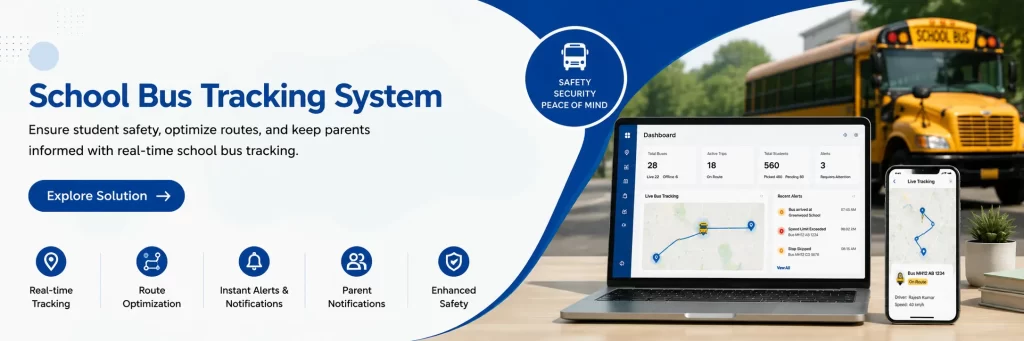
This is where gps fleet management for schools proves its value. Transport managers can monitor every bus from a single dashboard, identify delays immediately, and communicate accurate information to parents whenever routes are affected. If one bus encounters unexpected traffic, schools can quickly adjust schedules or notify families before unnecessary concern develops.
The result is a transport system that feels more organised for everyone involved. Parents stay informed, schools reduce repeated phone calls, and drivers can focus on operating the vehicle safely rather than constantly answering location requests.
Live Tracking Creates Safer School Journeys
Student safety has always been the highest priority during school transportation. While no technology can completely eliminate traffic or unexpected delays, live tracking allows schools to respond much faster whenever something unusual happens.
With real-time vehicle tracking, administrators know exactly where every bus is throughout the journey. If a vehicle remains stationary longer than expected or experiences an unexpected delay, school transport staff can immediately check the situation instead of discovering it much later. Parents also feel more confident because they know their child’s bus location is available whenever required.
Many schools have adopted Sahaj GPS because better visibility supports safer transportation while improving communication between parents, transport coordinators, and school management.
Choosing the Right School Bus Tracking Solution
Not every tracking platform offers the same experience. Schools should look for accurate live location updates, reliable notifications, route history, attendance support, simple mobile access, and reporting features that are easy for administrators to manage.
Parents also benefit when the system is straightforward to use. Nobody wants to open a complicated application every morning just to check whether the bus is arriving on time. A clear interface and reliable updates often make the biggest difference in everyday use.
Schools implementing Sahaj GPS generally choose it because it combines live tracking, route monitoring, transport visibility, and practical reporting tools that help simplify daily school transportation without adding unnecessary complexity.
Why Tracking Is Becoming a Standard in School Transportation
School transportation has changed a lot over the past few years. Parents expect better communication, schools manage larger transport networks, and student safety remains the highest priority. Relying only on phone calls or manual updates no longer meets those expectations.
A reliable tracking system doesn’t stop traffic or prevent every delay. What it does is replace uncertainty with accurate information. Parents know where the bus is, schools respond faster to changing situations, and transport operations become easier to manage every day. Sometimes peace of mind comes from something surprisingly simple-knowing exactly where your child’s school bus is and when it will arrive.
FAQs
1. What should parents do if the school bus is late?
Stay calm, check the live bus location if available, and wait a few minutes before contacting the school transport office. Avoid calling the driver while the bus is moving, and ensure your child remains in a safe waiting area.
2. How does GPS tracking for school buses help parents?
GPS tracking for school buses provides live bus locations, accurate arrival updates, and better communication during delays. Parents can monitor bus movement instead of relying on phone calls or estimated arrival times.
3. What is a real-time school bus tracking system?
A real-time school bus tracking system allows schools and parents to monitor bus locations live, receive delay notifications, improve transport coordination, and strengthen student safety throughout daily school journeys.
4. Why is gps fleet management for schools important?
Gps fleet management for schools helps administrators monitor buses, manage routes efficiently, reduce delays, improve communication with parents, and maintain better visibility across the entire school transportation network.
5. Can a GPS tracker for school buses improve student safety?
Yes. A GPS tracker for school buses enables schools to monitor vehicle locations continuously, respond faster during delays or emergencies, improve route visibility, and provide parents with greater confidence about their child’s daily journey.