
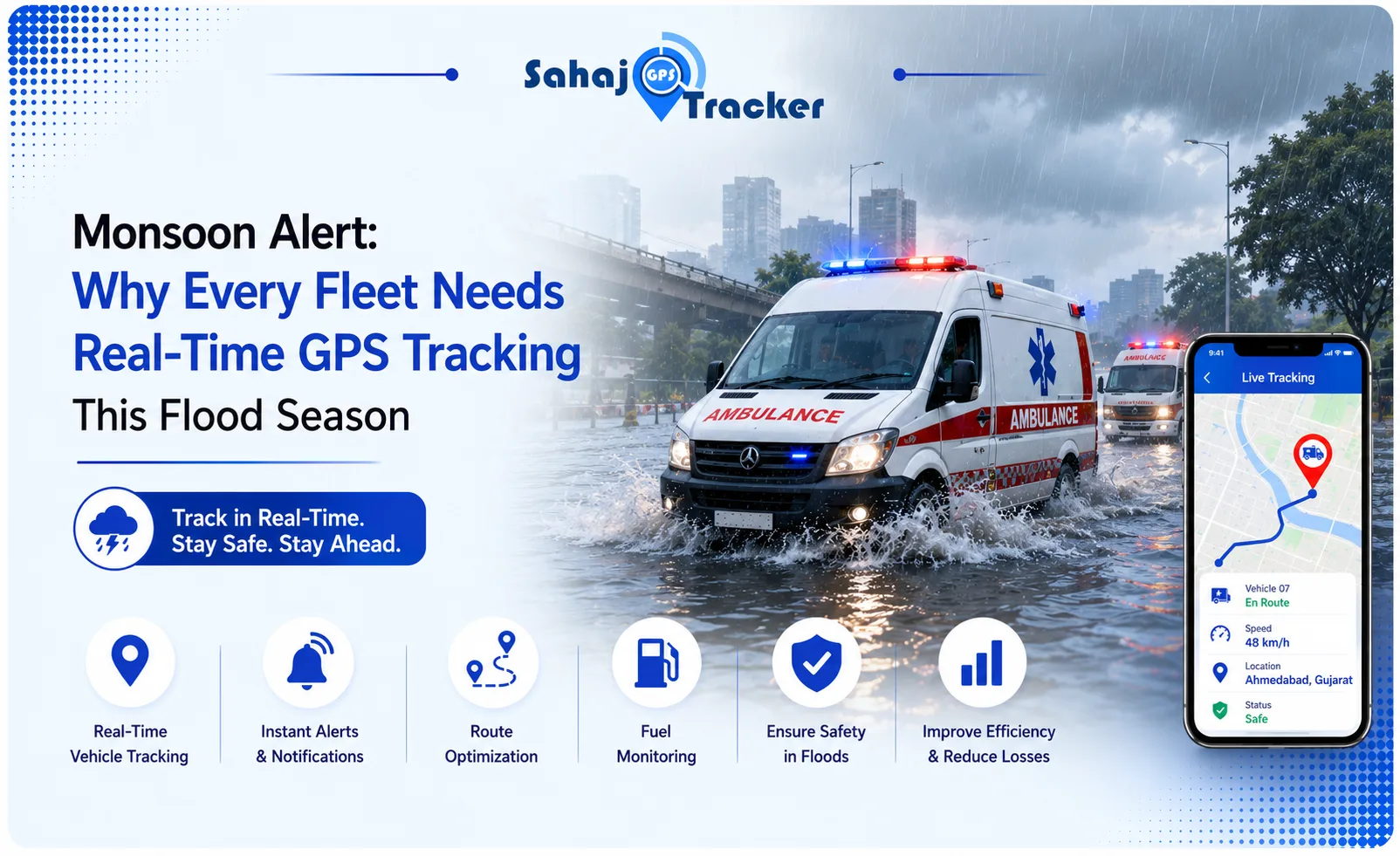
Every year around this time, the same pattern repeats itself across Indian cities. The first heavy spell of rain hits, familiar roads turn unrecognisable overnight, and fleet managers across transport, logistics, and delivery businesses start fielding the same panicked calls: a vehicle stuck in waterlogging, a driver who took a route that’s no longer passable, a delivery that’s hours late because nobody knew a particular stretch of road had gone under water until the truck was already halfway through it.
It happens every monsoon, and yet most fleets still approach it the exact same reactive way they did last year, and the year before that. This is exactly the kind of situation real-time GPS tracking was built to solve, and if there’s one season where the difference between having it and not having it becomes painfully obvious, it’s monsoon.
Why Monsoon Is Uniquely Hard on Fleet Operations
Under normal weather, a fleet manager already has a decent sense of how long a route should take and which roads are reliable. Monsoon rain erases that certainty almost overnight. A road that was fine yesterday can be flooded today. Traffic gets pushed onto alternate routes that weren’t designed to handle the extra load, creating unexpected jams in places that are usually clear. Visibility drops, driving conditions get riskier, and vehicles pushed through standing water are far more likely to suffer engine damage or breakdowns that could have been avoided with a different route.
On top of all this, monsoon is also when fuel costs tend to climb quietly, since vehicles stuck in traffic or rerouted through longer paths burn more fuel than usual, and it’s easy for that loss to go unnoticed if nobody’s actively monitoring it in real time.None of this is really about bad luck. It’s what happens when fleet decisions are still being made the old way, based on driver instinct and yesterday’s road conditions, during a season where both change by the hour.
What Real-Time GPS Tracking Actually Changes
The core value of a real-time vehicle tracking system during monsoon comes down to one simple thing: visibility that updates as conditions change, rather than a picture that’s already outdated by the time you’re looking at it. With live tracking, a fleet manager can see exactly where every vehicle is at any given moment, not where it was supposed to be according to a route plan made before the rain started. That alone changes how quickly problems get caught. If a truck stops moving somewhere unusual, that’s visible immediately, rather than being discovered hours later when a delivery hasn’t arrived and nobody knows why.
Geo-fencing becomes particularly useful during flood season. Fleet managers can mark out low-lying areas, known waterlogging spots, and roads that flood easily every year, and the system will alert them the moment a vehicle enters or approaches one of these zones. That gives enough time to redirect a driver before they’re committed to a route that’s about to become impassable, rather than finding out after the vehicle is already stuck.
Route intelligence matters just as much here. Instead of a driver relying purely on memory or a fixed route plan, a good tracking system factors in current conditions to suggest a route that’s actually passable right now, not just the shortest route on a normal, dry day. During monsoon, the difference between these two can easily be an extra hour or two of delay, or a vehicle stuck in water it never needed to drive through.
Fuel monitoring tied into the same system also helps catch the quiet cost increase that monsoon brings. When a system tracks consumption against distance and route in real time, it becomes obvious when a vehicle is burning noticeably more fuel than expected, whether that’s from extended idling in traffic or a longer detour that could have been avoided with better route information.
The Business Cost of Not Being Prepared
It’s worth being direct about what happens without this kind of monsoon-ready fleet tracking system in place. Deliveries get delayed without warning, and customers find out only when the shipment doesn’t arrive on time. Vehicles suffer water damage that could often have been avoided with a different route, leading to repair costs and downtime during a period when the fleet is already under pressure.
Fuel costs quietly rise without anyone catching it in time to act. And drivers are left making high-stakes decisions about which roads are safe, with no real-time information to back up that judgment.None of these outcomes are inevitable. They’re simply what tends to happen when a fleet doesn’t have live visibility into vehicle location, road conditions, and fuel usage during the one season where all three change the fastest.
What to Check in Your Current Tracking System
If your fleet already has some form of GPS tracking, monsoon is a good time to check whether it’s actually built for these conditions. A system that only updates location every few minutes isn’t fast enough when road and water conditions can change within that same window. Confirm that geo-fencing can be set up quickly for temporary flood zones, since these shift from year to year depending on where the rain hits hardest. And make sure the platform gives real-time alerts rather than requiring someone to actively check the dashboard, since fleet managers can’t be watching a screen constantly during a busy monsoon week.
It’s also worth checking that your GPS tracking device is AIS-140 certified, since this remains a regulatory requirement for most commercial fleets in India, and a certified real-time system typically comes with the live tracking, geo-fencing, and alert features monsoon operations genuinely need, rather than a basic location log that only tells half the story.
Getting Ahead of This Monsoon Season
The fleets that come out of monsoon season with the least disruption tend to be the ones that treated real-time tracking as essential rather than optional, well before the first heavy rain hit.
Waiting until a vehicle is already stuck in floodwater or a delivery is already hours late is the expensive way to learn this lesson. Setting up proper visibility now, while conditions are still manageable, is the far cheaper one. If you want to see exactly how a real-time GPS tracking system would work for your fleet during flood conditions, including geo-fencing for known waterlogging zones in your operating area, our team can walk you through a free live demo using your own vehicles and routes, with no pressure and no commitment.
Frequently Asked Questions
1. Why is real-time GPS tracking more important during monsoon?
Because road and flood conditions change quickly, and only live tracking can catch these changes in time to reroute a vehicle safely.
2. How does geo-fencing help during flood season specifically?
It alerts fleet managers the moment a vehicle enters a known waterlogging zone, giving time to redirect before it gets stuck.
3. Can GPS tracking reduce fuel costs during monsoon?
Yes, by flagging unusual fuel consumption from traffic delays or longer detours in real time, instead of only during month-end review.
4. Does bad weather affect GPS tracking signal reliability?
Modern trackers are built to handle weather disruptions and store data locally if signal briefly drops, syncing once connectivity returns.
5. Is AIS-140 certification necessary for monsoon fleet tracking?
Yes, it’s a regulatory requirement for most commercial fleets in India and ensures the system includes real-time and geo-fencing features.