

Running a private security company in India without any form of digital tracking is a bit like managing a restaurant without knowing which tables have been served. You issue deployment orders, guards head out to their posts, and then — practically speaking — you’re operating on trust and end-of-shift logs until something goes wrong.
Private security GPS India solutions have changed that operational reality significantly, and the adoption curve among security agencies of all sizes has been accelerating for good reason.
This isn’t just about technology for technology’s sake. The specific challenges of managing guards across multiple client sites, verifying patrol beats without physical supervision, and demonstrating proof-of-service to clients who are increasingly demanding it — these are problems that GPS-based tracking solves in ways that manual systems simply cannot. And in an industry where client retention depends heavily on reliability, that matters commercially.
Why Indian Private Security Agencies Are Turning to GPS Tracking
India’s private security industry is one of the largest in the world. With over nine million employed security personnel across the country, and thousands of registered agencies operating under the PSARA framework, the sector is massive — and the management challenges that come with that scale are equally significant.
A mid-sized security company might be deploying 200 to 500 guards across dozens of client sites daily. Supervisors can’t be everywhere. Site managers rely on phone check-ins that may or may not reflect where a guard actually is. Client complaints about guards not being at their post arrive after the fact, when the only available response is an apology and a promise that it won’t happen again.
Security company GPS India adoption is being driven largely by client pressure — corporate clients, housing societies, industrial facilities, and hospital campuses increasingly expect digital proof of service delivery rather than handwritten log registers that can be filled in at the end of a shift rather than in real time.
The Shift From Manual Registers to Real-Time Guard Accountability
Manual patrol registers have been the standard for decades. They’re easy to fake, easy to backdate, and provide zero real-time visibility. A guard who was supposed to complete rounds every 90 minutes and signed in at 10 PM, 11:30 PM, and 1 AM on paper — was that guard actually there at those times? Without a GPS timestamp attached to a physical location, there’s genuinely no way to verify it.
Guard agency GPS systems solve this cleanly. Every guard carries a GPS-enabled device — often integrated into a smartphone app — and every patrol check-in is logged with a GPS coordinate, a timestamp, and in some systems, a photo capture or NFC tag scan at defined checkpoints. The register is replaced by a digital audit trail that neither the guard nor the supervisor can retroactively alter.
Core GPS Features That Actually Matter for Security Agency Operations
Not every feature in a security agency tracker platform is equally valuable for actual security operations. Here’s what genuinely matters in practice.
Guard Patrol Monitoring and Beat Verification
Patrol beat verification is probably the single most important GPS feature for static guard deployments. It works through a combination of GPS tracking and checkpoint scanning — QR codes or NFC tags placed at specific locations around a client’s site that guards scan during patrol. The system records the time, location, and identity of the guard at each checkpoint, creating an irrefutable digital patrol log.
Sahaj GPS implements beat verification with configurable checkpoint alerts — so if a guard hasn’t scanned a checkpoint within the defined interval, the supervisor receives a notification in real time rather than discovering the gap during a morning log review. For client sites where patrol frequency is contractually defined, this feature directly supports contract compliance documentation.
Real-Time Guard Location and Emergency SOS Alerts
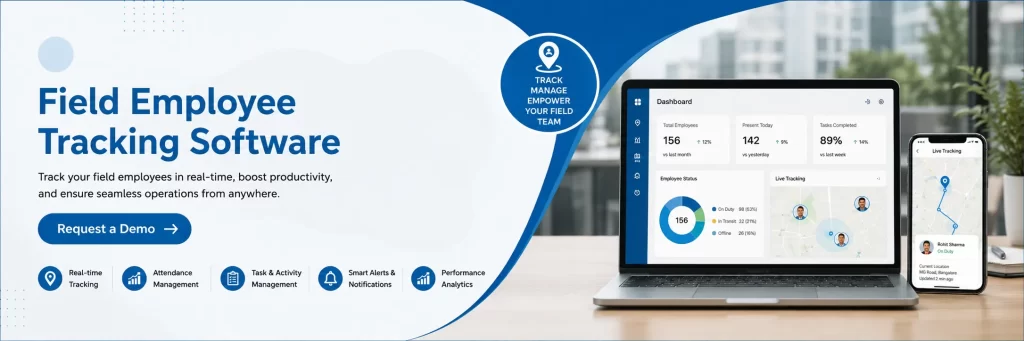
Private security GPS India platforms track each guard’s live location continuously during their shift. Supervisors managing multiple sites can see every deployed guard’s position from a single dashboard — which guards are at their posts, which are in transit between checkpoints, and which have been stationary longer than expected.
SOS alerts are critical for this sector in a way that’s different from logistics or field sales. Security guards work late nights, sometimes in isolated locations, sometimes in high-risk environments. A one-touch emergency alert that sends the guard’s precise GPS coordinates to the supervisor and a designated emergency contact — instantly, without needing to place a phone call — is a genuine safety feature, not just a compliance checkbox.
Geofencing for Client Site Boundary Management
Geofencing in a security context works slightly differently from fleet management. Virtual boundaries are drawn around client sites, and alerts fire when a guard exits the authorized zone during their shift. It’s an automatic way to detect if a guard has left their post without authorization — which is one of the more common client complaints security agencies receive.
For agencies managing multiple sites in the same city — say, three corporate campuses in Bengaluru, two hospital premises, and a residential complex — geofence alerts let a single supervisor manage all six simultaneously rather than relying on individual check-in calls from each site.
GPS Solutions for Security Vehicle Fleets: Mobile Patrols and Response Units
Many security companies don’t just deploy static guards — they also run mobile patrol vehicles and rapid response units. This is a second, distinct GPS requirement that often gets bundled into the same platform but has different operational priorities.
Tracking Response Vehicles for Faster Client Incident Response
When a client site triggers an alarm or a guard raises an emergency, response time is what clients measure the agency against. A guard company GPS system that tracks response vehicles in real time lets the control room dispatch the nearest available unit rather than calling around to find out where vehicles are.
Sahaj GPS supports this through live vehicle location integrated into the same dashboard as guard tracking — so the control room sees both active guards and available response vehicles in one operational view. For agencies running 10 to 20 patrol vehicles across a city like Delhi, Hyderabad, or Pune, the response time improvement from this visibility alone is measurable and client-visible.
The vehicle tracking layer also captures the same fleet management benefits available in any commercial vehicle context — driver behavior scoring, route verification, fuel monitoring, and idle time alerts — all relevant for an agency managing a fleet of patrol vehicles under operational and financial pressure.
How Guard GPS Tracking Improves Client Relationships and Retention
This one doesn’t get discussed enough in GPS conversations for security companies — but commercially, it might be the most important benefit.
Automated Patrol Reports as a Client-Facing Competitive Advantage
Clients who pay for 24-hour security coverage increasingly want to see evidence that coverage was delivered. Not just a monthly invoice. Actual documentation that guards were present, patrols happened on schedule, and any incidents were responded to promptly.
Sahaj GPS auto-generates patrol completion reports — shift summaries showing guard locations, checkpoint scan times, patrol completion percentages, and any alerts or incidents — that security agencies can share directly with clients. Agencies using this feature report that clients respond very positively to the transparency, and that it becomes a genuine differentiator during contract renewals against competitors who can only provide manual logs.
That’s a commercial benefit that translates directly to retention. Clients who can see the service being delivered don’t ask the question “are we actually getting what we’re paying for?” in the way that clients relying on paper registers do.
GPS Pricing for Private Security Companies in India: What to Expect
Pricing for private security GPS India solutions varies based on a few key factors: whether you need guard tracking, vehicle tracking, or both; the number of guards and vehicles; the platform feature depth; and whether hardware is purchased or leased.
What Typically Drives the Cost Difference Between Providers
Guard tracking through a mobile app is generally the most affordable entry point — costs for basic platforms start at around ₹100–₹200 per guard per month, with more feature-complete platforms with patrol beat verification, auto-reporting, and SOS functionality typically ranging from ₹250–₹500 per guard monthly.
Vehicle tracking adds a separate hardware and subscription cost per vehicle — typically in the ₹400–₹800 per vehicle per month range for a quality 4G GPS device with real-time tracking, driver behavior monitoring, and fleet management features.
For a security agency deploying 100 guards and 8 vehicles, a realistic total technology cost for a quality platform lands somewhere in the ₹35,000–₹60,000 per month range — which for most agencies of that size represents a fraction of one client contract’s value. The ROI case is usually straightforward when mapped against the client retention value of provable service delivery.
The price trap to avoid: the cheapest platform that just shows a location dot with 2-minute update intervals and no patrol verification features. It looks like a GPS solution in a demo. It doesn’t function like one when a client is disputing whether their guard was present at 3 AM.
Choosing the Right Guard Agency GPS System: The Honest Checklist
Before committing to any security company tracking platform, these are the questions that matter:
Does it work offline or with poor connectivity? Security guards in basements, underground parking structures, and rural deployment areas often have poor network coverage. The system needs to buffer data and sync when connectivity returns.
How granular is the patrol verification? QR or NFC checkpoint scanning with timestamped GPS is meaningfully stronger than GPS-only patrol logging, which can be spoofed by a guard standing at the right location without actually completing the round.
Can clients access a portal or receive automated reports? If you’re selling GPS-verified service to clients as a differentiator, they need to be able to see some version of the data.
What’s the SOS response chain? Who gets the alert, in what format, and how fast?
Is hardware durable enough for shift conditions? Devices worn or carried by guards through night shifts in varying weather need to survive the environment.
Sahaj GPS covers all of these for security agency deployments, with a specific focus on client-ready reporting and checkpoint verification that agencies can use as a sales and retention tool rather than just an internal management system.
FAQs
Q1. What does GPS guard tracking actually do for a private security agency?
It monitors patrol beats in real time, verifies guard presence at checkpoints with GPS timestamps, tracks guard location continuously during shifts, and sends SOS alerts — giving security managers and clients accurate digital proof of service delivery without manual log sheets.
Q2. How does a guard patrol GPS system verify that patrols actually happened?
Guard patrol GPS uses checkpoint scanning — QR codes or NFC tags placed at patrol points — combined with GPS timestamps to verify beat completion. This creates a tamper-proof digital patrol log that replaces manual registers and can be shared directly with clients as proof of service.
Q3. What does GPS tracking for private security companies in India typically cost?
Guard app tracking ranges from ₹150–₹500 per guard per month depending on features. Vehicle tracking typically costs ₹400–₹800 per vehicle monthly. A 100-guard, 8-vehicle agency can expect a total monthly platform cost of approximately ₹35,000–₹60,000 for a quality solution.
Q4. Can geofencing be used to monitor guards at client sites in India?
Yes. Geofencing creates virtual boundaries around client sites and triggers alerts when guards exit authorized zones during shifts — helping supervisors identify compliance issues in real time rather than discovering breaches in the following day’s log review.
Q5. How quickly can a GPS system be deployed for a security agency in India?
Guard app tracking typically deploys within 3–7 days. Vehicle GPS requires hardware installation, adding 2–5 days per batch. Full deployments of 50+ guards and vehicles across multiple cities may take 1–2 weeks depending on geography and installation logistics.