
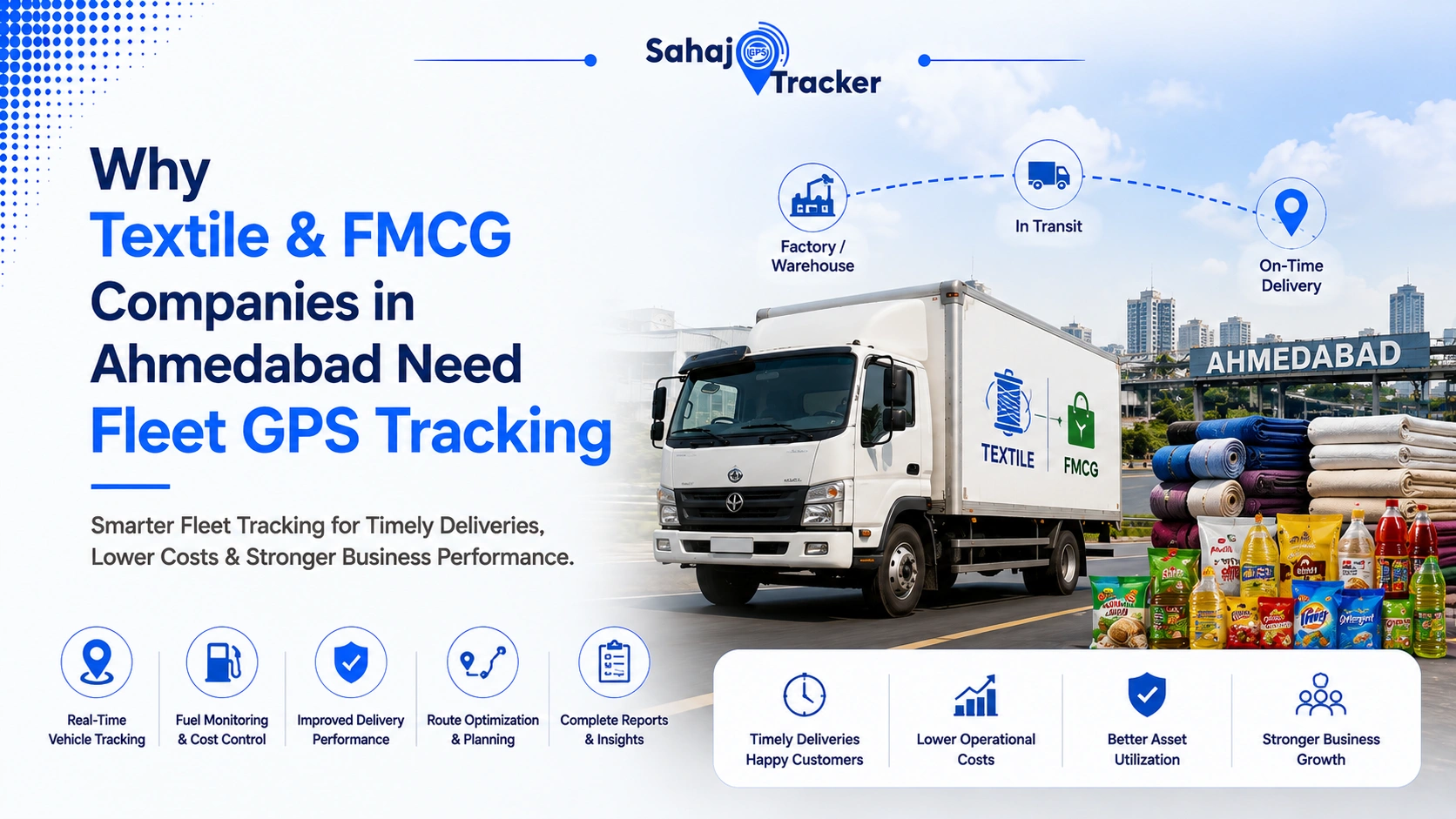
The textile and FMCG industries never really slow down. Trucks leave warehouses before sunrise, delivery vehicles travel across cities all day, and fresh orders keep arriving one after another. If even one vehicle gets delayed, the effect is felt across the entire supply chain. That’s exactly why fleet GPS tracking in Ahmedabad has become a necessity instead of a luxury.
Businesses today need complete visibility over their vehicles, not just to know where they are, but to ensure deliveries stay on schedule, fuel costs remain under control, and customers receive their orders on time. In competitive markets like Ahmedabad, where manufacturing and distribution move at a rapid pace, every hour matters.
Why Ahmedabad’s Textile and FMCG Industries Need Smarter Fleet Management
Ahmedabad has built a strong reputation as one of India’s leading textile and manufacturing hubs. Every day, garments, fabrics, packaged foods, household products, and consumer goods move from factories to distributors, retailers, and wholesalers across the country. Managing this constant movement manually becomes increasingly difficult as fleets grow larger. Drivers may choose different routes, unexpected traffic can delay shipments, and warehouse managers often struggle to estimate delivery times accurately.
This is where FMCG fleet management becomes far more than a tracking tool. It provides businesses with complete control over vehicle movement, allowing operations teams to monitor deliveries, assign vehicles efficiently, and respond quickly whenever disruptions occur. Instead of relying on phone calls for updates, managers have live operational data available from a single dashboard, making everyday logistics much easier to manage.
How Real-Time Vehicle Tracking Improves Daily Operations
Delivery schedules have become tighter than ever. Retailers expect stock to arrive exactly when promised, distributors depend on timely shipments, and manufacturers cannot afford unnecessary delays between production and dispatch. A reliable real-time vehicle tracking solution helps businesses maintain better control over every stage of transportation.
Fleet managers can monitor vehicle locations continuously, estimate accurate arrival times, and respond immediately if a vehicle encounters congestion or an unexpected road closure. Rather than waiting until a driver reports a problem, businesses can take action while the vehicle is still on the road. Small adjustments like these prevent larger disruptions throughout the supply chain.
Many growing businesses choose Sahaj GPS because accurate vehicle visibility allows transport teams to coordinate deliveries more efficiently while improving communication between warehouses, dispatchers, and drivers.
Lower Fuel Costs Through Better Route Planning
Fuel expenses continue to be one of the biggest operational costs for textile manufacturers and FMCG distributors. Vehicles that remain idle for long periods, travel unnecessary distances, or repeatedly encounter heavy traffic gradually increase transportation costs without adding business value.
A reliable fleet management solution for FMCG industry helps companies analyse daily vehicle movement and identify opportunities to reduce fuel consumption. Features such as route optimization, fuel monitoring system, driver behaviour monitoring, and vehicle tracking system provide useful operational insights that help businesses eliminate waste without affecting delivery performance.
When drivers consistently follow efficient routes, avoid excessive idling, and maintain better driving habits, businesses often notice significant improvements in monthly operating expenses. These savings may seem small on individual trips, but across an entire fleet operating every day, the financial impact becomes substantial.
Better Supply Chain Visibility Creates Better Customer Service
Customers don’t usually ask how deliveries are managed. They simply expect products to arrive on time. Behind every successful delivery, however, there’s a supply chain that depends on accurate planning and continuous coordination. Delayed vehicles can affect warehouse schedules, retailer inventory, and even future production timelines.
By combining fleet GPS tracking in Ahmedabad with supply chain visibility, logistics fleet management, and commercial vehicle tracking, businesses gain complete oversight of their transportation network. Dispatch teams can identify delivery delays early, reroute vehicles when traffic conditions change, and provide customers with more accurate delivery updates.
For textile exporters, this means shipments reach transport hubs on schedule. For FMCG companies, it helps maintain steady product availability across supermarkets, distributors, and retail stores. Reliable delivery performance strengthens customer confidence while reducing unnecessary operational pressure.
Many manufacturers and distributors trust Sahaj GPS because it simplifies transport management through live vehicle monitoring, intelligent reporting, and practical tools that support both local and long-distance fleet operations.
Improving Driver Performance and Fleet Security
Managing a fleet successfully isn’t only about knowing where vehicles are. It’s also about understanding how they are being driven. Harsh braking, unnecessary idling, speeding, and unauthorised vehicle usage can quietly increase fuel expenses and vehicle maintenance costs over time. With real-time vehicle tracking, fleet managers receive accurate trip reports that help identify driving patterns and improve accountability across the entire transport operation.
Using fleet tracking software alongside driver behaviour monitoring allows businesses to coach drivers, encourage safer driving practices, and reduce vehicle wear and tear. Better driving habits don’t just lower operating costs-they also improve road safety and reduce the chances of delivery disruptions. For businesses operating large fleets every day, these improvements add measurable value over the long term.
Managing Seasonal Demand Without Losing Control
Both textile manufacturers and FMCG companies experience seasonal spikes in demand. Festivals, holiday shopping, promotional campaigns, and export orders often place additional pressure on transport operations. During these busy periods, dispatch teams must coordinate more vehicles, tighter delivery schedules, and larger shipment volumes without compromising service quality.
A reliable fleet management solution for FMCG Industry helps businesses stay organised during these demanding months. Managers can monitor vehicle availability, assign deliveries more efficiently, and respond quickly whenever schedules change unexpectedly. Combined with route optimization, geofencing GPS tracker, and vehicle tracking system, businesses gain better control over their daily operations even when demand increases significantly.
Instead of reacting to delays after they happen, fleet managers can identify potential issues early and make informed decisions that keep deliveries moving smoothly. This flexibility becomes especially valuable when serving retailers and distributors that rely on consistent stock availability.
Many businesses choose Sahaj GPS because it helps simplify complex transport operations while supporting faster deliveries and improved fleet coordination across multiple routes.
Choosing the Right Fleet GPS Tracking Platform
Not every tracking platform offers the same level of reliability. While selecting a fleet management solution, businesses should look beyond basic vehicle location features. Accurate live tracking, instant alerts, route history, reporting, mobile accessibility, and software that can scale as the business grows are all equally important. A solution should help managers make quicker decisions rather than create additional work.
Companies that invest in a modern tracking platform often notice improvements across their entire transport operation. Deliveries become more predictable, communication improves, fuel costs are easier to control, and customers receive better service because dispatch teams always have access to real-time information.
Many growing manufacturers and distributors rely on Sahaj GPS because it combines live fleet visibility with practical operational insights that support both textile logistics and FMCG transportation. As customer expectations continue to increase, businesses that use smarter fleet management will always have an advantage. Sometimes success isn’t about adding more vehicles to the road-it’s about making every vehicle already on the road perform better.
FAQs
1. Why do textile companies need fleet GPS tracking?
Fleet GPS tracking helps textile companies monitor vehicle movement, improve delivery planning, reduce fuel costs, and ensure products reach distributors and retailers on time while maintaining better control over transportation operations.
2. How does FMCG fleet management improve business operations?
FMCG fleet management provides live vehicle visibility, improves dispatch planning, reduces delivery delays, optimises routes, and helps businesses maintain faster, more reliable product distribution across multiple delivery locations.
3. What features should a fleet management solution include?
A good solution should offer real-time vehicle tracking, route optimization, geofencing GPS tracker, trip history, fuel monitoring system, driver behaviour monitoring, reporting, and mobile access for better fleet control.
4. Can fleet GPS tracking reduce transportation costs?
Yes. Fleet GPS tracking helps reduce fuel wastage, prevent unnecessary vehicle usage, improve route planning, monitor driver performance, and increase fleet efficiency, leading to lower operating costs over time.
5. Why is fleet GPS tracking important for businesses in Ahmedabad?
Businesses using fleet GPS tracking in Ahmedabad can improve delivery efficiency, strengthen supply chain visibility, manage traffic-related delays, enhance customer satisfaction, and operate their transport fleets more effectively.