
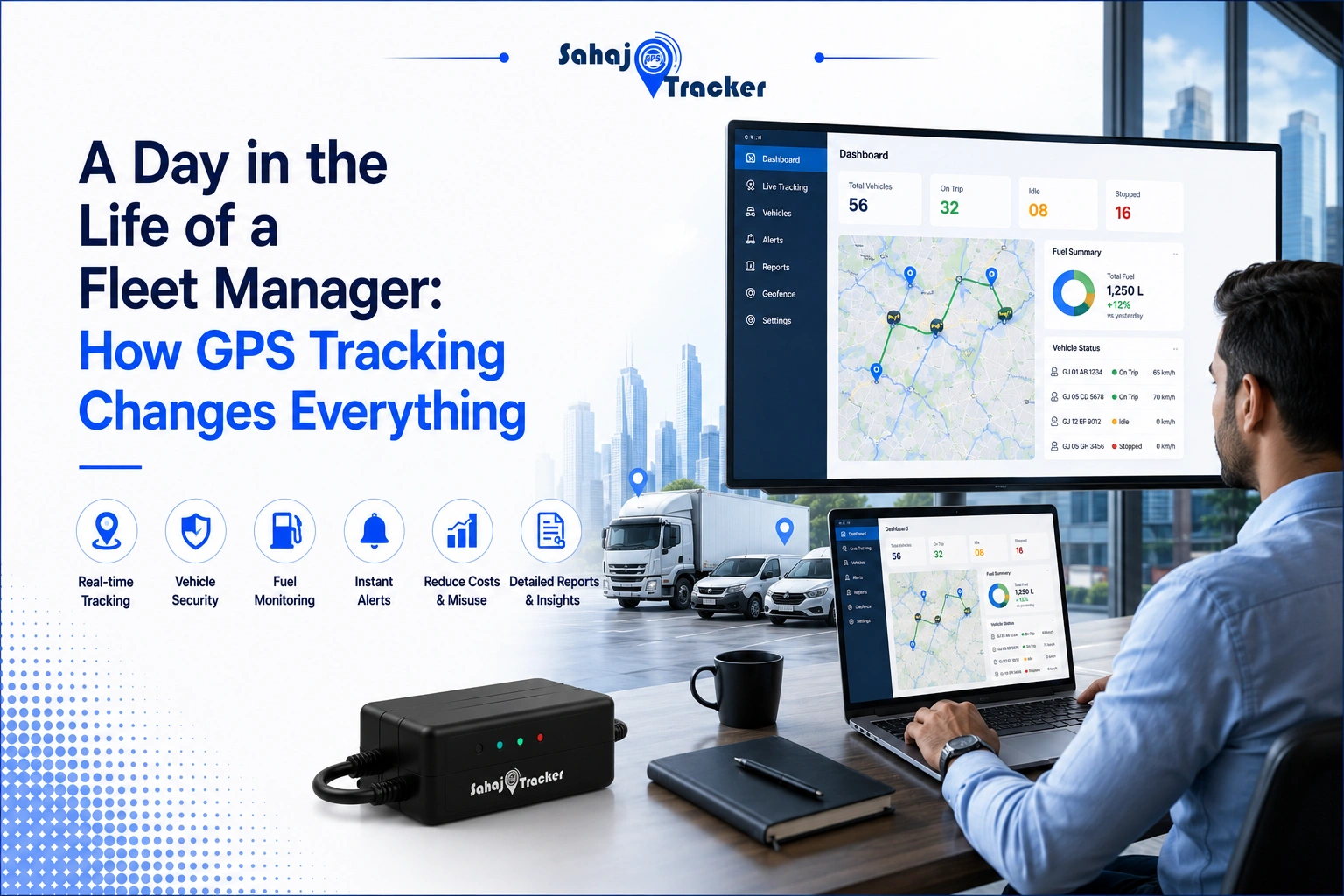
The workday hasn’t officially started yet, but Rakesh is already checking his phone. As the fleet manager for a logistics company in Ahmedabad with around 60 vehicles, that’s become part of his morning routine. Before the first cup of tea, he opens the fleet management dashboard to see where every vehicle stands. No long phone calls. No waiting for drivers to report in. Just a quick glance, and he knows what’s happening across the fleet.
He smiled while telling me that mornings weren’t always this calm. There was a time when the first hour of every day disappeared into tracking late vehicles, answering driver calls, or figuring out why a truck hadn’t reached its destination. Now, the information is available instantly. A reliable fleet management system hasn’t made the job effortless, but it has made it far more organised. Instead of starting the day by solving avoidable problems, Rakesh can focus on keeping operations moving smoothly.
The Morning Chaos That Used to Define This Job
Before GPS tracking became standard, mornings for fleet managers looked genuinely stressful. Rakesh described it – fifteen, twenty phone calls before 9am just confirming which trucks left on time, which drivers showed up, whether yesterday’s delivery actually got completed or got “postponed” without anyone telling him.
Checking In Without Actually Checking In
Now it’s different. He opens the dashboard, sees every vehicle’s live position, checks who’s moving, who’s idle, who hasn’t started their route yet. No calls needed, mostly. Occasionally he’ll still ring a driver just to, I don’t know, keep that human connection alive. But it’s a choice now, not a necessity.
Mid-Morning: Where Geofencing GPS Tracker Alerts Actually Earn Their Keep
Around 10am, Rakesh’s phone buzzed with an alert – one of his delivery vans had drifted outside its assigned route zone. This is where a geofencing GPS tracker genuinely proves itself. Not some paranoid surveillance thing, just… practical. Turned out the driver took a detour around road construction, totally legitimate reason, but Rakesh knew within seconds instead of finding out three hours later when a client complained about a late delivery.
Small Alerts, Big Time Savings
He mentioned something that stuck with me – “earlier I’d find out about problems after they’d already become problems. Now I catch them while they’re still small.” That’s really the whole value proposition of geofencing, when you strip away the technical jargon.
Midday: Fuel, Costs, and the Numbers Nobody Likes Looking At
By noon, Rakesh pulls up fuel consumption data across the fleet. This part used to be a monthly nightmare – reconciling fuel receipts, questioning drivers about mileage discrepancies, generally just guessing whether numbers added up correctly.
Fleet Expense Management Software Changed His Whole Approach to Budgets
With proper fleet expense management software integrated into the tracking platform, fuel costs, maintenance schedules, and toll expenses all sit in one place now. He showed me a report – genuinely detailed, route-wise fuel burn compared against distance covered. Two vehicles were burning noticeably more fuel than expected. Turned out it was tire pressure, something nobody would’ve caught without the data flagging the anomaly first.
Early Afternoon: The Construction Site Detour
Here’s something I didn’t expect to come up, but it did – Rakesh mentioned occasionally hauling materials to construction sites, and how the same tracking principles apply there too. Companies that use GPS to improve construction site safety for workers are essentially applying identical logic – knowing exactly where heavy vehicles and personnel are at any moment, reducing the chance of accidents near active work zones. Different industry, same underlying idea, really.
Why This Overlap Matters More Than People Realize
It’s a small tangent, sure, but it highlights something important – fleet visibility isn’t just a logistics convenience, it’s genuinely a safety tool wherever heavy vehicles and people share space.
Late Afternoon: Driver Behavior Reports Roll In
Around 3pm, harsh braking and speeding alerts from the morning’s routes get reviewed. Rakesh doesn’t do this to punish anyone, he was clear about that – it’s more about catching patterns early. One driver had three harsh-braking incidents in a week, and instead of writing him up, Rakesh actually sat down with him, found out the guy was struggling with a particular stretch of road that had a nasty blind curve. Small conversation, real fix, no drama.
Accountability Without Micromanaging
That balance is tricky honestly, and I think a lot of fleet managers get it wrong – either ignoring the data completely or leaning on it too hard and making drivers feel constantly watched. Rakesh seemed to have found some middle ground that actually worked for his team.
Evening: Planning Tomorrow Before Today Even Ends
By 5:30 or so, Rakesh reviews tomorrow’s scheduled routes, checks vehicle maintenance flags, and confirms which trucks need servicing before their next long haul. This proactive planning – genuinely made possible only because the fleet tracking system gives him usage data instead of vague estimates – means breakdowns happen far less often than they used to.
Fewer Breakdowns, Fewer 2am Phone Calls
He laughed telling me this part – said the number of 2am emergency calls has dropped dramatically since they started scheduling maintenance based on actual engine hours instead of just calendar dates. Sleep quality’s apparently improved too, which, fair enough, that’s a real quality-of-life win nobody talks about in these system demos.
Why Sahaj GPS Specifically Came Up in Our Conversation
When I asked Rakesh what platform they were running, he mentioned Sahaj GPS by name, unprompted actually, which I found kind of telling. Said the combination of geofencing, fuel monitoring, and expense tracking all sitting in one dashboard made his job considerably less scattered than the previous system he’d used, which apparently needed three different logins just to see half this information.
Sahaj GPS, from what he described, focuses heavily on giving fleet managers a single unified view rather than forcing them to piece together data from multiple disconnected tools – which, if you’ve ever managed a fleet without that unified view, you know exactly how much mental energy that fragmentation wastes daily.
What Changes When You Actually Trust Your Data
By the end of the day, Rakesh’s role looked less like firefighting and more like actual management – planning, coaching, optimizing. That shift is really what separates fleets running on guesswork from ones running on a proper fleet management system. Sahaj GPS and similar platforms don’t eliminate the job’s challenges entirely, obviously, but they change what kind of challenges you’re dealing with. Less “where is my truck,” more “how do I make this route 10% more efficient.”
Why Fleet Size Doesn’t Matter as Much as You Think
A common misconception is that fleet management systems are only useful for companies with hundreds of vehicles. In reality, smaller fleets often see faster results because every vehicle plays an important role in daily operations. When you’re managing just 10 or 20 vehicles, even a single delay, unnecessary trip, or fuel issue can affect customer service and overall profitability. A fleet management system helps smaller businesses stay organised, reduce avoidable expenses, and make smarter operational decisions without increasing manpower.
How Real-Time Visibility Changes Everyday Fleet Operations
Real-time visibility gives fleet managers complete confidence throughout the day. Instead of making repeated phone calls to drivers or guessing vehicle locations, they can instantly view live movement, trip progress, and route status from a single dashboard. This helps dispatch work faster, respond quickly to unexpected situations, improve communication with customers, and keep daily operations running smoothly with fewer interruptions.
FAQs
Q1. How does GPS tracking reduce a fleet manager’s daily workload?
It eliminates constant manual check-ins by providing live vehicle locations, fuel data, and driver behavior insights instantly through a single dashboard view.
Q2. What is geofencing and why does it matter for fleet managers?
Geofencing creates virtual boundaries around routes or zones, sending instant alerts when vehicles deviate, helping managers catch issues before they escalate.
Q3. Can fleet expense management software really reduce fuel costs?
Yes, it identifies inefficient routes, unusual fuel consumption, and maintenance issues early, often revealing savings opportunities that manual tracking misses entirely.
Q4. Is GPS fleet tracking useful for small fleets, not just large ones?
Absolutely, smaller fleets often benefit proportionally more, since inefficiencies have less room to hide when resources and vehicle numbers are limited.
Q5. Does GPS tracking help improve driver safety and behavior?
Yes, it flags harsh braking, speeding, and route deviations, allowing managers to coach drivers early rather than reacting only after incidents occur.