
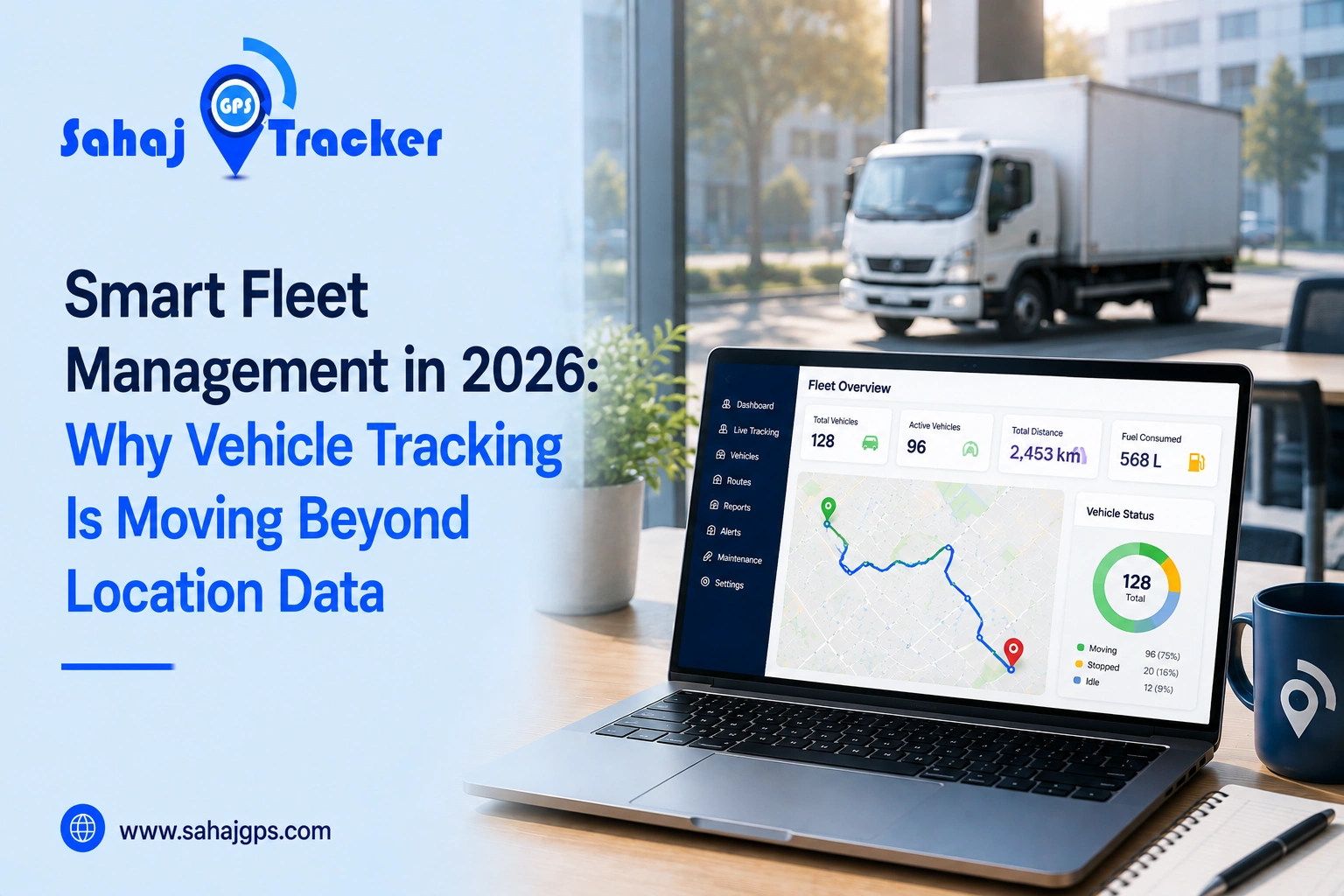
A vehicle tracking system used to answer one simple question: “Where is the vehicle?” That still matters, of course, but fleet operations have changed quite a bit. In 2026, smart fleet management is becoming less about watching vehicles move on a map and more about understanding what those vehicles are doing, how efficiently they are being used and where problems may be developing. With GPS data, route information, driver behaviour and operational reports working together, fleet managers can make decisions based on what is actually happening on the road.
What Is Smart Fleet Management?
Smart fleet management means using connected technology and real-time information to manage vehicles more efficiently. Instead of depending mainly on phone calls, spreadsheets and manual reports, businesses can use a fleet management system to monitor vehicles, review routes, understand driving patterns and track operational performance from a central platform.
The interesting part is that modern fleet systems don’t stop at location. A manager may want to know why a vehicle is stationary, how much distance it has covered, whether the driver followed the expected route or whether the vehicle has been used more heavily than normal. Location is still the foundation, but it isn’t the whole picture anymore.
Sahaj GPS provides GPS-based vehicle tracking capabilities that can help businesses monitor fleet movement, routes and vehicle activity while improving visibility across mobile operations.
Why GPS Vehicle Tracking Is Evolving
Traditional GPS vehicle tracking gave businesses something they didn’t have before: visibility. Managers could see where vehicles were and review where they had travelled. For many businesses, that alone was a major improvement.
But fleet operators started asking bigger questions. Why has fuel consumption increased this month? Which vehicles are being used the most? Where are unnecessary delays happening? Which drivers regularly brake harshly or accelerate suddenly? When should a vehicle be serviced?
Those questions require more than a location pin.
This is why GPS fleet management is moving toward a broader data-driven approach. GPS information can work alongside vehicle data, route history, alerts and analytics to create a clearer picture of overall fleet performance.
Real-Time Vehicle Tracking Is Just the Beginning
Real-time vehicle tracking remains one of the most useful features for fleet operators. A manager can check where vehicles are, identify delays and understand whether vehicles are moving or stationary. But imagine managing 100 vehicles. Watching 100 dots on a screen all day isn’t really management. It would be exhausting.
The real value comes when the system helps highlight something that needs attention. A vehicle may remain idle for an unusually long period, deviate from its normal route or show a repeated pattern of unnecessary movement. Instead of manually checking every vehicle, managers can focus on exceptions and investigate what is happening.
Sahaj GPS can help businesses use GPS-based vehicle visibility to monitor fleet movement, routes and operational activity from a central platform.
How Fleet Management Systems Use More Than Location Data
A modern fleet management system can bring several types of information together. Location data shows where a vehicle is, while trip history shows where it has been. Driver behaviour information can provide insight into driving patterns, and vehicle-related information may support maintenance planning. This can make fleet management less reactive.
Suppose a delivery vehicle repeatedly takes longer than expected to complete the same route. Historical information may show that the issue isn’t necessarily the driver. Perhaps the route has regular congestion, the delivery sequence is inefficient or the vehicle spends too much time waiting at certain customer locations.
Once the pattern is visible, the business can investigate the actual cause instead of guessing.
Predictive Maintenance and Vehicle Health
One of the more useful developments in fleet technology is the move toward predictive maintenance. Instead of waiting for a vehicle to break down, businesses can use available vehicle and usage information to identify possible maintenance concerns earlier.
For a fleet operator, an unexpected breakdown means more than a repair bill. A vehicle sitting beside the road can result in missed deliveries, unhappy customers and lost working hours for the driver.
Smart fleet management can help managers understand vehicle usage and maintenance patterns so servicing can be planned more carefully. It won’t eliminate every breakdown, but having better information can reduce some unpleasant surprises.
Driver Behaviour Monitoring
A vehicle can have a perfectly planned route and still be operated inefficiently. Harsh braking, sudden acceleration, speeding and excessive idling can increase fuel consumption and contribute to vehicle wear.
Modern GPS fleet management tools can help businesses identify these driving patterns. Managers can then use the information for driver coaching and safety initiatives rather than relying only on assumptions.
That’s an important difference. Tracking data should ideally help improve driving habits, not simply become a tool for blaming drivers whenever something goes wrong.
Sahaj GPS can provide location and movement information that businesses can use alongside their broader fleet monitoring and driver management processes.
Smarter Fuel Management
Fuel remains a major operating expense for many fleet-based businesses. GPS data can help managers understand distance travelled, routes, idle periods and vehicle usage.
For example, if one vehicle regularly travels much farther than similar vehicles doing comparable work, that difference deserves a closer look. Maybe the route is inefficient. Perhaps the vehicle is being used outside its assigned territory. Or there could simply be unnecessary trips between deliveries. Once the pattern becomes visible, the business can investigate and decide what needs to change.
A few kilometres saved on one trip may not seem like much. Across hundreds of trips every month, though, it can become a meaningful number.
AI and Data Analytics in Fleet Operations
AI is also changing the way businesses look at fleet information. Instead of simply collecting thousands of location records, intelligent systems can analyse patterns and help identify unusual behaviour or operational trends.
For example, analytics may highlight vehicles with unusual fuel consumption, repeated route deviations or frequent long idle periods. Managers can then investigate those specific cases instead of manually reviewing every trip.
This matters because fleet data can become overwhelming. More vehicles mean more information, and more information isn’t automatically better unless managers can actually understand and use it.
Smart Fleet Management in India
Fleet operations in India come with their own practical challenges. Traffic can change quickly in cities such as Delhi, Mumbai, Bengaluru, Hyderabad, Pune and Chennai. Delivery vehicles may also deal with narrow roads, crowded markets, changing customer schedules and long-distance routes outside major cities.
This makes smart fleet management in India particularly useful for businesses trying to control operating costs while maintaining reliable service. A vehicle tracking system can provide the location visibility needed for daily operations, while historical information can help managers understand longer-term patterns.
For larger fleets, combining GPS tracking, route monitoring, driver behaviour and fleet analytics can provide a much clearer operational picture.
What Businesses Should Look for in a Vehicle Tracking System
A modern vehicle tracking system should do more than display a vehicle on a map. Businesses should look for reliable real-time location updates, route history, geofencing, useful alerts and clear reporting. Depending on the type of fleet, driver behaviour monitoring and vehicle-related information may also be valuable.
Ease of use matters too. A platform packed with features isn’t particularly helpful if managers struggle to find the information they actually need. The best system is usually the one that gives useful information without making everyday fleet management unnecessarily complicated.
Sahaj GPS can be considered by businesses looking for GPS-based fleet monitoring with vehicle visibility, route tracking and operational management capabilities.
How Historical Data Improves Fleet Decisions
Live tracking tells managers what is happening now, but historical data can tell a different story. Looking at vehicle routes over several weeks or months can reveal patterns that are difficult to notice during a single working day.
For example, a company might discover that certain vehicles regularly cover longer distances than others. Another vehicle may spend an unusual amount of time at particular locations. Some routes may consistently take longer than planned.
These patterns can help businesses review vehicle allocation, route planning and daily schedules. This is where GPS tracking becomes more than a monitoring tool. It becomes a source of operational information that can support better decisions.
Connected Fleet Management Is Becoming More Important
Modern fleets are becoming increasingly connected. Vehicles, GPS devices, mobile applications and fleet management platforms can exchange information throughout the working day.
That connectivity can help businesses move away from isolated data. Instead of keeping fuel records in one place, driver information somewhere else and vehicle locations on another platform, businesses can work toward a more connected view of operations.
It doesn’t mean every business needs every possible feature. A small delivery company may have very different requirements from a large logistics operator. The important thing is choosing technology that solves real operational problems.
The Future of Vehicle Tracking
The future of vehicle tracking is unlikely to be about simply knowing where a vehicle is. Location will remain important, but businesses increasingly want to know what the location data means.
Is the vehicle taking an inefficient route? Is the driver spending too much time idling? Is a particular vehicle being used more than others? Could a maintenance issue be developing? Can the next delivery be assigned more efficiently? Those are the questions that turn raw GPS information into something genuinely useful.
Sahaj GPS can support businesses looking to use vehicle location and movement information as part of a wider approach to connected fleet management and operational visibility.
Conclusion
Vehicle tracking is moving beyond simple location monitoring because fleet managers need more than a map. In 2026, smart fleet management is increasingly about combining GPS vehicle tracking with route information, driver behaviour, vehicle data and operational analytics to understand what is really happening across the fleet.
For smaller fleets, basic tracking may still be enough. But as fleets grow and operating costs become harder to control, a connected fleet management system can provide the visibility needed to identify inefficiencies and make better decisions. The map is still useful. It’s just no longer the whole picture.

FAQs
1. What is smart fleet management?
Smart fleet management uses GPS, connected vehicle data and analytics to improve fleet operations. It goes beyond location tracking by helping businesses understand routes, driving behaviour, vehicle usage and other operational patterns.
2. How is GPS fleet management different from basic GPS tracking?
Basic GPS tracking mainly shows vehicle location and routes. GPS fleet management can combine that information with driver behaviour, trip reports, alerts and analytics to provide broader visibility into fleet operations.
3. Why is real-time vehicle tracking important?
Real-time vehicle tracking helps managers see current vehicle locations, identify delays and respond to unexpected situations. It can also reduce the need for frequent calls to drivers for routine location updates.
4. Can a vehicle tracking system help reduce fleet costs?
Yes. Tracking information can reveal unnecessary kilometres, excessive idling, inefficient routes and unusual vehicle usage. Managers can use these insights to review operations and identify practical opportunities to reduce costs.
5. Is smart fleet management useful for businesses in India?
Yes. Indian fleets often deal with changing traffic, long travel distances and varied road conditions. Smart fleet management can provide useful location, route and operational information to help businesses manage vehicles more efficiently.