
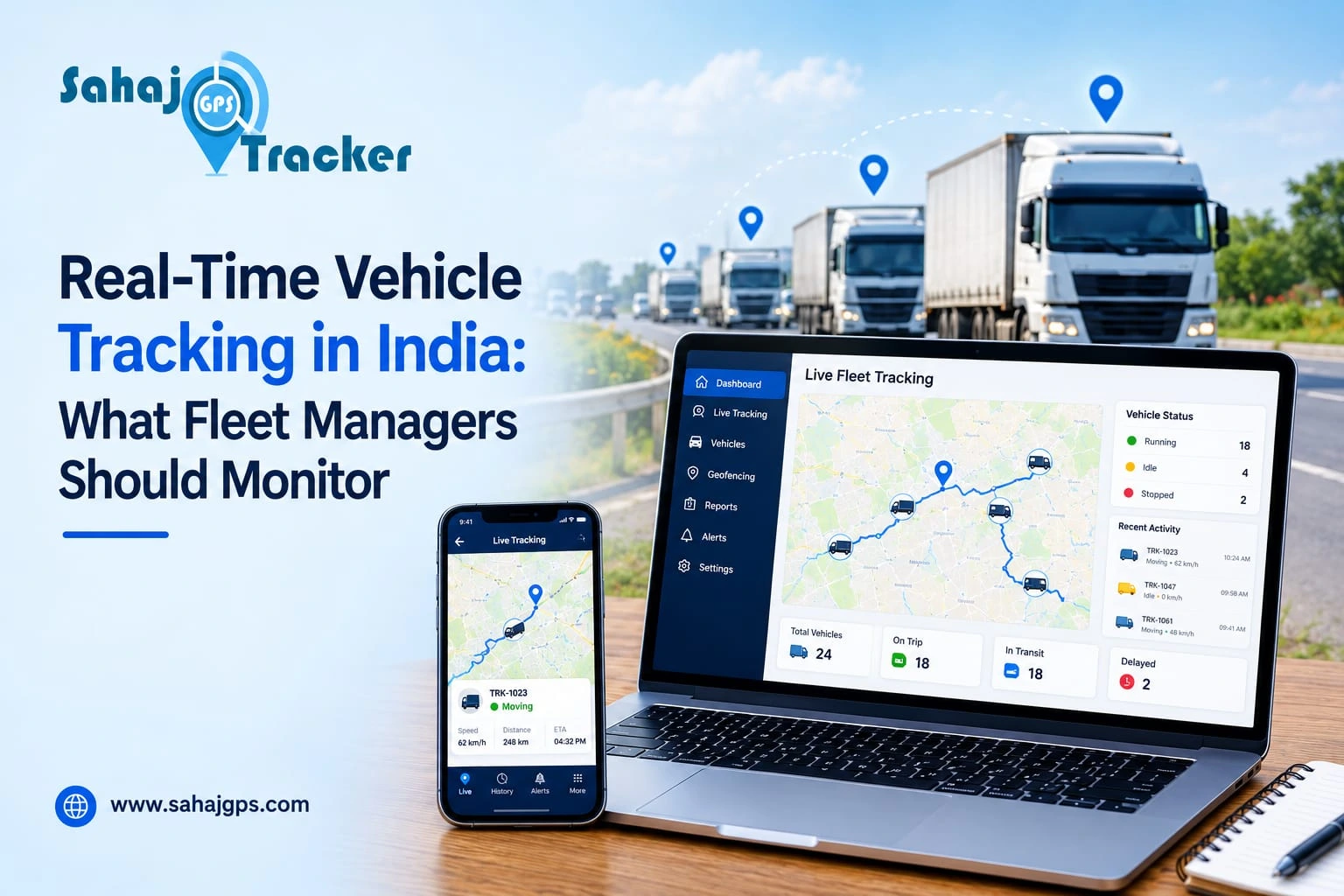
Managing vehicles across Indian roads is not always as simple as looking at a map. Traffic changes, drivers take different routes, fuel costs keep moving, and sometimes a vehicle just seems to disappear from the expected schedule. This is where real-time vehicle tracking in India becomes genuinely useful. A good vehicle tracking system gives fleet managers a clearer view of where vehicles are, how they are being driven, and what is happening during each trip.
Why Real-Time Vehicle Tracking Matters for Indian Fleets
A fleet may look perfectly organised from the office. Then the phone starts ringing. One driver is stuck in traffic, another has taken a different route, and a delivery is running late. Anyone who has managed vehicles knows how quickly a normal day can turn messy.
With real-time vehicle tracking in India, managers can check vehicle locations without depending entirely on phone calls or manual updates. This is especially useful for logistics companies, transport operators, service businesses, school transport, construction fleets and delivery companies working across cities and highways.
Sahaj GPS provides GPS-based tracking solutions that help businesses get better visibility into their vehicles and day-to-day fleet operations. The idea is fairly simple: know what is happening on the road while it is happening, not hours later when someone sends a report.
What Should Fleet Managers Monitor?
Not every piece of tracking data is equally useful. A manager doesn’t need to stare at a moving dot all day. What matters is knowing which information can actually help with decisions.
Vehicle Location and Route History
The first thing most businesses look for in a live vehicle tracking system is location. Where is the vehicle right now? Has it reached the expected area? Is it moving along the planned route?
Route history adds another layer. It can show where a vehicle travelled during a particular period, which can be useful when checking delivery delays, customer visits or unexpected route changes.
For a fleet operating between Delhi and Jaipur, for example, knowing the current location is useful, but seeing the complete route can be even more helpful when reviewing why a particular trip took longer than expected.
Speed and Driver Behaviour
A vehicle can be in exactly the right location and still be creating a problem if it is being driven badly. Speed monitoring helps fleet managers identify overspeeding and other risky driving patterns. Depending on the tracking solution, managers may also be able to review harsh acceleration, sudden braking, excessive idling or unusual driving behaviour.
This isn’t really about watching drivers every minute. It is about spotting repeated patterns. If one vehicle keeps generating speeding alerts while others don’t, that’s worth discussing with the driver.
Fleet Vehicle Tracking for Better Daily Control
Fleet vehicle tracking becomes particularly valuable when a company has dozens or hundreds of vehicles spread across different locations. Keeping track of every vehicle manually becomes difficult very quickly.
A central tracking platform can give managers a broader picture of vehicle movement. They can identify which vehicles are moving, which have stopped and which may have deviated from their expected route.
Sahaj GPS solutions can help businesses monitor vehicle activity through GPS-based tracking and make day-to-day fleet coordination easier. Instead of collecting information from separate drivers, managers can work from a central source of tracking data. That saves time. And sometimes, saving ten small chunks of time during the day adds up to a lot.
Fuel Monitoring Shouldn’t Be Ignored
Fuel is one of the biggest recurring expenses for many commercial fleets. Yet fuel management is often handled through fuel receipts and manual records, which don’t always explain what actually happened.
A vehicle fuel tracking system can help managers connect fuel usage with vehicle activity. If consumption suddenly looks higher than usual, the next question is why. Was there excessive idling? Did the vehicle take a longer route? Was fuel added? Or is there a possible fuel loss that needs investigation?
Looking at fuel and GPS information together makes the data much more useful. A fuel drop without any context may mean very little. A fuel drop combined with location and trip information tells a much clearer story.
Real Time Temperature Monitoring for Vehicles
Some fleets carry products that cannot simply sit in any temperature. Pharmaceuticals, vaccines, dairy products, frozen foods and certain chemicals may require controlled conditions throughout transportation.
This is where real time temperature monitoring for vehicles becomes important. Instead of checking temperature only when the vehicle reaches its destination, fleet managers can receive ongoing information during transit.
If the temperature moves outside an acceptable range, an alert can allow the responsible team to investigate quickly. Maybe a refrigeration unit needs attention. Maybe a door has been opened for longer than expected. Whatever the reason, knowing early is much better than discovering spoiled goods at delivery.
Geofencing for Vehicles and Fleet Operations
Geofencing is another feature worth paying attention to. A virtual boundary can be created around a depot, warehouse, customer location, school, construction site or other important area.
When a vehicle enters or leaves that area, the system can generate an event or alert depending on its configuration. For businesses with regular pickup and delivery points, this can make routine monitoring less dependent on manual calls.
For example, a logistics manager may want to know when a truck reaches a warehouse. Rather than asking the driver, the tracking platform can provide that information automatically.
Alerts That Actually Matter
A tracking system can generate plenty of alerts. The trick is not to turn on every possible notification and then ignore all of them.
Managers should focus on events that require action. Overspeeding, route deviation, unexpected stops, geofence entry or exit, ignition activity, fuel abnormalities and temperature changes may all be useful depending on the type of fleet.
A well-configured live vehicle tracking system should make important events easier to notice rather than burying managers under endless notifications.
Using Tracking Data to Improve Fleet Efficiency
Tracking information becomes more valuable when businesses actually use it to improve their processes.
Suppose several vehicles repeatedly spend 20 or 30 minutes idling at the same location. That may indicate a loading delay. If many drivers regularly take the same longer route, perhaps the route plan needs another look. If one vehicle consumes noticeably more fuel than similar vehicles, maintenance may need to be checked.
Sahaj GPS can support this kind of data-driven fleet management by bringing vehicle tracking information into one monitoring environment. The technology doesn’t make the decision for the manager. It simply makes the clues easier to find.
Real-Time Vehicle Tracking Across Indian Cities
Fleet operations in India can vary dramatically from one city to another. A route that looks easy on a map may become slow during peak traffic in Mumbai, Bengaluru or Delhi. Long-distance operations face another set of challenges, including highway delays, weather conditions and unexpected stops.
This is why real-time vehicle tracking in India is useful beyond simple location monitoring. Businesses can use tracking information to understand how vehicles actually perform across different routes and operating conditions.
For companies managing vehicles across Ahmedabad, Pune, Hyderabad, Chennai, Jaipur and other cities, having one central view can make coordination much less stressful.
What Makes a Vehicle Tracking System Useful?
A useful vehicle tracking system should be easy for managers to understand and practical for everyday fleet operations. Location is important, but businesses may also need route history, alerts, geofencing, driver behaviour information, fuel monitoring and temperature monitoring depending on their industry.
Sahaj GPS offers GPS tracking solutions that can help businesses build better visibility across their fleet. The right features will depend on what the vehicles carry, where they travel and what problems the business is trying to solve.
At the end of the day, tracking shouldn’t just answer “Where is my vehicle?” It should help answer the more useful questions: Why is it delayed? Is the route efficient? Is fuel being used normally? Is the driver safe? And, importantly, is something happening that needs attention right now?
Conclusion
A reliable vehicle tracking system can make everyday fleet management much easier by giving managers a clearer view of vehicle locations, routes, driver behaviour, fuel usage and unexpected stops. Instead of depending only on calls or manual updates, businesses can use real-time information to spot problems earlier and keep operations moving smoothly.
For fleets working across busy Indian cities and long highway routes, that extra visibility can save time, improve safety and make daily decisions a little less complicated.

FAQs
1. What is real-time vehicle tracking in India?
Real-time vehicle tracking in India uses GPS technology to show vehicle locations and movement while trips are in progress. It helps fleet managers monitor routes, delays, stops and vehicle activity remotely.
2. What should fleet managers monitor with GPS tracking?
Managers should monitor location, routes, speed, stops, driver behaviour and alerts. Depending on the fleet, fuel usage, geofencing and temperature can also provide valuable operational information.
3. How does fleet vehicle tracking improve efficiency?
Fleet vehicle tracking helps managers understand actual routes, delays, idle time and vehicle utilisation. This information can support better scheduling, route planning and daily fleet coordination.
4. Can GPS tracking monitor vehicle fuel usage?
Yes, when combined with suitable fuel sensors, a vehicle fuel tracking system can provide information about fuel levels and consumption. This can help identify unusual usage, wastage or possible fuel loss.
5. Why is temperature monitoring useful for transport fleets?
Real time temperature monitoring for vehicles is useful when transporting temperature-sensitive goods. It helps teams identify temperature changes during transit and respond before products are potentially damaged.