
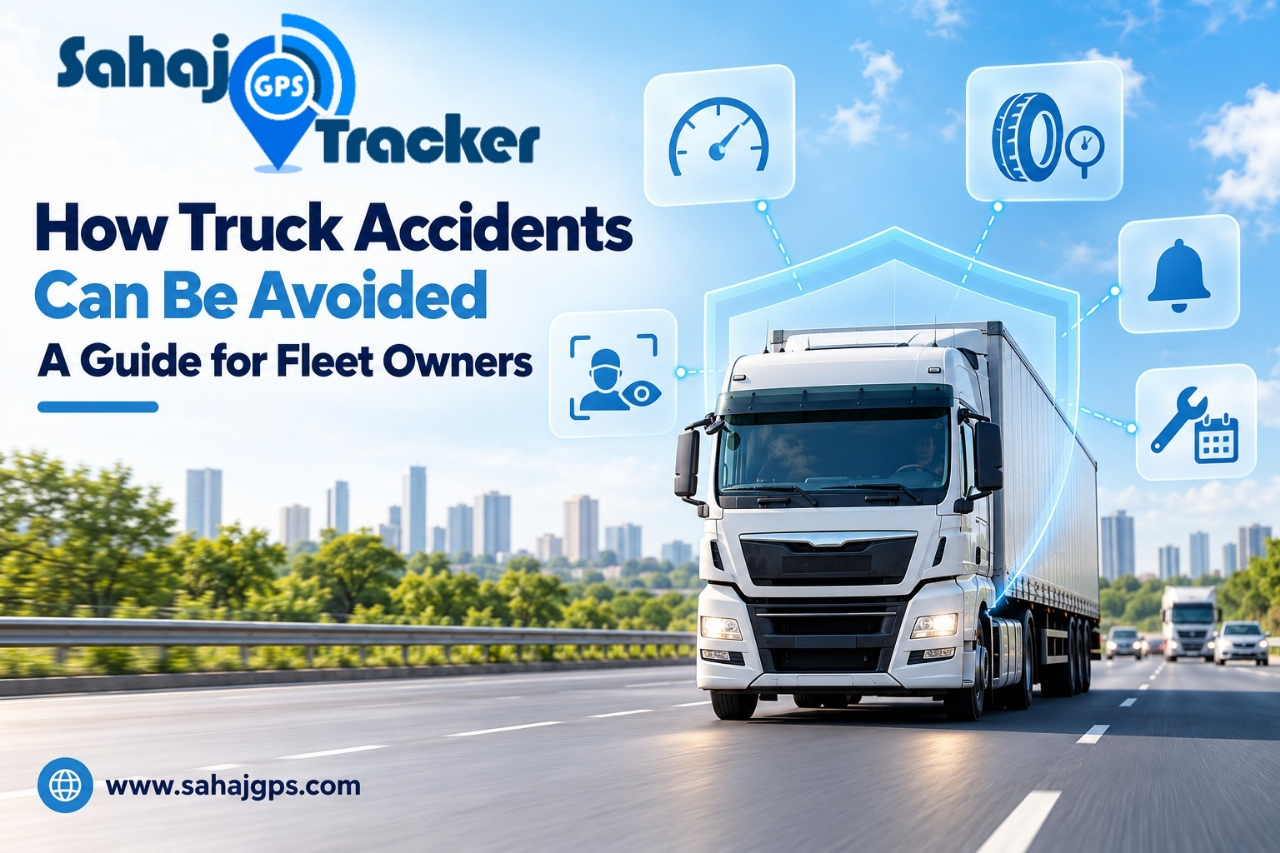
Most truck accidents don’t come out of nowhere. They build up from small things: a tired driver, a worn tyre, a rushed schedule. Fixing those starts with seeing them, and a vehicle tracking system gives you that view across every truck on the road.
Picture a driver on his second long run of the week. The delivery is late, the customer is calling and the road ahead is clear. He presses the accelerator a little harder. A little longer behind the wheel. A little less attention to the tyre that’s been “feeling off” since morning.
None of these is dramatic on its own. Together, they’re how many accidents begin.
The good news is that most of them are preventable. Here’s how.
Why Truck Accidents Happen
Every accident has its own story, but the causes repeat. The usual ones are:
- Overspeeding, especially on highways and downhill stretches
- Driver fatigue from long hours and little rest
- Harsh braking and tailgating, leaving no room to react
- Distraction, such as phone use or constant calls from dispatch
- Tyre and brake failure from poor maintenance
- Overloaded or badly secured cargo
- Night driving and bad weather, with poor visibility and slick roads
- Pressure to deliver faster, which quietly pushes all of the above
Notice how many of these come from schedules and habits, not bad luck. That’s why they can be fixed.
8 Practical Ways to Avoid Truck Accidents
1. Keep speed under control
Speed is the single factor that makes every other mistake worse. At higher speed, a truck needs more distance to stop and has less room to correct an error.
Set clear speed limits for each vehicle and route, and don’t rely on drivers to self-report. With instant alerts for speeding, harsh braking, idling and zone violations, you know about it when it happens, not a week later.
2. Don’t let fatigue build up
A tired driver reacts slower and misjudges distances. It’s the cause that’s hardest to see from the office.
Plan schedules with real rest in them, and follow the working-hour and rest rules that apply to your drivers. Avoid back-to-back long runs where possible. Technology can help too: video telematics with driver monitoring (DMS) and advanced driver assistance (ADAS) can flag risky behaviour and road conditions. You can read more about video telematics.
3. Leave room, and brake smoothly
Following too close is a habit, and habits can be changed. Harsh braking is often a sign that a driver is reacting late, not deciding early.
Driver behaviour monitoring tracks speed, braking, idling and driving patterns, so you can see who needs coaching and who is already driving well.
4. Inspect the truck before every trip
A five-minute check catches a lot. Walk around the vehicle and look at:
- Tyre condition and pressure
- Brakes and brake fluid
- Lights, indicators and reflectors
- Mirrors, wipers and horn
- Load security and tarpaulin
Make it a habit and a record, not an occasional check.
5. Take tyres seriously
Tyres are one of the most common sources of breakdowns and accidents, and they fail quietly before they fail loudly. Low pressure and high temperature wear them out faster.
TPMS integration monitors tyre pressure and temperature automatically, which helps cut breakdown risk. Sahaj’s TPMS integration covers this on connected vehicles.
6. Service on time, every time
Worn brakes and neglected servicing don’t announce themselves. They just show up on the wrong day.
Automated reminders for servicing, insurance, fitness checks and other maintenance tasks keep vehicles in shape and compliant. That’s what fleet reminders are for: nobody has to remember a date in their head.
7. Don’t overload, and secure the load
An overloaded truck brakes slower, strains tyres and is harder to control on turns. A badly secured load can shift suddenly or fall on the road.
Know each vehicle’s limit, load properly and check the lashing before the truck leaves.
8. Plan routes and timings with safety in mind
The fastest route isn’t always the safest. Think about accident-prone stretches, night driving, monsoon conditions and long hours between rest stops.
Where you can, avoid sending a tired driver on a risky night route just to save a few hours. A late delivery is cheaper than a crash.
What Drivers Can Do
- Stay within speed limits, even when running late
- Take breaks and report tiredness honestly
- Keep a safe distance and brake early
- Avoid phone use while driving
- Report any vehicle problem before leaving, not after
What Fleet Owners Can Do
- Set realistic schedules, so nobody has to speed to meet a deadline
- Support drivers when they report a problem
- Maintain vehicles on a fixed schedule
- Review safety data regularly and act on it
- Recognise good driving, not just fast delivery
Most of the pressure that leads to accidents comes from above, not from the driver’s seat. That’s why the owner’s role matters as much as the driver’s.
Using Data to Prevent Accidents
Data doesn’t drive the truck. But it shows you patterns you’d never spot otherwise: who speeds, where braking is harsh, which trucks idle for hours, and which drivers are on the road too long.
A few ways to use it well:
- Review it weekly, not only after an incident
- Coach first. Most drivers improve when they see their own numbers
- Share the results openly, so people know what’s measured and why
- Look at patterns, not single events. One harsh brake means little. Ten in a week mean something
Used fairly, it protects honest drivers too. A clear record shows who drives safely.
A Simple Weekly Safety Routine
You don’t need a big programme. Try this:
- Check the speeding and harsh-braking alerts for the week
- Talk to the two or three drivers who show up most often, and listen to their side
- Review upcoming service, insurance and fitness dates
- Check tyre and brake condition on any truck that looked unusual
- Plan the coming week’s routes and rest breaks with safety in mind
Fifteen minutes a week can prevent a very expensive day.
How SAHAJ GPS Helps
SAHAJ GPS Vehicle Tracking System supports safer fleet operations through:
- Live GPS tracking and route history
- Instant alerts for speeding, harsh braking, idling and zone violations
- Driver behaviour monitoring of speed, braking, idling and driving patterns
- Video telematics with ADAS and DMS, plus dashcam monitoring for driver accountability and incident recordings
- TPMS integration to monitor tyre pressure and temperature
- Fleet reminders for servicing, insurance and fitness checks
- Geo-fencing, with alerts when vehicles enter or exit set zones
- Route optimisation based on road conditions and traffic
One honest note: technology supports good habits, but it doesn’t replace driver training, proper rest or sensible schedules. It helps you see problems early enough to act on them.
Frequently Asked Questions
What is the main cause of truck accidents?
There isn’t just one. Overspeeding, driver fatigue, harsh braking, poor maintenance, overloading and distraction are among the most common, and they often combine.
How can fleet owners reduce truck accidents?
By setting safe speed limits and schedules, keeping vehicles maintained, monitoring driver behaviour and coaching drivers using real data.
Does GPS tracking prevent truck accidents?
It doesn’t prevent them on its own, but it helps. Alerts for speeding and harsh braking, driver behaviour data and maintenance reminders let you fix risks before they cause an accident.
Can tyre monitoring help avoid accidents?
Yes. Tyre pressure and temperature monitoring helps you spot problems early and reduces the risk of tyre-related breakdowns.
How often should trucks be inspected?
A quick check before every trip, plus regular scheduled servicing based on your maintenance plan.
Final Thoughts
Preventing truck accidents isn’t about one big fix. It’s about many small ones: a slower speed, an honest rest break, a tyre checked in time, a schedule that doesn’t force anyone to hurry.
If you’d like to see how this works for your own fleet, talk to the SAHAJ GPS team for a demo.