
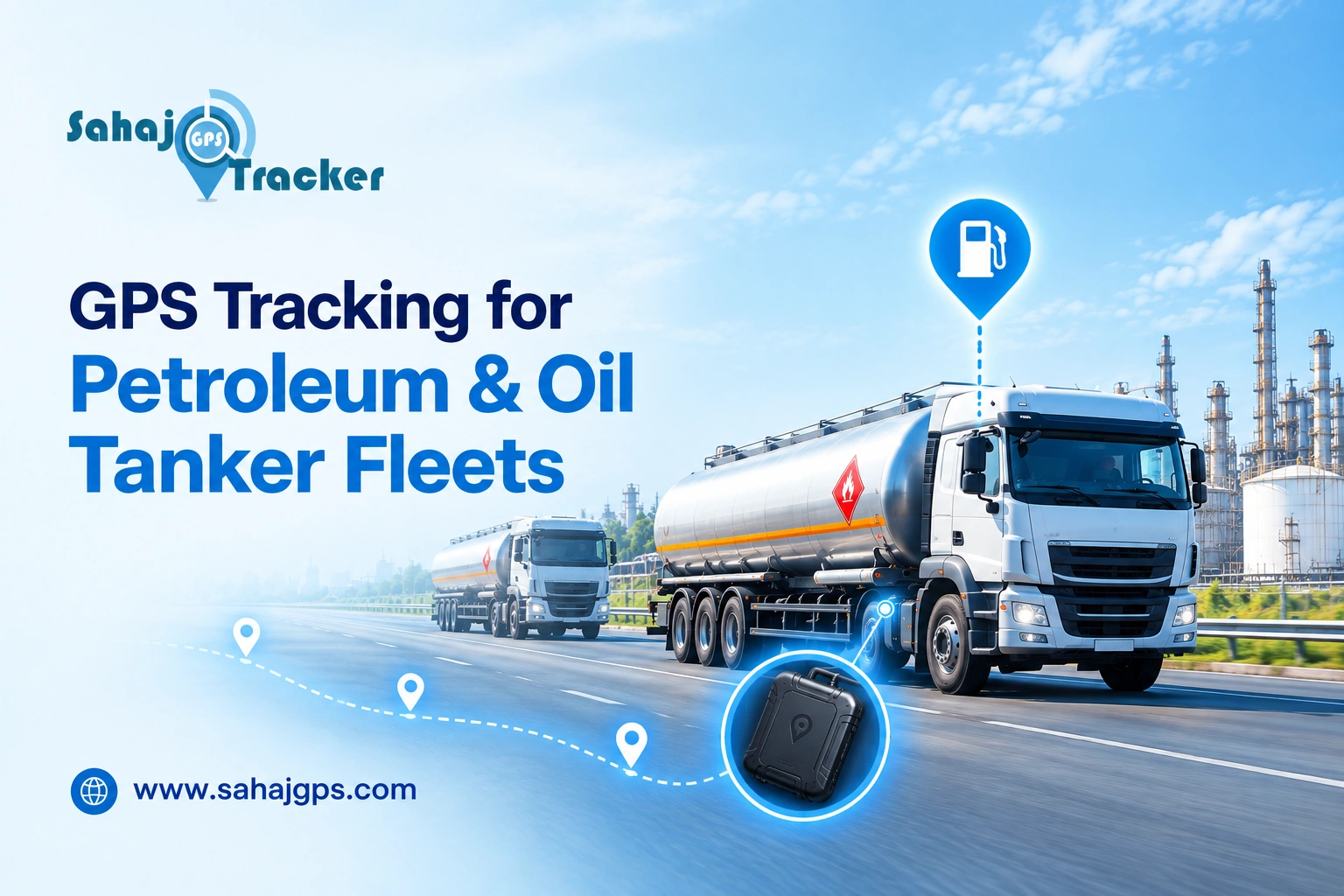
Transporting petroleum and oil requires careful fleet management because tanker vehicles often carry hazardous and high-value cargo over long distances. Fleet operators need better visibility into vehicle location, route movement, fuel usage, driver behaviour, and unexpected stops. Traditional tracking methods may not provide enough information to manage these operations efficiently.
A modern GPS tracking petroleum oil tanker fleet solution helps transport businesses monitor tanker movement in real time and improve operational control. With features such as a real time gps tracker, Geo-Fencing, route optimization, vehicle expense monitoring, and driver behaviour analysis, fleet managers can manage petroleum transportation with greater visibility.
For businesses handling hazardous cargo, GPS-based fleet management can also support better coordination between drivers, fleet managers, and control teams. Sahaj GPS provides tracking solutions that help businesses monitor tanker movement and manage important fleet activities through a centralized system.
Why GPS Tracking Is Important for Petroleum and Oil Tankers
Petroleum tankers operate under strict safety and operational requirements. A vehicle may travel through multiple cities and highways while carrying hazardous cargo. Knowing the exact location of each tanker becomes important for fleet managers.
An effective oil tanker tracking system provides continuous visibility of tanker locations. Managers can check whether a vehicle is following its assigned route, identify unexpected stops, and monitor vehicle movement from a centralized dashboard.
GPS tracking can also help improve response time when there is an unexpected delay or route deviation. Instead of depending entirely on phone calls from drivers, fleet managers can use location data to understand what is happening with the vehicle.
For companies transporting hazardous materials, this additional visibility can make daily fleet coordination more organized.
Real-Time GPS Tracking for Tanker Fleets
A real-time GPS tracker continuously sends vehicle location information to a tracking platform. Fleet managers can view the current position of tankers and monitor their movement during transportation.
Real-time tracking can be useful when a tanker is travelling between distribution points, fuel stations, warehouses, or customer locations. Managers can check the vehicle’s current location and review its movement history when required.
The system can also provide information about vehicle speed, stops, route movement, and other operational activities depending on the tracking setup. This allows fleet teams to identify unusual movement and take timely action.
For petroleum transportation businesses, real-time visibility can support better coordination and help reduce uncertainty during long-distance trips.
Geo-Fencing for Hazardous Cargo Tracking
Geo-Fencing creates a virtual boundary around a selected geographical area. When a tanker enters or exits this predefined area, the system can generate an alert.
This feature can be particularly useful for hazardous cargo tracking because fleet managers may want to monitor specific loading points, unloading locations, depots, restricted areas, or approved routes.
For example, a Geo-Fence can be created around a petroleum storage facility. When a tanker enters the area, the fleet team can receive an alert. Similarly, an alert can be generated when the vehicle leaves the designated location.
Geo-Fencing can also help businesses monitor whether vehicles are moving through approved operational zones. This creates better visibility and makes it easier to identify unexpected movements.
Best Route Planning And Route Optimization Software for Tankers
Route planning plays an important role in petroleum transportation. Tankers often cover long distances, and inefficient routes can increase travel time, fuel consumption, and vehicle operating costs.
Using best route planning and route optimization software can help fleet managers plan routes based on factors such as distance, road conditions, vehicle requirements, traffic conditions, and planned stops.
Route optimization can help identify practical routes for tanker movement while reducing unnecessary kilometres. When routes are planned properly, drivers have clearer instructions, and fleet managers can monitor whether vehicles are following the planned journey.
Historical route information can also help businesses identify frequently delayed routes and improve future trip planning.
Vehicle Expense Tracking for Better Cost Control
Petroleum tanker operations involve several expenses, including fuel, maintenance, tolls, repairs, tyres, and other vehicle-related costs. Without proper monitoring, small expenses can accumulate and affect fleet profitability.
Vehicle Expense Tracking allows fleet managers to record and monitor expenses associated with individual vehicles. This can make it easier to understand how much each tanker costs to operate.
When expense information is reviewed along with mileage and trip data, businesses can identify vehicles with unusually high operating costs. This can support better maintenance planning and help management make more informed fleet decisions.
Fuel-related information can also be reviewed to identify unusual consumption patterns. When combined with GPS movement data, expense tracking can provide a more complete picture of tanker operations.
Driver Behavior Tracking System for Safer Operations
Driver behaviour is another important part of petroleum transportation. Speeding, harsh braking, rapid acceleration, excessive idling, and other driving patterns can affect safety, fuel consumption, and vehicle wear.
A driver behavior tracking system can help fleet managers monitor these driving patterns. Instead of relying only on manual observations, managers can review data from actual vehicle journeys. The information can be used to identify driving habits that may require attention. Fleet managers can then provide appropriate guidance and training to drivers.
For hazardous cargo transportation, responsible driving is particularly important because tanker vehicles require careful handling. Monitoring driving behaviour can therefore become an important part of an overall fleet management strategy.
How GPS Tracking Improves Petroleum Fleet Management
GPS tracking brings different operational functions together in one system. Fleet managers can monitor vehicle locations, review routes, set Geo-Fences, analyse driving patterns, and track vehicle-related information.
The main advantage is better visibility. When managers know where vehicles are and how they are moving, they can coordinate transportation activities more effectively. GPS data can also create a historical record of vehicle journeys. This information can be useful when reviewing delays, route deviations, unnecessary stops, or operational issues.
With Sahaj GPS, petroleum and oil tanker operators can use GPS-based fleet monitoring to improve visibility across their transportation operations. The goal is not simply to know where a vehicle is, but to use vehicle data to support better planning, monitoring, and cost management.
Choosing the Best GPS Tracker for Oil Tankers
Selecting the best GPS tracker depends on the operational requirements of the tanker fleet. Businesses should consider tracking accuracy, real-time visibility, alert capabilities, Geo-Fencing, route monitoring, reporting, and ease of use.
The tracking system should also provide useful information rather than simply displaying a vehicle’s location. Features such as trip history, driver behaviour monitoring, route deviation alerts, and expense-related reports can make the system more valuable for fleet management.
For larger tanker operations, scalability is also important. The system should allow fleet managers to monitor multiple vehicles without making daily operations unnecessarily complicated.
Conclusion
Petroleum and oil tanker transportation requires strong control over vehicle movement, routes, drivers, and operating expenses. A reliable best GPS tracker solution for petroleum oil tanker fleets can provide the visibility required to manage these activities more effectively.
From oil tanker tracking and petroleum transport GPS to Geo-Fencing, route optimization, Vehicle Expense Tracking, and driver monitoring, GPS technology can support several important areas of fleet management.
A well-planned tracking system can help businesses understand vehicle movement, identify operational issues, improve route planning, and maintain better control over fleet costs. Sahaj GPS can help petroleum transportation businesses bring these tracking capabilities together and build a more organized approach to tanker fleet management.
Frequently Asked Questions
1. How does GPS tracking help oil tanker fleets?
GPS tracking helps oil tanker fleets monitor vehicle location, route movement, stops, speed, and trip history. Fleet managers can use this information to improve visibility and coordinate tanker operations more effectively.
2. What is hazardous cargo tracking?
Hazardous cargo tracking refers to monitoring vehicles carrying materials that require careful transportation and handling. GPS-based tracking can provide information about the vehicle’s location, route, and movement during transportation.
3. How does Geo-Fencing help petroleum transportation?
Geo-Fencing creates virtual geographical boundaries around selected locations. Fleet managers can receive alerts when a tanker enters or leaves a defined area, helping them monitor depots, loading points, unloading locations, and other important zones.
4. Can GPS tracking help reduce tanker fleet expenses?
GPS tracking can provide useful information about routes, mileage, vehicle usage, and driving behaviour. When this data is combined with Vehicle Expense Tracking, businesses can better understand operating costs and identify areas where unnecessary expenses may occur.
5. What features should the best GPS tracker for oil tankers have?
A suitable GPS tracker for oil tankers should offer real-time tracking, Geo-Fencing, route monitoring, trip history, driver behaviour tracking, alerts, and useful fleet reports. Businesses should select features according to their tanker fleet size and operational requirements.