
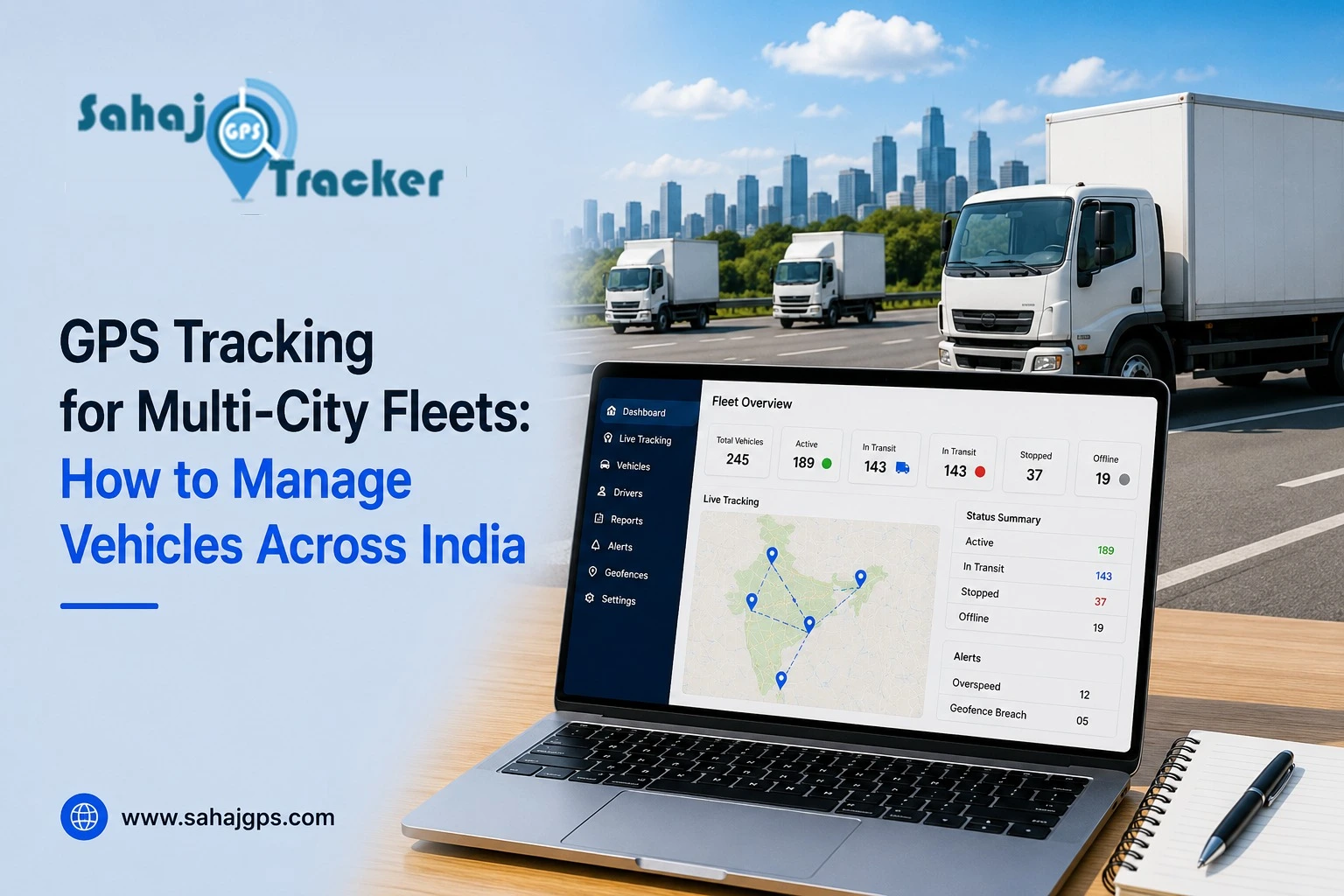
Managing vehicles in one city is fairly straightforward. You know the roads, the drivers, the usual traffic points and even the places where delays happen. But once a business starts operating vehicles across Delhi, Mumbai, Ahmedabad, Bengaluru, Pune, Jaipur or other cities, things get complicated quickly. GPS tracking for multi-city fleets gives fleet owners a way to see where vehicles are, how they are being used and whether daily routes are actually running as planned.
For companies handling dozens or hundreds of vehicles, checking locations through phone calls or spreadsheets simply doesn’t work for long. A vehicle may leave Ahmedabad in the morning and reach another state by evening. Meanwhile, another vehicle could be stuck in traffic in Delhi, while a third has taken an unexpected route near Bengaluru. This is where a proper fleet tracking system in India becomes useful.
Why Multi-City Fleet Management Is Difficult
Running vehicles across multiple cities isn’t just about knowing their location. Every city has different traffic patterns, road conditions, delivery schedules and operating challenges. A route that looks perfect on paper may turn into a two-hour delay during peak traffic.
There is also the driver side of things. Fleet managers need to know whether vehicles are being used for the assigned work, whether drivers are taking unnecessary stops and whether scheduled deliveries or service visits are happening on time.
When all this information comes from separate phone calls, WhatsApp messages and manual updates, small problems start adding up. One missed update might not seem serious. Ten missed updates across five cities? That’s another story. A centralized multi-city fleet management system helps bring these operations into one place instead of making managers chase information from different teams.
How GPS Tracking for Multi-City Fleets Works
A GPS-enabled device installed in each vehicle sends location information to a centralized tracking platform. Fleet managers can then view vehicles through a web dashboard or mobile application.
With real-time vehicle monitoring, it becomes easier to see the current location of vehicles, their movement and route progress. Depending on the tracking solution, managers may also have access to information such as speed, stoppages, ignition status, route history and alerts.
This is particularly useful when vehicles operate across different states. A manager sitting in an office in Ahmedabad can check a vehicle travelling through Rajasthan without needing to call the driver every few hours. Sahaj GPS provides GPS-based tracking solutions that help businesses maintain visibility over vehicles and field operations across different locations.
Centralized Vehicle Tracking System for Multiple Cities
One of the biggest advantages of a centralized vehicle tracking system is that fleet managers don’t have to maintain separate tracking processes for every city. Imagine a logistics company operating 150 vehicles across Ahmedabad, Surat, Mumbai, Pune and Delhi. Without centralized tracking, each regional manager might maintain separate records. Getting a complete picture of the fleet becomes difficult.
With a centralized system, vehicles can be viewed from one dashboard. Managers can identify which vehicles are active, which ones are stationary and which have deviated from their expected routes.
Real-Time Vehicle Monitoring Across India
Real-time vehicle monitoring becomes especially valuable for businesses where timing matters. Delivery companies, employee transport providers, rental fleets and service businesses can use live vehicle information to respond faster when something changes.
For example, if a delivery vehicle is running late because of unexpected traffic, the operations team can see the delay rather than waiting for the driver to call. They can then adjust the next delivery or inform the customer.
It sounds like a small thing. Across hundreds of daily trips, though, these small improvements can make a noticeable difference.
GPS Fleet Management for Better Route Control
Route planning becomes harder when vehicles are spread across multiple cities. A driver may know the local roads better than anyone, but fleet managers still need visibility into whether vehicles are following the assigned routes. GPS fleet management can help businesses review actual travel patterns against planned routes. Managers can identify frequent detours, unnecessary stops and routes that consistently take longer than expected.
Reduce Unnecessary Travel and Fuel Usage
Fuel is one of the biggest running costs for many commercial fleets. Unplanned trips, excessive idling and unnecessary route deviations can quietly increase expenses.
By reviewing vehicle movement and route history, fleet managers can identify where fuel may be getting wasted. A vehicle repeatedly taking a longer route, for instance, may need a route review.
This doesn’t mean every deviation is a problem. Sometimes the driver is avoiding a road closure or heavy traffic. That’s why having actual movement data is useful—it gives managers something concrete to investigate instead of simply assuming the driver was at fault.
Managing Drivers Across Different Cities
Drivers are an important part of any fleet, and managing them remotely can be challenging. A manager may not personally know every driver working in another city.
A GPS tracking solution can provide useful operational information, including driving speed, stops, route adherence and vehicle usage. This can support better driver monitoring without depending entirely on verbal updates.
Sahaj GPS solutions can help businesses improve visibility into vehicle movements and day-to-day fleet operations, making remote management more practical for companies working across multiple locations.
How a Fleet Tracking System in India Helps Operations Teams
A good fleet tracking system in India should do more than show tiny vehicle icons moving around a map. The real value comes from turning location information into something the operations team can actually use.
For instance, managers can review historical routes to understand recurring delays. They can check whether a vehicle reached a particular location and review movement around specific time periods.
Businesses can also use alerts for events such as unexpected movement, route deviation, excessive speed or prolonged stoppage, depending on the capabilities of their tracking platform.
This reduces the need for constant manual checking. And honestly, nobody wants an operations manager spending half the day calling drivers asking, “Where are you now?”
GPS Fleet Tracking for Businesses Operating Across India
Different industries can benefit from GPS tracking for multi-city fleets. Logistics companies can monitor delivery vehicles, distributors can track sales and service teams, and businesses with employee transportation can maintain better visibility over their transport operations.
Construction companies may use tracking to monitor vehicles moving between project locations. Rental and transportation businesses can also use live tracking to understand vehicle utilization.
For a company expanding from one city to several regions, implementing tracking early can make fleet growth easier to manage. Instead of creating a new manual process every time vehicles are added, the same centralized system can be expanded.
Choosing the Right Multi-City Fleet Management Solution
Not every GPS tracking solution is equally suitable for large or geographically distributed fleets. Before choosing one, businesses should look at the number of vehicles supported, dashboard usability, mobile access, alert options, historical tracking and reporting capabilities.
Network reliability is another practical consideration, especially when vehicles travel through different states and less-connected areas.
The system should also be easy enough for regional teams to use. A platform with dozens of complicated features isn’t much help if employees struggle to find basic vehicle information. Sahaj GPS offers vehicle and fleet tracking solutions designed for businesses that need centralized visibility, real-time tracking and better control over vehicles and field operations.
The Bigger Benefit: One View of the Entire Fleet
The biggest advantage of multi-city tracking isn’t simply seeing vehicles on a map. It’s having a common source of information for the entire operation.
A manager can compare vehicle activity across cities, identify delays, check route performance and respond to problems without waiting for multiple phone calls. Regional teams can continue handling their local responsibilities while the central operations team maintains an overall view. As fleets become larger and more distributed, that visibility becomes increasingly important.
Final Thoughts
Managing vehicles across India is a different challenge from managing a small local fleet. More cities mean more routes, more drivers, more traffic and, naturally, more opportunities for things to go wrong.
A reliable vehicle tracking system can take some of that uncertainty away. With live location data, route history, alerts and centralized fleet information, businesses can make decisions based on what is actually happening on the road. And that’s really the point of GPS tracking for multi-city fleets. Not just watching vehicles move, but making the entire operation easier to understand and manage.
FAQs
1. What is GPS tracking for multi-city fleets?
GPS tracking for multi-city fleets allows businesses to monitor vehicles operating across different cities from one centralized platform. Managers can view locations, routes, stops and vehicle activity remotely.
2. How does GPS fleet management help businesses?
GPS fleet management provides better visibility into vehicle movements, routes and driver activity. It can help businesses identify delays, unnecessary travel, route deviations and other operational issues.
3. Can one fleet tracking system monitor vehicles across India?
Yes. A centralized fleet tracking system can monitor vehicles operating across multiple cities and states, provided the tracking devices have suitable network connectivity and platform support.
4. What is real-time vehicle monitoring?
Real-time vehicle monitoring allows fleet managers to view the current location and movement of vehicles through a tracking platform. It helps teams respond faster to delays, route changes and unexpected stops.
5. Which businesses can use multi-city fleet management?
Logistics, transportation, distribution, construction, rental, service and employee-transport businesses can use multi-city fleet management to improve vehicle visibility and coordinate operations across different locations.