
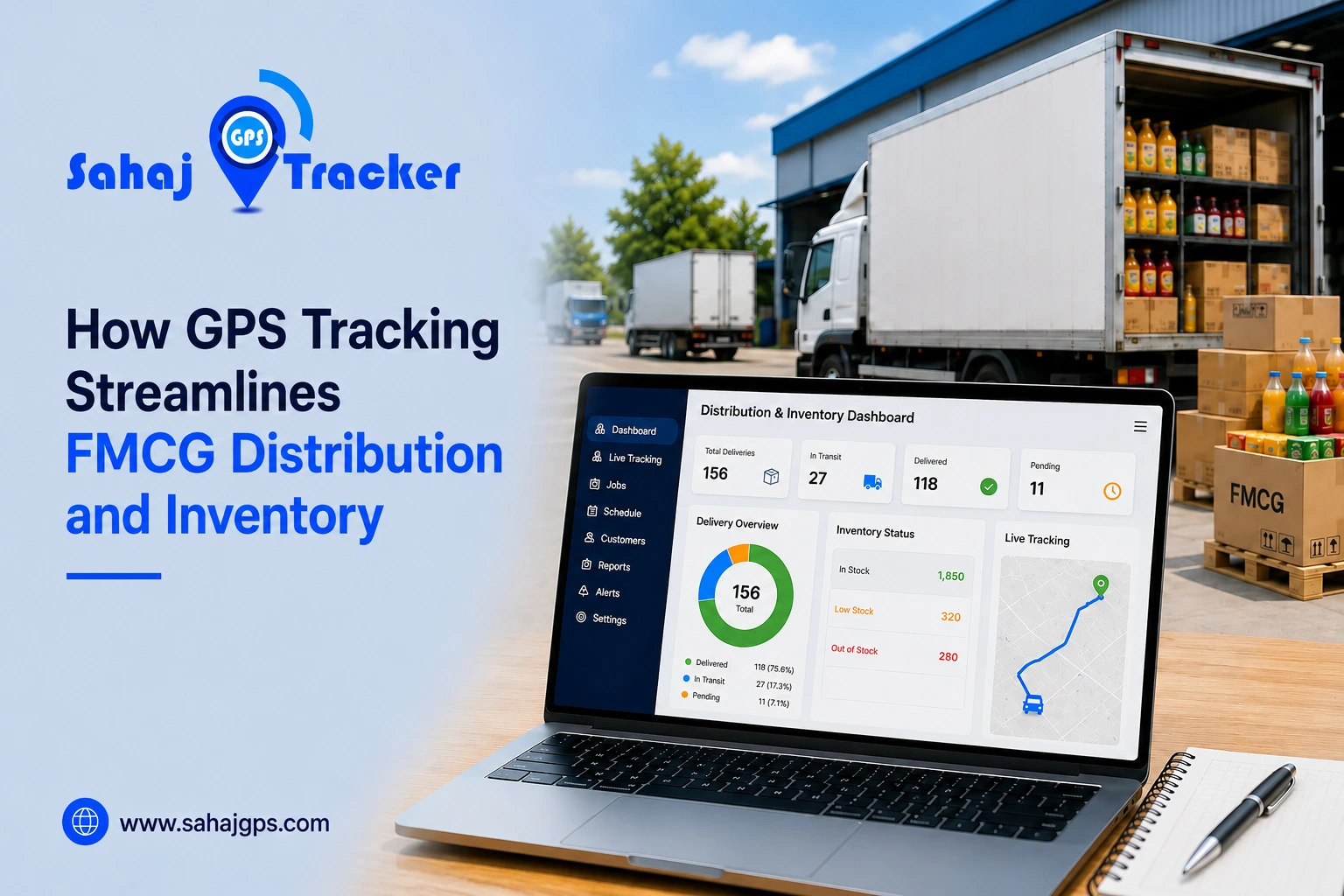
FMCG distribution depends on speed, accuracy, and smooth coordination between vehicles, warehouses, distributors, and delivery teams. Delays, inefficient routes, poor vehicle utilization, and limited delivery visibility can affect inventory availability and increase operating costs.
GPS tracking provides real-time visibility into vehicle movement, helping fleet managers monitor routes, coordinate deliveries, and improve operational decisions. A vehicle maintenance system can also support timely servicing and keep delivery vehicles operational.
For commercial transportation, Sahaj GPS provides technology-driven fleet visibility that supports distribution planning, vehicle monitoring, and operational control.
The Role of GPS Tracking in FMCG Distribution
FMCG distribution involves frequent deliveries across multiple locations, making transportation visibility particularly important. A vehicle may visit several retailers in a single day, and even minor delays can affect the timing of subsequent deliveries.
GPS tracking allows fleet managers to monitor vehicle locations through a centralized platform. Instead of depending entirely on phone calls or manual updates, managers can view vehicle movement and assess whether deliveries are progressing according to plan.
Improving Delivery Visibility
Real-time location information helps businesses understand the current status of vehicles during distribution. Managers can identify whether a vehicle has reached a delivery location, remains stationary for an extended period, or is moving along its expected route.
This visibility can improve communication between fleet teams and distribution managers. If a retailer requests an update, the responsible team can check the vehicle’s location and provide more accurate information.
For FMCG businesses operating large distribution networks, better visibility can also make it easier to identify recurring delays and improve future route planning.
Optimizing Routes for Faster Distribution
Route efficiency is an important part of FMCG logistics. Vehicles that follow inefficient routes may consume additional fuel and spend more time on the road, reducing the number of deliveries that can be completed during a working day.
GPS tracking can help managers review actual vehicle movement and compare it with planned routes. This information can reveal unnecessary detours, repeated delays, and areas where route planning can be improved.
Reducing Unproductive Travel
When distribution teams understand how vehicles are being utilized, they can make more informed decisions about route allocation. Vehicles can be assigned according to delivery locations, operational requirements, and available fleet capacity.
Over time, historical tracking information can help businesses identify patterns in travel time and vehicle movement. These insights can support better planning for recurring delivery routes and improve overall fleet utilization.
Sahaj GPS can help businesses gain greater visibility into vehicle movement, allowing fleet teams to monitor distribution activity and identify opportunities for operational improvement.
Supporting FMCG Inventory Movement
Inventory management does not end inside the warehouse. Products are continuously moving between warehouses, distribution centers, retailers, and other delivery points. Knowing the location of vehicles carrying inventory can provide an additional layer of visibility across the supply chain.
GPS tracking can help businesses understand whether inventory is still in transit, has reached a destination, or is delayed along the route. This information can support coordination between logistics and inventory teams.
Better Coordination Between Fleet and Inventory Teams
When vehicle movement is visible, inventory teams can receive more accurate information about expected deliveries. This can help them prepare for incoming stock and coordinate receiving activities more effectively.
For example, if a delivery vehicle is delayed, the responsible team can become aware of the situation and adjust operational plans accordingly. This is particularly useful for FMCG businesses where consistent product availability is important.
Using AIS 140 Approved GPS Devices for Commercial Fleets
For businesses operating eligible commercial vehicles, compliance and vehicle tracking requirements can be important considerations. AIS 140 approved GPS devices are designed according to applicable automotive industry standards and can be relevant for organizations that require compliant vehicle tracking solutions.
Selecting suitable tracking hardware is important because the device needs to support reliable location transmission and remain suitable for the operating environment of the vehicle.
Why Device Selection Matters
A tracking system is only useful when the hardware provides dependable data. Businesses should consider factors such as tracking reliability, installation requirements, connectivity, reporting capabilities, and compatibility with their fleet operations.
Using appropriate tracking devices can help organizations establish a dependable foundation for real-time vehicle visibility while supporting applicable compliance requirements.
Integrating Vehicle Maintenance With Distribution Operations
FMCG distribution vehicles operate frequently and may cover significant distances every day. Regular maintenance is therefore essential for maintaining vehicle availability and reducing unexpected breakdowns.
A vehicle maintenance system can help businesses organize maintenance-related information and keep track of servicing requirements. When maintenance information is considered alongside vehicle tracking data, fleet managers can gain a broader understanding of vehicle utilization.
Preventing Avoidable Downtime
Tracking vehicle usage can help fleet teams understand how frequently vehicles are operating and how much distance they are covering. This information can support maintenance planning and help identify vehicles that may require attention.
Instead of waiting for a vehicle to develop a major problem, businesses can follow scheduled maintenance practices and monitor relevant vehicle activity. Better maintenance planning can reduce unexpected downtime and help maintain delivery continuity.
Sahaj GPS can support businesses looking to connect vehicle tracking with broader fleet management practices, helping teams improve visibility across both vehicle movement and operational requirements.
Improving Fleet Maintenance Planning
Effective fleet maintenance involves more than repairing vehicles after a breakdown. It requires consistent monitoring, timely servicing, and proper planning to keep vehicles available for daily operations.
GPS-based fleet information can help managers understand vehicle utilization and identify patterns that may influence maintenance planning. Vehicles covering longer routes or operating more frequently may require closer attention than vehicles with lower utilization.
Keeping Vehicles Ready for Daily Deliveries
For FMCG distributors, vehicle availability directly affects delivery capacity. If several vehicles are unavailable at the same time, businesses may need to reschedule deliveries or arrange alternative transportation.
A structured maintenance approach can help reduce these operational disruptions. By keeping service schedules organized and reviewing vehicle usage regularly, fleet managers can improve vehicle readiness.
Strengthening Safety With Vehicle Monitoring
FMCG vehicles operate across highways, city roads, industrial areas, and local delivery routes. Maintaining safe driving practices is therefore an important part of distribution management.
A safety monitoring system can help businesses identify driving-related events and provide greater visibility into vehicle activity. Depending on the system, managers may be able to review events such as speeding, harsh braking, sudden acceleration, and other configured driving behaviors.
Encouraging Safer Fleet Operations
The purpose of monitoring should be to identify risky patterns and support better driving practices. When fleet managers have access to reliable information, they can provide targeted feedback and establish clearer safety expectations.
Safer driving can also support operational efficiency by reducing avoidable incidents, vehicle stress, and unexpected interruptions to delivery schedules.
Sahaj GPS can help businesses improve fleet visibility through tracking and monitoring capabilities that support both operational control and safer vehicle management.
Reducing Fuel and Operational Costs
Fuel is a significant expense for FMCG distribution fleets. Inefficient routes, excessive idling, unnecessary travel, and aggressive driving can increase fuel consumption.
GPS tracking provides information that can help managers review how vehicles are being used. When unnecessary travel or repeated idle periods are identified, businesses can investigate the underlying causes and make appropriate operational changes.
Improving Vehicle Utilization
Better utilization means making effective use of available vehicles while reducing unnecessary movement. GPS data can help managers understand which vehicles are active, where they are operating, and how routes are being completed.
This information can support decisions about route allocation, delivery scheduling, and fleet size. Over time, these improvements can contribute to better control over transportation expenses.
Creating Better Delivery Accountability
FMCG distribution often involves multiple deliveries throughout the day. Without reliable tracking information, it can be difficult to determine when a vehicle reached a particular location or how long it remained there.
GPS records can provide useful operational information that helps managers review completed journeys and delivery movement. This can improve accountability and make it easier to investigate delays or route deviations.
Supporting Data-Driven Decisions
Historical tracking information can help businesses identify recurring operational patterns. Managers can use these insights to improve route planning, vehicle allocation, maintenance scheduling, and delivery coordination.
Instead of making decisions based only on assumptions, businesses can use actual fleet data to identify areas requiring improvement.
Building a More Connected FMCG Distribution System
GPS tracking is becoming an important component of modern fleet operations because it connects vehicle movement with broader distribution requirements. When location visibility, safety monitoring, maintenance planning, and inventory coordination work together, businesses can develop a more organized transportation process.
For FMCG distributors, this can mean better control over delivery routes, improved vehicle utilization, stronger maintenance planning, and greater visibility into inventory movement.
Sahaj GPS can help organizations adopt a technology-driven approach to fleet visibility, enabling managers to monitor vehicles and use operational data to improve distribution performance.
Conclusion
Efficient FMCG distribution requires continuous coordination between inventory, vehicles, drivers, warehouses, and delivery locations. GPS tracking can simplify this process by providing real-time visibility into vehicle movement and helping managers make more informed operational decisions.
From route optimization and inventory movement to AIS 140 approved GPS devices, a vehicle maintenance system, fleet maintenance, and a safety monitoring system, connected fleet technology can support multiple areas of FMCG transportation.
Frequently Asked Questions
How does GPS tracking help FMCG distribution?
GPS tracking provides real-time visibility into vehicle locations and movement. This helps fleet managers monitor deliveries, identify route deviations, coordinate with drivers, and improve overall distribution planning.
Can GPS tracking help with FMCG inventory management?
Yes. GPS tracking can provide visibility into inventory while it is being transported. Teams can monitor whether vehicles are in transit, approaching a destination, or delayed, helping improve coordination between logistics and inventory operations.
What are AIS 140 approved GPS devices?
AIS 140 approved GPS devices are vehicle tracking devices designed to meet applicable AIS 140 requirements. They can provide location tracking and other relevant vehicle data for eligible commercial transportation applications.
How does GPS tracking support fleet maintenance?
GPS tracking can provide information about vehicle usage and travel activity. This data can support maintenance planning by helping managers understand vehicle utilization and coordinate servicing requirements.
Can GPS tracking improve FMCG fleet safety?
Yes. Tracking and monitoring systems can provide visibility into driving-related events and vehicle movement. This information can help fleet managers identify risky patterns, support driver awareness, and develop stronger safety practices.