
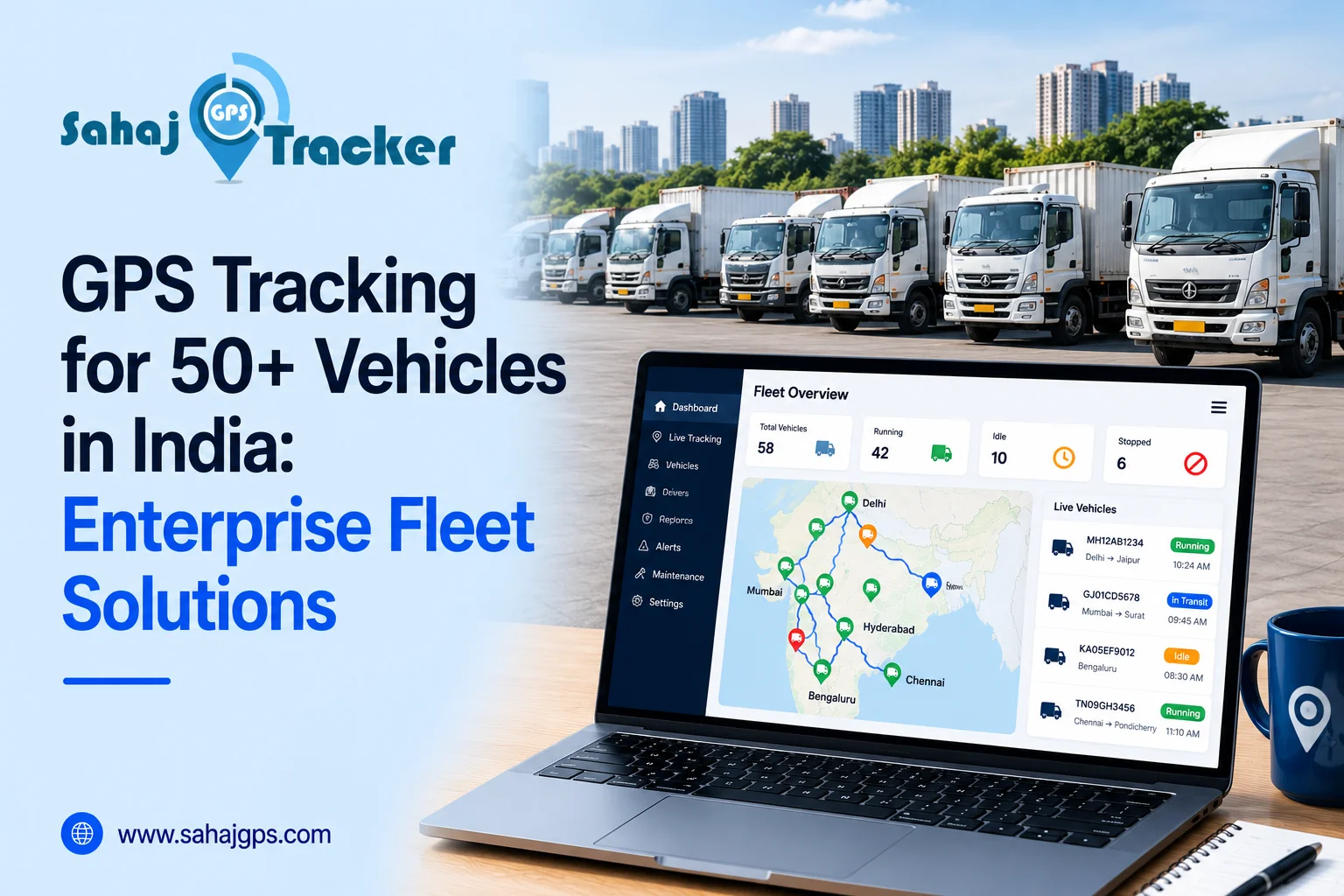
Managing five vehicles is one thing. Managing 50, 80, or 150 is a completely different job. Once a fleet grows, simply calling drivers for updates starts becoming messy. This is where GPS Tracking for 50+ Vehicles in India becomes useful. A reliable GPS vehicle tracking system can give fleet managers a single view of vehicle locations, routes, stops, driving activity and overall fleet movement, instead of checking each vehicle separately.
For large businesses, the real value isn’t just knowing where a vehicle is. It is having useful information available when something goes wrong, a delivery gets delayed, fuel usage looks unusual, or a driver takes an unexpected route.
Why Large Fleets Need a GPS Vehicle Tracking System
With a small fleet, a manager may remember which driver is handling which vehicle. Add another 40 or 50 vehicles and that becomes difficult very quickly.
A large fleet can have vehicles operating across different cities, highways and industrial areas at the same time. Some may be delivering goods, others may be returning to a warehouse, while another vehicle could be waiting at a customer location.
A GPS vehicle tracking system brings these movements together on one platform. Managers can check current locations, review previous routes and get a clearer picture of daily operations. It also reduces the need for constant phone calls. And honestly, nobody wants to spend half the day asking, “Where is the truck now?”
Real-Time Vehicle Tracking for Multiple Vehicles
A real-time vehicle tracking system can show the current location of multiple vehicles through a central dashboard. Depending on the solution, managers may also see speed, ignition status, route history, stoppage information and other vehicle activity.
For an enterprise fleet, this visibility can make coordination much easier. If a customer asks about an expected delivery, the operations team can check the vehicle’s movement rather than calling several people for an update.
GPS Fleet Tracking for Businesses With 50+ Vehicles
GPS fleet tracking for businesses is particularly useful when vehicles are spread across multiple routes or locations. Instead of treating every vehicle as a separate operation, managers can look at the fleet as one connected system.
For example, imagine a logistics company operating 70 delivery trucks. Twenty are travelling between warehouses, thirty are handling local deliveries, and the remaining vehicles are returning after completing their trips. A central tracking dashboard can make this information easier to understand.
Monitor Routes, Stops and Vehicle Activity
Route history is often just as useful as live tracking. A vehicle may reach its destination on time, but what happened during the journey?
Was there an unusually long stop? Did the driver take a longer route? Was there repeated idling? Historical tracking data can help managers look back at these situations and identify patterns. It doesn’t automatically tell you why something happened, but it gives you something concrete to investigate.
Geofencing GPS Tracker for Better Fleet Control
A geofencing GPS tracker allows businesses to create virtual boundaries around selected locations. These could include warehouses, customer sites, fuel stations, factories, restricted areas or regional zones.
When a vehicle enters or exits a defined area, the system can generate an alert. This can be handy for large fleets because manually checking every arrival and departure simply isn’t practical.
Use Geofencing for Entry and Exit Alerts
Suppose a company has 50 delivery vehicles and several distribution centres. A geofence can be created around each centre.
When a truck enters the location, the operations team can receive an alert. Another alert can be generated when it leaves. The same idea can be used for customer sites. It gives managers a clearer view of vehicle visits without needing to constantly watch the map.
GPS Fleet Management Software for Enterprise Operations
A growing fleet needs more than a map with vehicle icons. Good GPS fleet management software should help turn vehicle data into information that managers can actually use.
Depending on the platform, businesses may be able to access route reports, trip history, driver activity, vehicle status, alerts and fleet performance information from one dashboard.
Sahaj GPS provides tracking solutions designed to help businesses manage vehicle movement and fleet operations through centralised GPS monitoring.
Keep Fleet Information in One Place
When vehicle information is scattered between spreadsheets, phone calls and handwritten trip records, small mistakes are easy to miss.
A central system can make everyday monitoring more organised. Managers can check vehicles, review reports and identify unusual activity without jumping between different tools. This becomes increasingly important as fleet size grows.
Vehicle Fuel Tracking System for Large Fleets
Fuel is one of the biggest ongoing expenses for many commercial fleets. With 50 or more vehicles, even a small amount of unnecessary fuel consumption across each vehicle can add up. A vehicle fuel tracking system can help businesses monitor fuel-related information and identify patterns that deserve attention.
For example, if one vehicle consistently uses more fuel than similar vehicles travelling comparable routes, that difference may be worth investigating.
It could be caused by driving behaviour, excessive idling, route conditions, vehicle maintenance or another operational factor.
Combine GPS and Fuel Data
GPS and fuel information can become more useful when viewed together. Suppose a vehicle covers significantly more kilometres than planned while also showing higher fuel consumption. The route history may help explain part of the difference.
Similarly, excessive idling can sometimes contribute to fuel wastage. Tracking vehicle activity gives managers more context when reviewing fuel expenses.
Sahaj GPS can support fleet monitoring by bringing vehicle tracking and operational visibility into a more structured workflow.
Benefits of GPS Tracking for 50+ Vehicles
Large fleets usually have different priorities depending on their industry. A logistics company may care more about delivery visibility, while a construction business may focus on equipment movement and operating hours. Still, several benefits are common.
Better Route Planning
Tracking historical routes can help managers identify inefficient journeys, frequent delays and unnecessary detours. This information can be used when planning future trips.
Improved Driver Visibility
Managers can review vehicle movement, speed and stoppage patterns. This provides useful operational information without depending entirely on verbal updates.
Faster Response to Delays
If a vehicle stops unexpectedly or moves away from its planned route, an alert can help the operations team notice the issue sooner.
Easier Fleet Coordination
When dozens of vehicles are moving simultaneously, a central dashboard makes it easier to understand what is happening across the fleet.
More Control Over Operating Costs
Route efficiency, fuel usage, unnecessary idling and vehicle utilisation all influence fleet expenses. Tracking data can help businesses identify areas where costs may be reduced.
Choosing the Right Enterprise Fleet Tracking Solution
Not every GPS tracker is suitable for a large fleet. When comparing solutions, businesses should look at the complete system rather than only the device price.
Check whether the platform supports multiple vehicles, real-time updates, historical reports, mobile access, geofencing, alerts and fleet-level dashboards.
Scalability matters too. A company with 50 vehicles today might have 100 a couple of years from now. Switching systems later can be frustrating, especially when historical data and user accounts are involved.
Features Worth Checking Before Installation
Look for features such as:
- Real-time vehicle tracking
- Multi-vehicle fleet dashboard
- Geofencing alerts
- Route history and trip reports
- Driver behaviour monitoring
- Vehicle fuel tracking integration
- Ignition status
- Speed alerts
- Mobile application access
- Custom reports
- Fleet-level analytics
- Alert notifications
It is also worth checking installation support, device durability, network compatibility and the quality of customer support.
GPS Fleet Tracking Across India
Businesses operating across India often deal with very different road conditions, traffic patterns and operating environments. A vehicle travelling through a major city may have completely different tracking requirements from one travelling on a long-distance highway route.
For this reason, enterprise tracking should be flexible enough to support different types of vehicles and routes. Sahaj GPS offers GPS-based fleet monitoring solutions that can help businesses maintain visibility across larger vehicle operations and make day-to-day fleet coordination more manageable.
The goal isn’t to collect endless data just because technology allows it. The useful part is being able to find the information that actually helps you run the fleet better.

FAQs
1. Can GPS tracking manage 50 or more vehicles at once?
Yes. Enterprise GPS platforms can be designed to monitor multiple vehicles from a central dashboard. Managers can view locations, routes, alerts and reports without checking each vehicle separately.
2. What is the benefit of GPS tracking for large fleets?
It provides better visibility into vehicle locations, routes, stops and driving activity. This can help businesses improve coordination, respond to delays and identify operational inefficiencies.
3. Can GPS tracking help reduce fleet fuel costs?
GPS tracking can highlight unnecessary kilometres, excessive idling and inefficient routes. When combined with fuel data, it can give managers more useful information for investigating unusual fuel consumption.
4. Is geofencing useful for commercial vehicle fleets?
Yes. Geofencing can create virtual boundaries around warehouses, customer locations, depots and other areas. Entry and exit alerts can help managers monitor vehicle visits and movement more efficiently.
5. What should businesses consider before choosing fleet tracking software?
Businesses should check vehicle capacity, real-time tracking, geofencing, reporting, mobile access, integrations, scalability, installation support and customer service. The system should also suit the fleet’s actual operating requirements.