
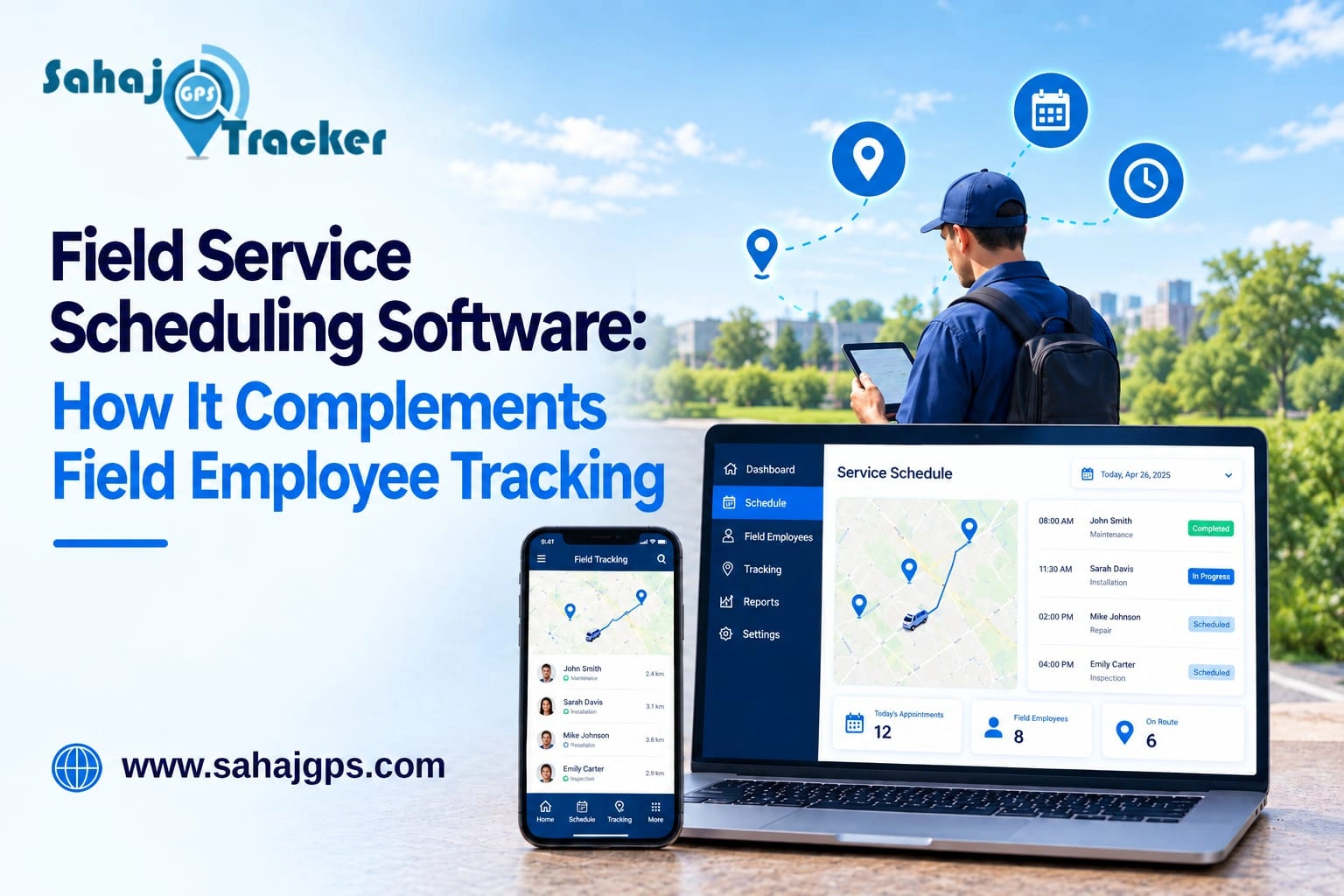
Managing a field workforce involves more than knowing where employees are located. Businesses also need to assign jobs, plan schedules, manage attendance, coordinate service visits and make sure the right employee reaches the right customer at the right time. This is where field service scheduling and employee tracking can work together.
Field service scheduling software helps managers organise daily assignments, while employee location tracking software provides visibility into employee locations and movement. When these functions are connected, businesses can improve coordination between office teams and field employees while reducing avoidable delays.
For organisations managing service engineers, technicians, sales representatives or other mobile teams, service engineer job allocation becomes easier when scheduling and location data work together. A connected system can also support field workforce dispatch, helping managers assign jobs based on employee availability, location and daily schedules.
What Is Field Service Scheduling?
Field service scheduling is the process of planning and assigning jobs to employees who work outside the office. A manager may need to consider the employee’s location, availability, skills, workload and the customer’s preferred service time before making an assignment.
Without a structured scheduling process, jobs may be assigned manually through calls, messages or spreadsheets. As the number of field employees and customer visits increases, this can become difficult to maintain.
Service Engineer Job Allocation
Service engineer job allocation involves assigning service requests to engineers according to their availability and job requirements. Location can also be an important consideration because assigning a nearby employee may reduce unnecessary travel.
For example, if several service requests are scheduled in different areas, managers can review employee locations and assign jobs in a way that supports smoother daily movement.
This can be particularly useful for businesses handling installation, maintenance, repair and inspection visits.
How Field Employee Tracking Supports Scheduling
Scheduling determines what an employee needs to do, while tracking provides visibility into where that employee is during the workday. Combining both functions can give managers a clearer picture of field operations.
Field employee monitoring software can help managers view employee locations, movement history and other relevant activity information, depending on the system being used.
When a scheduled employee is delayed or moves away from the expected work area, managers may identify the situation earlier and adjust the schedule as needed.
Real-Time Visibility for Managers
Location visibility can make communication between field teams and managers more practical. Instead of relying entirely on phone calls to determine an employee’s current location, managers can use available location information through the tracking system.
Live Location Sharing software can also help authorised users share or view current location information when required for operational coordination.
This can be useful when customers ask for an estimated arrival time or when managers need to coordinate multiple service visits during the same working period.
Connecting Scheduling With Geo-Fencing
Geo-fencing can add another layer of visibility to field workforce management. A virtual geographic boundary can be created around a customer location, office, project site or service area.
Geo-Fencing for Field Teams
Geo-Fencing for Field Teams can help businesses monitor when employees enter or leave predefined locations. For scheduled service visits, this information can provide useful context about whether an employee has reached the assigned work area.
For example, a manager may create a geo-fence around a customer’s premises. When the employee enters the defined area, the system can record the relevant location event depending on its configuration.
Geo-fencing does not replace scheduling. Instead, it can complement the schedule by providing location-based visibility around planned assignments.
Digital Attendance and Field Scheduling
Attendance management can become more complicated when employees spend most of their working day outside the office. Traditional attendance methods may not provide enough visibility into when and where field employees begin their work.
A Digital attendance management system can help businesses maintain attendance records through digital processes. When combined with scheduling and location information, managers can have a more organised view of employee availability and field activity.
Matching Attendance With Daily Assignments
Attendance data can help managers understand which employees are available for scheduled work. This can be useful when allocating urgent service requests or adjusting assignments during the day.
For example, if an employee is unavailable, the manager can identify another available field worker and update the assignment instead of relying on outdated schedules.
Field Workforce Dispatch and Daily Operations
Field workforce dispatch involves coordinating employees and sending them to customer locations or work sites according to operational requirements. Effective dispatching requires more than simply assigning jobs.
Managers may need to consider employee availability, current location, job priority, estimated travel time and the skills required for each task.
Field tracking can provide current location information that supports these decisions. If a technician has completed one job and is already near another scheduled location, the manager can take that information into account when organising subsequent assignments.
Reducing Scheduling Conflicts
Scheduling conflicts can occur when multiple jobs are assigned to the same employee or when travel time between appointments is underestimated.
A connected scheduling and tracking approach can provide better visibility into the employee’s current workload and location. This can help managers identify potential conflicts earlier and make adjustments when necessary.
CRM Integration Software for Field Service
Customer information and field operations are often managed through separate systems. This can create gaps between customer requests, job assignments and employee activity.
CRM integration software can help connect customer-related information with field service workflows, depending on the systems being used.
Connecting Customer Requests With Field Jobs
When customer information, service requests and field assignments can be connected, managers may have easier access to the information needed to organise service visits.
For example, a customer request can be associated with a service task, assigned to an available employee and monitored through the field operation workflow. This reduces the need to manually transfer information between different systems.
Integration can also help keep customer service teams informed about job status and field activity.
Benefits of Combining Scheduling and Tracking
Field service scheduling and employee tracking solve different operational problems, but their combination can provide a more complete view of field workforce activity.
Scheduling helps managers determine who should perform a particular task and when it should happen. Tracking provides visibility into where employees are and how their movement relates to scheduled work.
Together, these capabilities can support better job allocation, more informed dispatch decisions and improved coordination between office managers and field employees.
Sahaj GPS provides field workforce management capabilities that can support businesses looking to bring scheduling, employee visibility and location-based monitoring into their field operations.
How Businesses Can Use the Combined Approach
Businesses should begin by identifying the main challenges in their field operations. These may include delayed service visits, inefficient job allocation, attendance visibility, excessive travel or difficulty coordinating employees across multiple locations.
Once these requirements are clear, scheduling rules can be created around employee availability, job priority, service areas and required skills.
Tracking can then provide location visibility during the working day. Managers can use this information to monitor progress, identify delays and make operational adjustments when needed.
The objective should not simply be to track employees. The greater value comes from using location information alongside schedules, job assignments and operational data.
Choosing the Right Field Management Setup
The right setup depends on the size of the field workforce, number of daily service requests and complexity of operations. A business with a small team may have relatively simple scheduling requirements, while a large service operation may need automated assignments, geo-fencing, attendance management and system integrations.
Businesses should also consider ease of use, reporting capabilities, location accuracy, mobile access and integration requirements before selecting a solution.
Sahaj GPS can be considered by businesses looking to improve visibility across field operations while connecting employee location information with everyday workforce management.
Conclusion
Field service scheduling software and employee tracking can complement each other by connecting planned work with real-world field activity. Scheduling helps businesses organise jobs and allocate employees, while tracking provides visibility into employee locations and movement.
Features such as service engineer job allocation, field workforce dispatch, geofencing technology, digital attendance, and CRM integration can further support field operations when they are configured according to business requirements.
A connected approach can help managers respond to changing schedules, monitor field activity and coordinate employees more efficiently. Sahaj GPS offers tools that can support businesses in managing field teams with greater operational visibility.
Frequently Asked Questions
What is field service scheduling software?
Field service scheduling software helps businesses plan service visits, assign jobs to field employees and organise daily work according to factors such as availability, location and job requirements.
How does employee tracking complement field service scheduling?
Employee tracking provides location and movement visibility, while scheduling defines assigned jobs and timings. Using both can help managers compare planned assignments with actual field activity.
Can geo-fencing be used for field service teams?
Yes. Geo-fencing can create virtual boundaries around selected locations and provide location-based events when employees enter or leave those areas, depending on the system configuration.
How can digital attendance help field employees?
A digital attendance management system can help businesses record attendance through digital processes and provide managers with better visibility into employee availability for daily assignments.
Why is CRM integration useful for field service operations?
CRM integration can connect customer information and service requests with field assignments and operational workflows, reducing manual data transfer and helping teams coordinate customer-related work more effectively.