
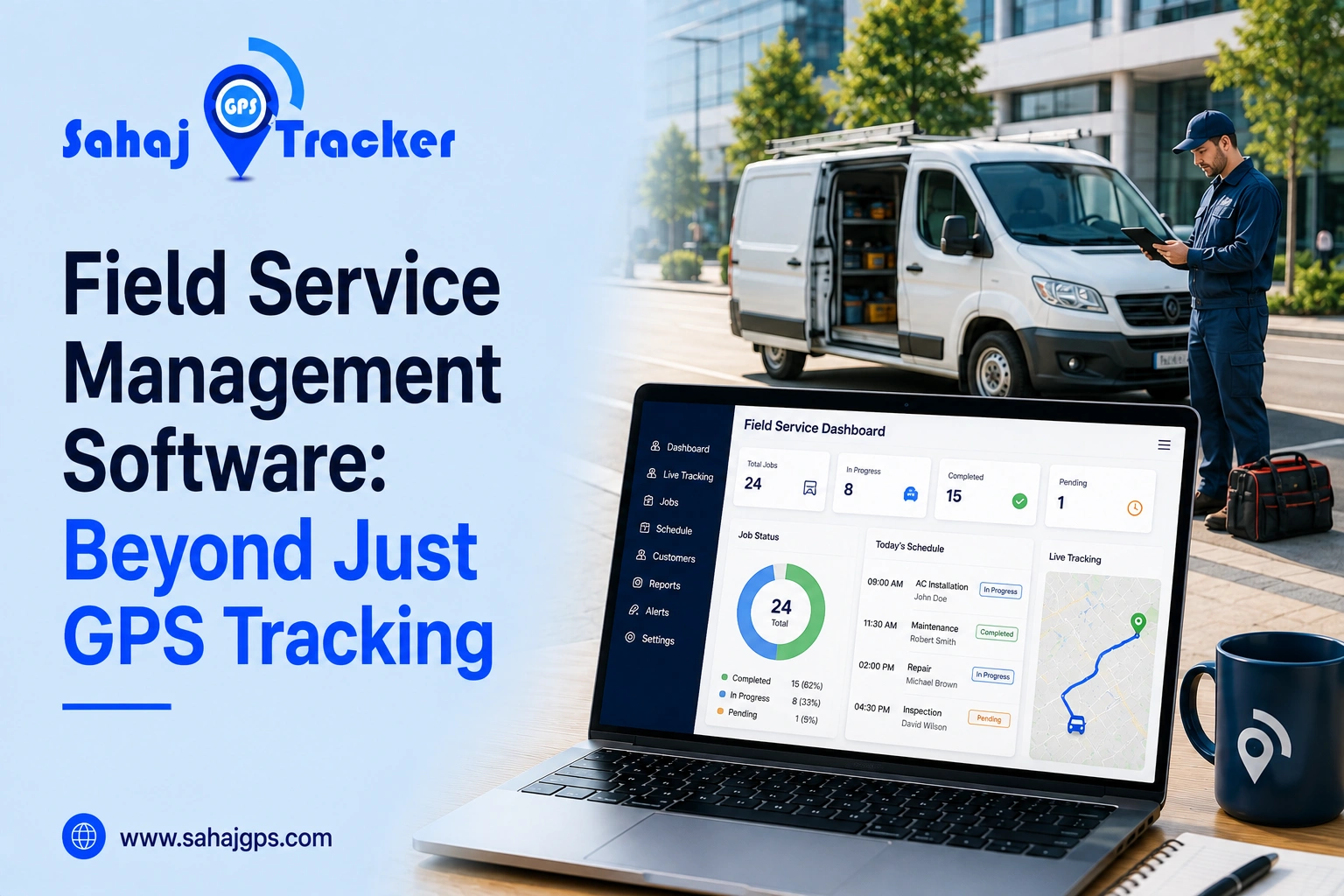
Managing a field team is about much more than knowing where an employee or vehicle is. A technician might be stuck in traffic, waiting for a spare part, finishing a repair, or already heading toward the next customer. This is where field service management software becomes genuinely useful. GPS can show location, sure, but businesses also need scheduling, job allocation, visit tracking, route visibility and better communication. A good system brings these things together so managers can understand what is happening in the field without making endless phone calls.
What Is Field Service Management Software?
Field service management software is a digital platform that helps businesses manage technicians, field employees, customer visits and service jobs from one place. Depending on the software, it can include scheduling, dispatching, GPS tracking, job updates, route history and reporting. Instead of maintaining one spreadsheet for employee schedules, another file for customer visits and a separate process for tracking vehicles, businesses can bring much of this information together.
Consider an appliance repair company with 30 technicians working across a city. One technician may have six appointments in a day, while another may have only three. Simply knowing where both employees are doesn’t solve the scheduling problem. Managers also need to know which jobs are pending, which technician has the right skills and who is closest to the next customer. That’s where a complete field management system starts becoming much more useful than GPS alone.
Why Field Service Software Is More Than GPS Tracking
GPS tracking mainly answers one question: Where is the employee or vehicle? That’s useful, obviously, but field operations usually involve several other questions. Has the technician reached the customer? Is the previous job complete? Who should handle the next urgent service request? Is someone spending too much time travelling between appointments?
Field service software connects these operational details with location information. GPS becomes one part of a larger workflow instead of being the entire solution. This can help managers move from simply watching employees on a map to actually managing field operations more effectively.
Sahaj GPS provides GPS-based tracking solutions that can help businesses monitor vehicle and employee movement, routes and locations while improving visibility across mobile operations.
How GPS Field Service Management Works
GPS field service management combines location tracking with everyday service coordination. A GPS-enabled device can provide an employee’s or vehicle’s current location, while the software can connect that information with assigned jobs and schedules.
For example, imagine a service company receiving an urgent repair request in Delhi. Several technicians may be available, but one technician could already be working nearby while another is travelling across the city. Location visibility gives the dispatcher another useful factor to consider before assigning the job.
This doesn’t mean the nearest technician is always the right technician. Skills, workload, appointment timing and job requirements still matter. GPS simply gives managers better information before making the decision.
How Field Employee Tracking Software Helps Managers
Field employee tracking software can make it easier to understand what employees are doing during the working day. Managers can review current locations, travel routes and visit activity instead of depending entirely on phone calls or manual updates.
This can be especially useful when employees cover large territories. A supervisor doesn’t need to call every technician simply to ask where they are. The available tracking information can provide a quick reference.
Historical data can be useful too. If a technician regularly spends a large amount of time travelling between two areas, managers can review those routes and consider whether the territory or schedule needs to be adjusted. Sometimes the problem isn’t the employee at all. The route may simply be poorly planned.
Field Staff Tracking System for Daily Operations
A field staff tracking system can help businesses manage employees who spend most of their working day outside the office. Depending on the solution, managers may be able to review employee locations, assigned areas, routes and customer visits.
Take a sales team visiting retailers across Mumbai. Managers may want to know whether representatives are covering their assigned territories and reaching important customer locations. Location data can provide useful supporting information for those checks.
The same concept can apply to installation teams, inspection workers, collection agents, maintenance staff and other mobile employees. Their jobs are different, but the basic management challenge is similar: the team is outside the office, and managers need visibility without constantly interrupting them.
GPS Tracking for Field Service Teams
GPS tracking for field service is particularly useful when technicians travel between multiple customer locations every day. Managers can review current movement as well as historical routes to understand how much time technicians are spending on the road.
Suppose a technician has appointments in three different parts of Bengaluru. If those appointments are poorly arranged, a large portion of the day may disappear into travelling. Route history can help reveal this pattern, while better scheduling can potentially group nearby appointments together.
This is one reason GPS should not be treated only as a security feature. The location information can also provide practical operational insights.
Improving Technician Scheduling and Dispatch
Scheduling field technicians can become complicated surprisingly quickly. Customers may have preferred appointment windows, technicians may have different skill sets and some jobs can take much longer than expected.
A field service platform can help managers organise these appointments more efficiently. When location information is available, dispatchers can also consider where technicians are currently working.
Imagine a customer in Pune needs an urgent repair. One technician is 25 kilometres away, while another has just finished a job two kilometres from the customer’s location. If the dispatcher only looks at a static schedule, that nearby technician might be overlooked. Current location information can make the assignment decision more practical.
Sahaj GPS can support this type of visibility by providing GPS-based employee and vehicle location information that businesses can use alongside their field service workflows.
Reducing Travel Time Between Service Jobs
Travel time is often overlooked when companies measure field productivity. A technician might complete every assigned job and still spend three or four hours travelling. That isn’t necessarily a performance problem. It could be a scheduling issue.
By reviewing route history, businesses can identify common travel patterns and areas where appointments could potentially be organised better. Jobs in the same locality may be grouped together, while distant appointments can be planned with more realistic travel time between them.
Less unnecessary driving can also mean lower fuel usage and less wear on service vehicles. Small changes, repeated every day, can make a noticeable difference over time.
Improving Field Service Productivity
Productivity in field service isn’t simply about making employees complete more jobs. Quality matters too. A technician rushing through eight appointments may not provide better service than someone completing six jobs properly.
The better approach is to understand where working time is actually going. Managers can look at travel time, waiting periods, job duration and visit patterns to identify possible bottlenecks.
Maybe one customer location consistently causes delays because parking is difficult. Maybe a particular technician has a territory that is too large. Maybe some jobs regularly require additional equipment. Data can help raise these questions, and managers can then investigate the actual reason.
Sahaj GPS can provide location and route information that helps businesses understand these patterns and make more informed decisions about field operations.
Better Customer Communication With Real-Time Visibility
Customers usually don’t care about GPS technology itself. They want to know one thing: When will the technician arrive?
Real-time location information can make that question easier to answer. Customer support teams can check whether a technician is travelling, delayed or already near the service location instead of calling the employee for a routine update.
This can also reduce interruptions for technicians who are driving. Rather than receiving repeated calls asking for their location, employees can focus on the road and their assigned work.
It’s a small operational improvement, but across hundreds of customer visits, small improvements tend to add up.
Field Service Management Software in India
Field service operations in India can be challenging because traffic, road conditions and travel distances vary significantly between locations. A technician working in Mumbai may spend a considerable amount of time dealing with congestion, while a technician serving customers around Jaipur or Ahmedabad may cover longer distances between appointments.
This makes field service management software in India useful for businesses managing technicians across different territories. Location and route information can help managers understand how much time employees actually spend travelling and whether service territories are reasonably balanced.
Businesses operating across Delhi, Mumbai, Bengaluru, Hyderabad, Pune, Chennai and other cities can use field data to make scheduling decisions based on actual movement instead of assumptions.
Features to Look For in Field Service Software
Real-Time Location Tracking
The platform should provide reliable location visibility so authorised managers can understand where field employees or service vehicles are during active jobs.
Job Scheduling and Dispatch
Scheduling tools should make it easier to assign jobs according to technician availability, location, skills and appointment requirements.
Route History
Historical routes can help businesses identify repeated delays, unnecessary travel and inefficient territory planning.
Geofencing
Geofencing can be used around customer sites, offices, warehouses and service areas. Entry and exit events can provide supporting information for visit verification.
Reports and Analytics
Reports can help managers understand travel time, customer visits, employee movement and operational trends over time.
Field Service Automation Saves Administrative Time
A surprising amount of field management happens behind the scenes. Someone has to update schedules, check employee locations, collect visit information and prepare reports. When these tasks are handled manually, managers can spend hours every week just keeping records updated.
Automation can reduce some of this administrative workload. Job information can be organised digitally, GPS data can be collected automatically and reports can be generated from available records. Sahaj GPS can be part of a broader field management setup where GPS tracking supports employee visibility, route monitoring and operational reporting.
What GPS Tracking Alone Cannot Do
It is important to keep expectations realistic. GPS can show that an employee reached a location, but it cannot tell you whether the service was completed correctly or whether the customer was happy with the work.
That’s why GPS tracking for field service works best alongside proper job management processes. Location is useful information, but it is only one part of the complete service picture.
Businesses should also be transparent with employees about how tracking information is collected and used. When people understand that the purpose is better scheduling, safety and operational visibility, adopting the system can become much easier.
Choosing the Right Field Service Management Approach
The right setup depends on the size and nature of the business. A company with five technicians and a few weekly service calls may not need the same system as a business managing 200 technicians across several cities.
Before choosing software, businesses should identify the problems they actually want to solve. Are managers spending too much time scheduling technicians? Are customer visits difficult to verify? Are employees travelling unnecessarily? Are customers constantly calling for updates?
Once those problems are clear, it becomes easier to select the features that genuinely matter instead of paying for tools nobody uses.
Conclusion
Field service management software goes far beyond putting employee locations on a map. GPS tracking provides valuable visibility, but businesses can get considerably more value when location information is connected with scheduling, dispatching, route history and service operations.
For growing field teams, this can mean fewer unnecessary calls, better technician scheduling, improved customer communication and a clearer understanding of what happens outside the office. The goal isn’t to track employees simply for the sake of tracking them. It is to use practical information to make field operations smoother for managers, technicians and customers. Sometimes the biggest improvement is simply knowing what is happening before someone has to make that phone call.
FAQs
1. What is field service management software?
Field service management software helps businesses schedule jobs, assign technicians, monitor field activity and manage service operations. It can combine GPS tracking with scheduling, dispatching, reporting and customer visit management.
2. Is field service software the same as GPS tracking?
No. GPS tracking mainly provides vehicle or employee location information, while field service software manages wider operations such as job scheduling, dispatch, technician assignments, service updates and reporting.
3. How does GPS field service management help technicians?
GPS field service management helps managers understand technician locations and routes while coordinating service jobs. This can support better scheduling, reduce unnecessary travel and make it easier to assign nearby technicians.
4. Can field employee tracking software improve productivity?
It can provide useful information about employee movement, travel time and customer visits. Managers can use these insights to identify inefficient routes, scheduling problems and territory issues without relying only on manual reports.
5. Is a field staff tracking system useful for small businesses?
Yes, although the required features depend on the business. A small company may mainly need location and route visibility, while larger teams may benefit from scheduling, dispatching, geofencing, reports and advanced field management tools.