
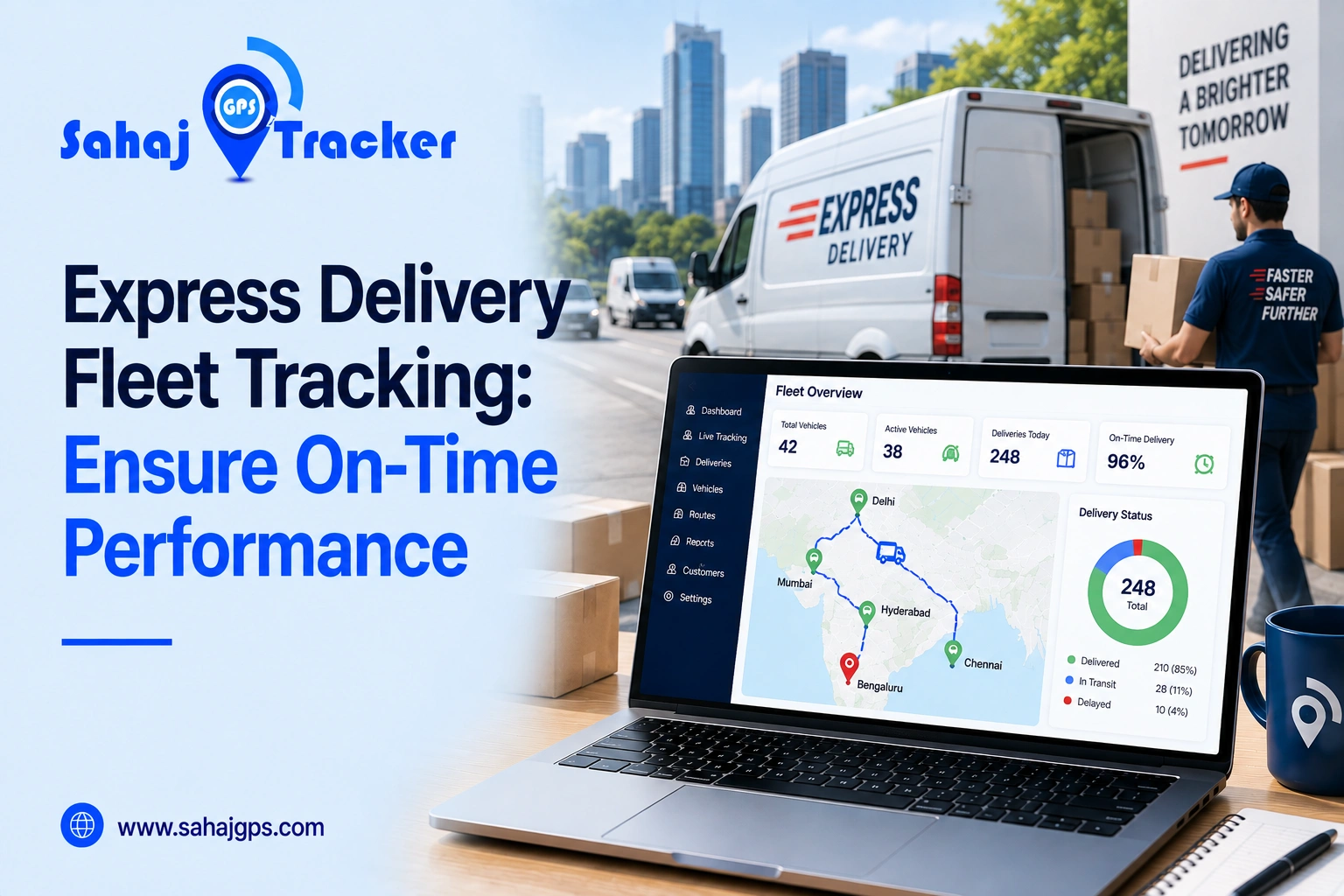
In express delivery, being late by even 20 minutes can turn a smooth day into a chain of unhappy calls. Customers want their parcels when promised, drivers need practical routes, and fleet managers need to know what is happening without calling every vehicle. That is where express delivery fleet tracking and a reliable delivery fleet tracking system can make everyday operations much easier.
A delivery vehicle moves through traffic, takes diversions, waits at gates, stops for multiple parcels and sometimes gets stuck somewhere nobody expected. Real-time visibility helps businesses respond to these situations instead of finding out about them after the delivery is already late.
Why Express Delivery Fleet Tracking Matters
Speed is important in courier and express delivery, but speed alone isn’t enough. A vehicle can be fast and still take the wrong route, miss a delivery window or spend too much time waiting.
With fleet tracking, managers can see vehicle locations, monitor routes and understand how deliveries are progressing throughout the day.
Think about a fleet of 50 delivery vans operating across a busy city. One driver gets stuck in traffic. Another takes a longer route. A third has already completed six deliveries but still has ten more stops. Without live information, the manager is mostly guessing. With real-time vehicle tracking, the situation becomes much clearer.
Keep Track of Vehicles on Every Route
A tracking dashboard can show where vehicles are currently located and whether they are moving, stopped or delayed. This gives dispatch teams a better understanding of the fleet without depending entirely on phone calls. It is a small change, really. But when the number of vehicles increases, it becomes a big one.
How a Delivery Fleet Tracking System Improves Operations
A good delivery fleet tracking system does more than display a vehicle on a map. It can bring together location data, route information, alerts and historical reports in one place.
This helps managers answer everyday questions quickly:
- Where is the delivery vehicle?
- Has the driver reached the delivery area?
- How long has the vehicle been stopped?
- Is the driver following the planned route?
- Which deliveries could be delayed?
- Are vehicles spending too much time idling?
The answers can help teams make decisions while deliveries are still in progress.
Real-Time Vehicle Tracking for Faster Deliveries
Customers don’t see the traffic jam your driver is sitting in. They just see the delivery time.
That is why real-time vehicle tracking is useful for express delivery businesses. Managers can identify delays earlier and communicate with drivers when necessary.
For example, if a vehicle has been stationary for an unusually long period, the dispatcher can check what is happening. Maybe there is traffic. Maybe the driver is at a customer’s location. Or perhaps the vehicle has taken an unexpected stop. Without live tracking, all three situations can look exactly the same from the office.
Monitor Delivery Progress Live
Real-time tracking can also help dispatch teams coordinate vehicles based on their current positions. If a nearby driver is available while another vehicle is running behind schedule, the team may have more information to adjust the workload. Of course, the exact options depend on the delivery operation and tracking platform.
Delivery Route Optimisation Saves Time
Poor route planning is an easy way to lose time. A driver may visit locations in an inefficient order, make unnecessary turns or travel through roads that regularly experience congestion.
Delivery route optimization helps businesses plan routes more efficiently by considering delivery locations, vehicle positions and other operational factors.
Use Route Optimization Software
Modern route optimization software can help dispatchers create practical delivery sequences rather than relying on manual planning.
Imagine a driver has 25 parcels spread across a city. Instead of simply following the order in which the parcels were loaded, the route can be planned around location and delivery priorities.
That means fewer unnecessary kilometres and, potentially, more completed deliveries during the same working shift.
For logistics companies operating in Delhi, Mumbai, Bengaluru, Hyderabad, Pune and Ahmedabad, route planning can become especially important because traffic conditions can change dramatically during the day.
Geo-Fencing Tracker for Delivery Operations
Geo-Fencing is another useful feature for delivery fleets. A virtual boundary can be created around a warehouse, customer location, service zone or delivery area. When a vehicle enters or leaves that defined area, the system can generate an alert.
How Geo-Fencing Helps Delivery Teams
Suppose a delivery van is approaching a customer location. The system can recognise when it enters the predefined area, giving the operations team better visibility into the delivery process.
A Geo-Fencing Tracker can also be used around warehouses and distribution centres. Managers may receive notifications when vehicles arrive or leave, which can make vehicle movement easier to monitor. It can be particularly handy for businesses with several delivery hubs.
Instant Vehicle Alerts for Quick Action
Not every fleet event needs someone staring at a dashboard all day. Sometimes an alert is more useful.
Instant vehicle alerts can notify authorised users about events such as unexpected stops, route deviations, geofence activity, ignition changes or other configured conditions.
Respond Before a Delay Gets Bigger
Suppose a delivery vehicle suddenly leaves its planned route. A manager receives an alert and checks the vehicle’s location. Maybe there is a road closure. Fine. But if the vehicle has taken an unnecessary detour, the dispatcher can contact the driver while the delivery route is still underway. That early response can matter. A 10-minute issue can sometimes become a one-hour delay if nobody notices it.
Improve Driver Accountability Without Constant Calls
Drivers are an important part of express delivery operations, and fleet managers need visibility without turning every trip into a series of phone calls. Tracking data can provide information about routes, stops, speed patterns and working hours, depending on the system. Sahaj GPS provides tracking solutions that help delivery businesses monitor vehicle movement and manage fleet activity from a central platform.
The idea isn’t simply to watch drivers. It is to understand what is happening on the road and identify operational problems that need attention.
Reduce Unnecessary Fuel and Vehicle Costs
More kilometres usually mean more fuel, more vehicle wear and more maintenance. When fleet managers have access to route history and vehicle movement data, they can identify inefficient routes, repeated detours and excessive idling.
Over time, these small inefficiencies can add up. A delivery business may not notice an extra five kilometres on one trip. Across hundreds of trips every week, though, it becomes a different story. This is where tracking becomes useful beyond just delivery visibility.
Use Tracking Data to Improve Customer Service
Customers increasingly expect delivery updates. They want to know whether a parcel is on the way, delayed or already close to their location.
Accurate vehicle information can help delivery teams provide more useful updates instead of vague answers. For example, telling a customer that the vehicle is currently several kilometres away is far more useful than simply saying, “Your parcel is out for delivery.”
Better information can also reduce repeated customer calls. And yes, anyone who has managed a busy delivery desk knows how quickly those calls can pile up.
Choosing the Right Tracking Solution
Not every tracking platform will suit every express delivery company. A small local courier business may have different needs from a national logistics operation.
Before choosing a solution, check for:
- Real-time vehicle tracking
- Accurate location updates
- Delivery route optimisation
- Geo-fencing
- Instant vehicle alerts
- Route history and reports
- Mobile tracking access
- Multi-vehicle monitoring
- Driver activity information
- Reliable customer support
Sahaj GPS offers fleet tracking technology that can help businesses improve vehicle visibility, monitor delivery operations and make better use of route and vehicle data.
It is also worth checking the quality of the tracking application itself. A system can have dozens of features, but if the dashboard is confusing, your operations team probably won’t use half of them. Simple is often better.
Express Delivery Tracking in Indian Cities
India’s delivery environment is changing quickly. E-commerce, quick commerce, pharmacies, food delivery and traditional courier businesses all depend on vehicles reaching customers within expected time windows.
Traffic, weather, road closures and high delivery volumes can make that difficult. For businesses operating across cities such as Delhi, Mumbai, Bengaluru, Chennai, Pune and Ahmedabad, fleet tracking can provide useful visibility across different delivery zones.
A manager can see where vehicles are, identify potential delays and use historical data to improve future planning. Sahaj GPS helps businesses bring vehicle tracking, route visibility and fleet monitoring into their daily delivery operations.
Making On-Time Delivery a Daily Habit
On-time performance doesn’t come from one feature. It usually comes from several small improvements working together. Better routes. Faster communication. Useful alerts. Fewer unnecessary stops. Clearer visibility.
That’s what makes express delivery fleet tracking valuable. It gives managers information while there is still time to do something with it. A delivery vehicle isn’t just a dot moving across a map. Behind that dot is a customer waiting, a driver working through traffic, and a business trying to keep its promise.
And when the whole fleet is moving at once, having that little bit of extra visibility can make the day feel considerably less chaotic.

FAQs
1. What is express delivery fleet tracking?
Express delivery fleet tracking uses GPS technology to monitor delivery vehicles in real time. It helps businesses track routes, identify delays, manage drivers and improve overall delivery performance.
2. How does real-time vehicle tracking improve deliveries?
Real-time vehicle tracking shows where delivery vehicles are and how they are moving. Managers can identify delays earlier, communicate with drivers and make operational adjustments before problems become bigger.
3. Can Geo-Fencing help delivery businesses?
Yes. Geo-Fencing creates virtual boundaries around locations such as warehouses or customer areas. Businesses can receive alerts when vehicles enter or leave these predefined zones.
4. What does route optimisation software do?
Route optimisation software helps plan efficient delivery sequences based on locations and operational requirements. It can reduce unnecessary travel, save time and help drivers complete more stops efficiently.
5. Are instant vehicle alerts useful for express fleets?
Yes. Instant vehicle alerts can notify managers about events such as route deviations, unexpected stops or geofence activity. Faster notifications can help teams investigate issues while the delivery is still in progress.