
Managing a commercial fleet involves much more than keeping vehicles on the road. Vehicle condition, fuel consumption, driver safety, accident risk, and operating costs are closely connected to the way vehicles are driven every day.
When driving habits are not monitored, small issues such as harsh braking, rapid acceleration, speeding, excessive idling, and aggressive cornering can gradually become expensive operational problems. For fleet operators, identifying these warning signs early can help reduce unnecessary expenses and improve road safety.
A modern driver behavior monitoring software can provide useful insights into driving patterns and help fleet managers understand what is happening behind the wheel. Instead of relying only on complaints, fuel reports, or accident records, businesses can use data to identify risky behavior and provide timely guidance.
Why Driver Behavior Matters in Fleet Management
Driver behavior directly influences vehicle performance, fuel efficiency, maintenance requirements, and overall fleet safety. Two drivers operating similar vehicles under similar conditions can produce very different results because of differences in driving habits.
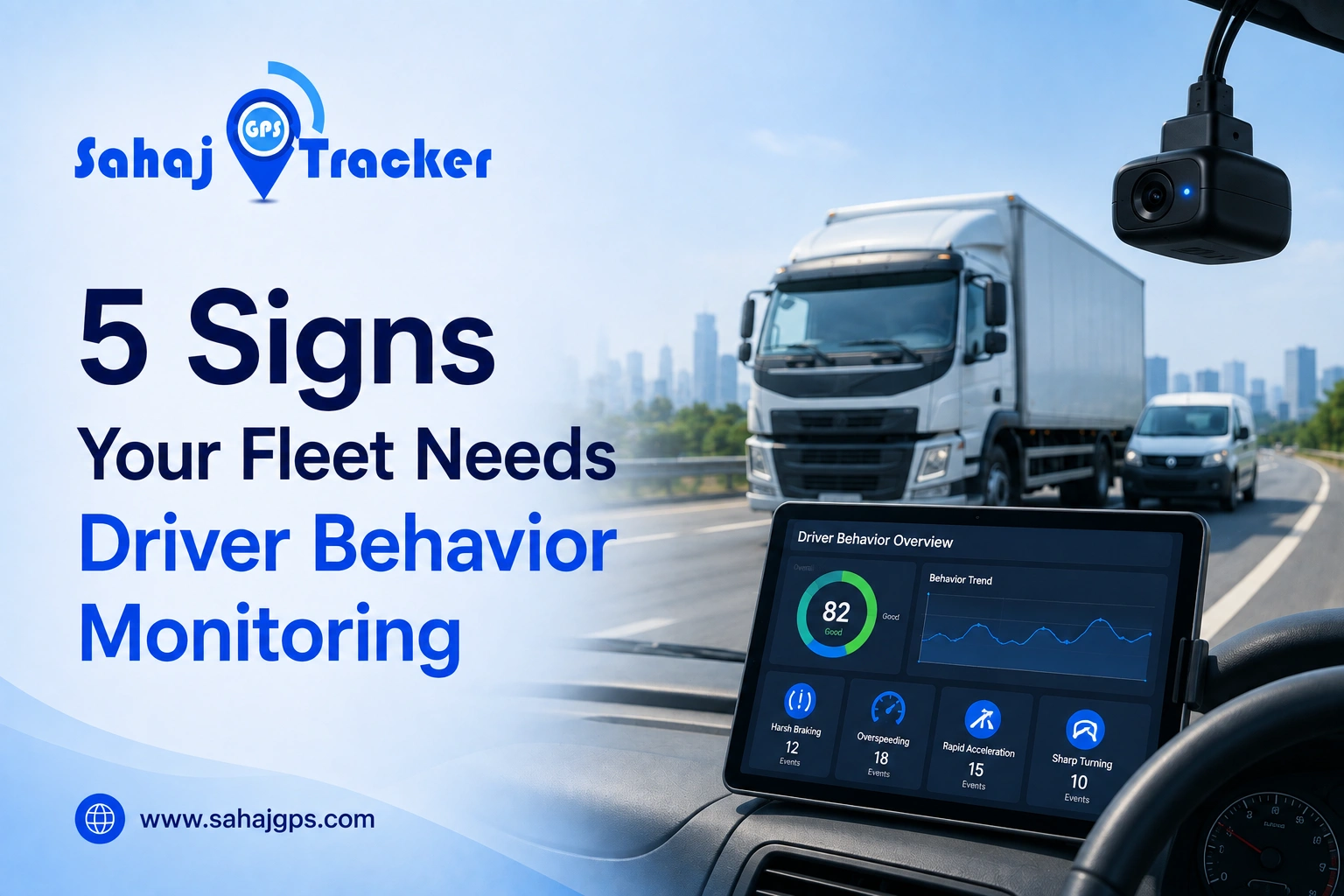
A structured fleet driver behavior monitoring approach helps businesses identify these differences. It can provide information about speeding, harsh acceleration, sudden braking, excessive idling, sharp turns, and other driving events. This information can then be used to improve driver awareness and create more consistent driving standards across the fleet.
Sahaj GPS provides fleet tracking system capabilities that can help businesses gain better visibility into vehicle movement and driving patterns. The objective is not simply to monitor drivers, but to use reliable information to improve safety, efficiency, and fleet performance.
Sign 1: Rising Maintenance and Repair Costs
One of the clearest signs that a fleet may need driver behavior monitoring is a steady increase in maintenance and repair expenses. Vehicles naturally require servicing, but frequent replacement of components such as brakes, tires, and transmission-related parts can indicate that driving habits are placing additional stress on vehicles.
How Driving Habits Affect Vehicle Wear
Harsh braking and rapid acceleration can place unnecessary strain on mechanical components. Similarly, aggressive cornering and inconsistent driving can contribute to faster tire wear. When these behaviors occur repeatedly across multiple vehicles, the additional maintenance cost can become significant.
A driver behavior tracking system can help fleet managers identify patterns associated with excessive vehicle stress. Instead of simply noticing that maintenance costs are increasing, managers can investigate whether specific driving events are contributing to the problem.
Monitoring these patterns can also support preventive action. When drivers receive appropriate feedback about smoother acceleration, braking, and cornering, businesses may be able to reduce avoidable wear and improve vehicle longevity.
Sign 2: High or Increasing Fuel Consumption
Fuel is one of the most significant operating expenses for many commercial fleets. If fuel consumption continues to rise without a corresponding increase in vehicle utilization or business activity, driving behavior should be examined.
Excessive Idling and Aggressive Driving
Excessive idling can waste fuel when vehicles remain stationary with engines running. Rapid acceleration and high-speed driving can also increase fuel consumption because the engine operates less efficiently under certain driving conditions.
A Driver Behavior Monitoring Software platform can help identify events such as excessive idling, speeding, and aggressive acceleration. By analyzing these patterns, fleet managers can determine whether driving behavior is contributing to higher fuel expenses.
Fuel efficiency is not only about selecting efficient vehicles. Consistent driving practices can also influence how much fuel vehicles consume during daily operations. Monitoring behavior therefore gives businesses another way to control operating costs.
Sign 3: Increasing Accidents or Near-Misses
A rise in accidents, sudden braking events, or reported near-misses is a strong indication that a fleet may require closer driver behavior oversight. Even when an incident does not result in significant damage, repeated risky driving events can indicate a developing safety problem.
Understanding What Happened Before an Incident
Traditional accident reporting often focuses on the final outcome. However, understanding the driving behavior before an event can provide more useful information. Sudden braking, excessive speed, sharp turns, or other unusual driving patterns may help explain why an incident occurred.
A fleet driver behavior monitoring system can provide objective data that helps managers identify recurring risk patterns. This information can support more focused driver coaching rather than applying the same approach to every driver.
The goal should be to identify unsafe patterns early and encourage safer driving practices before they result in serious incidents. Consistent monitoring can make fleet safety more proactive rather than purely reactive.
Sign 4: Rising Insurance Premiums and Liability Concerns
Increasing insurance costs can also indicate that a fleet’s risk profile needs attention. Frequent accidents, traffic violations, or repeated safety incidents can make fleet operations more expensive and create additional liability concerns.
Building Better Visibility Into Fleet Safety
When a business lacks reliable information about driving behavior, it can be difficult to understand the causes behind repeated incidents. A driver behavior tracking system can provide valuable records related to vehicle movement and driving events.
Objective data can help fleet managers understand whether risky behavior is isolated to particular situations or appears consistently across the operation. It can also support internal safety policies by giving managers measurable information rather than relying entirely on assumptions or manual reports.
Sahaj GPS can help businesses improve visibility into fleet activity through technology-driven tracking and monitoring. Better information can support more informed decisions around driver coaching, operational policies, and fleet safety management.
Sign 5: Disconnected Tools and Manual Tracking
Another major warning sign is the growing dependence on spreadsheets, paperwork, phone calls, and disconnected systems to understand fleet activity. When GPS information, fuel records, maintenance details, and driver reports are stored separately, creating a complete picture of fleet performance can become difficult.
Why Manual Monitoring Becomes a Problem
Manual tracking takes time and can result in delayed or incomplete information. A fleet manager may discover a recurring driving issue only after reviewing several weeks of reports. By that point, the behavior may already have contributed to additional fuel consumption, vehicle wear, or safety concerns.
A centralized monitoring approach can make information easier to review and act upon. With relevant driving data available through one system, managers can identify trends more efficiently and provide timely feedback.
Sahaj GPS supports businesses looking for more connected fleet visibility, helping reduce dependence on fragmented monitoring processes and making important vehicle information easier to access.
How Driver Behavior Monitoring Can Improve Fleet Operations
A successful monitoring strategy should not focus only on identifying mistakes. Its broader purpose is to encourage safer and more efficient driving habits. When drivers understand which behaviors are being monitored and why those behaviors matter, organizations can create clearer expectations around fleet safety.
Regular review of driving data can help identify positive improvements as well as areas requiring attention. Managers can use the information to recognize safer driving patterns, address repeated issues, and develop practical coaching programs.
The right Driver Behavior Monitoring Software can therefore become part of a wider fleet management strategy. It can connect driving behavior with vehicle performance, fuel efficiency, maintenance requirements, and safety objectives.
Moving Toward Smarter Driving Behavior Monitoring
The need for driver behavior monitoring usually becomes visible through multiple warning signs rather than one isolated issue. Increasing maintenance expenses, rising fuel consumption, more accidents, higher insurance costs, and inefficient manual processes can all indicate that a fleet needs better visibility into driving behavior.
A data-driven Driving Behavior Monitoring approach allows fleet managers to move beyond assumptions and understand how vehicles are actually being operated. With timely information, businesses can identify risky patterns, improve driver awareness, reduce avoidable costs, and build stronger fleet safety practices.
It can support this transition by helping organizations bring vehicle tracking and driver behavior insights into a more structured monitoring process. For growing fleets, better visibility can make it easier to manage daily operations while working toward safer, more efficient, and more accountable driving practices.
Frequently Asked Questions
What is driver behavior monitoring?
Driver behavior monitoring is the process of collecting and analyzing information about how drivers operate vehicles. It can include data related to speeding, harsh braking, rapid acceleration, excessive idling, and other driving events.
How can driver behavior monitoring reduce fleet costs?
Monitoring can help identify driving habits that contribute to excessive fuel consumption and premature vehicle wear. Businesses can then provide appropriate feedback and coaching to encourage smoother and more efficient driving practices.
What is a driver behavior tracking system?
A driver behavior tracking system is a technology-based solution that collects driving-related data and presents it to fleet managers. It can help organizations identify patterns, review driving events, and improve visibility into fleet safety.
Can driver behavior monitoring help reduce accidents?
Monitoring can help identify risky driving patterns before they result in serious incidents. By using driving data to support timely coaching and safety measures, businesses can take a more proactive approach to reducing avoidable risks.
When should a fleet start using driver behavior monitoring?
A fleet can benefit from monitoring when it experiences rising maintenance costs, increasing fuel consumption, repeated safety incidents, higher insurance expenses, or difficulty managing vehicle information manually. Early monitoring can help identify problems before they become more expensive.