
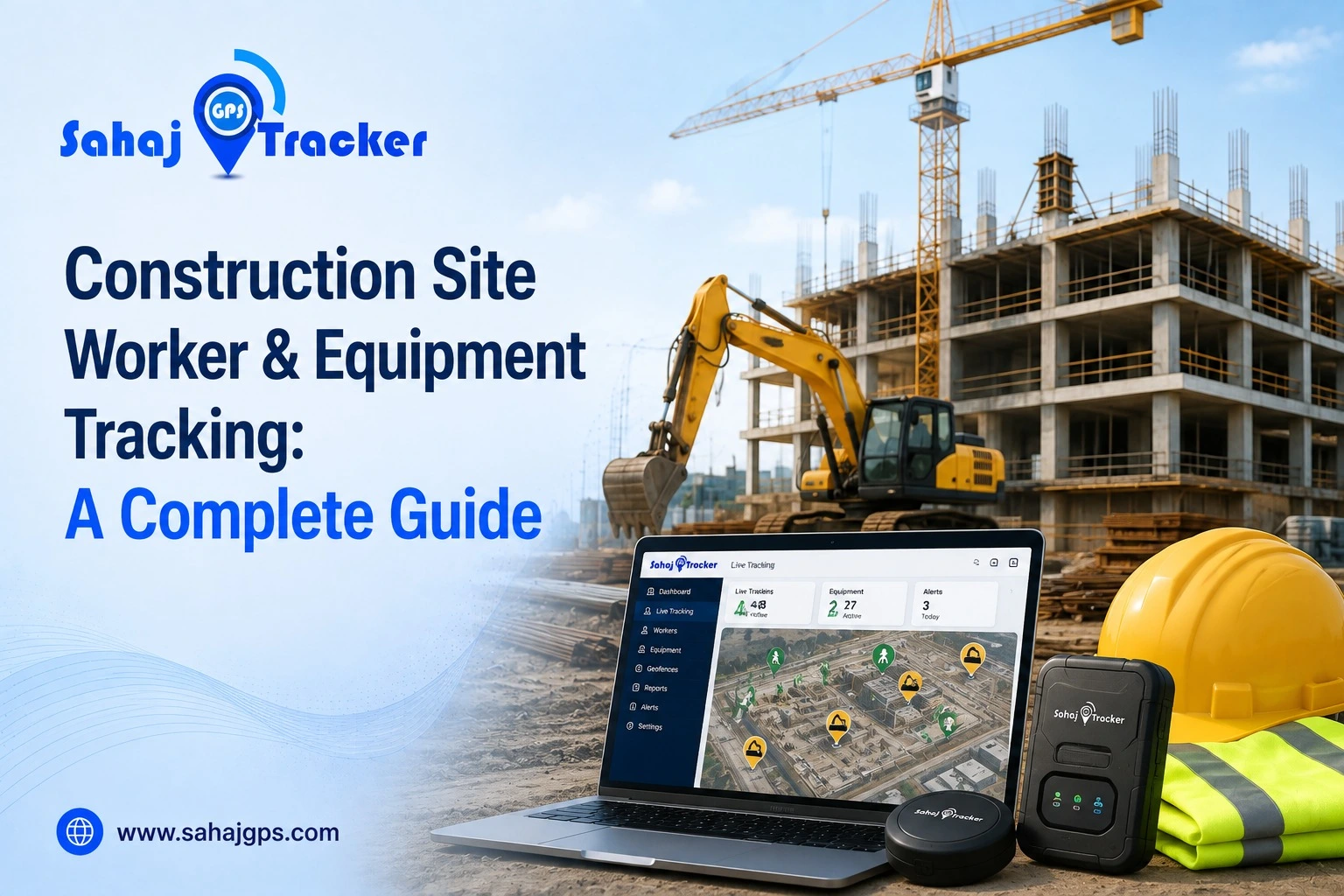
Construction sites are rarely quiet or predictable. Workers move between work zones, machines are shifted from one location to another, deliveries arrive at odd hours, and sometimes a piece of equipment simply disappears from where it was supposed to be. It may sound like a small operational headache, but across a large project, these little gaps can turn into serious delays and extra costs.
That is where construction site worker and equipment tracking becomes useful. With GPS-based tracking, construction companies can keep an eye on employees, vehicles, machinery and mobile assets from a single system. It is not about watching people every minute. The real goal is knowing what is happening on the site when the supervisor cannot physically be everywhere.
What Is Construction Site Worker and Equipment Tracking?
Construction site worker and equipment tracking is the use of GPS, mobile technology, telematics and location-based systems to monitor the movement and status of workers, vehicles, machinery and other valuable assets. Depending on the project, tracking may cover excavators, cranes, loaders, trucks, generators, tools and field employees.
A modern construction site tracking system can show where an asset or authorised worker is located, while also providing useful information such as movement history, idle time, route activity and working zones. For managers handling multiple projects, this can make daily operations much easier to understand.
Think about a supervisor managing three construction sites at the same time. Calling each team every few hours is possible, but hardly efficient. A live tracking dashboard gives a much quicker picture.
Why Construction Companies Need Worker and Equipment Tracking
Construction projects involve expensive equipment and large teams working in changing environments. Even a short period of downtime can affect schedules. When equipment sits unused, fuel is consumed unnecessarily, or workers spend too much time travelling between areas, productivity takes a hit.
A construction worker tracking system helps managers understand workforce movement and improve coordination. At the same time, equipment tracking provides visibility over machines that may be worth lakhs or even crores of rupees.
There is also the issue of accountability. If a vehicle leaves the project area unexpectedly or machinery is being used outside scheduled hours, the tracking record can help identify what happened. Not every unusual movement means something is wrong, of course. Sometimes a machine simply needed to be moved. But having the information makes the conversation easier.
Key Features of a Construction Site Tracking System
Real-Time Worker Location Tracking
A field staff tracking solution can help construction managers know where authorised employees or field teams are working. This becomes particularly useful when a project covers a large area or when workers are distributed across several zones.
An employee location tracking system can also support emergency coordination. If a worker needs assistance, supervisors can identify the relevant location faster instead of relying entirely on phone calls and verbal directions.
GPS Tracking for Construction Equipment
Construction machinery is expensive, and leaving it unmonitored can create unnecessary risk. GPS devices installed on eligible equipment can provide location visibility and movement history.
With construction asset tracking, companies can monitor equipment such as excavators, cranes, dumpers, tractors, generators and other mobile machinery. Managers can see whether assets are being used at the correct project location and identify equipment that has remained inactive for unusually long periods.
Construction Fleet Tracking
Vehicles often move between construction sites, suppliers, storage yards and project offices. Construction fleet tracking helps managers understand these movements without constantly calling drivers.
Route history can also highlight unnecessary trips, long stops or deviations. Over time, this information can help companies improve vehicle utilisation and reduce avoidable fuel expenses. Sahaj GPS provides GPS-based tracking capabilities that can help businesses bring worker, vehicle and asset visibility into a more organised workflow.
How Worker Tracking Improves Construction Site Safety
Safety is one area where location information can be genuinely useful. Construction sites contain moving machinery, restricted areas, unfinished structures and changing hazards. Knowing where teams are working can help supervisors coordinate activities more effectively.
For example, if heavy machinery is scheduled to operate in a particular zone, supervisors can check whether workers are still assigned nearby. Similarly, during an emergency, location information may help teams identify the last known position of a field employee. A tracking system does not replace safety procedures or trained supervisors. It simply adds another layer of information when quick decisions matter.
How Equipment Tracking Reduces Losses and Downtime
Equipment downtime can quietly eat into a construction budget. A machine may be available on paper but sitting unused for several hours because the operator, fuel or project assignment is not aligned.
This is where construction asset tracking becomes practical rather than just another technology feature. Managers can review utilisation patterns, identify idle equipment and make better decisions about where machines should be deployed.
Sahaj GPS can help construction businesses maintain better visibility of mobile assets and vehicles, making it easier to understand where equipment is being used and where operational gaps may exist.
Preventing Unauthorised Equipment Movement
Equipment leaving a project site without approval can create a major headache. GPS tracking can provide movement alerts and location history, helping managers notice unusual activity sooner.
Geofencing can also be useful. A virtual boundary can be created around a construction project, yard or authorised operating area. If a tracked asset moves outside that boundary, the relevant team can receive an alert.
Benefits for Construction Companies in India
Construction operations in India often involve multiple project locations, long-distance vehicle movement and a mix of owned and rented equipment. Managing all of this manually becomes difficult as the business grows.
A construction worker tracking system in India can help companies coordinate field teams more efficiently, while GPS-based equipment tracking can improve asset visibility across cities and project sites.
Some practical benefits include better equipment utilisation, improved fleet coordination, reduced unnecessary travel, quicker response during emergencies, stronger operational accountability and easier project monitoring.
The value is not only in seeing a dot moving across a map. The useful part comes from the decisions made with that information.
How to Choose the Right Construction Tracking Solution
Not every construction business needs the same setup. A small contractor may need vehicle and equipment tracking, while a large infrastructure company could require worker tracking, fleet monitoring, geofencing, reports and multiple-user access.
Look for a system that offers reliable GPS accuracy, real-time location updates, historical route information, geofencing, alerts and an easy-to-use dashboard. Mobile access is another useful feature because project managers are not always sitting inside an office.
Data should also be presented clearly. A dashboard packed with confusing graphs is not particularly helpful when a supervisor needs an answer quickly.
Sahaj GPS offers tracking solutions designed around real-world fleet and field operations, giving construction businesses a way to bring different tracking requirements into one manageable system.
Best Practices for Construction Worker and Equipment Tracking
Before installing tracking devices everywhere, decide what you actually want to monitor. Start with high-value machinery, vehicles or teams where location visibility can solve a clear operational problem.
Create sensible geofences around major project sites and storage yards. Set alerts for important events instead of generating notifications for every tiny movement. Too many alerts quickly become background noise.
It is also worth explaining the purpose of employee tracking to workers. Clear communication can reduce confusion and help teams understand that the system is primarily being used for safety, coordination and operational management.
Finally, review the tracking data regularly. A system becomes far more valuable when managers use historical information to identify repeated delays, idle equipment, inefficient routes or unusual utilisation patterns.
The Future of Construction Site Tracking
Construction tracking is moving beyond simple vehicle location. Companies are increasingly looking at connected equipment, digital project management, telematics, fuel monitoring and workforce visibility as parts of the same operational picture.
The bigger opportunity is integration. Instead of checking separate systems for vehicles, equipment and field employees, businesses can gradually build a connected tracking environment.Sahaj GPS can be part of that approach, helping businesses use GPS-based visibility to make everyday construction operations more organised and easier to manage.
For construction companies, the technology itself is only half the story. The real benefit comes when location data turns into faster decisions, fewer blind spots and better use of people and equipment. And honestly, on a busy construction site, having that extra bit of visibility can make a bigger difference than it first appears.
FAQs
1. What is construction site worker and equipment tracking?
Construction site worker and equipment tracking uses GPS technology to monitor authorised workers, vehicles and machinery. It helps managers improve visibility, coordination, safety and equipment utilisation across active construction projects.
2. How does a construction worker tracking system work?
A construction worker tracking system uses GPS-enabled devices or authorised mobile applications to share location information. Managers can view locations, movement history and selected alerts through a central dashboard.
3. Can GPS tracking monitor construction equipment?
Yes. GPS devices can be installed on suitable construction machinery and vehicles to provide live location, route history, geofencing and movement information. This helps businesses monitor valuable assets more effectively.
4. Is construction fleet tracking useful for multiple project sites?
Yes, especially when vehicles regularly move between projects, warehouses and suppliers. Construction fleet tracking provides visibility into routes, stops and vehicle locations, helping managers coordinate resources and reduce unnecessary travel.
5. What is the benefit of an employee location tracking system?
An employee location tracking system can improve field-team coordination and emergency response by providing authorised location visibility. It can also help managers understand workforce movement across large or multiple construction sites.