
Vehicle tracking is no longer only a fleet management feature. For several categories of public service vehicles in India, vehicle location tracking and emergency alert capabilities are part of the regulatory framework. The introduction of AIS-140 helped standardize Vehicle Location Tracking Devices and related backend systems for safer and more structured transport operations.
Understanding AIS 140 rules is important for fleet owners, transport operators, permit holders, and businesses that manage passenger-carrying vehicles. A compliant setup can help organizations meet applicable vehicle tracking compliance requirements while also improving visibility over vehicle movement and safety.
What Is AIS-140 and Why Does It Matter?
Understanding the AIS-140 Standard
AIS-140 is an automotive industry standard covering specifications for Vehicle Location Tracking Devices, commonly referred to as VLTDs, along with related communication and backend requirements. The standard includes requirements for location information, communication with backend systems, emergency alerts, and other operational functions.
An AIS 140 Certified GPS Tracker is designed to meet the applicable technical requirements of this framework. For regulated vehicles, selecting a device based only on basic GPS tracking features may not be sufficient. The device and its implementation need to meet the applicable regulatory requirements.
Role of Vehicle Location Tracking
The purpose of regulated vehicle tracking goes beyond knowing where a vehicle is. Location information can support monitoring centres, emergency response, transport authorities, and other authorized stakeholders. AIS-140 specifications include capabilities such as GNSS-based positioning, communication with a government-authorized backend server, configurable position data transmission, and emergency alert functionality. For fleet operators, Sahaj GPS can make tracking information part of a broader operational system, helping businesses monitor vehicles while keeping compliance requirements in view.
AIS 140 Rules and Government GPS Mandate
What the Government Framework Covers
The Government of India introduced requirements for Vehicle Location Tracking Devices and emergency buttons in public service vehicles through the Motor Vehicles framework. The implementation has been supported through state-level Vehicle Location Tracking and Emergency Alert systems. The official VLT framework states that public service vehicles covered by the applicable provisions are required to have VLT devices and emergency buttons, with AIS-140 used to standardize the technology.
This is why the phrase government GPS mandate is often used when discussing AIS-140. However, fleet owners should not assume that every vehicle in India has the same requirement. Applicability can depend on vehicle category, registration, permit conditions, and the requirements implemented by the relevant State or Union Territory.
Why State-Level Requirements Also Matter
AIS-140 provides the technical framework, but actual implementation involves state transport authorities and their monitoring infrastructure. States can establish or authorize backend control centres for receiving vehicle data and processing alerts.
For example, official state VLT systems provide features for device enlistment, activation, real-time tracking, emergency alerts, and device health monitoring. Therefore, businesses should check the applicable RTO and State Transport Department requirements rather than treating AIS-140 as a one-size-fits-all compliance checklist.
VLTD, RTO Regulation and Compliance Requirements
What Is a VLTD?
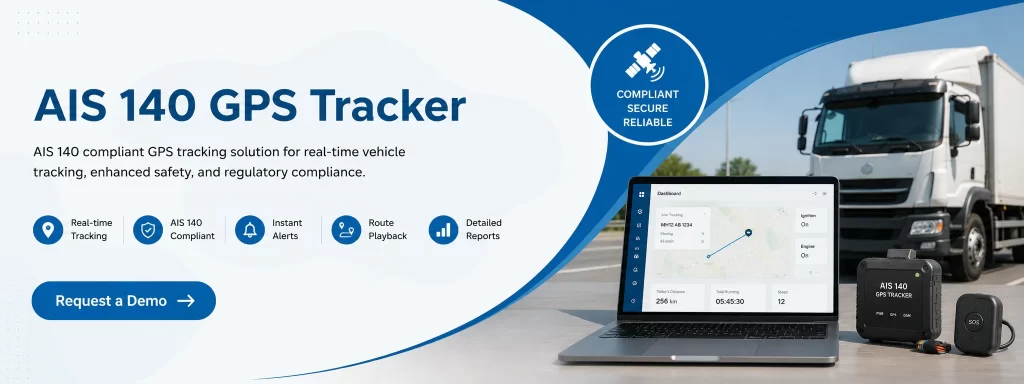
A VLTD is a Vehicle Location Tracking Device installed in a vehicle to transmit location and related information to an appropriate backend system. Under the AIS-140 framework, the device needs to support specific technical and communication capabilities. The device can transmit position, velocity, time, and heading information, while also supporting emergency alert communication.
The AIS-140 specification also provides for configurable transmission frequency and communication with designated backend systems. For businesses, choosing a suitable AIS 140 certified GPS tracker is therefore an important part of establishing a compliant vehicle tracking setup.
Importance of RTO Regulation
RTO regulation is relevant because vehicle permits, registration conditions, fitness requirements, and state-level implementation can affect what a vehicle operator needs to maintain.
A compliant tracking device should not be viewed as a standalone purchase. Businesses should also consider device activation, testing or enlistment where applicable, backend connectivity, emergency button integration, and ongoing device health.
The official VLT system documentation also describes an enlistment and testing process involving Type Approval or COP documentation and compatibility testing with the backend system.
How AIS-140 Improves Public Transport Safety
Emergency Alerts and Real-Time Visibility
One of the key objectives of regulated vehicle tracking is improving passenger safety. AIS-140 supports emergency alert functionality through an emergency button, allowing an alert to be transmitted to the configured backend or emergency response system. The standard also includes vehicle location tracking and historical tracking capabilities. This creates a record that can help authorized stakeholders understand vehicle movement and respond to specific incidents.
Monitoring Vehicle Health and Operations
Compliance does not end after installing the device. AIS-140 specifications include provisions for regular health checks and notifications when a device stops functioning or stops sending data to the backend.
This makes ongoing monitoring important. A device that is physically installed but not communicating correctly may create an operational or compliance concern. It can support fleet managers by bringing vehicle tracking and operational monitoring into one workflow, helping them keep better visibility over vehicle activity and system status.
Beyond Compliance: Fleet Management Benefits
Driver Behavior Monitoring System
A regulatory tracking setup can also support wider fleet management objectives. A driver behavior monitoring system can help fleet managers review driving patterns such as speeding, harsh braking, acceleration, excessive idling, and other events when the required data and features are available.
This information can help businesses identify training requirements and encourage safer driving practices. Better driving behaviour can also contribute to improved vehicle utilization and operating efficiency.
Supporting Fleet Maintenance
Vehicle tracking data can work alongside fleet maintenance processes. Knowing vehicle usage, distance travelled, operating patterns, and other relevant information can help managers organize servicing and inspections more effectively.
Regular maintenance is particularly important for commercial and public transport vehicles because mechanical problems can affect safety, availability, and operating costs.
How to Choose an AIS-140 Compliant Tracking Solution
Check Certification and Technical Compatibility
Before selecting a device, fleet operators should verify whether the specific device is approved or certified as required for the applicable implementation. ARAI maintains information on approved vehicle tracking systems, including AIS-140-related listings.
Businesses should also check whether the device can communicate with the required backend, supports the required emergency functionality, and meets applicable state implementation requirements.
Consider Long-Term Monitoring
The right solution should not be selected only because it offers live GPS location. Businesses should consider device health, alerts, historical tracking, backend connectivity, installation support, maintenance, and reporting.
Sahaj GPS can be considered as part of a broader fleet monitoring approach where compliance-related tracking is combined with day-to-day vehicle management.
Final Thoughts
AIS-140 has played an important role in creating a standardized framework for vehicle location tracking and emergency alert systems in India. For applicable public service vehicles, understanding the relevant requirements is important for maintaining vehicle tracking compliance and supporting safer transport operations.
The AIS 140 mandate should be viewed alongside state-level implementation, government compliance, RTO requirements, device certification, backend connectivity, and ongoing system health. Simply installing a GPS device does not necessarily mean that all applicable requirements have been fulfilled.
At the same time, an AIS-140 tracking setup can offer benefits beyond regulatory needs. With features such as a driver behavior monitoring system, fleet maintenance support, real-time tracking, and operational reporting, businesses can use vehicle data to improve both safety and fleet efficiency.
For organizations managing regulated vehicles, Sahaj GPS can help bring these tracking requirements into a structured fleet management process while giving managers better visibility into their vehicles and operations.
FAQs
1. What is AIS-140 compliance?
AIS-140 compliance refers to meeting the applicable technical and implementation requirements associated with Vehicle Location Tracking Devices and emergency alert systems under the AIS-140 framework. The exact requirements applicable to a vehicle can depend on its category and state-level implementation.
2. What is a VLTD?
A VLTD, or Vehicle Location Tracking Device, is a device installed in a vehicle to provide location and related information to a designated backend system. AIS-140 specifies technical requirements for such devices and their communication capabilities.
3. Is an AIS 140 Certified GPS Tracker mandatory for every vehicle in India?
No. The applicable mandate depends on the vehicle category and relevant government or state transport requirements. Public service vehicles covered under the applicable framework have specific VLT and emergency alert requirements, so operators should verify the rules relevant to their vehicle and state.
4. What role does the RTO play in AIS-140 compliance?
The RTO and State Transport Department can be involved in implementing and monitoring vehicle tracking requirements, including permit-related conditions and device-related processes. Operators should follow the requirements applicable in their respective state.
5. Can AIS-140 tracking also help with fleet management?
Yes. Beyond regulatory requirements, vehicle location data can support route monitoring, a driver behavior monitoring system, fleet maintenance, safety alerts, and operational analysis. This allows businesses to use compliance-related tracking as part of their wider fleet management process.