
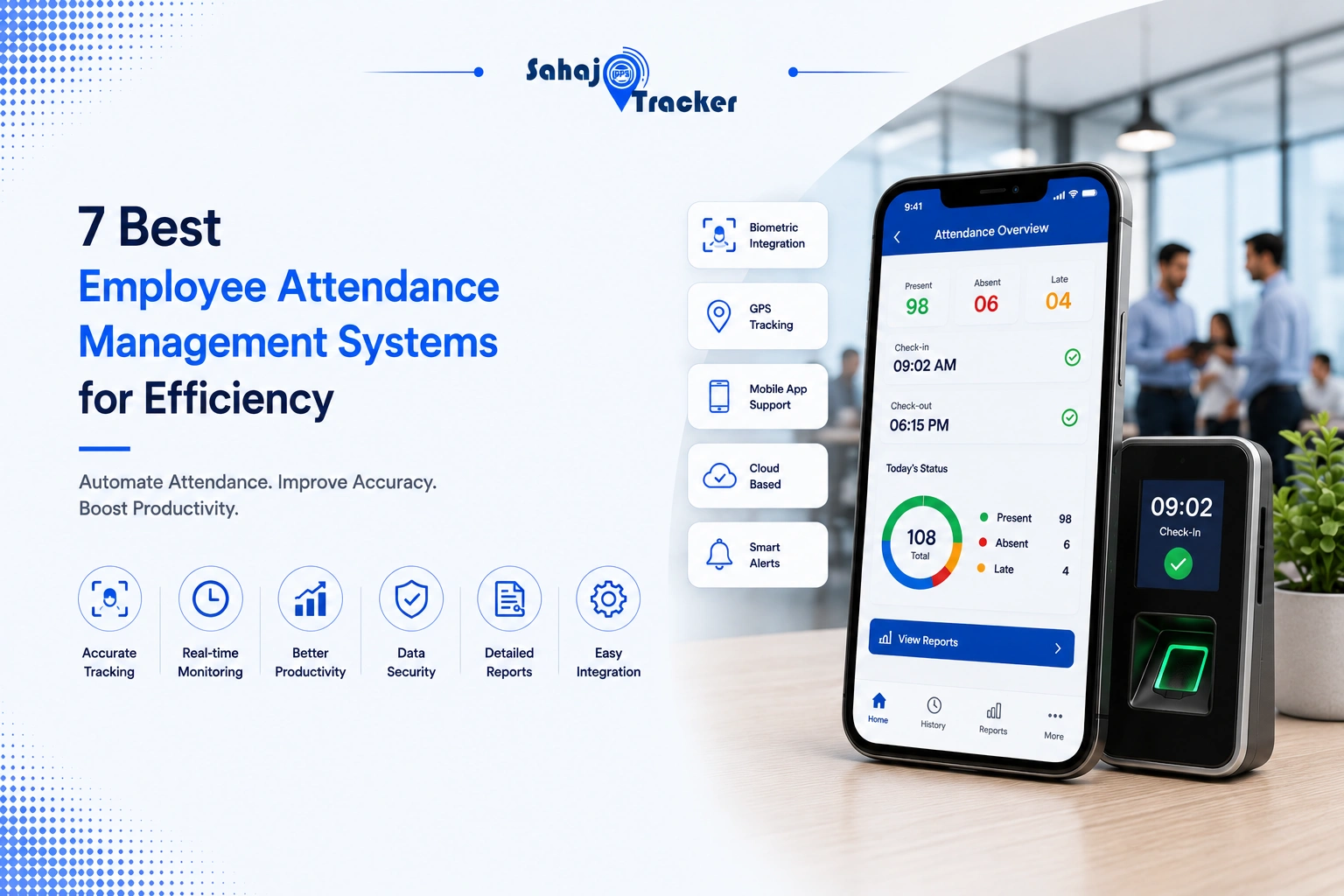
Managing attendance used to be simple. A register on the reception desk, a signature, and the day moved on. But workplaces don’t function that way anymore. Employees work from offices, client locations, warehouses, and even from home. Keeping track of everyone’s working hours manually isn’t just difficult-it creates unnecessary errors and wastes valuable time.
That’s why Digital Attendance Management has become an essential part of modern workforce operations. Whether a company operates in Mumbai, Bengaluru, Delhi, Hyderabad, or anywhere else in India, investing in a reliable Employee attendance system helps improve productivity, payroll accuracy, and workforce accountability while reducing paperwork.
Today’s businesses also need more than attendance records. They need visibility into employee movement, especially for field teams. Technologies like field employee tracking software, Field Employee Monitoring software, and an employee location tracking system allow managers to verify attendance, monitor work progress, and make better operational decisions without constantly calling employees for updates.
As businesses continue expanding, attendance management has evolved into a complete workforce management solution rather than a simple HR function.
Why Every Business Needs a Modern Employee Attendance System
Manual attendance tracking often looks inexpensive until hidden problems begin appearing. Missing attendance entries, incorrect overtime calculations, payroll disputes, and inaccurate leave records consume significant administrative time. HR teams spend hours correcting avoidable mistakes that digital systems can eliminate automatically.
Modern attendance platforms provide real-time attendance records, automated reports, shift management, leave tracking, and payroll integration from one dashboard. Instead of maintaining multiple spreadsheets, businesses receive organised data that supports faster and more informed decision-making. Employees also appreciate transparent attendance records because working hours remain accurate without manual intervention.
Companies managing multiple branches or mobile workforces gain even greater benefits. Attendance information becomes available instantly across every office, ensuring managers always have access to reliable workforce data regardless of employee location.
1. Digital Attendance Management
Digital Attendance Management has become the backbone of efficient workforce operations because it replaces outdated attendance registers with automated technology. Employees can record attendance through mobile applications, biometric devices, web portals, QR codes, or GPS-enabled systems depending on business requirements. Every attendance record is stored securely, making it easy for HR teams to access reports whenever required.
One of the biggest advantages of digital attendance is automation. Working hours, overtime, leave balances, holidays, and attendance reports are updated automatically without requiring manual calculations. Payroll processing becomes faster because attendance information remains accurate throughout the month. Managers can identify attendance trends, monitor employee punctuality, and resolve attendance-related issues before they affect overall productivity.
Businesses with distributed teams benefit even more because attendance remains synchronised across different locations. Employees working from Chennai, Pune, Ahmedabad, or remote locations follow the same attendance process, creating consistency throughout the organisation. Instead of collecting attendance separately from every office, HR teams receive centralised information that improves workforce planning and simplifies compliance reporting.
Many organisations further strengthen Digital Attendance Management by integrating Sahaj GPS into their workforce operations. Along with recording attendance, managers can verify employee locations, monitor daily movement, and review field activities from one dashboard. This reduces manual supervision while improving transparency across both office-based and field employees.
2. GPS-Based Employee Attendance System
Businesses with mobile employees require more than standard attendance records because attendance alone cannot confirm where employees are actually working. A GPS-Based Employee Attendance System solves this challenge by combining attendance with location verification. Employees mark attendance through their smartphones, while GPS confirms they are checking in from authorised work locations rather than anywhere they choose.
This approach is particularly valuable for organisations managing sales representatives, healthcare professionals, technicians, construction supervisors, and service engineers who travel throughout the day. Managers receive accurate attendance along with verified work locations, reducing attendance fraud and improving operational visibility.
Many businesses also combine GPS attendance with Sahaj GPS to monitor workforce movement, customer visits, and daily productivity without increasing reporting responsibilities for employees.
3. Biometric Attendance Management System
Biometric Attendance Management Systems remain one of the most dependable options for organisations where employees work from fixed office locations, factories, warehouses, or production units. By using fingerprint, facial recognition, or iris scanning, these systems ensure that attendance is recorded only by the actual employee. This eliminates buddy punching, reduces attendance manipulation, and creates accurate attendance records without additional supervision.
Another advantage is speed. Employees can mark attendance within seconds, while HR teams receive real-time attendance data for payroll, overtime calculations, and compliance reporting. Modern biometric solutions also integrate with cloud platforms, allowing managers to review attendance from multiple branches without maintaining separate records. For organisations focused on accuracy and security, biometric attendance continues to be a practical long-term investment.
4. Mobile Attendance Management System
The modern workplace is no longer limited to office premises. Employees attend client meetings, travel between project sites, or work remotely from different cities. A Mobile Attendance Management System allows them to mark attendance directly through a smartphone, making the process convenient for both employees and employers.
Mobile attendance solutions often support GPS verification, selfie authentication, QR code scanning, and digital timestamps to improve reliability. Managers receive attendance updates instantly, while employees no longer worry about reaching the office simply to register attendance. This flexibility is especially valuable for businesses with hybrid work policies because attendance remains consistent regardless of where employees are working.
5. Cloud-Based Employee Attendance System
Cloud-based attendance systems provide businesses with secure access to attendance records from anywhere. Instead of storing information on individual computers, attendance data is synchronised online, making it available to HR teams, managers, and authorised employees whenever required.
The biggest advantage of cloud technology is centralised management. Businesses operating across multiple cities no longer need separate attendance registers or spreadsheets for each branch. Managers can review attendance, approve leave requests, generate reports, and prepare payroll from one dashboard.
Many organisations integrate cloud attendance with Sahaj GPS to combine attendance management, workforce visibility, and location verification, creating a single platform that supports both office employees and field teams.
6. Field Employee Attendance Management System
Managing employees who spend most of their day outside the office requires more than basic attendance software. A Field Employee Attendance Management System records attendance while supporting field employee tracking software, Field Employee Monitoring software, and an employee location tracking system to provide complete workforce visibility.
Managers can verify employee check-ins, review customer visits, monitor travel routes, and analyse daily productivity without depending on manual reports. Employees also benefit because they spend less time updating managers and more time completing assigned work. Businesses involved in logistics, healthcare, facility management, retail, and field sales often rely on these systems to improve operational efficiency and customer service.
7. AI-Powered Attendance Management System
Artificial intelligence has added a new level of intelligence to attendance management. AI-powered systems do more than record attendance; they analyse employee behaviour, identify attendance trends, detect unusual patterns, and generate reports that support better workforce planning.
Managers receive alerts for frequent late arrivals, excessive overtime, or unusual attendance behaviour before these issues begin affecting business performance. AI also helps HR teams forecast staffing requirements, optimise shift schedules, and improve workforce utilisation using real operational data instead of assumptions. As businesses continue embracing automation, AI-powered attendance management is becoming an important part of long-term workforce planning.
Choosing the Right Attendance Management System
Every organisation has unique workforce requirements, so selecting the right attendance management system should depend on business operations rather than popularity alone. Companies with office-based employees may prioritise biometric attendance, while organisations managing field teams should focus on GPS verification, mobile attendance, cloud reporting, and workforce visibility.
Businesses looking for a complete workforce solution often choose Sahaj GPS because it combines attendance management, employee tracking, live location monitoring, and productivity reporting within one platform. Rather than using multiple applications, organisations can manage attendance, field operations, and workforce performance more efficiently while reducing manual administrative work.
Attendance management has become much more than recording working hours. The right solution improves transparency, strengthens employee accountability, reduces payroll errors, and helps businesses make smarter workforce decisions. As organisations continue expanding across India, investing in an efficient attendance management system is no longer optional-it’s a practical step toward building a productive and future-ready workplace.
FAQs
1. What is Digital Attendance Management?
Digital Attendance Management automates attendance using mobile apps, biometric devices, GPS, or cloud platforms. It improves accuracy, reduces paperwork, simplifies payroll, and provides businesses with real-time workforce visibility.
2. Why should businesses use an Employee attendance system?
An Employee attendance system records working hours accurately, reduces manual errors, automates payroll calculations, improves compliance, manages shifts and leave, and increases workforce accountability across office and remote teams.
3. How does field employee tracking software help businesses?
Field employee tracking software verifies attendance with GPS, tracks employee movement, monitors customer visits, improves productivity, and ensures field teams work from authorised locations while reducing manual reporting.
4. Which industries benefit most from attendance management systems?
Logistics, healthcare, construction, manufacturing, retail, facility management, field sales, and service businesses benefit the most because they manage multiple shifts, distributed teams, and employees working across different locations.
5. What features should businesses consider before selecting attendance software?
Choose software with mobile attendance, GPS verification, biometric support, cloud access, reporting dashboards, payroll integration, leave management, scalability, strong security, and easy integration with existing business systems.