
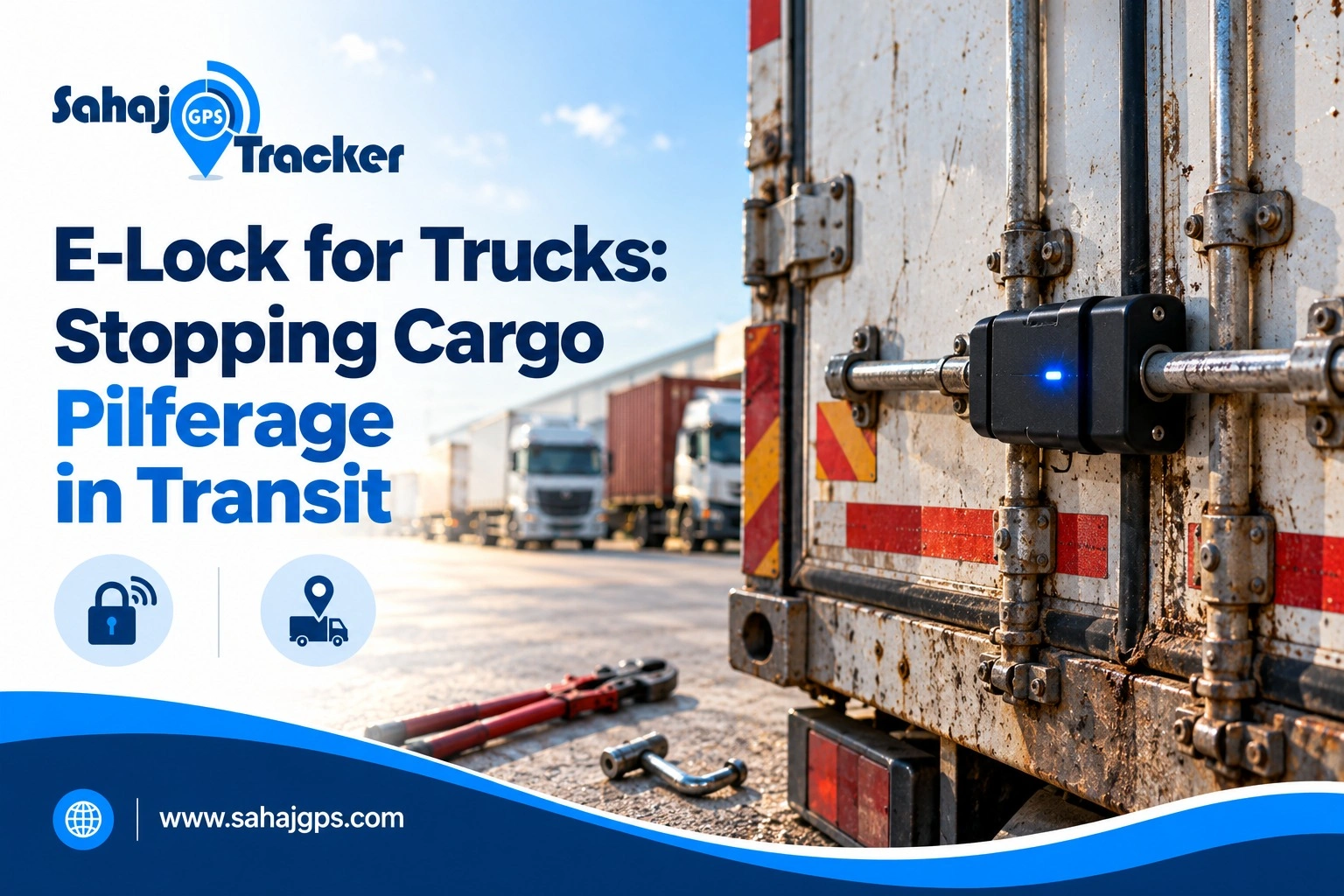
Most cargo losses don’t look like a robbery. They look like a short delivery. The truck leaves full, arrives a few cartons light, and nobody can say where it happened. An e-lock, working alongside a vehicle tracking system, gives you something rare in transit: a record of when the load was opened, and where.
Say you ship 500 cartons from a warehouse to a distributor. The seal is intact at delivery, the driver says nothing happened, and 12 cartons are missing. The customer wants a credit note. The transporter denies it. Everyone has an opinion and nobody has proof.
That gap, between “something happened” and “I can show you what happened,” is where most pilferage lives. Let’s look at how it happens and how to close it.
What Is Cargo Pilferage?
Pilferage is theft in small amounts. It isn’t a hijacking. It’s a few cartons, a few bags or a few drums taken during a journey, often in a way that’s hard to notice until the delivery is checked.
Because each case is small, it rarely triggers an investigation. But it repeats, and the losses add up quietly.
How Pilferage Usually Happens
The pattern is similar in most cases:
- Unplanned halts. A stop that wasn’t in the plan, often at night or in a quiet place.
- Tampered seals. A plain seal can be cut and replaced. Unless someone checks the seal number carefully, it looks fine at delivery.
- Opening the load in transit. Doors or tarpaulins are opened, a few items are removed, and everything is closed again.
- Collusion. Sometimes more than one person is involved, which makes it harder to trace.
- Transfers and handovers. Every time cargo changes hands, there’s a chance for things to go missing without a record.
Notice what’s common to all of these. Something happened while the truck was out of sight, and nothing recorded it.
What an E-Lock Does
An e-lock is an electronic lock fitted to a truck’s cargo door or container. Instead of relying only on a metal seal, it adds an electronic record of the lock’s status.
Features vary by model, but a good e-lock typically does some or all of the following:
- Records when the lock is opened and closed, with the time
- Raises an alert if it’s forced open or tampered with
- Allows opening only by an authorised person or code
- Works together with a GPS platform, so each event is tied to a location
Compare that with a traditional seal. A seal tells you whether something has been cut. An e-lock can tell you when, and with GPS, where.
Because products differ, always check which of these features a specific lock actually supports before you buy.
E-Lock vs Mechanical Seal
| Mechanical seal | E-lock | |
| What it shows | Whether it was broken | When it was opened (on models that log events) |
| Replacement risk | A cut seal can sometimes be replaced | Harder to hide, if events are logged |
| Alerts | None | Possible, depending on the model |
| Location of the event | Unknown | Known, if linked to GPS |
| Cost | Low | Higher |
| Best for | Basic assurance | High-value or sensitive cargo |
An e-lock isn’t necessary for every load. But for valuable or easily resold goods, the extra visibility is often worth it.
Why a Lock Alone Isn’t Enough
A lock tells you when the load was opened. It doesn’t tell you why the truck stopped, how long it stayed, or whether it was where it should have been. That’s where GPS tracking comes in.
Think of cargo security as layers:
- The lock records when the load is opened.
- GPS tracking shows where the truck is and where it stops.
- Zone alerts warn you when the truck enters or leaves areas it shouldn’t. Geo-fencing lets you set virtual boundaries around routes, depots and delivery points.
- Instant alerts for events like zone violations and long idling make unusual behaviour visible quickly. See how instant alerts work.
- Camera footage, such as dashcam monitoring, adds evidence of what happened on the road.
Each layer covers a gap in the others. Together they turn “we think something happened” into a timeline.
What to Look for in a Truck E-Lock
If you’re considering one, ask these questions:
- What type of lock is it? Is it suited to your trucks: containers, closed bodies or something else?
- How is it opened? By a code, an app or an authorised person? Who holds that authority?
- Does it log events? With a time and a location?
- Does it alert you if forced open? And how quickly?
- How long does the battery last? And what happens when it runs low?
- What if there’s no network? Does it still record events and sync later?
- Does it link to your GPS platform? Or is it a separate system you have to check?
- What’s the process for delivery? How is it unlocked and handed over at the destination?
- What does installation involve? And what support is there if it fails?
A lock that’s hard for your own team to use will end up bypassed.
Pair the Lock With a Simple Process
Technology works better with a few basic habits:
- Seal and photograph the load at departure. Keep the photos with the trip record.
- Record the lock or seal details in the delivery paperwork.
- Plan the route and approved halts. Then unplanned stops stand out.
- Review stoppages after each trip. Long or unusual halts are worth a quick question.
- Check the lock record on arrival. Before the load is opened, confirm it matches the plan.
- Be clear with drivers. Explain what’s recorded and why. Most honest drivers welcome a record that protects them from blame.
That last point matters. An accurate record clears the people who did nothing wrong, as much as it catches those who did.
What a Day Looks Like With and Without Visibility
Without: a truck leaves at 8 p.m. and arrives at 6 a.m. Cartons are missing. Nobody knows when, where or how.
With: the load is locked at departure. The log shows the door opened once, at an unplanned halt 40 km from the destination. The tracking history shows the truck stopped for 25 minutes at that location. You now have a time, a place and a question to ask.
You still need to investigate. But you’re investigating with facts, not guesses.
What Pilferage Really Costs
Here’s a rough example. These numbers are made up to show the maths, so use your own.
A truck carries goods worth ₹8 lakh. A 2% shortage on one trip is ₹16,000. Over 50 trips in a year, that’s ₹8 lakh, for one truck. That’s before counting disputes, credit notes and the damage to a customer relationship.
For a fleet, even small percentages become a real number.
How SAHAJ GPS Helps
SAHAJ GPS Vehicle Tracking System helps logistics and cargo owners keep a closer watch on goods in transit. According to the website, it provides:
- Live GPS tracking and history playback of past trips
- Geo-fencing and points of interest, with alerts when a vehicle enters or exits a zone
- Instant alerts through app notifications, SMS or email for events such as ignition status, over-speeding and zone activity
- Reports on trips, stoppages, idling and travel distance
- Dashcam monitoring and video telematics for incident recordings
- Temperature monitoring for sensitive or perishable goods
- E-lock security, listed among its features alongside tire management and job scheduling
It’s also built for transport and logistics operations, and you can read more on our transport and logistics page. For details about the e-lock itself, such as lock types and what it supports, it’s best to ask the team directly with your truck type and cargo in mind.
We’ve also covered related ground in our guide on how to stop vehicle misuse using a GPS tracking system, which shows how unauthorised halts and trips can be spotted.
Frequently Asked Questions
What is an e-lock for trucks?
It’s an electronic lock fitted to a truck’s cargo door or container that records when the lock is opened or closed, and in some models alerts you if it’s tampered with.
How does an e-lock help stop cargo pilferage?
By recording when the load is opened, and by linking that event to a location through GPS, it gives you a timeline to investigate, and it discourages tampering in the first place.
Is an e-lock better than a mechanical seal?
They do different things. A seal shows whether something was broken. An e-lock, depending on the model, can also show when and where it was opened. Many fleets use both for valuable loads.
Can GPS tracking alone prevent cargo theft?
Not alone. GPS shows where the truck is and where it stops, but it doesn’t show whether the cargo door was opened. Combining GPS with a lock covers both.
Do e-locks work for every type of truck?
Not always. They suit closed bodies and containers better than open trucks. Check compatibility with your vehicle type before buying.
What should I check before buying an e-lock?
How it unlocks, what events it logs, whether it alerts on forced opening, battery life, offline behaviour and how well it integrates with your tracking platform.
Final Thoughts
Pilferage rarely announces itself. It shows up later as a shortage, a dispute and a conversation nobody enjoys. A lock that records, a tracker that follows and a process that people actually follow make that conversation much shorter.
If you move high-value or easily resold cargo, talk to the SAHAJ GPS team about what’s possible for your trucks, including e-lock options.