
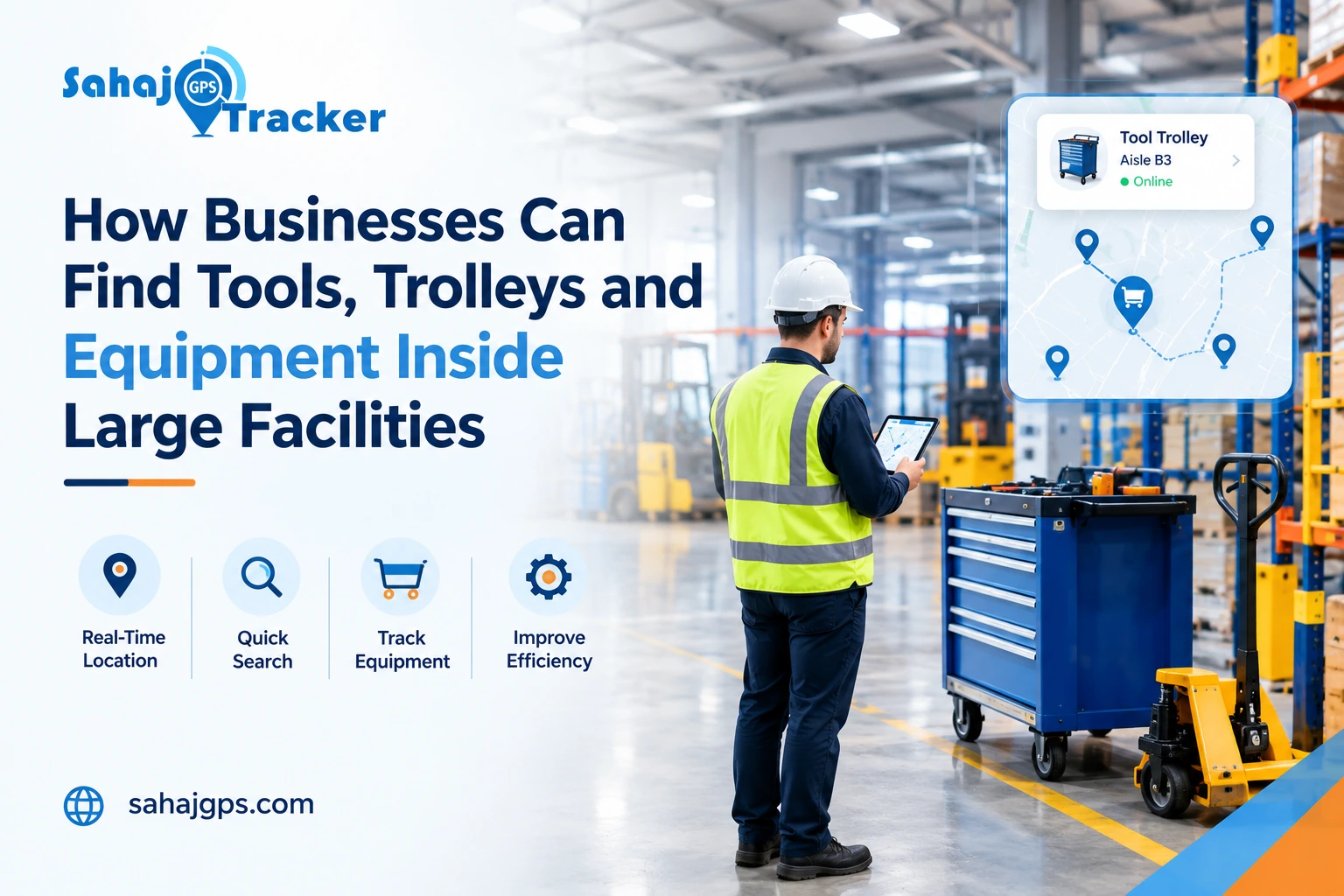
Finding a tool or piece of equipment in a large facility should not feel like looking for a needle in a haystack. But in factories, warehouses, hospitals, workshops, and large commercial buildings, this happens more often than businesses expect.
A trolley may have been moved to another department. A maintenance tool may be with a different team. Equipment that was available yesterday may suddenly be nowhere to be found. An indoor asset tracking system can help businesses solve this everyday problem by making it easier to know where important assets are inside a facility.
Why Is It So Difficult to Find Equipment in Large Facilities?
The problem usually grows as a facility gets bigger. A business may have hundreds or even thousands of tools, trolleys, machines, containers, and other movable items spread across different areas.
Most businesses start with simple methods such as registers, spreadsheets, labels, or asking employees where something was last seen. These methods may work when there are only a few assets, but they become difficult to manage when equipment is constantly moving between departments.
As a result, employees can spend a surprising amount of time searching for things they need. In some cases, businesses may even purchase additional equipment because they cannot find the items they already own.
How Can an Indoor Asset Tracking System Help?
An indoor asset tracking system gives businesses a better way to keep track of movable equipment inside a building.
A tracking tag or identification device can be attached to an asset. The system then uses indoor positioning technology to help identify where that asset is located. Instead of depending completely on memory or manual records, employees can check the system when they need to find something.
For example, imagine a maintenance team needs a particular tool to repair a machine. Rather than calling different departments and asking who has it, the team can check the asset’s recorded location and find the area where it is currently being used.
That small change can save time every day, especially in facilities where equipment moves frequently.
What Can Businesses Track?
Indoor tracking is not limited to expensive machines. Businesses can use it for tools, trolleys, carts, portable equipment, testing devices, maintenance equipment, storage containers, and other assets that regularly move around a facility.
A tool tracking system can be useful in factories and workshops where several employees or teams share the same tools. Similarly, trolley tracking can help warehouses, hospitals, manufacturing units, and other large facilities keep track of trolleys that frequently move between different areas.
The best place to start is usually with assets that are expensive, frequently misplaced, shared by multiple teams, or difficult to replace.
Make Equipment Easier to Find With Indoor Zones
Large facilities often have clearly defined areas such as production floors, warehouses, maintenance rooms, loading areas, storage sections, and dispatch zones. An indoor tracking system can use these areas to make asset location easier to understand.
Instead of simply asking, “Where is this trolley?”, a manager can see that it is currently in a particular zone or department. This gives employees a much clearer starting point when they need to locate it.
Businesses interested in improving visibility of assets inside buildings can learn more about Sahaj GPS Indoor Tracking Software.
The solution is designed for indoor environments where businesses need better visibility of assets and equipment.
Why Asset Movement History Is Useful
Knowing where an asset is right now is helpful, but its movement history can provide even more information.
Businesses can use movement data to understand how often equipment is being used, which departments use it most, and where it spends most of its time. This can reveal assets that are overused, underused, or regularly moved between the same areas.
For example, if a trolley is constantly moving between a warehouse and dispatch area, the business may discover that it needs better trolley allocation in those locations. Over time, these small insights can help improve daily operations.
Indoor Tracking vs. Traditional GPS
GPS is excellent for tracking vehicles and outdoor movement, but locating an asset inside a large building is a different challenge. Building structures, walls, floors, and other obstacles can affect GPS visibility.
This is why indoor tracking is useful for facilities where businesses need to know where assets are within a building. The technology used depends on the facility and the level of location accuracy required.
For a factory, warehouse, hospital, or large commercial facility, an indoor solution can provide more useful asset visibility than relying on traditional outdoor GPS tracking alone.
How Can a Business Start Tracking Its Assets?
Businesses do not have to track every asset from the first day. In fact, starting small can make implementation much easier.
A company can begin with the equipment that causes the biggest problems. This could be expensive tools, shared trolleys, frequently misplaced equipment, or assets that employees spend a lot of time searching for.
The business should also look at the facility layout, number of assets, required location accuracy, and how often those assets move. Once the system is working well, more assets can gradually be added.
The Benefits Go Beyond Finding Lost Equipment
The obvious benefit of indoor asset tracking is that employees can spend less time looking for equipment. However, the value does not stop there.
Better asset visibility can help businesses understand equipment usage, improve resource planning, reduce unnecessary purchases, and make it easier for different teams to share equipment.
It can also make everyday work less frustrating. When employees know where the equipment they need is located, they can get on with their work instead of spending time calling other departments or walking around looking for it.
How to Choose the Right Indoor Tracking Solution
Every facility has different requirements, so businesses should not choose a tracking solution simply because it has a long list of features.
The size and layout of the facility, number of assets, required accuracy, tracking frequency, and type of equipment should all be considered. It is also worth checking whether the system provides useful features such as location history, zone-based tracking, alerts, and an easy-to-use dashboard.
Most importantly, the system should be simple enough for employees to use as part of their normal work. A tracking system only creates value when people actually use it.
Frequently Asked Questions
What is an indoor asset tracking system?
An indoor asset tracking system helps businesses locate and monitor movable assets inside buildings. It can be used for tools, trolleys, equipment, machines, and other important items.
Can indoor tracking be used for tools and trolleys?
Yes. Tools and trolleys are common examples of assets that can benefit from indoor tracking, particularly when they are shared between teams or frequently moved around a facility.
Is GPS suitable for tracking assets inside buildings?
Traditional GPS is mainly designed for outdoor positioning. Inside large buildings, an indoor tracking solution can be more suitable for businesses that need visibility of equipment within specific areas or zones.
Can businesses track where an asset has been?
Depending on the tracking solution, businesses can access asset movement information and understand how equipment moves between different areas. This can be useful for identifying usage patterns and improving resource planning.
Can indoor tracking help reduce equipment loss?
Yes. Better visibility makes it easier to locate equipment and identify where an asset was last recorded. This can reduce the time employees spend searching and help businesses manage valuable assets more effectively.
Is indoor tracking useful for warehouses and factories?
Yes. Warehouses and factories often have large numbers of movable assets, making them strong use cases for indoor tracking. It can help teams improve equipment visibility and reduce unnecessary searching.
Conclusion
Finding tools, trolleys, and equipment should not become a daily challenge for employees. In a large facility, even a few minutes spent searching for an item can add up to many lost working hours.
An indoor asset tracking system gives businesses a clearer view of where their equipment is and how it moves around the facility. With better asset visibility, businesses can save time, make better use of existing equipment, reduce unnecessary purchases, and keep everyday operations running more smoothly.