
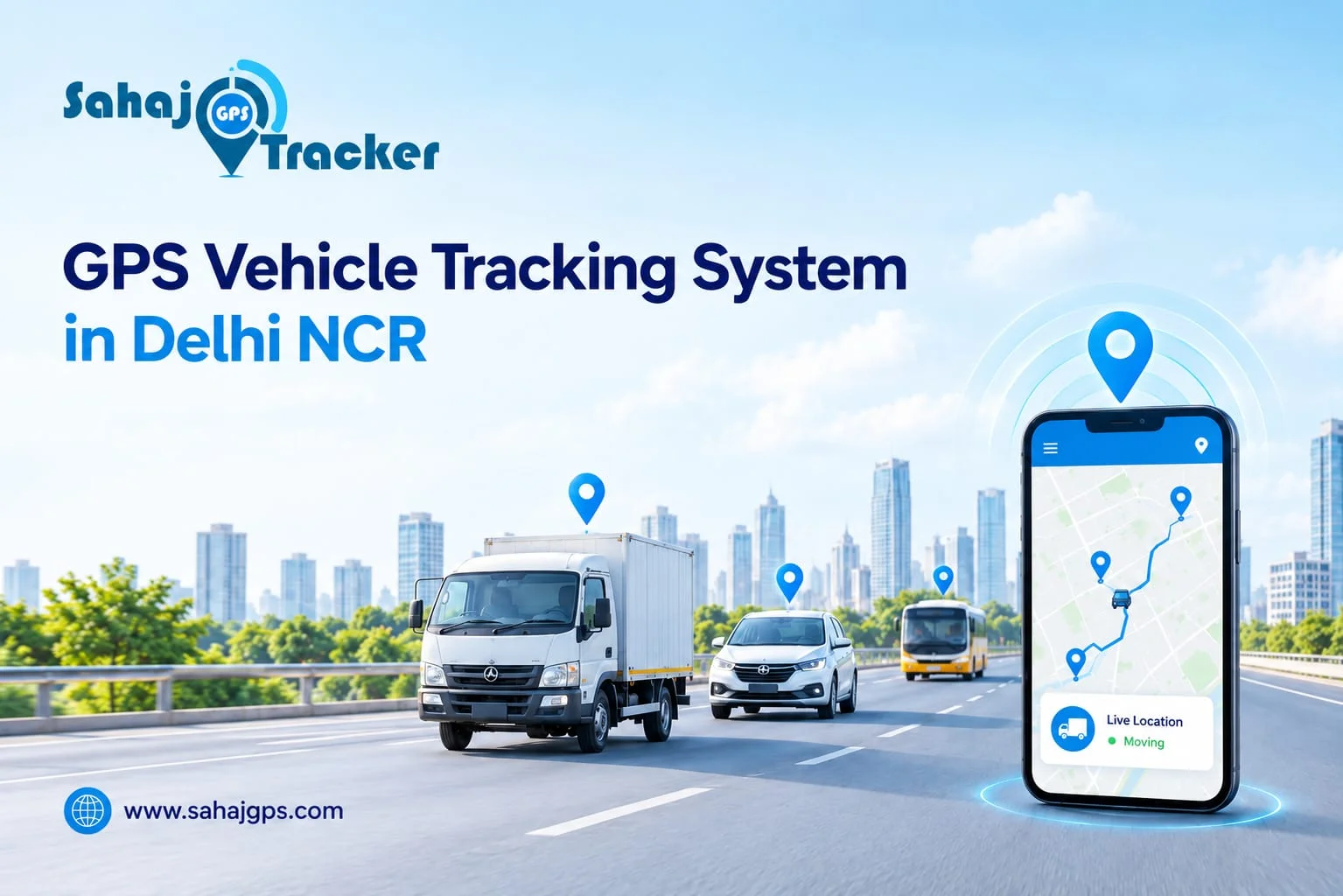
Managing vehicles across Delhi, Gurgaon, Noida, and nearby areas can become difficult when businesses depend only on phone calls, manual updates, and driver reports. Traffic congestion, changing routes, fuel expenses, delivery schedules, and vehicle utilisation all require better visibility.
A GPS vehicle tracking system in Delhi NCR gives fleet operators a practical way to monitor vehicles, understand movement, and manage daily operations from a central platform. Instead of simply knowing where a vehicle is, businesses can use tracking data to improve route planning, monitor driving activity, control fuel usage, and respond to operational issues faster.
For businesses managing cars, commercial vehicles, delivery fleets, school buses, or field-service vehicles, GPS-based monitoring can become an important part of everyday fleet management.
Why Businesses Need Vehicle Tracking in Delhi NCR
Delhi NCR has a complex road network connecting Delhi with Gurgaon, Noida, Ghaziabad, Faridabad, and other surrounding areas. Traffic conditions can change quickly, making it difficult for fleet managers to depend on fixed travel-time assumptions.
A reliable vehicle tracking Delhi solution provides live visibility into vehicle locations and movement. Fleet managers can check whether vehicles are following assigned routes, identify delays, and review trip history when required.
This visibility is particularly useful when several vehicles are operating at different locations at the same time. Instead of contacting every driver for an update, managers can access tracking information through a central dashboard.
Real-Time Visibility Across Multiple Vehicles
A vehicle GPS system can provide real-time location information and help businesses maintain better control over their fleet. Depending on the solution, managers may also be able to review speed, ignition status, trip history, stoppages, and other vehicle-related information.
For companies operating between Delhi, Gurgaon, and Noida, this can make daily coordination easier and provide a clearer picture of vehicle utilisation.
How GPS Tracking Supports Fleet Management
Fleet management involves much more than knowing vehicle locations. Businesses also need to control operating costs, maintain schedules, monitor drivers, and ensure that vehicles are being used appropriately.
A fleet management Gurgaon Noida operation can benefit from GPS tracking by bringing different aspects of vehicle movement into one system. Managers can review historical trips, identify unnecessary stops, and understand how vehicles are being used throughout the day.
Better Route Monitoring
Route deviation can affect delivery schedules, fuel consumption, and vehicle availability. GPS tracking allows managers to compare actual vehicle movement with planned routes.
This does not mean every deviation is a problem. Road closures, traffic, customer requirements, and other situations may require drivers to change their routes. However, having accurate trip information allows managers to understand what happened instead of relying only on assumptions.
Improved Vehicle Utilisation
A fleet may contain vehicles that are frequently used while others remain underutilised. Tracking data can help businesses understand usage patterns and make better decisions about vehicle allocation.
Over time, this information can support more efficient scheduling and reduce unnecessary vehicle movement.
Vehicle Fuel Tracking System for Better Cost Control
Fuel is one of the major operating expenses for many commercial fleets. Small inefficiencies repeated across multiple vehicles can have a significant impact on monthly costs.
A vehicle fuel tracking system can help businesses monitor fuel-related activity and identify unusual consumption patterns. Depending on the technology used, businesses may be able to compare fuel usage with distance travelled and vehicle activity.
Identifying Unusual Fuel Consumption
Unexpected fuel consumption can have several possible causes, including excessive idling, inefficient driving, route deviations, vehicle condition, or discrepancies in fuel records.
GPS and fuel-related data can give fleet managers additional information to investigate such patterns. Instead of looking at fuel expenses in isolation, managers can compare them with actual vehicle movement and operating conditions.
Choosing the Right GPS Tracking Device
The hardware installed in a vehicle plays an important role in the overall tracking experience. A GPS tracking device should be selected according to the type of vehicle, operating environment, required features, and tracking requirements.
For some businesses, basic location tracking may be sufficient. Others may require features such as ignition monitoring, route history, alerts, fuel monitoring, or advanced reporting.
Consider Your Fleet Requirements
Before installing tracking devices, businesses should understand what they actually need to monitor. A small fleet may require straightforward location visibility, while a larger operation may need detailed reports and multiple monitoring parameters.
The right setup should provide useful information without making fleet management unnecessarily complicated.
GPS Geo Fencing for Smarter Vehicle Monitoring
One useful feature of modern tracking systems is GPS geo fencing. It allows businesses to create virtual boundaries around specific geographical areas.
When a vehicle enters or exits a defined zone, the system can generate an alert based on the configured settings. This can be useful for monitoring operational areas, customer locations, warehouses, project sites, or restricted zones.
How Geo Fencing Can Help Fleet Operators
Geo fencing can make routine monitoring easier. For example, a business may create a virtual boundary around a delivery area and receive notifications when a vehicle enters or leaves that location.
It can also help businesses review whether vehicles are operating within approved areas. Combined with trip history, geo fencing can provide additional context about vehicle movement.
Why Localised Fleet Monitoring Matters
A GPS solution for Delhi NCR needs to work within the realities of the region. Heavy traffic, dense commercial areas, multiple industrial zones, and long-distance movement between NCR cities can create different operational challenges.
A GPS company Delhi NCR businesses choose should therefore be able to support practical fleet requirements rather than offering tracking as a standalone location feature.
Sahaj GPS provides GPS-based vehicle tracking solutions that can help businesses monitor vehicles, review movement, and improve fleet visibility.
Turning Tracking Data Into Better Decisions
The real value of GPS tracking comes from using the information generated by the system. Simply installing a tracking device does not automatically improve fleet performance.
Managers need to review patterns such as frequent stoppages, route deviations, excessive idling, vehicle utilisation, and travel history. These insights can then be used to improve operational processes.
From Location Tracking to Fleet Intelligence
When location, trip, fuel, and vehicle activity data are reviewed together, fleet managers can develop a clearer understanding of how their vehicles operate.
For example, repeated delays on a particular route may indicate a need for route adjustments. Frequent long stoppages may require further investigation. Higher fuel consumption in certain operating conditions may highlight an opportunity to improve driving practices or vehicle maintenance.
This turns GPS tracking from a simple location tool into a source of operational information.
Making Fleet Operations More Efficient
Fleet businesses are constantly balancing service quality, operating costs, vehicle availability, and customer expectations. A well-configured tracking system can support this balance by providing reliable visibility into daily vehicle activity.
Whether a business operates in Delhi, Gurgaon, Noida, or across the wider NCR region, real-time tracking can help managers stay informed without depending entirely on manual communication.
Sahaj GPS solutions can support businesses looking to bring vehicle visibility, trip monitoring, fuel-related insights, and geo fencing into their fleet operations.
Conclusion
Managing a fleet across Delhi NCR requires visibility, timely information, and practical control over vehicle operations. A GPS vehicle tracking system in Delhi NCR can help businesses monitor movement, review routes, understand vehicle utilisation, and support better fleet management decisions.
Features such as a vehicle GPS system, vehicle fuel tracking system, GPS tracking device, and GPS geo fencing can address different operational requirements. When the collected data is reviewed consistently, businesses can move beyond simply tracking vehicles and start using fleet information to improve everyday operations.
For companies managing vehicles across Delhi, Gurgaon, Noida, and surrounding areas, GPS-based monitoring can provide a structured way to gain better visibility and make fleet operations more manageable.

FAQs
What is a GPS vehicle tracking system?
A GPS vehicle tracking system uses GPS technology to determine a vehicle’s location and transmit tracking information to a monitoring platform. Depending on the solution, it can also provide trip history, alerts, speed information, and other vehicle-related data.
How can GPS tracking help businesses in Delhi NCR?
GPS tracking can help businesses monitor vehicle locations, review routes, track trips, improve vehicle utilisation, and maintain better operational visibility across Delhi, Gurgaon, Noida, and other NCR locations.
What is GPS geo fencing?
GPS geo fencing creates a virtual geographical boundary around a selected area. When a tracked vehicle enters or leaves that area, the system can generate an alert according to the configured settings.
Can GPS tracking help monitor fuel usage?
Yes. A vehicle fuel tracking system can provide fuel-related information and help businesses identify unusual consumption patterns when combined with vehicle movement and trip data.
What should businesses consider when choosing a GPS tracking device?
Businesses should consider vehicle type, required tracking features, reporting needs, installation requirements, coverage, alerts, fuel monitoring requirements, and whether the system can scale with their fleet.