
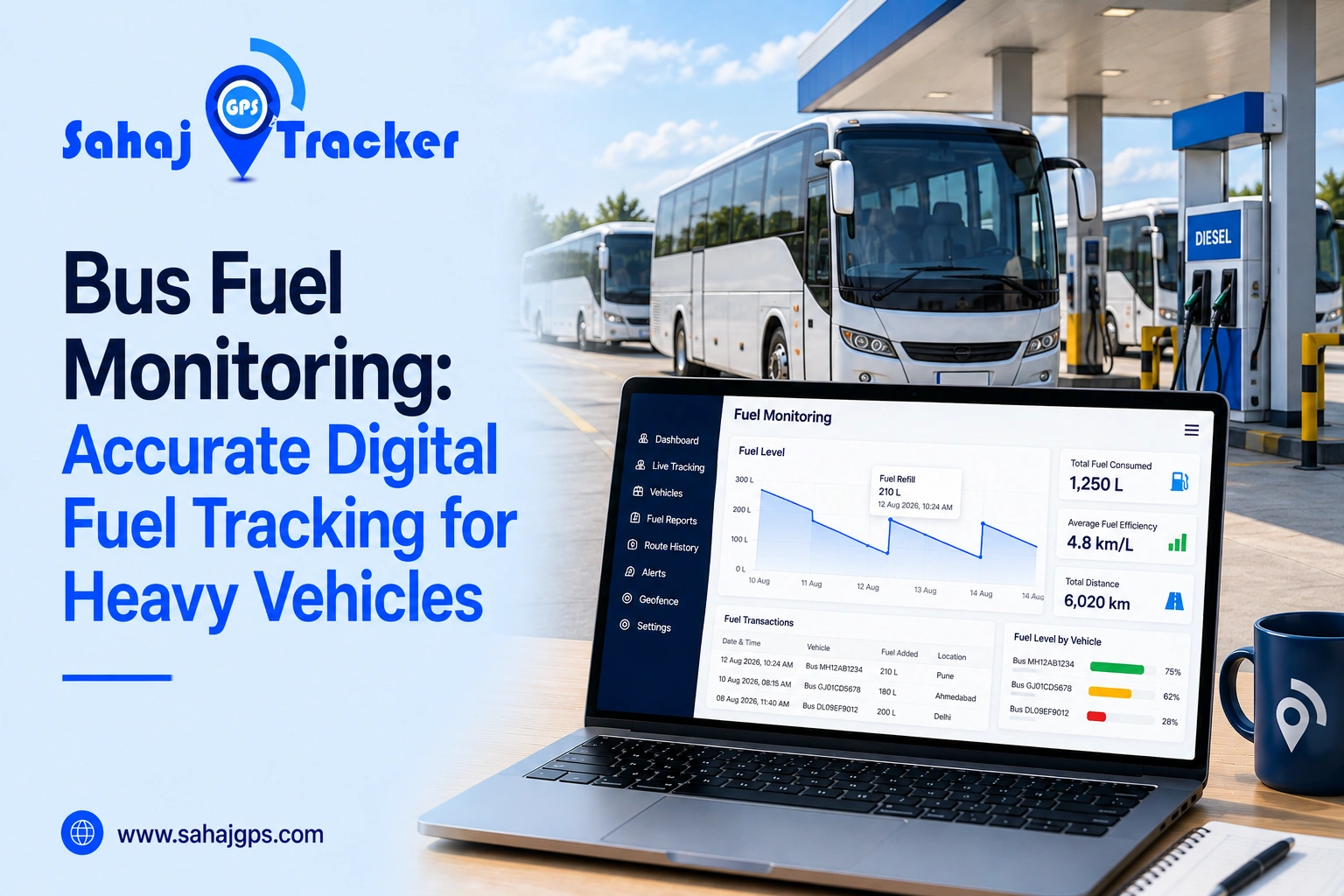
Running a bus fleet means dealing with fuel costs every single day. A few extra litres here and there may not look like much, but across 20, 50, or 100 buses, the numbers can get uncomfortable. A bus fuel monitoring system gives fleet managers a clearer picture of where fuel is going, how much each bus is consuming, and whether something unusual is happening. With digital tracking, bus fuel monitoring becomes less about guesswork and more about having actual data to work with.
Why Bus Fuel Monitoring Matters for Heavy Vehicles
Fuel is one of the biggest running expenses for transport operators. Buses cover long routes, spend time in traffic, stop frequently, and often operate for many hours without much rest. Naturally, fuel consumption changes from one trip to another. The problem starts when the numbers don’t make sense.
A bus may consume more fuel because of heavy traffic or a difficult route. But what if the same vehicle keeps showing unusually high consumption every week? Or fuel levels drop while the bus is parked? Manual registers usually won’t answer these questions clearly.
A digital system can. With a fuel tracking system for buses, fleet managers can monitor fuel levels, consumption patterns and vehicle activity from one platform. It becomes much easier to compare vehicles and notice things that might otherwise go unnoticed.
How a Bus Fuel Monitoring System Works
A modern system generally uses fuel sensors, GPS technology and tracking software to collect information from the vehicle. The data is then displayed through a web dashboard or mobile application.
Depending on the setup, managers may be able to see:
- Current fuel level
- Fuel consumption
- Refuelling events
- Sudden fuel drops
- Vehicle location
- Driving activity
- Route history
- Idling behaviour
- Fuel-related alerts
- Historical fuel reports
The exact features depend on the equipment and configuration, of course. Still, having this information together makes daily fleet management considerably easier.
Real-Time Fuel Monitoring on the Move
Real time fuel monitoring is particularly useful for large bus fleets because managers don’t have to wait until the end of a shift to review fuel records.
Imagine a bus leaves the depot in the morning with a certain fuel level. During the day, the system records changes as the bus travels. If there is an unexpected drop, the manager can check the vehicle’s location and other available data. It’s a simple idea, but it can save a lot of manual checking.
Real-Time Fuel Consumption Tracking for Bus Fleets
Fuel usage isn’t identical across every bus. Two vehicles running on similar routes may still show different consumption because of driving style, traffic, vehicle condition, passenger load, or idling. This is where real time fuel consumption tracking becomes useful.
Instead of looking only at the total fuel purchased, fleet managers can study consumption patterns over time. Which buses are using more fuel? Which routes create higher consumption? Are some vehicles spending too much time idling? These questions can lead to practical changes.
Monitor Excessive Idling
A bus waiting at a terminal with its engine running is still burning fuel. The same thing can happen during traffic congestion, passenger boarding, breaks, or loading activities.
One bus doing this occasionally isn’t necessarily a major issue. But when several buses do it every day, the cost adds up. Fuel and GPS data can help managers identify repeated idling patterns and discuss them with drivers or supervisors.
GPS Fuel Monitoring System for Better Fleet Visibility
A GPS fuel monitoring system combines fuel information with vehicle location data. That’s where things get interesting.
Suppose a bus shows a sudden fuel-level change. Looking at the fuel reading alone doesn’t tell the whole story. Location data can provide additional context. Was the vehicle at a fuel station? Was it moving? Was it parked at the depot? When these details are available together, investigation becomes much simpler.
A GPS-based approach can also help transport companies keep track of buses operating across different routes and cities.
For operators searching for a GPS fuel monitoring system in India, it is worth checking sensor compatibility, tracking accuracy, reporting options, network performance and after-sales support before selecting a solution.
Fuel Theft Detection System for Buses
Fuel theft is an uncomfortable subject, but fleet operators have to consider it. Unexplained fuel loss can happen for different reasons, and not every sudden drop automatically means theft.
That’s why a proper fuel theft detection system for buses should focus on identifying unusual fuel-level changes and giving managers information to investigate them.
Detect Sudden Fuel Drops
A sharp drop in fuel level while a bus is stationary may require attention. The system can generate an alert based on configured thresholds, allowing the fleet manager to check the event.
For example, if a bus is parked inside a depot overnight and its fuel level changes significantly without a scheduled refuelling activity, that’s worth looking into.
Digital records also create a useful history. Instead of relying on memory — “I think the bus had around half a tank” — managers can refer to recorded data.
Benefits of Digital Fuel Tracking for Heavy Vehicles
The biggest advantage isn’t simply knowing how many litres a bus has. It’s the visibility that comes from connecting different pieces of information. A good system can help with:
Better Fuel Cost Control
Regular monitoring helps fleet operators understand where fuel expenses are coming from and identify avoidable consumption.
Improved Driver Accountability
Fuel data combined with vehicle activity can highlight unusual patterns. This gives supervisors something concrete to discuss rather than making assumptions about driver behaviour.
Easier Fleet Management
When multiple buses are operating simultaneously, centralised reports reduce the need for constant phone calls and manual registers.
Faster Identification of Fuel Issues
Unexpected drops, unusual consumption and repeated idling can be noticed sooner when the system provides timely alerts.
Better Vehicle Maintenance Planning
High fuel consumption isn’t always a fuel problem. Sometimes it can point towards mechanical issues, tyre pressure problems, poor engine performance or other maintenance concerns. So fuel data can also become another useful input for fleet maintenance decisions.
How to Choose the Right Fuel Tracking System for Buses
Buying the first system that appears in a search result isn’t always a great idea. Bus fleets have their own requirements, and installation quality matters too.
Before choosing a solution, check whether it offers:
- Accurate fuel-level measurement
- Reliable fuel sensors
- GPS tracking integration
- Real-time alerts
- Fuel theft monitoring
- Historical reports
- Mobile access
- Easy-to-understand dashboards
- Multi-vehicle monitoring
- Technical and installation support
Sahaj GPS offers vehicle tracking and fuel monitoring solutions designed to give fleet operators better visibility into vehicle movement and fuel usage. Also ask about sensor calibration. This part is easy to overlook, but inaccurate readings can make an otherwise good system frustrating to use.
Fuel Monitoring for Bus Operators in India
Indian bus fleets deal with a mix of long highway journeys, crowded city roads, frequent stops and changing traffic conditions. A bus travelling through Mumbai may have a very different fuel pattern from one running a long-distance route between cities. That’s why location and route data can be useful alongside fuel information.
Transport operators in Delhi, Mumbai, Bengaluru, Ahmedabad, Pune and other Indian cities can use digital monitoring to compare vehicle performance, understand route-wise consumption and keep closer control over operating expenses.
For school buses, staff transportation, private bus operators and commercial passenger fleets, the use case can be slightly different, but the basic need remains the same: know what the vehicle is doing and how efficiently it is operating.
Why Digital Fuel Data Is Worth Using
There was a time when fleet managers had to depend heavily on fuel slips, registers and phone calls. Those methods aren’t completely useless, but they become difficult to manage as the fleet grows. A digital system gives you a running record.
You can look back at yesterday’s fuel consumption. Compare two buses. Check a particular refuelling event. Investigate an unusual drop. It’s all much easier when the information is sitting in one dashboard.
Sahaj GPS helps businesses bring vehicle tracking and fuel monitoring together so fleet teams can make more informed day-to-day decisions.
And really, that’s the practical value of fuel monitoring. It doesn’t magically make diesel cheaper. It simply helps you see where fuel is being used, where wastage may be happening, and where a little attention could save money. For a busy bus fleet, that visibility can matter quite a bit.
FAQs
1. What is a Bus Fuel Monitoring System?
A Bus Fuel Monitoring System tracks fuel levels and consumption digitally. It can help fleet managers monitor refuelling, identify unusual fuel drops, study consumption patterns and improve overall control of bus operating costs.
2. How does real-time fuel monitoring work?
Real-time fuel monitoring uses sensors installed with the vehicle’s fuel system to measure fuel levels and transmit information to tracking software. Managers can then view readings and receive alerts through a dashboard.
3. Can fuel monitoring help detect fuel theft?
Yes, fuel monitoring can identify unusual or sudden fuel-level changes and provide alerts for investigation. When combined with GPS location and vehicle activity, managers can better understand when and where an unusual event occurred.
4. Is GPS fuel monitoring useful for large bus fleets?
Yes. A GPS fuel monitoring system can combine vehicle location with fuel data, making it easier to monitor multiple buses, compare consumption, investigate unusual events and manage fleet operations from a central platform.
5. Can fuel monitoring reduce bus operating costs?
It can help identify excessive idling, unusual consumption, wastage and inefficient vehicle usage. Using these insights, fleet managers can take practical steps to improve fuel efficiency and control avoidable operating expenses.