
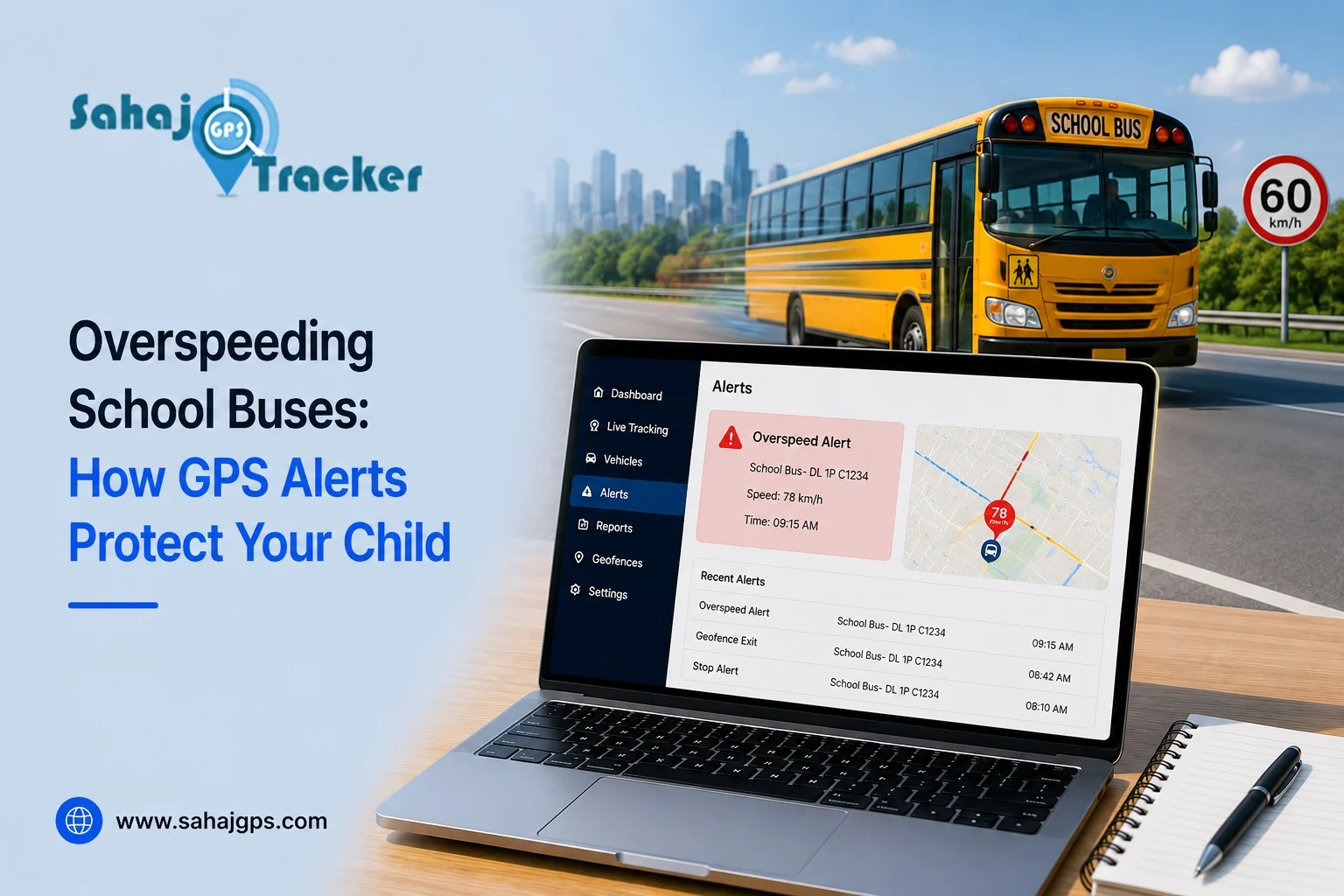
Parents don’t usually think about the technology inside a school bus. They think about whether their child reached school safely. They may wonder if the driver is following the route, whether the bus is running late, or simply whether it is moving too fast. A school bus GPS tracking system can provide answers to many of these everyday concerns by offering live location information, speed monitoring and timely safety alerts.
Overspeeding is one of those problems that can be difficult to notice from the outside. A bus might look completely normal while travelling on the road, but a few extra kilometres per hour can make a difference when traffic suddenly stops or a child crosses the road. With the right GPS technology, schools can monitor vehicle speed and respond to unusual driving behaviour instead of finding out about it much later.
Why Overspeeding School Buses Can Become a Safety Risk
Driving a school bus is not an easy job. Drivers have to deal with traffic, crowded roads, sudden turns, pedestrians, motorcycles and frequent stops. In busy Indian cities, the situation can change within minutes.
When a school bus is travelling too fast, the driver has less time to react to something unexpected. Braking may take longer, sharp turns can become more difficult, and a small mistake can have bigger consequences.
Sometimes speeding happens because a driver is trying to make up for lost time. A traffic jam, a delayed pickup or road construction can put pressure on the schedule. Sometimes, the driver may simply not realize how much the vehicle’s speed has increased.
This is where school bus speed monitoring becomes useful. Instead of depending entirely on manual supervision, schools can use GPS data to identify when a vehicle exceeds its permitted speed.
How a School Bus GPS Tracking System Monitors Speed
A school bus GPS tracking system uses a GPS device installed in the vehicle to collect location and movement information. The system can calculate the vehicle’s speed and compare it with a predefined limit.
For example, a school may configure an appropriate speed threshold for its buses. If the vehicle crosses that limit, the platform can generate an alert for the transport manager or another authorized person.
The useful part is that the school doesn’t have to wait until the end of the trip to review what happened. Depending on the tracking platform, the alert can be received while the vehicle is still on the road.
A school bus GPS tracker can also provide trip history, route information and other vehicle data, giving the school a clearer picture of how the bus was operated during the journey.
Sahaj GPS provides GPS-based vehicle tracking solutions that can help schools and transport operators monitor vehicle location, movement and speed through a centralized platform.
Overspeed Alert System for School Buses
An overspeed alert system for school buses is designed to notify authorized users when a bus crosses a configured speed limit. This makes it easier for transport managers to notice potentially unsafe driving without constantly watching every vehicle.
Why Real-Time Speed Alerts Matter
Imagine a bus travelling through a residential area where children are walking to school. The driver suddenly starts travelling faster than the permitted limit. The transport manager is sitting miles away and obviously cannot see the road. A real-time alert can bring attention to the event.
The manager may be able to check the vehicle’s current location and contact the driver if the situation requires immediate attention. Later, the school can review the trip history and see whether the incident was isolated or part of a repeated pattern.
That second part is important. One alert doesn’t necessarily mean a driver is careless. Maybe there was an emergency. Maybe the road conditions changed. But if the same bus repeatedly generates alerts on the same route, that’s worth looking into.
Real-Time School Bus Tracking for Better Visibility
Parents often want more than a message saying, “The bus has left.”
Real-time school bus tracking can allow authorized parents and school staff to see where a bus is during its journey. Depending on the system, they may also be able to view the route and receive notifications related to the vehicle’s movement.
For parents, this can make the morning routine a little easier. Instead of standing outside for twenty minutes wondering whether the bus is close, they may be able to check its current location.
Schools can benefit too. If several buses are operating at the same time, transport staff can monitor them from a central dashboard rather than calling individual drivers for updates. Sahaj GPS helps businesses and institutions use real-time tracking technology to improve visibility over vehicle movement and daily transportation operations.
School Bus Safety Tracking System: More Than Just a Map
A school bus safety tracking system should not be treated as nothing more than a map showing moving vehicles. Location is useful, but combining it with speed alerts, route history and geofencing can provide much more practical information.
For example, schools can review whether buses are following their assigned routes and identify unusual stops or route deviations. A virtual boundary can also be created around the school, pickup points or other important locations.
When a bus enters or leaves a defined area, the system may record the event or send an alert, depending on its configuration.
Monitoring School Bus Routes and Driving Patterns
A school might have ten buses today and twenty a few years later. Manually checking every route becomes harder as the fleet grows.
GPS tracking can create a record of each trip. Transport managers can look at previous journeys, check where delays happened and identify repeated speed events.
This information can also support driver training. If a particular route regularly produces overspeed alerts, the school can look at the bigger picture before making a decision. Perhaps the route timing needs adjustment. Perhaps the driver needs guidance. Maybe the road itself has changed. The data doesn’t make the decision. It helps people make a better one.
How GPS Tracking Can Improve Driver Behaviour
Drivers are more likely to maintain safer driving habits when they know that speed and vehicle movement can be reviewed. This doesn’t mean GPS should be used simply to punish drivers.
A better approach is to use tracking information as part of regular safety management. Repeated overspeed events can be discussed with the driver, while good driving behaviour can also be recognized.
A school bus GPS tracker can provide historical information that helps schools understand what happened during a trip instead of relying only on verbal explanations. Sahaj GPS can support this process by providing tracking information that schools and transport teams can use to review vehicle movement and driving-related events.
School Bus GPS Tracking in India
The need for reliable school bus GPS tracking in India is especially noticeable because road conditions vary so much. A school bus may travel through a quiet residential area, a crowded market, a highway and a narrow local road during the same day. Traffic can change quickly as well. A journey that normally takes 30 minutes might suddenly take an hour because of congestion, construction or weather.
For schools managing several routes, GPS tracking can provide centralized visibility across the fleet. Transport staff can monitor buses operating in different parts of the city without making repeated calls to drivers.
Location-specific tracking is also useful for schools in cities such as Delhi, Mumbai, Bengaluru, Ahmedabad, Pune and Jaipur, where traffic patterns and road conditions can vary considerably from one route to another.
What Should Schools Look for in a School Bus GPS Tracker?
Choosing a school bus GPS tracker shouldn’t be based only on whether it shows a vehicle on a map. Schools should consider features that support actual transportation safety. Speed alerts are important, but route history, real-time tracking, geofencing, notifications and reporting can also make the system more useful. The interface should be simple enough for transport staff to understand quickly, especially when several buses are being monitored at once.
Parents also need clear information. They don’t need a complicated dashboard filled with technical details. They need useful updates about the bus and its journey.
Data security and responsible access are important too because school transportation involves information that should only be available to authorized users. Sahaj GPS offers GPS tracking solutions that can help schools and transport operators improve vehicle visibility, monitor routes and support safer day-to-day transportation management.
GPS Alerts Cannot Replace Safe Driving
It is worth keeping one thing clear: GPS is not a substitute for a trained driver or proper safety procedures. A tracking system cannot physically stop a speeding vehicle. What it can do is make speeding visible. That visibility gives schools an opportunity to identify problems, speak with drivers, review routes and take corrective action where necessary.
When school bus speed monitoring, real-time tracking and route information work together, schools get a much better understanding of what is happening on the road.
For parents, that’s valuable. You may never notice the GPS device sitting quietly inside the bus, and honestly, that’s probably the way it should be. But knowing that the vehicle can be monitored when your child is on board can provide an extra layer of reassurance.
Conclusion
Keeping children safe during daily school travel requires more than careful driving; schools also need better visibility into what happens on the road. A school bus GPS tracking system can help monitor vehicle location, speed and routes, while instant vehicle alerts allow transport teams to quickly notice overspeeding or unusual movement.
With timely information available, schools can respond faster, encourage safer driving habits and give parents greater confidence in their child’s everyday journey.
FAQs
1. How does a school bus GPS tracking system detect overspeeding?
A GPS device monitors the bus’s movement and calculates its speed. When the vehicle exceeds a configured speed limit, the system can generate an alert for authorized school transport staff.
2. Can parents use real-time school bus tracking?
Yes, when the school provides parent access to its tracking platform. Parents may be able to view the bus location and route progress through a mobile application or web-based system.
3. What is an overspeed alert system for school buses?
It is a GPS-based safety feature that identifies when a bus exceeds a predefined speed limit. An alert can then notify authorized staff so they can review or respond to the event.
4. Why is school bus speed monitoring important?
School bus speed monitoring helps schools identify potentially unsafe driving patterns. Reviewing repeated overspeed events can support driver training, route assessment and stronger transportation safety practices.
5. Can a school bus safety tracking system monitor routes?
Yes. Depending on the platform, a school bus safety tracking system can provide route history, live vehicle locations, geofencing, and alerts, helping transport teams maintain better visibility over daily bus operations.