
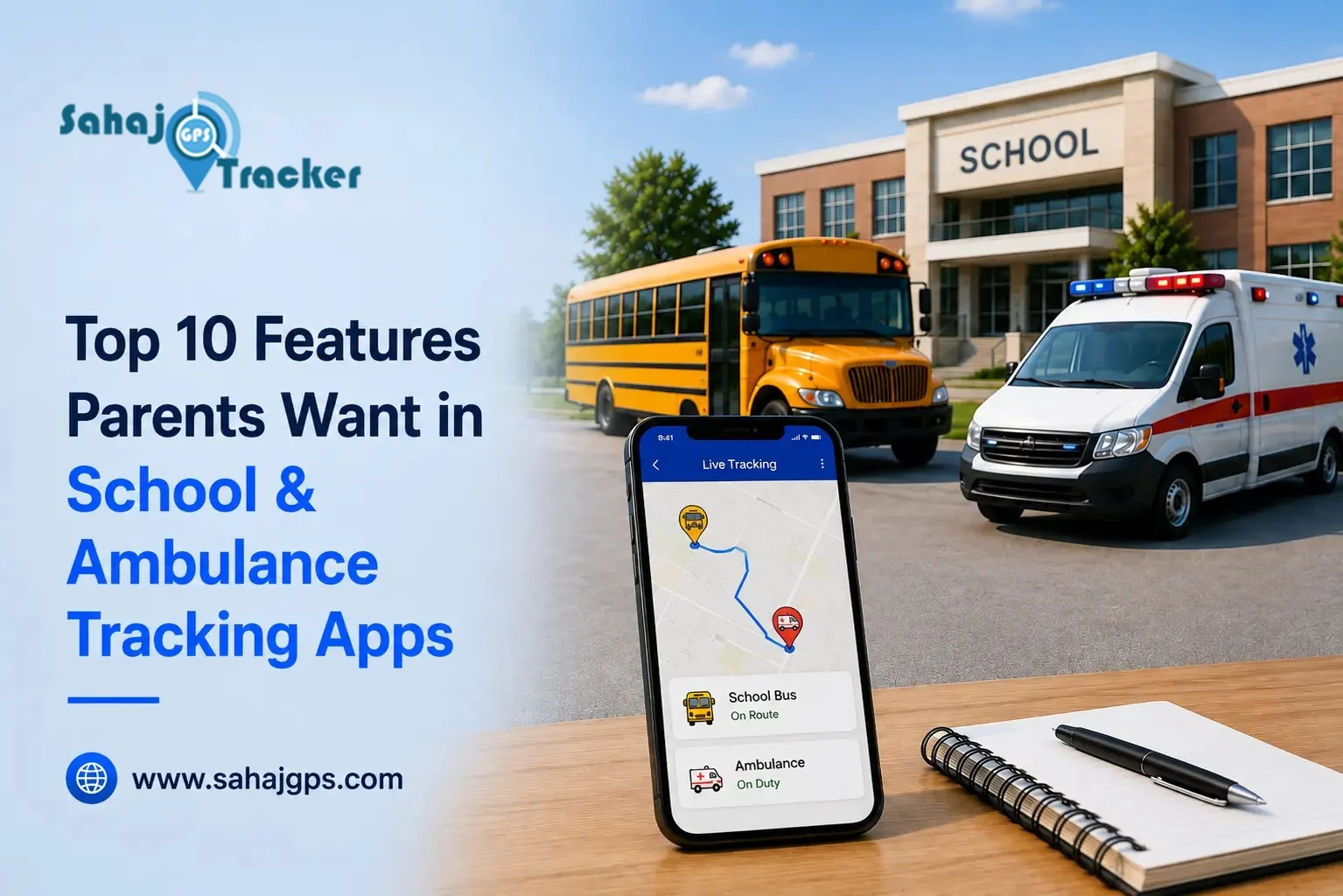
Safety, visibility, and timely communication are important when vehicles are responsible for transporting children or supporting emergency medical services. Parents want to know whether a school vehicle is following its route and when their child can be expected to arrive. Similarly, healthcare organizations need reliable vehicle visibility to coordinate ambulances and respond efficiently to emergency situations.
A modern school bus tracking system can provide real-time information about school vehicles, routes, and movement. When supported by useful alerts and fleet management features, it can improve communication between schools, transport teams, drivers, and parents.
For organizations managing school transportation and other specialized fleets, Sahaj GPS provides technology-driven tracking solutions designed to improve vehicle visibility and operational control. The following features are particularly valuable for creating a more reliable and transparent tracking experience.
1. Real-Time Vehicle Location Tracking
The most important feature of a school or ambulance tracking application is real-time location visibility. Parents want to know where the school bus is without having to repeatedly contact the driver or transport coordinator.
A school vehicle tracking system can display the current location of a vehicle on a digital map. This allows authorized users to understand whether the vehicle is approaching a pickup point, moving along its planned route, or has stopped unexpectedly.
For ambulances, real-time location visibility can help healthcare teams coordinate vehicles more effectively. Knowing the current position of an ambulance can support better dispatch coordination and provide useful information about its progress toward a destination.
2. Live Route Monitoring
Parents are not only interested in the location of a vehicle but also in whether it is following the expected route. Route monitoring can provide additional visibility into daily transportation operations.
A tracking application can show the vehicle’s movement along a predefined route and help transport managers identify significant deviations. If a vehicle moves away from its expected route, authorized personnel can review the situation and take appropriate action.
For school transportation, this can improve route supervision and help transport teams maintain greater control over daily operations.
3. Pickup and Drop-Off Alerts
Parents often want timely notifications when a school bus is approaching a pickup or drop-off location. Waiting without knowing when the vehicle will arrive can create unnecessary uncertainty.
A School Bus GPS Tracking Software solution can support automated notifications based on vehicle location and configured pickup points. Parents may receive alerts when the bus is approaching a designated stop or when the vehicle has reached the relevant location.
For school administrators, these alerts can also improve communication with families and reduce the need for manual updates.
4. Estimated Arrival Time
Estimated arrival information is another useful feature for parents. Instead of relying on a fixed timetable that may change because of traffic or operational delays, real-time tracking can provide a more current indication of when the vehicle may arrive.
An application can use the vehicle’s current position and movement information to provide an estimated arrival time. This can help parents plan when to accompany younger children to pickup points or prepare for their arrival after school.
For ambulance operations, estimated arrival information can help relevant teams understand how long a vehicle may take to reach a location, subject to traffic and road conditions.
5. Geofencing and Location-Based Alerts
Geofencing allows virtual boundaries to be created around specific locations such as schools, pickup areas, hospitals, or designated operational zones.
When a tracked vehicle enters or exits a configured boundary, the system can generate an alert. In school transportation, geofencing can be used to monitor when a bus reaches the school premises or a particular pickup zone.
A school vehicle tracking system with geofencing can therefore provide additional visibility into important stages of a vehicle’s journey without requiring constant manual monitoring.
6. Driver Behavior and Safety Monitoring
Vehicle location is only one part of transportation safety. Parents and school administrators also want assurance that vehicles are being operated responsibly.
Depending on the available tracking hardware and system configuration, fleet platforms can monitor driving events such as speeding, harsh braking, rapid acceleration, and sudden changes in driving patterns.
A School Bus Fleet Management System can help transport managers review relevant driving information and identify patterns that may require attention. This information can support driver awareness, safety training, and better fleet management practices.
For ambulance fleets, safety monitoring can also help organizations maintain visibility into vehicle movement while supporting responsible driving practices.
7. Emergency and Instant Alerts
Parents expect tracking applications to provide more than routine location updates. Emergency notifications can become especially important when unusual situations occur.
A tracking platform can be configured to generate alerts for selected events, such as route deviations, unexpected stops, or geofence violations. These notifications can help authorized personnel become aware of unusual vehicle activity more quickly.
Sahaj GPS can help organizations improve vehicle visibility through tracking and alert capabilities that support faster awareness of important events.
8. Trip History and Route Playback
A useful tracking application should provide access to historical vehicle information rather than only showing the current location. Trip history allows authorized users to review previous journeys, routes, stops, and travel patterns.
For school transportation, this information can help administrators review whether vehicles followed their assigned routes and understand recurring delays. It can also support operational reviews when a transport-related concern needs to be investigated.
For ambulance fleets, historical data can help organizations analyze vehicle utilization and review completed trips for operational planning.
A School Bus GPS Tracking Software platform with historical reporting can therefore support both daily monitoring and longer-term fleet analysis.
9. Vehicle and Fleet Management Information
Parents may primarily focus on safety and location, but schools need broader fleet management capabilities to keep transportation operations running efficiently.
A School Bus Fleet Management System can help transport teams organize information related to vehicles, routes, drivers, and daily operations. Centralized information can reduce dependence on disconnected records and make fleet administration more manageable.
Maintenance-related information can also be valuable for ensuring that vehicles receive timely servicing. Keeping vehicles in suitable operating condition is an important part of maintaining reliable school transportation.
For ambulance operators, centralized fleet information can similarly help teams manage vehicle availability and operational readiness.
10. Simple and Secure Access for Parents
A tracking application should be easy for parents to understand and use. Complicated interfaces can make it difficult to find important information quickly, particularly when parents simply want to check a vehicle’s current location or arrival status.
Access should also be appropriately controlled because school transportation involves sensitive information about children, routes, and vehicles. Only authorized users should have access to relevant tracking information.
A well-designed School Bus Tracking System can provide parents with a straightforward way to access permitted vehicle information while allowing schools to maintain administrative control over the platform.
Why These Features Matter for School Transportation
School transportation involves multiple stakeholders, including students, parents, drivers, transport coordinators, and school administrators. Without reliable communication, even small delays can create confusion.
Real-time tracking, route monitoring, arrival notifications, geofencing, safety monitoring, and trip history can bring these activities into a more organized system. Parents gain better visibility, while administrators gain useful information for managing daily transportation operations.
The purpose of tracking should not be limited to watching a vehicle on a map. The larger objective is to create a structured transportation environment where relevant information is available when it is needed.
How Tracking Supports Ambulance Operations
Ambulances operate under different conditions from school buses, but real-time vehicle visibility can still be valuable. Emergency response requires coordination between drivers, dispatch teams, healthcare facilities, and other authorized personnel.
Real-time location tracking can help teams understand where ambulances are currently located and whether they are available or already engaged in a trip. Route visibility can support coordination, while alerts can bring attention to important vehicle events.
Sahaj GPS can support organizations that need centralized vehicle visibility for specialized transportation operations. The exact features available depend on the tracking hardware, software configuration, and operational requirements of the organization.
Choosing the Right School Vehicle Tracking Solution
When selecting a tracking solution, schools should consider more than the availability of basic GPS location information. The platform should support the practical requirements of parents, administrators, transport teams, and drivers.
A suitable solution should provide reliable location updates, useful alerts, route visibility, historical information, and appropriate access controls. Schools should also consider the scalability of the system if the number of vehicles or routes increases over time.
For organizations looking for structured vehicle visibility, Sahaj GPS can provide technology-based tracking capabilities that support school transportation and fleet management requirements.
Conclusion
Parents increasingly expect school transportation to provide greater visibility, reliable communication, and stronger safety monitoring. A modern School Bus Tracking System can address these expectations by combining real-time location tracking with route monitoring, pickup alerts, geofencing, safety features, and historical reporting.
For schools, a school vehicle tracking system can simplify daily transport supervision and improve communication with parents. A School Bus fleet management can provide broader administrative control, while School Bus GPS Tracking Software can help make vehicle location and trip information accessible to authorized users.
Frequently Asked Questions
What is a School Bus Tracking System?
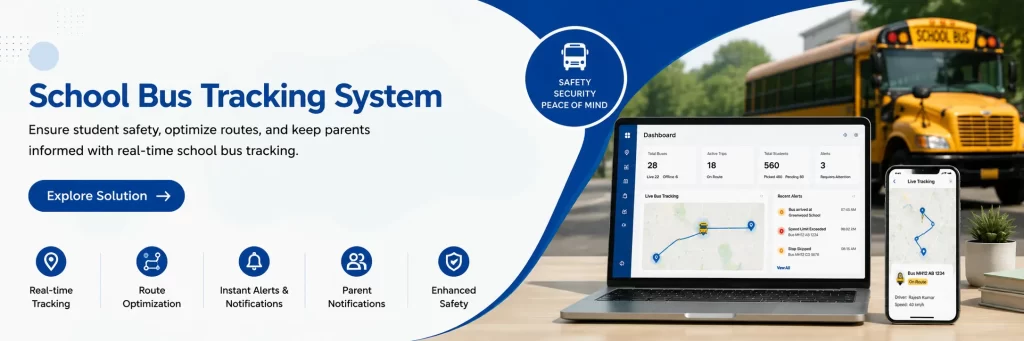
A School Bus Tracking System uses GPS-based technology to monitor school vehicle locations and provide authorized users with information about vehicle movement, routes, and related events.
Can parents track the school bus in real time?
Yes, when the school provides an appropriate tracking application with parent access, authorized parents can view the vehicle’s current location and receive configured notifications about its journey.
How does geofencing help school transportation?
Geofencing creates virtual boundaries around selected locations. When a vehicle enters or leaves a configured area, the system can generate an alert, helping transport teams monitor important route points.
What is included in a School Bus Fleet Management System?
Depending on the solution, it may include vehicle tracking, route monitoring, driver information, trip history, alerts, reporting, and maintenance-related fleet information.
How can school bus GPS software improve safety?
School Bus GPS Tracking Software can provide real-time visibility into vehicle movement and support features such as route monitoring, geofencing, driving behavior information, and alerts. These capabilities can help schools improve transportation oversight and respond more quickly to unusual events.