

Fuel is one of the biggest recurring expenses for any commercial fleet. When fuel prices rise, even small amounts of unexplained fuel loss can quickly increase operating costs. Fuel theft is particularly difficult to identify when managers rely only on fuel receipts, driver reports, or periodic tank checks. By the time an unusual pattern becomes obvious, the business may already have experienced significant losses.
A modern fuel monitoring system can help fleet managers identify suspicious fuel activity much earlier. By combining fuel-level data, vehicle location, mileage, and consumption patterns, managers can understand where and when fuel is being used. The goal is not simply to monitor drivers but to create a reliable system for detecting unusual activity and controlling unnecessary fuel expenses.
What Is Fuel Theft in Fleet Operations?
Fuel theft occurs when fuel purchased or assigned to a vehicle is removed, misused, or consumed without a legitimate business purpose. It can happen in several ways, including unauthorized fuel purchases, fuel siphoning, false fuel entries, or excessive fuel consumption that does not match the vehicle’s actual work.
For fleet managers, the challenge is that fuel theft does not always look like an obvious missing quantity. Sometimes it appears as a small difference between expected and actual consumption. Repeated over weeks or months, these small discrepancies can become a major financial problem.
A reliable fuel monitoring software solution can help compare fuel consumption with vehicle movement and operating conditions, making unusual patterns easier to investigate.
Real Warning Signs of Fuel Theft
1. Sudden Drops in Fuel Levels
One of the clearest warning signs is an unexpected reduction in the fuel tank level while the vehicle is stationary or operating in a way that does not justify the loss.
For example, if a vehicle is parked overnight and its fuel level suddenly drops, the event deserves attention. Similarly, a large decrease that occurs within a short period may indicate unauthorized fuel removal.
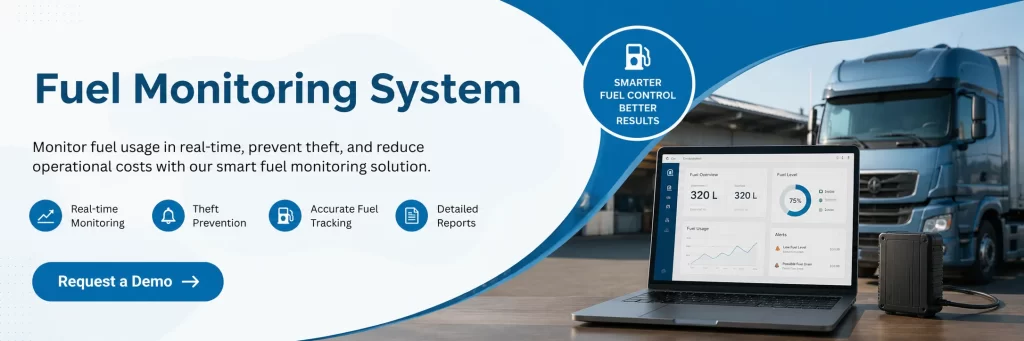
With a fuel monitoring system for vehicles, managers can monitor tank-level changes and identify unusual drops instead of depending entirely on manual inspections.
However, not every fuel-level fluctuation means theft. Fuel sensors can experience variations because of vehicle movement, road conditions, or measurement limitations. The important factor is identifying repeated or unusually large changes that cannot be explained by normal operations.
2. Poor Fuel Economy Without a Clear Reason
Every vehicle has an expected fuel-consumption range based on its model, route, load, driving conditions, and operating behavior.
When one vehicle consistently consumes more fuel than similar vehicles operating under comparable conditions, it should be investigated.
For instance, two trucks may travel similar routes with similar loads, but one repeatedly consumes considerably more fuel. Possible reasons include excessive idling, aggressive driving, mechanical problems, route deviations, or fuel theft.
A fuel consumption monitoring system makes it easier to compare actual consumption against historical data and expected performance.
3. Unusual Night or Weekend Activity
Unexpected vehicle activity outside normal operating hours can be another warning sign.
If a vehicle is normally used during business hours but frequently stops at unfamiliar locations late at night or during weekends, fleet managers should review the activity. A location history can help determine whether the vehicle was at an authorized site, depot, fuel station, or another location connected to company operations.
The combination of location and fuel data is particularly useful. A fuel-level drop occurring at an unusual location is more significant than a fuel-level change occurring during a documented refueling event.
4. Excessive Idling
Idling is not necessarily fuel theft, but it can create substantial fuel waste and sometimes hide unusual fuel consumption.
A vehicle that remains stationary with its engine running for long periods can consume fuel without generating useful mileage. If excessive idling repeatedly appears alongside unusually high fuel consumption, managers should investigate the cause.
Drivers may idle because of traffic, loading requirements, weather conditions, or operational needs. Therefore, idle data should be evaluated in context rather than automatically treated as suspicious.
A fleet fuel monitoring system can help managers identify vehicles with consistently high fuel consumption and connect that information with driving and idling patterns.
5. Fuel Level Drops When the Vehicle Is Parked
Fuel loss while a vehicle is parked is particularly important to investigate because there may be no legitimate mileage associated with the reduction.
For example, if a vehicle reaches a depot with a full tank and is later found with significantly less fuel before its next assignment, the manager should check the fuel records, vehicle location, and tank-level history.
A fuel monitoring system can provide a timeline of fuel-level changes, helping managers determine approximately when the unusual event occurred.
6. Missing or Damaged Fuel Caps
Physical signs should not be ignored. A missing fuel cap, damaged fuel door, or other unusual condition around the tank can indicate unauthorized access.
Fleet operators should include fuel-system checks in regular vehicle inspections. These inspections become even more valuable when combined with digital monitoring.
Technology can identify when something unusual happened, while physical inspection can help determine whether there is an obvious reason for the event.
7. Fuel Receipts That Do Not Match Vehicle Data
Fuel receipts should correspond with the vehicle’s actual activity.
A receipt may show a purchase at a particular time and location, while vehicle tracking data may show that the vehicle was somewhere else. Similarly, an unusually large fuel purchase may not match the vehicle’s tank capacity.
These inconsistencies can be caused by administrative errors, shared fuel cards, incorrect entries, or unauthorized use. They should therefore be investigated rather than immediately classified as theft.
Integrating fuel records with vehicle information can make these comparisons much easier.
Why Fuel Data Should Be Compared With GPS Information
Fuel data alone cannot always explain why consumption changed. GPS information provides the operational context needed to interpret it.
Suppose a vehicle shows higher fuel consumption than normal. Location data may reveal that the vehicle spent several hours in heavy traffic or travelled an unusually long route. In another case, the same fuel loss might occur while the vehicle was parked at an unauthorized location.
This is where fuel monitoring solutions become valuable. Instead of looking at fuel records in isolation, fleet managers can examine fuel levels alongside location, distance, stops, and vehicle activity.
Sahaj GPS helps businesses use vehicle tracking and monitoring data to gain better visibility into fleet operations and identify patterns that may require attention.
How Fleet Managers Can Prevent Fuel Theft
Detection is important, but prevention should be the long-term objective.
Establish Normal Fuel Consumption Benchmarks
Create expected consumption ranges for different vehicle types, routes, and operating conditions. This gives managers a baseline against which unusual performance can be identified.
Monitor Fuel Levels Continuously
Periodic manual checks may miss short-term fuel losses. Digital monitoring provides more frequent information and helps identify sudden changes closer to when they occur.
Connect Fuel Events With Vehicle Location
A fuel event becomes easier to verify when its location and timing are known. Managers can check whether the vehicle was actually at an authorized fuel station or operating location.
Review Reports Regularly
Fuel data becomes useful only when someone reviews it. Weekly reports can help identify recurring patterns before they become expensive problems.
Investigate Patterns, Not Isolated Events
A single unusual reading may have a legitimate explanation. Repeated unexplained fuel drops, consistently poor fuel economy, and unusual locations are stronger indicators that deserve investigation.
Maintain Transparent Fuel Policies
Drivers should understand fuel card rules, authorized fueling locations, reporting procedures, and the company’s approach to fuel monitoring. Clear policies reduce confusion and make unusual activity easier to address.
Benefits of a Fuel Monitoring System for Fleet Businesses
A properly implemented monitoring system can provide benefits beyond theft detection. Better visibility into fuel consumption can help fleet managers identify inefficient routes, excessive idling, unusual driving patterns, maintenance-related consumption problems, and vehicles that consistently perform below expectations.
Over time, this information can support better operational decisions. Managers can determine which vehicles require attention, where fuel is being wasted, and which processes need improvement.
A fuel consumption monitoring system also helps fleet managers understand long-term fuel usage trends and identify vehicles that consistently consume more fuel than expected. This data can support better route planning, maintenance decisions, and overall fuel cost control.
Sahaj GPS can support fleet operators looking for technology-driven ways to improve vehicle visibility, fuel monitoring, and operational control.
Final Thoughts
Fuel theft can quietly reduce fleet profitability, especially when losses occur repeatedly across multiple vehicles. The warning signs are often visible when fuel data is analyzed alongside vehicle activity.
Sudden fuel-level drops, unexplained poor fuel economy, unusual night or weekend activity, excessive idling, parked-vehicle fuel losses, damaged fuel access points, and inconsistent fuel receipts are all signals worth investigating.
A combination of digital monitoring, GPS data, regular inspections, clear fuel policies, and consistent reporting can help fleet managers control fuel-related losses more effectively. Sahaj GPS provides fleet monitoring solutions that help businesses improve visibility into vehicle activity and fuel usage.
For businesses operating multiple vehicles, investing in reliable fuel monitoring solutions is not simply about detecting theft. It is about creating greater transparency around one of the fleet’s most important operating expenses.
Frequently Asked Questions
1. What is a fuel monitoring system?
A fuel monitoring system tracks fuel levels and consumption in vehicles using sensors and digital monitoring technology. It can help fleet managers identify unusual fuel usage, monitor consumption patterns, and investigate possible fuel losses.
2. How does fuel monitoring software help detect theft?
Fuel monitoring software can identify unusual changes in tank levels and compare fuel activity with vehicle movement, distance, and operating patterns. This makes it easier to spot fuel events that may require further investigation.
3. What are the biggest signs of fuel theft?
Common warning signs include sudden fuel-level drops, unexplained poor fuel economy, unusual fuel activity while a vehicle is parked, inconsistent fuel receipts, unexpected fueling locations, and repeated fuel losses that cannot be explained by normal operations.
4. Is a fuel monitoring system for vehicles useful for small fleets?
Yes. Small fleets can also benefit because fuel losses from even a few vehicles can affect operating costs. A fuel monitoring system for vehicles can provide visibility into consumption and help managers identify inefficient or unusual fuel usage.
5. Can a fleet fuel monitoring system reduce fuel costs?
A fleet fuel monitoring system can help reduce fuel-related costs by identifying excessive idling, unusual consumption, inefficient vehicle use, and potential fuel losses. The data can then be used to improve fleet operations and control unnecessary fuel expenses.