
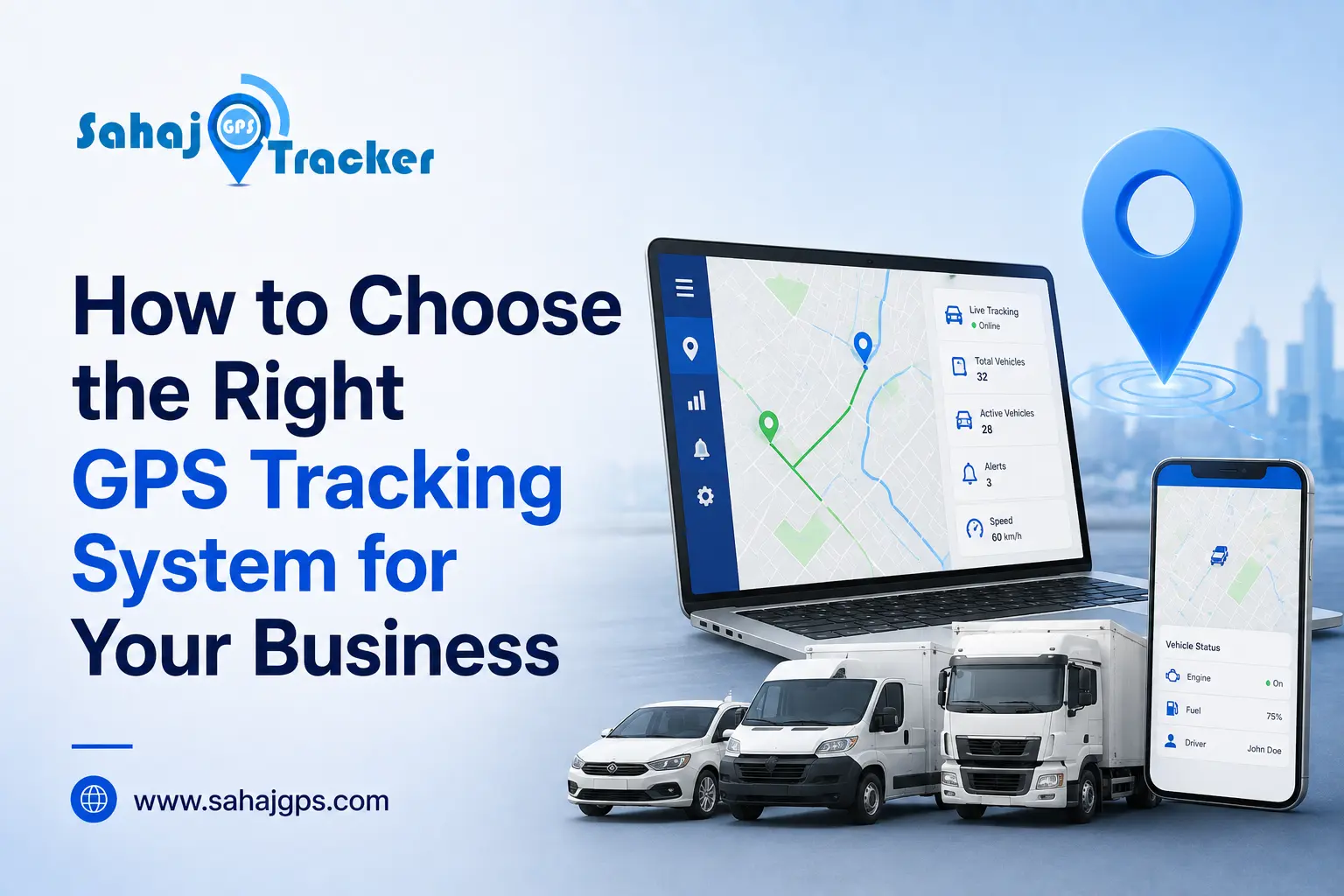
Choosing a GPS tracking system for Business isn’t simply about installing a device in a vehicle and watching a dot move across a map. Businesses usually have a reason for looking into tracking in the first place. Maybe vehicles are reaching customers late, fuel expenses keep creeping up, or managers don’t have a clear idea where their field teams are during the day. Whatever the problem, the right tracking solution should make that particular problem easier to manage.
GPS Tracking System for Business: Understand Your Actual Needs
Before comparing providers, first look at how your vehicles are being used. A logistics company may need route planning and delivery visibility, while a field service company might care more about employee location and customer visits. A construction business, meanwhile, may need vehicle movement, geofencing, and equipment monitoring.
Think about the questions your team asks repeatedly. Where is the vehicle right now? Has the driver reached the site? Why is this route taking longer today? Is a vehicle being used outside working hours? These are the kinds of questions a good GPS tracking system should answer without making someone call the driver every few minutes.
Businesses operating in Ahmedabad and Gujarat also have to deal with busy roads, changing traffic conditions, and long-distance travel between locations. Better visibility can make those everyday challenges a little easier to handle.
Decide What You Want to Monitor
Not every business needs every available feature. Start with the basics and then add what actually makes sense.
If delivery delays are your biggest problem, focus on live vehicle tracking, route history, and route planning. If unauthorised vehicle use is a concern, geofencing and movement alerts may be more useful. For larger fleets, driver behaviour, fuel monitoring, maintenance tracking, and detailed reporting can provide additional value.
This approach keeps the buying process simple. Instead of asking which system has the longest feature list, ask which features will actually help your team work better.
Check Live Vehicle Tracking Accuracy
Live vehicle tracking is usually one of the first features businesses look at, and for good reason. Managers need location information they can trust when making decisions about deliveries, service calls, or vehicle allocation.
During a product demonstration, don’t just look at the map. Ask how frequently location information is updated, what happens when network coverage changes, and how historical locations are stored. A system that looks impressive during a five-minute demo may feel very different when used every day.
Historical route data is useful too. It allows managers to see where vehicles travelled, how long they stopped, and whether drivers regularly deviate from planned routes.
Use a Geofencing GPS Tracker for Location-Based Alerts
A geofencing GPS tracker creates a virtual boundary around a selected location. When a vehicle enters or leaves that area, the system can generate an alert.
This can be useful for offices, warehouses, factories, customer sites, construction projects, and restricted areas. For example, a business can create a geofence around its depot and receive a notification when a vehicle leaves outside authorised hours.
Geofencing can also help verify site visits. If a service vehicle is expected at a customer location, the system can provide a digital record of arrival and departure.
The idea isn’t to create unnecessary alerts for every movement. It is to automate specific checks that would otherwise require someone to constantly monitor the fleet.
Route Optimization Software Can Improve Efficiency
Poor route planning can quietly increase fuel costs and working hours. A driver may take a longer route, revisit the same area, or spend unnecessary time travelling between appointments.
Route optimization software helps businesses plan more efficient routes based on destinations and operational requirements. This becomes especially useful for delivery companies and field service teams handling multiple visits in a single day.
For instance, if a technician has several customer appointments around Ahmedabad, arranging those visits in a sensible order can reduce unnecessary travel. It sounds like a small improvement, but repeated across an entire fleet, those saved kilometres can add up.
Compare Hardware, Software and Budget Before Choosing
Before selecting a provider, businesses should look beyond the tracker price and understand what they actually need from the system. Choosing the right GPS tracking system for your business requires defining your operational goals, comparing hardware types, and evaluating software features against your budget. A small business may only need live vehicle tracking and geofencing, while a larger logistics fleet may require route optimisation, driver behaviour monitoring, fuel monitoring, maintenance alerts, and detailed reporting.
Comparing these factors together makes it easier to choose a solution that delivers practical value without paying for features your team may never use. The best option is the one that fits your daily operations, is easy for your staff to manage, and can continue supporting the business as the fleet grows.
Don’t Choose Only by Device Price
Price matters, obviously. But it shouldn’t be the only deciding factor.
A cheaper device may come with limited reporting, poor application performance, or weak after-sales support. On the other hand, an expensive system isn’t automatically better if your business doesn’t need half of its features.
Look at the complete value: hardware reliability, software usability, tracking accuracy, support, reporting, scalability, and the features that solve your actual operational problems. That’s a much better comparison.
Test Driver Behaviour Monitoring Features
Driving habits can affect fuel consumption, vehicle wear, and road safety. If your business operates several vehicles, driver behaviour monitoring can provide useful insights into speeding, harsh braking, rapid acceleration, and excessive idling.
The purpose should be improvement, not simply punishment. Managers can use these reports to identify training needs and encourage safer driving habits.
A tracking system becomes more useful when the data helps improve everyday decisions rather than simply producing another report that nobody opens.
Look at Fuel Monitoring and Vehicle Maintenance
A tracking system can become much more useful when it provides information beyond vehicle location. Fuel consumption and vehicle maintenance are two areas where businesses can often find avoidable costs.
Fuel monitoring can help managers identify unusual fuel usage, excessive idling, or sudden changes in consumption. Maintenance tracking, meanwhile, can remind teams when servicing is due and help prevent small mechanical issues from turning into expensive breakdowns.
For a business running vehicles every day, this combination can make a noticeable difference. A vehicle that spends several days in a workshop isn’t just a repair expense; it can also mean missed deliveries, delayed service visits, and lost productivity.
Check Alerts and Geofencing Controls
Good alerts should make fleet management easier, not create a flood of notifications that people eventually ignore.
Look for customisable alerts for speeding, geofence entry or exit, ignition activity, route deviations, excessive idling, and unusual vehicle movement. Managers should be able to decide which alerts matter and when they should be triggered.
For example, a vehicle leaving a warehouse at midnight might deserve immediate attention, while the same movement during normal working hours may be completely routine. Custom settings make alerts more practical.
Choose Reports Your Team Will Actually Use
Reports are where raw tracking data starts becoming useful for business decisions. A good platform should make it easy to review trips, mileage, idle time, route history, vehicle usage, and driver activity.
Don’t get impressed by a dashboard packed with colourful graphs if nobody on your team understands what they mean. Ask for sample reports and see whether they answer the questions your managers actually have.
Over time, these reports can reveal repeated route delays, unnecessary stops, inefficient driving patterns, or vehicles that are being underused.
Consider Installation and After-Sales Support
The tracking device itself is only one part of the experience. Installation quality, technical support, software updates, and device replacement can matter just as much.
Ask the provider who handles installation and what happens if a device stops transmitting data. Find out how support requests are handled and whether assistance is available when your fleet is actually operating.
For businesses in Ahmedabad and Gujarat, having accessible support can be particularly useful when managing larger fleets across multiple locations.
Think About Scalability Before Buying
Your fleet may have ten vehicles today and thirty next year. The tracking platform should be able to grow with you.
Check whether adding vehicles, users, locations, and new tracking features is straightforward. You don’t want to replace an entire system simply because the business expanded faster than expected.
Scalability also applies to reporting and administration. As the fleet grows, managing vehicles manually becomes increasingly difficult, so the platform should continue making operations easier rather than adding another layer of work.
Ask for a Demo or Trial
A proper trial can tell you more than a sales presentation.
Let the people who will actually use the system test it. Ask a fleet manager to review reports, let a dispatcher monitor vehicles, and try the mobile application from a phone. Create a geofence, check route history, and see how quickly alerts appear.
Pay attention to small things. Is the dashboard easy to understand? Can you find a vehicle quickly? Are reports simple to export? Do notifications make sense?
These details become important after months of daily use.
Why the Right GPS Tracking System Matters
There isn’t one perfect tracking platform for every business. A small service company may need basic location tracking and geofencing, while a large logistics operation could require route optimisation, driver monitoring, fuel management, and detailed fleet reports.
The right GPS tracking system for Business should make everyday work easier. It should give managers better visibility, help reduce unnecessary travel, improve vehicle control, and provide information that supports practical decisions.
Businesses considering solutions such as Sahaj GPS can evaluate the available tracking, alert, reporting, and fleet management capabilities against their own requirements. The important thing is not choosing the system with the most features. It’s choosing one your team will actually use.
FAQs
1. What should I consider when choosing a GPS tracking system?
Consider tracking accuracy, live vehicle tracking, geofencing, reporting, route optimisation, driver monitoring, mobile access, support, scalability, and overall cost. The right features depend on your fleet size and business requirements.
2. Is a GPS tracking system useful for small businesses?
Yes. Small businesses can use GPS tracking to monitor vehicles, improve route planning, reduce unnecessary travel, manage field operations, and maintain better visibility without needing a large fleet management department.
3. What is a geofencing GPS tracker used for?
A geofencing GPS tracker creates virtual boundaries around selected locations and sends alerts when vehicles enter or leave them. It can help monitor depots, customer sites, offices, warehouses, and restricted areas.
4. Can route optimization software reduce business costs?
Route optimization software can help reduce unnecessary kilometres, travel time, and fuel consumption by creating more efficient routes. Actual savings depend on traffic, destinations, fleet size, and how routes are managed.
5. What features should a business GPS tracking system have?
Important features include live vehicle tracking, route history, geofencing, alerts, driver behaviour monitoring, reporting, mobile access, and route optimisation. Fuel and maintenance monitoring can also be useful for larger fleets.