
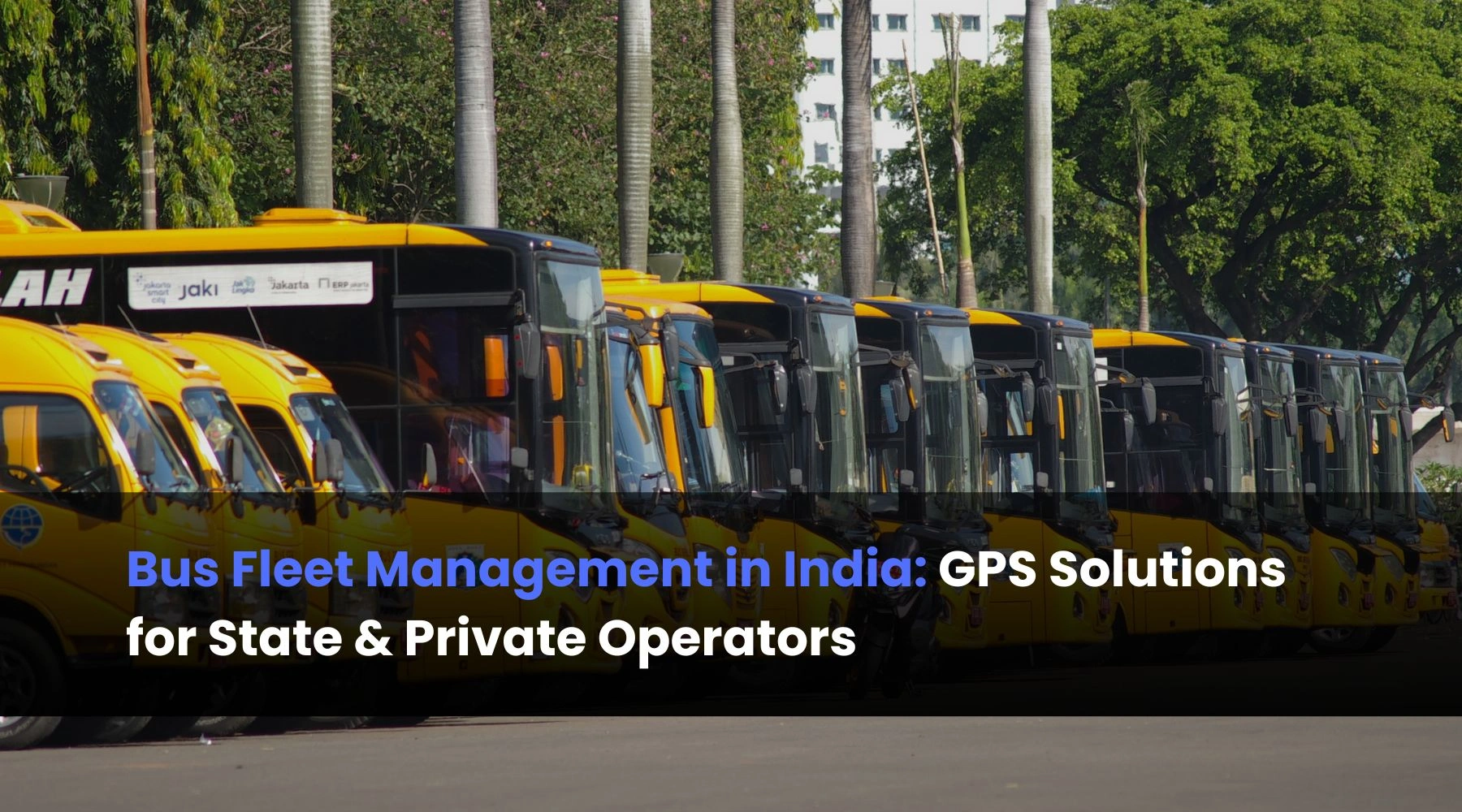
Managing a bus fleet in India is genuinely one of the more complex operational challenges in the country — and bus fleet GPS India solutions have become central to how both government-run corporations and private operators are trying to run things better. Not just for compliance reasons, though that’s part of it.
But because the scale, the route complexity, the passenger safety expectations, and the fuel economics of bus operations make real-time visibility less of a luxury and more of a basic requirement.
Whether you’re managing 40 intercity coaches out of Bengaluru or overseeing hundreds of state buses across an entire district, the problems are recognizable. Drivers running behind schedule. Fuel bills that creep up without explanation.
Passenger complaints about buses that never arrived. A breakdown on a state highway with no fast way to dispatch support. GPS-based fleet management doesn’t fix all of that overnight — but it changes what’s visible, and visibility is where most of the fixing actually starts.
Why Bus Fleet Management in India Is a Genuinely Unique Challenge
Bus fleets aren’t like truck fleets or field staff vehicles. A truck driver’s primary obligation is to get cargo from A to B. A bus operator’s obligation is more layered — timely departure, passenger safety through the journey, adherence to a fixed route, scheduled stops, and arrival within a window that someone has been waiting for. The consequences of failure are visible, immediate, and often personal to the people on board.
Add to that the scale of Indian public bus operations. KSRTC in Karnataka alone operates thousands of buses. MSRTC, UPSRTC, the Delhi Transport Corporation — these are some of the largest road transport organizations in the world by fleet size. Managing that kind of scale without real-time data is not a management challenge, it’s practically an impossible one.
Why Traditional Bus Management Methods Break Down at Scale
Paper-based route logging. Driver check-ins over the phone. Supervisors stationed at key points along busy corridors to manually observe adherence. These aren’t bad ideas in isolation — they’re just completely inadequate for the volume and complexity of modern bus operations.
A route supervisor standing at a junction can tell you one bus ran 12 minutes late. A state transport tracker connected to 200 buses can tell you that the same thing happened on 34 routes today, identify which three routes account for 60% of the delays, and trace those delays back to driver departure times rather than traffic conditions. That’s not the same kind of information. It’s a different management universe entirely.
GPS Solutions for State Transport Corporations: Managing at Public Scale
State transport GPS implementation is happening across India, partly driven by MoRTH’s AIS 140 mandate and partly by state governments recognizing that passenger confidence in public transport depends heavily on reliability — which requires visibility.
The challenges for state transport corporations specifically are worth naming. These are organizations managing fleets of hundreds to thousands of buses across large geographic areas, often with aging infrastructure and legacy systems that don’t integrate easily with modern tracking platforms. Implementing GPS isn’t just a technology decision — it’s an organizational change management project.
State Bus Tracking Across Hundreds of Routes Simultaneously
The first thing state bus tracking makes possible that simply wasn’t feasible before: a real-time operational picture across the entire network simultaneously.
When a supervisor in a state transport control room can see every bus’s live position, current speed, and schedule adherence in a single dashboard view, they can prioritize interventions. A bus running 20 minutes behind on a busy urban corridor gets a dispatcher call. A breakdown on a remote rural route gets support dispatched within minutes of the vehicle stopping unexpectedly rather than after the driver manages to reach someone by phone.
Sahaj GPS works with state-level transport operations and is designed to handle the data volumes that large-fleet deployments generate — hundreds of simultaneous location updates, alert streams from multiple vehicles, and historical data that actually remains accessible and searchable rather than disappearing into an unusable archive.
AIS 140 Compliance and Government Server Integration
For state transport corporations, compliance with the AIS 140 standard is mandatory — not optional. Every vehicle must carry a certified device transmitting real-time location to the MoRTH VLT platform. Emergency panic buttons must be functional. The data must meet defined communication protocols.
Beyond the legal obligation, AIS 140 compliance for GPS bus operations creates a standardized data layer that state transport managers can actually use across mixed-age fleets — older buses and newer ones feeding into the same operational picture through certified, compatible hardware.
Private Bus Fleet Management: Different Scale, Different Priorities
Private bus fleet management covers an enormous range of operations — intercity sleeper coaches, school bus fleets, corporate employee transport, pilgrim special services, local charter operations. The compliance requirements overlap with state transport in some areas (AIS 140 is mandatory for private commercial passenger vehicles too), but the operational priorities are distinctly different.
A private intercity bus operator’s primary commercial concern is reputation. One bad experience — a late arrival, a safety incident, a bus that didn’t show — travels fast through passenger reviews and social media in a way that affects bookings directly. GPS fleet management for private operators is partly about operational efficiency and partly about reputation defense.
Intercity Private Bus Operators: Route Efficiency and Real Passenger Trust
Private bus GPS on intercity routes does something operationally important that passengers increasingly notice: it makes live tracking available. When a passenger booked on an overnight coach from Hyderabad to Vijayawada can see exactly where the bus is on their phone, the anxiety of waiting disappears. That’s a service improvement that costs the operator almost nothing extra once GPS tracking is in place.
Beyond passenger-facing features, GPS route data for intercity coaches shows operators which routes are consistently running over time, which drivers are adhering to scheduled halt durations, and where fuel consumption patterns vary in ways that suggest either route inefficiencies or driver behavior issues.
Sahaj GPS provides the passenger-facing live tracking link alongside the operator-facing management dashboard — both served from the same underlying GPS data, so operators don’t need separate systems for internal management and customer communication.
School Bus and Staff Transport GPS: Where Safety Is Non-Negotiable
School bus operations in India sit in a category of their own from a safety expectations standpoint. Parents aren’t tolerant of vague answers about where the bus is or why it’s late — and in an era where everyone has a smartphone, “we don’t have real-time tracking” is an increasingly unacceptable response to a parent asking where their child is.
Private bus GPS for school fleets serves a dual function: operational management for the transport contractor and real-time visibility for parents through a companion app. Speed alerts — triggered when a school bus exceeds a defined limit — are particularly valued. Route deviation alerts let school administrators know immediately if a bus goes off its approved path, which is both a safety concern and a compliance issue under school transport regulations in several Indian states.
Staff transport for corporate campuses operates similarly. The employee expecting a pickup at 8:15 AM who can see on an app that the bus is 7 minutes away has a meaningfully better experience than one calling the transport coordinator to ask where the bus is.
Real-Time GPS Bus Operations: What Good Fleet Monitoring Looks Like
A lot of bus operators in India have GPS devices installed — they just don’t have them configured or monitored in a way that generates any real operational value. The device exists for compliance documentation. Nobody’s actually looking at the data.
Real GPS bus operations management means someone is watching the live dashboard, alerts are configured to notify the right people when something goes wrong, driver behavior reports are being reviewed and acted on, and the data from every trip is being used to make the next week’s scheduling slightly smarter.
Driver Behavior Monitoring Specific to Bus Operations
Harsh braking with passengers on board isn’t just a fuel issue — it’s a safety and comfort issue that generates complaints and, in serious cases, passenger injuries. Hard acceleration in heavy urban traffic increases fuel consumption and mechanical wear. Speeding on highway sections puts dozens of passengers at risk simultaneously.
Bus fleet management India platforms that score driver behavior specifically in the context of passenger-carrying vehicles — where the risk profile is different from a goods truck — provide more actionable data than generic fleet driver scores.
Sahaj GPS includes passenger vehicle-specific driver scoring that weights behaviors relevant to bus operations more heavily — smooth braking, speed limit adherence, halt duration compliance, and scheduled departure timing — giving transport managers data that’s actually relevant to their specific operational priorities.
Fuel Management and Cost Control Across Bus Fleets
Fuel is a significant percentage of bus operating costs — typically 35–45% of total operating expenses for commercial bus operators in India. Managing it well requires the same combination of fuel sensor integration, idle time monitoring, and consumption anomaly detection as any fleet, but at a scale where even small per-vehicle improvements multiply significantly.
A private operator running 25 intercity buses saving ₹1,200 per bus monthly through GPS-based fuel management is recovering ₹30,000 per month — ₹3.6 lakhs annually. From a monitoring investment that typically costs a fraction of that.
State transport corporations managing thousands of buses face an even more dramatic version of the same math. Fuel savings of even 8–10% across a 2,000-bus fleet translate into crore-level annual recoveries.
FAQs
Q1. What does bus fleet GPS tracking actually do for Indian operators?
It monitors real-time location, speed, driver behavior, schedule adherence, and fuel use across entire bus operations — improving safety, passenger service reliability, and operational cost control significantly.
Q2. Is GPS tracking mandatory for state transport buses in India?
Yes. AIS 140-certified GPS devices are mandatory for all state transport corporation vehicles, transmitting real-time location to MoRTH’s national VLT platform with functional emergency alert systems installed.
Q3. How does private bus fleet management GPS differ from state transport GPS?
Private operators prioritize passenger-facing live tracking, reputation management, driver behavior scoring, and fuel efficiency. State transport focuses more on network-wide schedule adherence and public accountability reporting at scale.
Q4. Can GPS fleet systems for buses include live tracking for passengers?
Yes. Modern bus GPS platforms generate shareable live tracking links for passengers — showing real-time bus position on a map without requiring a separate dedicated app from the operator.
Q5. What fuel savings can bus fleet GPS monitoring realistically deliver?
Most bus operators see fuel cost reductions of 12–20% after GPS deployment, driven by idle time alerts, consumption anomaly detection, route optimization, and driver behavior coaching.