
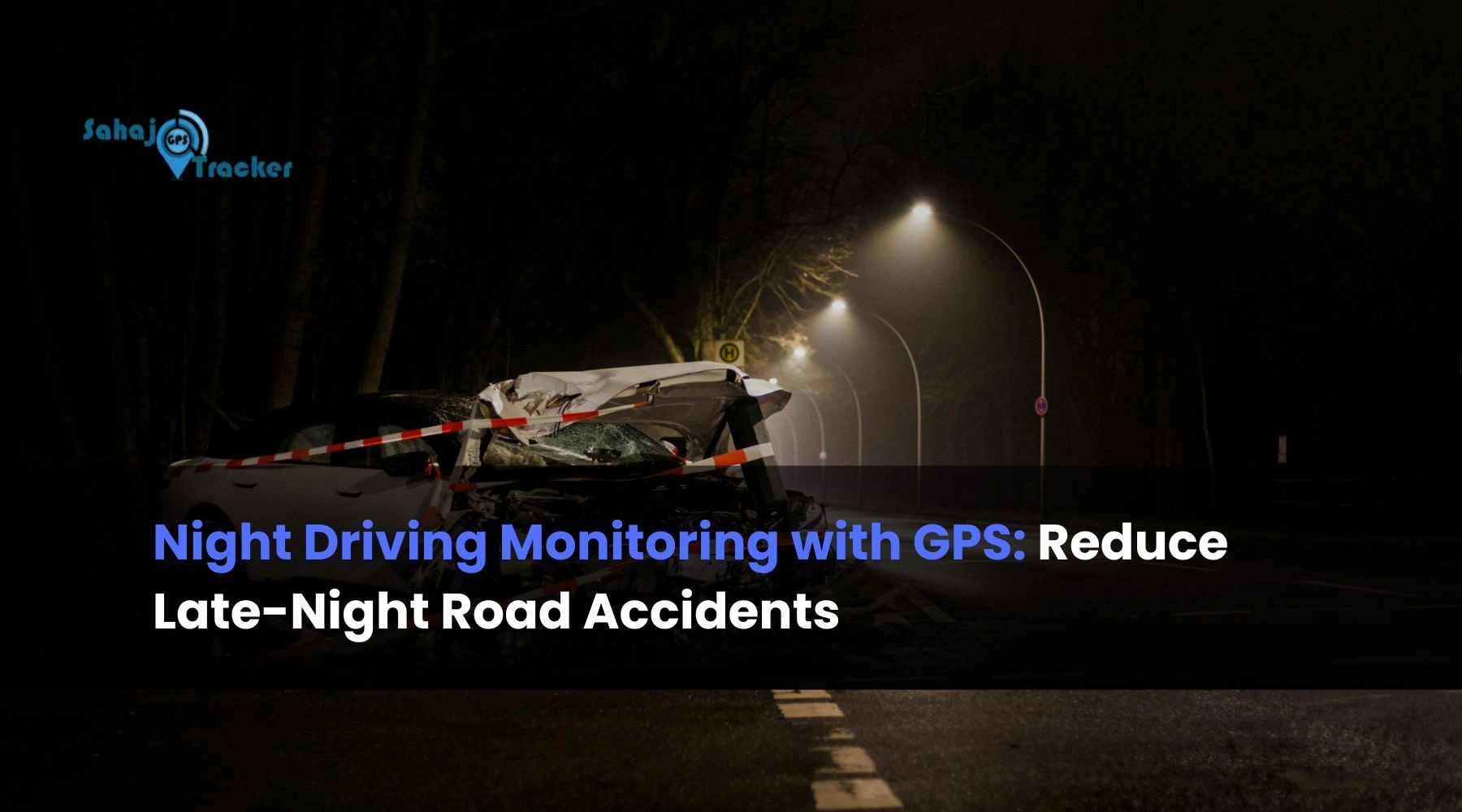
Late-night roads carry a particular kind of danger that daytime driving just doesn’t – not even close. Emptier, yes. But quieter roads breed faster speeds, and faster speeds with tired drivers is a combination that shows up in accident statistics with grim consistency.
If you manage a fleet, the hours between 10 PM and 5 AM are honestly the ones that should keep you up at night – ironically enough. Night drive GPS monitoring has become one of the more genuinely useful tools available for addressing this specific problem, and it’s worth understanding both why it works and what it actually does in practice.
Why Night Driving Is Statistically the More Dangerous Shift
Ask any traffic safety researcher which hours they’d prefer vehicles stayed off the road and they’ll point to late night and early morning. Every time.
The reasons stack fast. Reduced visibility. Driver fatigue that builds through the day and peaks somewhere between midnight and 4 AM. Lower traffic density that paradoxically encourages higher speeds. Fewer checkpoints. And an almost universal psychological effect — quieter roads make drivers and fleet managers alike feel less vigilant, even when the risk is actually higher.
It’s not just instinct. The data consistently backs this up.
The Grim Reality of Nocturnal Road Risk in India
India’s road accident statistics are difficult to sit with even in daylight hours. But the concentration of fatal accidents during nighttime is disproportionate to the volume of vehicles actually on the road during those windows.
Road transport ministry data consistently shows a significant percentage of fatal accidents occurring between 9 PM and 6 AM — despite that window accounting for far less than half of total daily vehicle movement.
Commercial trucks are particularly overrepresented. Long-haul logistics doesn’t stop when the sun goes down, which means driver fatigue and reduced visibility combine with loaded vehicles doing highway speeds through the night.
NH44 through Madhya Pradesh. The Mumbai-Pune Expressway past midnight. NH8 near Jaipur. If you’ve worked in Indian logistics long enough, you already know which corridors carry histories. That’s not coincidence — it’s what happens when speed, fatigue, and zero real-time oversight converge at the wrong moment.
What Night Drive GPS Monitoring Actually Does
Let’s get specific, because GPS monitoring gets used loosely across the industry and means genuinely different things depending on the system.
Basic GPS tells you where a vehicle is. That’s table stakes. Night driving GPS monitoring is something more layered — active oversight, automated alerts, and behavioral tracking that specifically accounts for the elevated risks of after-hours operation.
Real-Time Location and After-Dark Alert Systems
The most fundamental feature of any serious after dark driving monitor is real-time location visibility throughout the night. Fleet managers — or more realistically, an automated system running while managers sleep — need to know where every vehicle is at every point.
But location alone is passive. What makes nighttime vehicle GPS genuinely effective for safety is the alert layer built on top of raw location data. When a vehicle enters a high-risk corridor after a certain hour, a notification fires.
When a truck exceeds a designated night speed limit — set lower than the daytime threshold — the supervisor gets an alert immediately, not in a morning report. When a vehicle stops at an unscheduled location in the middle of the night, the system flags it for review.
A human dispatcher cannot monitor 50 or 100 vehicles manually at 2 AM. An automated after dark tracker does it continuously, without fatigue, without distraction, without missing anything.
Speed and Behavior Monitoring After Hours
Here’s where night driving GPS monitoring separates genuinely useful from technically basic. Speed behavior after dark carries a different risk profile than the same speeds during daytime.
A driver doing 85 km/h on a national highway at 2 PM is moving within a normal traffic stream, with reasonable visibility and ambient road context. The same driver doing 85 km/h at 2 AM on an empty stretch of highway is operating with reduced reaction margins, probable fatigue, and less room for error if something unexpected enters the road ahead.
Smart nocturnal tracking systems apply distinct speed thresholds for night hours and flag aggressive acceleration or erratic trajectory behavior with higher sensitivity during those windows. Sahaj GPS handles this through configurable night-hour driving profiles — letting fleet managers set separate alert triggers for daytime versus after-hours operation. It sounds like a small feature. In practice, it meaningfully changes how after-dark risk is caught and managed.
Late-Night Fleet Safety: A Fleet Manager’s Problem, Not Just a Driver’s
Individual drivers making poor decisions at night is a safety issue. An entire fleet operating through night hours without adequate monitoring is an organizational liability — and a legal one.
Late-night fleet safety isn’t purely about accident prevention, though obviously that matters most. It’s about documentation, accountability, and demonstrating that real monitoring systems were in place. Insurance consequences alone make this worth attention. If a nighttime incident occurs and there’s no evidence of active oversight or defined night policies, the financial and legal exposure can be severe.
Driver Fatigue Detection and Nocturnal Tracking
Fatigue is probably the most underestimated risk factor in night driving — partly because it’s deceptive. Drivers in early stages of fatigue frequently believe they’re functioning normally. The subjective experience of tiredness is a lagging indicator, not a leading one. By the time a driver feels dangerously tired, the cognitive impairment has already been present for a while.
Nocturnal tracking systems address this partly through movement analysis. A driver who’s been moving for several continuous hours — particularly through late-night windows — triggers a rest recommendation alert. More sophisticated systems also flag subtle GPS trajectory deviations: the micro-drift in route that correlates with early-stage fatigue, detectable before it becomes visible to other drivers on the road.
Sahaj GPS integrates driving duration alerts into its night monitoring suite, flagging vehicles operating for extended periods after 10 PM and prompting check-in confirmation from drivers through the companion mobile app. It’s not a complete fatigue solution on its own. But it builds accountability into a window when accountability most tends to disappear.
After Dark Driving Monitor Features That Actually Change Outcomes
Not every feature marketed under “night safety” genuinely changes accident outcomes. Here’s what matters based on how late-night fleet incidents actually happen.
Geofencing and Unauthorized Night Movement Alerts
A significant amount of fleet vehicle misuse happens during night hours. Vehicles taken off approved routes, used for personal trips, or operated by unauthorized individuals outside scheduled windows. A proper after dark driving monitor addresses this operationally with time-based geofencing.
When a vehicle begins moving outside authorized hours, the system flags it immediately — in real time, not in a log reviewed the next morning. Combined with driver ID verification through the app, fleet managers get a clear, documented picture of who operated which vehicle and when.
For companies running fleets across cities like Delhi, Bengaluru, Chennai, or Kolkata — where off-hours vehicle misuse is a documented operational problem across industries — this feature alone frequently justifies the monitoring subscription cost.
SOS and Emergency Response When It Matters Most
Something goes wrong at night. A vehicle breaks down on an isolated highway stretch. An accident on a road with no nearby services. A medical emergency in the cab.
Response time in these situations is directly tied to how quickly someone who can help knows there’s a problem. Nighttime vehicle GPS with SOS functionality closes that gap completely. A driver presses the emergency button, precise coordinates go to the fleet manager and designated contacts instantly, and response begins immediately — not after a delayed phone call or a missed morning check-in.
Sahaj GPS builds SOS response into its after-dark monitoring specifically because the highest-stakes emergency scenarios for commercial vehicles overwhelmingly occur during night hours on highway routes. The alert design is immediate and action-oriented, not buried in a notifications stack.
How Indian Fleet Operators Are Using Night GPS Monitoring Right Now
India’s logistics sector doesn’t sleep. Long-haul trucks cover the most distance during night hours specifically to avoid daytime urban congestion. Cold chain vehicles run overnight to maintain temperature windows. E-commerce last-mile delivery pushes into late evening across metropolitan areas every single day.
The riskiest driving hours are also, for a huge portion of Indian commercial operations, the most commercially critical hours. That’s the tension fleet managers are navigating.
Operators using platforms like Sahaj GPS across Rajasthan, Uttar Pradesh, Maharashtra, and Tamil Nadu — states with both high highway freight volumes and elevated nighttime accident rates — are increasingly building formal night driving policies supported by GPS data rather than relying on driver self-reporting and hope.
The approach is practical: use the data the system generates to identify which routes, which time windows, and which driver profiles carry the most after-dark risk. Build operational policies around actual evidence. That’s a more defensible approach than uniform rules applied guesswork.
Building a Night Driving Policy That GPS Data Can Support
If your fleet doesn’t have a defined night driving policy, it probably should. And night driving GPS monitoring makes building one measurably easier because real data replaces assumption.
A workable baseline: define high-scrutiny night operating hours — most safety researchers flag the 11 PM to 5 AM window as highest risk. Set lower speed thresholds for those hours. Mandate rest stops every three to four hours for drivers running through the night. Require app check-ins at defined intervals. Activate automated SOS and geofence monitoring for all vehicles operating outside daytime windows.
None of this requires a massive operational restructure. It requires a GPS system that supports it and the organizational commitment to follow through consistently. The monitoring infrastructure is already available — the harder part is usually the policy commitment itself.
FAQs
Q1. What is night drive GPS monitoring and how does it reduce accidents?
It tracks vehicle location, speed, and driver behavior during late-night hours, sending automated alerts for speeding, long driving durations, or unauthorized movement — reducing after-dark accident risk significantly.
Q2. How does an after dark driving monitor help detect driver fatigue?
It tracks continuous driving duration and GPS trajectory patterns. When a driver exceeds set hours without a stop, the system automatically alerts both the fleet manager and prompts a driver check-in.
Q3. Can nighttime vehicle GPS catch unauthorized fleet vehicle use?
Yes. Time-based geofencing sends real-time alerts when any vehicle moves outside authorized hours — helping fleet managers identify and respond to unauthorized use before it escalates further.
Q4. Is late-night fleet safety monitoring suitable for smaller Indian fleets?
Absolutely. Even fleets of 5–15 vehicles benefit from night monitoring, particularly when drivers regularly run national highway routes where nighttime accident risk is disproportionately high.
Q5. What core features should a night driving GPS alert system include?
Real-time location, night-specific speed thresholds, driving duration alerts, SOS emergency buttons, and unauthorized movement notifications — these five form the essential baseline for effective after-dark monitoring.