
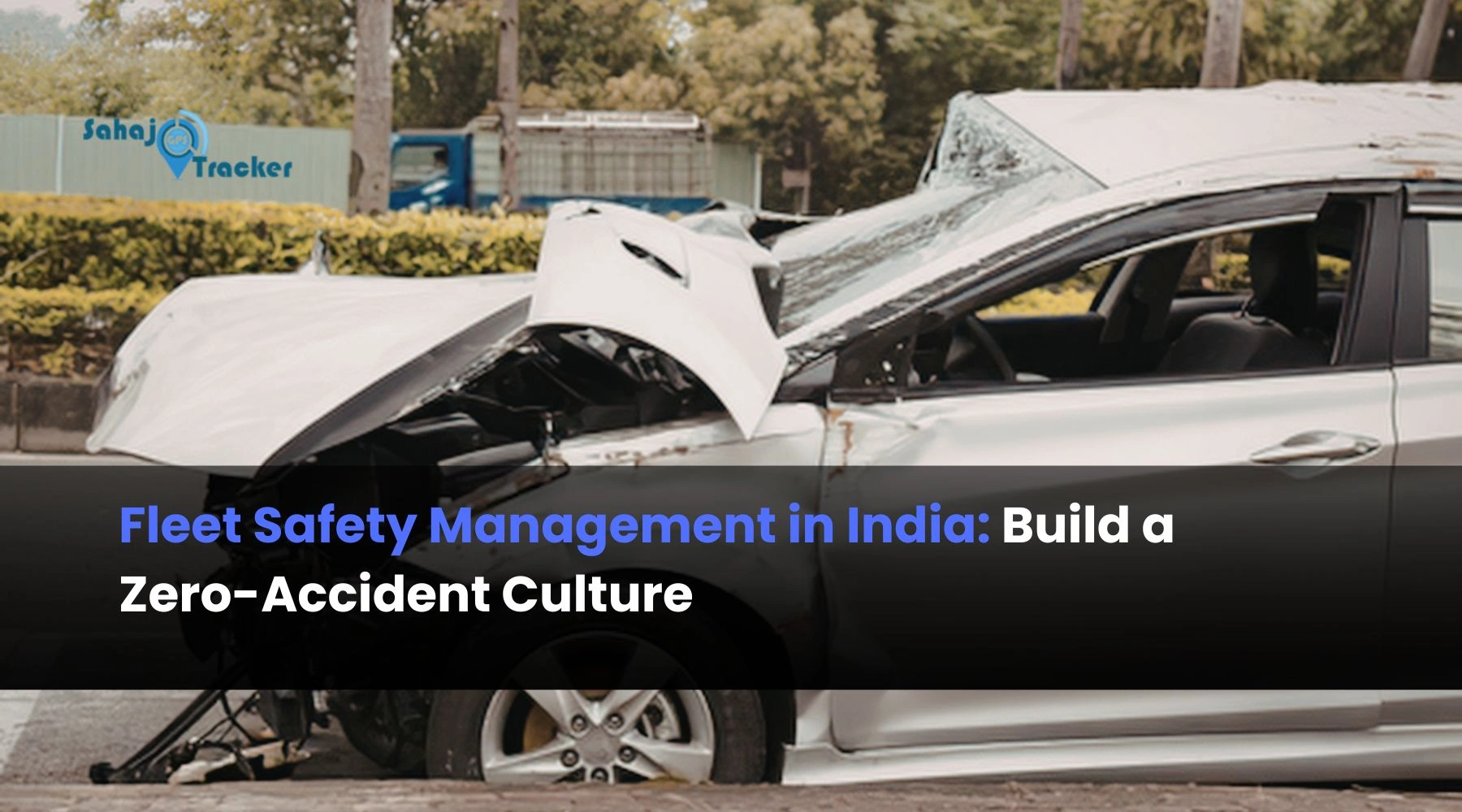
India loses more people to road accidents than almost any other country on earth. That’s not a dramatic way to open a blog — it’s just a fact that sits uncomfortably at the centre of any honest conversation about fleet safety GPS and vehicle safety management in commercial transport.
If you’re running a fleet of vehicles in India, your drivers are operating on roads where the risk environment is genuinely challenging: mixed traffic, inconsistent road quality, aggressive driving culture, and inadequate infrastructure in large parts of the country. Managing fleet safety in this context isn’t a compliance exercise. It’s a serious operational and ethical responsibility.
This guide is about building a fleet safety culture that goes beyond having the right policies on paper. Real zero-accident culture is a combination of technology, training, accountability, and management commitment — and getting all of those elements working together is harder than it sounds but more achievable than most fleet operators realise.
Why Most Indian Fleet Safety Programs Don’t Actually Work
Walk into most fleet companies in India and you’ll find some version of a safety policy. Rules about speed limits. A prohibition on phone use while driving. Maybe a driver handbook that new hires sign on their first day. What you won’t always find is any mechanism that connects those policies to daily driving behaviour in a measurable way.
Policies without measurement are aspirations, not safety systems. And the uncomfortable reality of most Indian commercial fleets is that drivers know the official rules and the actual operating norms are often quite different.
The pressure to make deliveries on time creates informal incentives for speeding. Long-haul driving cultures normalise hours behind the wheel that exceed safe fatigue limits. And without any real-time visibility into driver behaviour management only finds out about dangerous practices after something goes wrong.
That’s the gap that fleet accident prevention in India programs need to close — the gap between stated policy and daily practice.
The Cost of Getting This Wrong
Before getting into solutions, it’s worth quantifying what poor fleet safety management actually costs. Accident costs in commercial transport include the vehicle repair or write-off, the cargo damage, the third-party liability exposure, the driver medical and legal costs, the operational disruption of losing a vehicle from service, and the insurance premium impact that follows.
For a mid-size fleet of thirty vehicles, even two significant accidents per year represent a cost that dwarfs most GPS safety technology investments.
Then there’s the human cost. Drivers are people with families. The moral dimension of sending someone out in a vehicle without the training, tools, and accountability structure to keep them safe is real.
This isn’t just about protecting the company’s bottom line — though the financials absolutely make the case for investment. It’s about giving drivers the best possible chance of coming home at the end of their shift.
What a Zero-Accident Fleet Culture Actually Looks Like
“Zero accident” as a target sounds aspirational to the point of being unrealistic. And honestly, in practice what it means is not that accidents become literally impossible, but that every process in the organisation is oriented toward prevention rather than response. Zero accident culture is the difference between a fleet that learns from close calls and a fleet that only responds to actual crashes.
Leadership Commitment That Goes Beyond Policy Documents
The organisations that actually achieve sustained safety improvement in Indian fleet operations share one common factor: senior management treats safety data the same way they treat revenue data. Not as a compliance requirement to be reviewed quarterly, but as a live operational metric that gets discussed in the same meetings as delivery performance and cost management.
When fleet safety GPS data showing a driver’s speeding events gets the same senior attention as a missed delivery target, the organisation sends a clear signal about what it actually values. That signal travels down through supervisors, coordinators, and ultimately to drivers — and it changes behaviour in ways that policy documents alone never do.
Building Safety Into Daily Operations
Zero-accident culture doesn’t happen through occasional training programs. It happens when safety considerations are woven into daily workflow. Pre-trip vehicle inspection checklists that drivers actually complete. Regular route risk assessments for high-incident road segments. Proactive fatigue management that monitors hours behind the wheel. Driver briefings that include route-specific hazard information.
None of this requires technology to start. But technology makes it scalable. A fleet of ten vehicles can potentially manage safety processes manually. A fleet of fifty cannot — not with any consistency or accountability.
How GPS Fleet Safety Technology Enables Prevention Over Response
This is the practical core of fleet safety management in India 2025 — what technology actually does in safety terms, not just tracking terms.
Real-Time Speed Monitoring and Alerts
Speed is the single most consistent predictor of accident severity in commercial vehicle incidents. Not just whether a vehicle is speeding in absolute terms, but whether it’s going significantly faster than the appropriate speed for the road type and conditions.
A GPS system that monitors vehicle speed against route-specific thresholds — not just a blanket national speed limit — gives fleet managers and drivers much more actionable safety information.
Real-time alerts that notify both the driver (through an in-cab buzzer or visual signal) and the fleet coordinator when speed thresholds are breached create dual-layer accountability. The driver knows immediately. The coordinator knows simultaneously. Neither party can claim the event was unknown.
Sahaj GPS configures route-specific speed alert thresholds for fleet clients, recognising that applying a single threshold across highway driving, urban distribution routes, and school zone passages produces either too many false alerts on highways or too-high thresholds in sensitive areas. Differentiated thresholds based on road classification and time of day significantly improve both compliance and alert relevance.
Harsh Driving Event Detection and Driver Scoring
Harsh braking, sudden acceleration, and sharp cornering are all leading indicators of accident risk — they represent moments where the driver is responding to situations rather than anticipating them. A driver who consistently shows harsh braking events is a driver whose following distances or attention levels need addressing, before that pattern produces a collision.
GPS-based driver behaviour scoring gives fleet managers a structured picture of each driver’s safety profile over time. Not a single day’s snapshot, but trends — is this driver improving? Getting worse? Showing a specific pattern around certain route types or times of day? That trend data is what makes coaching conversations specific and credible rather than vague and defensive.
Sahaj GPS driver scoring in the fleet safety context generates weekly safety scores per driver with specific incident breakdowns — harsh braking events per hundred kilometres, speeding frequency, cornering events — that give a safety manager the exact data needed for a structured coaching conversation with any individual driver.
Fatigue Management and Journey Time Monitoring
Long-haul driving fatigue is one of the most underacknowledged risk factors in Indian fleet accident statistics. Drivers who’ve been behind the wheel for eight, ten, twelve hours face dramatically elevated accident risk compared to the same driver at hour two or three.
Most Indian commercial transport doesn’t have automated tachograph systems like European regulations require — which means fatigue monitoring has historically been self-reported and largely unverified.
GPS journey time analysis provides an objective picture of how long a driver has been operating without a break. Platforms that track driving time, break duration, and total hours behind the wheel for each driver on each shift give fleet safety managers the data to enforce rest requirements rather than just recommend them.
For long-haul segments — overnight routes between Mumbai and Nashik, early-morning runs from Delhi to Agra, multi-day schedules for mining and construction equipment transport in Jharkhand — this data is potentially life-saving.
Driver Training and GPS Data — A Combination That Actually Changes Behaviour
Technology without human follow-through produces dashboards, not safety culture. The GPS data is only as valuable as the conversations it enables.
Coaching With Data vs Lecturing Without It
The most common failure mode in fleet driver training programs is generic content delivery — a safety video, a lecture about road rules, a signed acknowledgement form. Drivers sit through it, most of it doesn’t change behaviour, and the organisation has technically completed a training activity without actually improving safety.
The alternative: individual coaching sessions where the driver and their supervisor review the driver’s own GPS safety data together. “Here are your three harsh braking events from Tuesday — let’s look at the locations and talk about what was happening at each one.” That specificity changes the dynamic entirely.
The driver can’t dismiss it as irrelevant or generic. The supervisor isn’t making a general complaint — they’re discussing a specific event at a specific place at a specific time.
Sahaj GPS supports this coaching workflow with shareable individual driver reports that can be used directly in one-on-one sessions, including map views of specific incident locations and timeline playback of the events surrounding an alert. The data does the heavy lifting; the manager focuses on the conversation.
Incentivising Safe Driving Rather Than Just Penalising Unsafe Driving
Negative reinforcement alone doesn’t build safe culture — it builds resentment and gaming behaviour. Drivers who feel they’re being watched to be caught doing something wrong don’t become safer drivers; they become more guarded drivers who, in some cases, learn to behave differently when the monitoring is visible.
A positive incentive structure — monthly recognition for top safety scores, bonuses linked to accident-free periods, preferential assignment of desirable routes for consistently high-scoring drivers — generates genuine engagement with the safety program rather than grudging compliance. Drivers who are proud of their safety score are fundamentally different from drivers who are avoiding their safety score.
Geofencing and Restricted Zone Management
Not all safety risk is about how vehicles are driven. Some of it is about where they go. Schools, hospitals, dense residential areas, industrial zones with restricted access, border areas — these locations have their own safety profiles and often their own regulatory requirements around vehicle access.
Geofence-based alerts that flag vehicles entering restricted zones, operating outside approved hours in sensitive areas, or deviating from approved routes through hazardous terrain give fleet managers location-specific safety control that driver behaviour monitoring alone can’t provide.
For companies operating tanker fleets through residential areas in Chennai or Pune, or construction equipment transport through hill passes in Himachal Pradesh, these zone-specific controls are a meaningful layer of risk management.
Sahaj GPS geofencing is used by fleet safety managers to set up permanent restricted zone alerts alongside dynamic geofences for event-specific route controls — which is particularly useful for fleet operators whose vehicles occasionally carry hazardous materials through populated areas or sensitive infrastructure zones.
Building a real safety culture is slow. It doesn’t happen in a quarter. It’s the product of consistent management attention, regular coaching conversations, a fair incentive structure, and technology that makes invisible behaviour visible.
The companies that have gotten there in Indian fleet operations describe it as a tipping point — at some point, safety-conscious behaviour stops being something that needs to be enforced and starts being something that experienced drivers take genuine pride in.
That tipping point is reachable. It just requires treating fleet safety GPS as a management tool rather than a surveillance tool, and treating drivers as partners in safety rather than subjects of it.

Frequently Asked Questions
Q1. What is fleet safety management and why is it critical for Indian commercial fleets?
Fleet safety management combines technology, training, and policy to prevent commercial vehicle accidents. In India’s high-risk road environment, it significantly reduces accident frequency, fatigue incidents, and the legal and financial costs of collisions for any fleet size.
Q2. How does GPS technology help prevent fleet accidents in India?
GPS enables real-time speed monitoring, harsh event detection, route deviation alerts, and fatigue tracking. Making driver behaviour continuously visible creates accountability structures that change daily driving practices before dangerous patterns result in actual accidents on Indian roads.
Q3. What is driver scoring and how does it contribute to fleet accident prevention?
Driver scoring assigns a performance rating based on GPS-measured events like speeding, harsh braking, and cornering. Scored data identifies high-risk drivers early, enables specific coaching conversations, and creates positive incentives when linked to recognition programs.
Q4. How can Indian fleet operators build a zero-accident culture beyond just installing GPS?
GPS provides the data layer. Zero-accident culture also requires senior leadership treating safety metrics seriously, regular individual coaching using driver data, positive incentive programs for safe behaviour, and pre-trip inspection processes embedded in daily operations.
Q5. Is fleet safety GPS tracking cost-effective for small and medium fleets in India?
Yes. Even for ten to twenty vehicle fleets, GPS safety monitoring costs are typically recovered within months through reduced accident repair costs, lower insurance premiums over time, better fuel efficiency, and reduced vehicle wear from less aggressive driving behaviour.