

Sales team tracking software helps businesses improve field productivity by providing real-time visibility into employee locations, customer visits, attendance, route planning, task management, and performance reporting. Instead of relying on manual updates, managers can make faster decisions using accurate operational data while helping field teams work more efficiently.
Managing a field sales team becomes increasingly challenging as the business grows. More territories, more customer visits, and tighter sales targets often leave managers juggling phone calls, spreadsheets, and daily follow-ups just to understand what’s happening on the ground. While this approach may work for a small team, it quickly becomes inefficient as operations expand.
Sales team tracking software addresses this challenge by bringing all field activities into one centralized platform. Rather than chasing updates throughout the day, businesses gain real-time visibility into employee movement, completed visits, attendance, and sales activities. This allows managers to focus on improving performance instead of collecting information manually.
Why Field Sales Teams Need Better Visibility
Field employees spend most of their working hours away from the office, making it difficult for managers to verify customer visits, monitor schedules, or respond quickly when priorities change. Delayed communication often results in missed opportunities, inefficient travel, and reduced productivity.
A structured tracking system provides managers with accurate operational visibility without interrupting employees during their workday. Instead of relying on assumptions, decisions are based on real-time information, helping businesses improve both planning and execution.
Understanding Sales Team Tracking Software
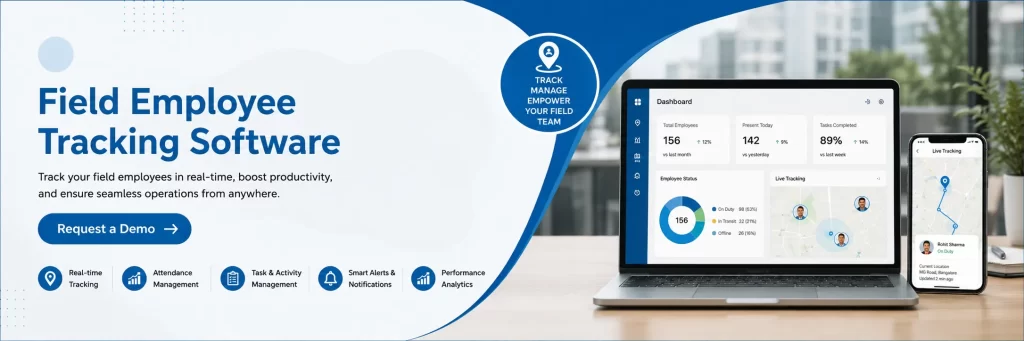
Sales team tracking software is a digital workforce management solution designed specifically for businesses with employees working in the field. It combines GPS tracking, attendance management, customer visit verification, task assignment, reporting, and sales activity monitoring into a single platform.
By connecting field representatives and managers through one system, businesses gain complete visibility into daily operations while reducing manual administration and improving overall coordination.
Live Location Tracking Supports Better Planning
Real-time GPS tracking is one of the most valuable features for managing field sales operations. Managers can instantly view employee locations, understand territory coverage, and assign urgent customer visits to the nearest available representative.
Location visibility also helps reduce unnecessary travel and improves route planning throughout the day. Rather than spending valuable time calling employees for updates, managers have instant access to accurate information whenever they need it.
Smarter Route Planning Increases Productivity
Travel consumes a significant portion of a field sales representative’s working day. Poor route planning often results in unnecessary driving, missed appointments, and fewer customer interactions.
Sales tracking software analyses travel routes and helps businesses identify more efficient ways to organise customer visits. Optimised scheduling allows representatives to spend less time travelling and more time meeting customers, increasing daily productivity without increasing working hours.
Digital Attendance and Visit Verification
Manual attendance systems often create confusion for businesses managing remote employees. GPS-enabled attendance simplifies this process by recording employee check-ins along with verified location data.
Customer visits can also be confirmed digitally through geo-tagged check-ins, creating reliable records of field activity. This improves accountability while eliminating disputes over attendance or completed visits.
Better Task Management for Field Teams
Managing multiple customer visits across different locations requires clear task allocation and continuous coordination. Sales team tracking software allows managers to assign tasks digitally, monitor progress in real time, and receive updates as work is completed.
Employees benefit from having clear schedules and priorities, while managers can identify delays early and make adjustments before they affect customer service or sales performance.
CRM Integration Makes Sales Management More Efficient
One of the biggest challenges for field sales teams is keeping customer information updated. When representatives record meeting notes or follow-up details manually at the end of the day, important information can easily be missed or forgotten.
Sales team tracking software that integrates with a CRM allows customer interactions, visit history, follow-up schedules, and sales updates to be recorded as activities happen. Managers receive accurate information without waiting for manual reports, while sales representatives spend less time on paperwork and more time building customer relationships.
Having customer data and field activity available in one place also helps businesses improve sales planning and maintain a more organised pipeline.
Simplified Expense Management
Travel is a routine part of field sales, but managing travel expenses manually often creates unnecessary administrative work. Verifying mileage claims, reviewing receipts, and processing reimbursements can consume valuable time for both finance teams and managers.
Sales tracking software simplifies this process by recording travel routes automatically. Businesses can compare travel claims with actual routes, making reimbursements faster and more transparent. Employees also benefit because legitimate expenses can be processed more efficiently without repeated verification.
Better Insights Help Managers Make Faster Decisions
Managing a field team becomes much easier when reliable operational data is available throughout the day. Instead of waiting until weekly review meetings, managers can monitor progress in real time and respond quickly whenever priorities change.
Detailed reports provide insights into customer visits, attendance, travel patterns, task completion, territory coverage, and employee productivity. This information helps businesses identify performance gaps, improve territory planning, and allocate resources more effectively.
As decision-making becomes data-driven, overall sales operations become more consistent and easier to manage.
Sales Representatives Benefit Too
Employee tracking software is often viewed only as a management tool, but it also creates significant advantages for field representatives. Better route planning reduces unnecessary travel, digital reporting minimises paperwork, and automated attendance removes the need for manual record keeping.
Sales representatives can spend more time meeting customers instead of preparing reports or responding to repeated status requests. Clear schedules and organised task management also help employees manage their workload more efficiently throughout the day.
When performance is measured using accurate operational data, employees receive fair recognition for the work they complete rather than being evaluated solely on manual reports.
Choosing the Right Sales Team Tracking Solution
Every business has different operational requirements, so selecting the right software requires careful evaluation. A good solution should improve productivity without making daily work more complicated for employees.
Businesses should look for features such as live GPS tracking, geo-tagged attendance, customer visit verification, CRM integration, task management, reporting, offline functionality, and a simple mobile application that employees can use comfortably in the field.
A solution that combines these capabilities within one platform helps businesses manage field operations more effectively while supporting future growth.
How Sahaj GPS Supports Field Sales Teams
Managing distributed sales teams becomes much easier when attendance, employee tracking, task management, customer visit verification, and reporting are available within one integrated platform. Sahaj GPS helps businesses improve field workforce visibility through real-time GPS tracking, geo-tagged attendance, digital task management, CRM-friendly reporting, and performance analytics.
By reducing manual administration, improving route planning, and providing accurate operational insights, Sahaj GPS enables organisations to manage field sales teams more efficiently while improving overall productivity.
Final Thoughts
As field operations continue to expand, businesses need better visibility into daily sales activities without increasing administrative work. Manual reporting and fragmented communication often slow decision-making and reduce overall efficiency.
Sales team tracking software provides the structure needed to manage field teams more effectively by improving coordination, simplifying reporting, and delivering real-time operational insights. When supported by accurate data and clear workflows, businesses can strengthen productivity, improve customer service, and build a more efficient sales operation.
Frequently Asked Questions
What is sales team tracking software?
Sales team tracking software is a digital solution that helps businesses monitor field employee attendance, customer visits, GPS location, task progress, and daily sales activities from a centralized platform.
Can sales tracking software improve field productivity?
Yes. By improving route planning, reducing manual reporting, and providing real-time visibility into field activities, businesses can increase employee productivity and operational efficiency.
Is GPS tracking useful for field sales teams?
GPS tracking helps managers verify customer visits, optimise travel routes, improve territory management, and respond quickly to changing schedules throughout the day.
Can sales team tracking software integrate with CRM systems?
Many modern platforms support CRM integration, allowing customer visits, sales updates, follow-ups, and field activities to be managed from a single system.
Is sales team tracking software suitable for small businesses?
Yes. Businesses of all sizes can benefit from improved workforce visibility, better task management, simplified reporting, and more efficient field operations.