
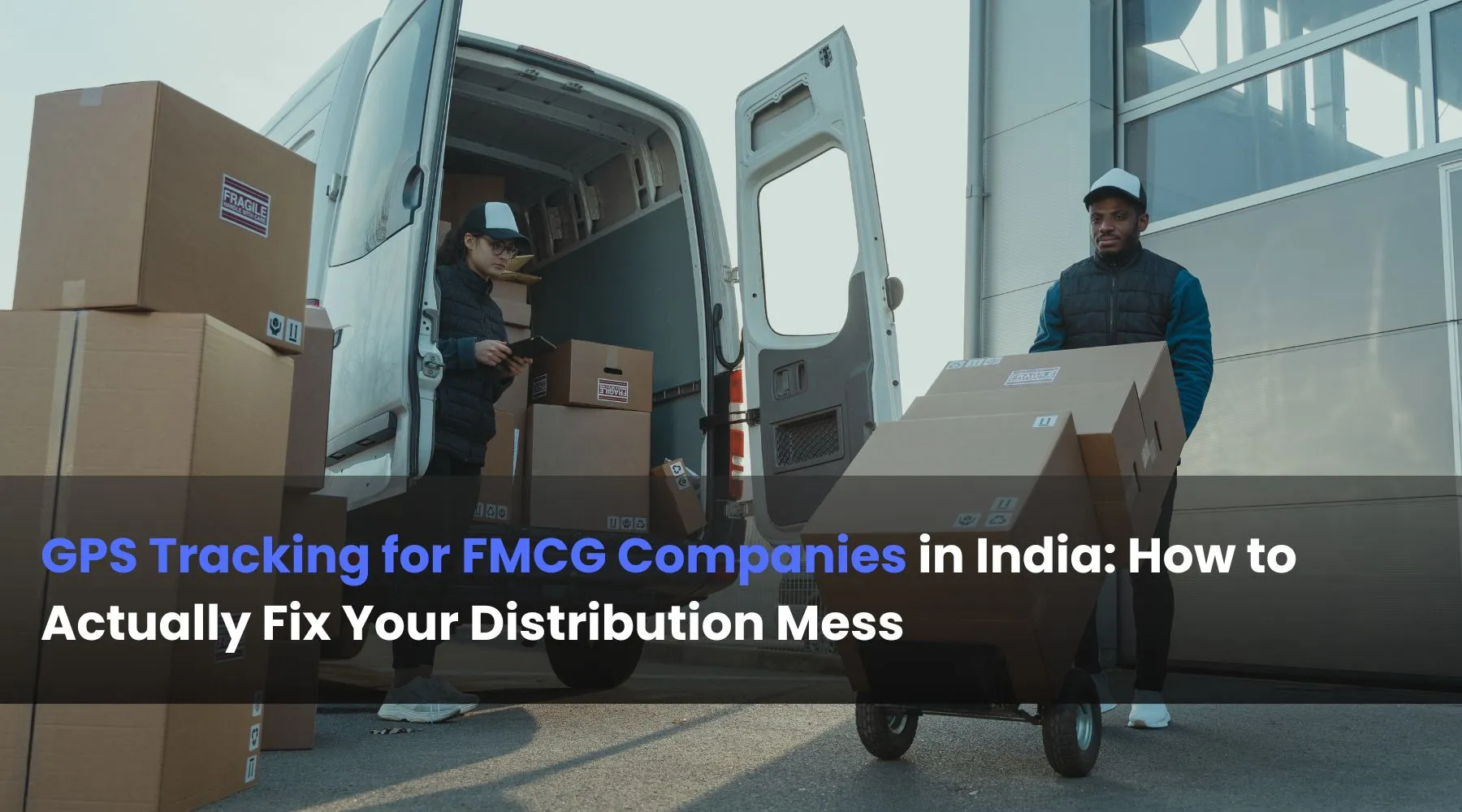
Anyone who’s worked in FMCG distribution in India knows the drill. A truck leaves the warehouse at 6 AM, and by 2 PM nobody really knows where it is. Maybe it’s stuck near Ghaziabad.
Maybe the driver took a “shortcut” that added two hours. Maybe — and this happens more than companies like to admit — it’s parked somewhere it shouldn’t be. This is exactly why FMCG fleet GPS has stopped being a “nice to have” and become something companies genuinely can’t run without anymore, especially with how competitive the consumer goods space has gotten.
I’ve spent some time talking to distribution managers (okay, mostly just listening to them vent), and the same complaints keep coming up. Delayed deliveries. Fuel costs that don’t make sense. Retailers complaining about stock not showing up on time. And honestly? A lot of these problems trace back to one simple thing — lack of visibility. You can’t fix what you can’t see.
Why FMCG Distribution in India is… Complicated
Let’s be real for a second. India isn’t exactly the easiest place to run a distribution network. You’ve got massive cities with traffic that makes no sense, rural routes that sometimes aren’t even proper roads, and weather that can turn a 4-hour trip into an 8-hour nightmare during monsoon season.
Add to that the sheer scale — thousands of SKUs, hundreds of distributors, lakhs of retail touchpoints — and you start to see why traditional tracking methods (read: phone calls and Excel sheets) just don’t cut it anymore.
A distribution tracker isn’t some fancy add-on anymore. It’s basically the nervous system of the whole operation. Without it, you’re flying blind. With it… well, things still go wrong sometimes, but at least you KNOW they’re going wrong, and that’s half the battle honestly.
What Does FMCG GPS Tracking Actually Solve?
Okay so let’s break this down practically. Not in a boring corporate “here are our five pillars of success” way — just real stuff that companies deal with daily.
Route optimization — this one’s huge. I remember reading about a mid-sized snacks company in Maharashtra that cut their delivery times by almost 20% just by optimizing routes based on real-time traffic data. Twenty percent! That’s not small. When you’re running consumer goods fleet GPS systems, the software basically calculates the best possible route considering traffic, road conditions, delivery windows — all of it. The driver doesn’t have to guess anymore.
Fuel monitoring — and oh boy, this is where companies lose SO much money without even realizing it. Fuel theft is unfortunately common in India’s logistics sector (nobody likes talking about it but it’s true). GPS systems with fuel sensors can flag unusual drops in fuel level instantly. Like, if a truck’s fuel tank suddenly drops by 15 liters while it’s “parked” somewhere — that’s a red flag right there.
Real-time delivery tracking — retailers want to know when their stock is arriving. Distributors want proof of delivery. And companies want to make sure their FMCG distribution tracking actually matches what’s happening on ground. GPS gives everyone this visibility without a hundred phone calls.
Driver behavior monitoring — harsh braking, speeding, idle time… all of this affects vehicle maintenance costs and fuel efficiency. Plus, let’s not forget — safer driving means fewer accidents, which means less downtime, which means… you get the picture.
The Cost Side of Things (Because Let’s Be Honest, This Matters)
Look, at the end of the day, it comes down to money. FMCG margins are thin. Like, REALLY thin in some categories. A company selling biscuits or soaps is working with margins that get eaten up fast by inefficiencies. So when GPS tracking helps reduce:
- Fuel wastage
- Unauthorized vehicle usage
- Delivery delays (and the resulting penalty costs from big retail chains)
- Vehicle downtime due to poor maintenance scheduling
…it’s not just operational improvement. It’s straight up profit protection.
I’ll be honest, some smaller distributors initially resist adopting FMCG GPS systems because they think it’s expensive or complicated. But when you actually calculate the ROI — most companies see returns within months, not years. The technology has gotten way cheaper and more accessible than it was even five years ago.
Location-Specific Challenges Across India
This part doesn’t get talked about enough. GPS tracking needs in Delhi NCR are completely different from, say, distribution networks running through rural Bihar or the hill regions of Himachal Pradesh.
In metro cities like Mumbai, Bangalore, Chennai, Delhi — the challenge is traffic congestion and last-mile delivery efficiency. Trucks get stuck for hours, deliveries get delayed, and FMCG GPS tracking India systems help reroute in real time.
But in tier-2 and tier-3 cities — places like Indore, Coimbatore, Lucknow (where I’m based, actually) — the challenge shifts. It’s less about traffic and more about route coverage, ensuring vehicles actually reach far-flung retail outlets, and reducing the “ghost trips” where drivers claim to have visited outlets they never actually went to.Sahaj GPS
And then there’s the whole rural distribution angle — getting products to small kirana stores in villages where road infrastructure is… let’s just say “developing.” GPS combined with geofencing helps verify that deliveries actually happened at the right location, which sounds simple but solves a massive trust issue between companies and their distribution partners.
How Sahaj GPS Fits Into This Picture
This is where solutions like Sahaj GPS come in — and I’m mentioning this not as some forced plug, but because the approach matters. A good distribution fleet monitor system needs to be simple enough for ground staff to actually use (because if drivers find it too complicated, they’ll find workarounds, trust me), while still giving management the detailed analytics they need.
What I’ve noticed with platforms like Sahaj GPS is that they focus on practical usability — things like easy geofencing setup for retail zones, automated alerts for route deviations, and reports that don’t require a data science degree to understand. For FMCG companies juggling hundreds of vehicles across multiple states, having a system that’s actually USED (not just installed and forgotten) makes all the difference.
The thing about consumer goods GPS tracking is — it’s not just about the technology itself. It’s about how well it integrates into existing workflows. A complicated dashboard that nobody checks is basically useless. Sahaj GPS and similar solutions seem to understand this — keeping things straightforward so that even smaller distribution teams without dedicated IT support can manage it.
What About Implementation? Is It a Headache?
Honestly, implementation is way less painful than most people expect. Modern GPS devices are plug-and-play in most cases — installed in vehicles within an hour or two. The bigger “work” is on the process side — training drivers, setting up geofences for delivery zones, configuring alerts for things like unauthorized stops or speed limits.
Some companies try to do everything at once across their entire fleet, which… can get messy. A better approach (in my opinion, anyway) is starting with a pilot — maybe 10-15 vehicles in one region — working out the kinks, then scaling up. This way you’re not troubleshooting issues across 500 vehicles simultaneously while your operations team has a meltdown.
Is GPS Tracking Just for Big FMCG Players?
Nope, not anymore. This used to be true maybe a decade back — only the big names like HUL or ITC could afford fleet tracking at scale. But pricing has come down significantly, and even regional FMCG brands with fleets of 20-50 vehicles are adopting FMCG fleet GPS solutions now.
Actually, smaller players sometimes benefit MORE because their margin for error is smaller. One delayed truck, one fuel theft incident — these hit a smaller company’s bottom line harder proportionally.
A Quick Word on Data and Privacy
Something that doesn’t get discussed much but probably should — drivers sometimes feel uncomfortable being “monitored” constantly. It’s a fair concern honestly. Companies implementing GPS tracking should be transparent about what’s being tracked and why. Framing it as a safety and efficiency tool (which it genuinely is) rather than pure surveillance helps with adoption. Happier drivers, smoother rollout — simple as that.
Anyway, that’s pretty much the landscape as I see it. GPS tracking for FMCG distribution in India isn’t some futuristic concept anymore — it’s just… how things work now, or at least how they should work if companies want to stay competitive. The roads aren’t getting less chaotic anytime soon, so might as well have the tools to navigate that chaos smartly, right?
FAQs
Q1. What is FMCG fleet GPS tracking?
It’s a system that monitors delivery vehicles in real-time, tracking location, routes, fuel usage, and driver behavior to improve distribution efficiency.
Q2. How does GPS tracking reduce fuel costs?
It detects fuel theft, monitors idle time, and suggests optimized routes — all of which cut unnecessary fuel consumption significantly over time.
Q3. Is GPS tracking expensive for small FMCG distributors?
Not really anymore. Costs have dropped a lot, and most companies see ROI within a few months through reduced fuel and operational waste.
Q4. Can GPS tracking improve delivery times in rural areas?
Yes, especially with geofencing — it verifies deliveries actually happened and helps optimize routes even in areas with poor road infrastructure.
Q5. How long does it take to implement a distribution tracker?
Basic installation takes hours, but a phased rollout — starting with a small pilot fleet — usually takes 2-4 weeks for smooth scaling.