

Quick Answer
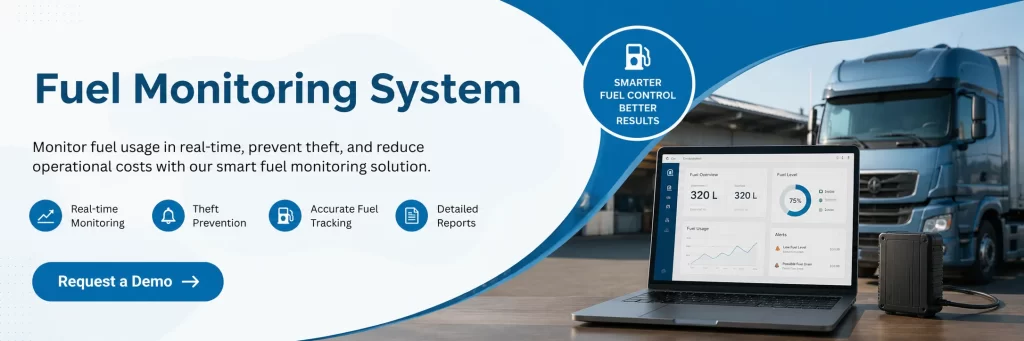
A fuel monitoring system continuously tracks the fuel level inside a vehicle or machine using a high-precision fuel level sensor connected to a GPS tracking device. The collected data is transmitted to a cloud-based platform, where fleet managers can monitor live fuel levels, detect fuel theft, receive instant alerts, analyse fuel consumption, and generate detailed reports to improve fleet efficiency and reduce operating costs.
Fuel is one of the largest operating expenses for fleet-based businesses, yet it is also one of the hardest resources to control without accurate data. Manual fuel records, fuel bills, and driver reports often fail to identify hidden losses caused by theft, excessive idling, inefficient driving, or fuel wastage. As fuel prices continue to rise, businesses require smarter solutions that provide complete visibility into fuel usage instead of relying on assumptions.
A modern fuel monitoring system gives fleet owners real-time insights into every litre of fuel consumed across their vehicles. By combining GPS tracking, intelligent fuel sensors, and advanced reporting, businesses can monitor fuel usage, improve operational efficiency, and prevent unnecessary losses. Solutions like Sahaj GPS help fleet operators make informed decisions using accurate fuel data while strengthening overall fleet management.
The Main Components of a Fuel Monitoring System
A professional fuel monitoring solution consists of several integrated components that work together to monitor fuel usage accurately. Understanding these components helps businesses choose the right system while knowing exactly how fuel data is collected and analysed.
1. Fuel Level Sensor
The fuel level sensor is the most important part of the system because it continuously measures the amount of fuel available inside the tank. Modern fuel monitoring solutions use capacitive fuel sensors, which offer much higher accuracy than conventional float-based sensors found in most vehicles.
Unlike standard dashboard fuel gauges that provide approximate readings, capacitive sensors monitor fuel levels throughout the tank and generate highly accurate measurements. This level of precision allows businesses to identify small fuel losses that manual monitoring methods would normally miss.
The sensor is calibrated according to the shape and size of each fuel tank, ensuring accurate readings regardless of vehicle type. Whether monitoring trucks, buses, construction equipment, generators, or agricultural machinery, proper calibration plays an important role in maintaining reliable fuel data.
2. GPS Tracking Device
The GPS tracking device acts as the communication hub between the fuel sensor and the fleet management platform. While the sensor measures fuel levels, the GPS device records vehicle location, speed, ignition status, and movement, providing important context for every fuel event.
Whenever fuel levels change, the GPS device combines location data with sensor readings before transmitting the information securely through the mobile network. Even if the vehicle enters an area with poor network coverage, the device stores data internally and automatically uploads it once connectivity is restored.
This continuous communication enables businesses to monitor fuel consumption in real time while maintaining complete trip history without missing important operational events.
3. Cloud-Based Fuel Management Platform
Once vehicle data reaches the cloud platform, it becomes meaningful operational information that fleet managers can access from anywhere. Instead of reviewing paper records or manually comparing fuel bills, businesses receive live operational insights through an easy-to-use dashboard.
A modern fuel management system typically provides:
- Live fuel level monitoring
- Fuel consumption history
- Vehicle location tracking
- Trip-wise fuel usage
- Idle fuel consumption reports
- Refuelling history
- Fuel drain event records
- Vehicle performance analytics
Businesses using Sahaj GPS can monitor every vehicle from a single dashboard, helping managers identify unusual fuel usage, compare vehicle performance, and improve overall fleet efficiency without manual calculations.
4. Intelligent Alert System
Collecting fuel data alone is not enough. Businesses also need immediate notifications whenever unusual fuel activity occurs. This is where an intelligent alert system becomes essential.
Modern fuel monitoring systems generate instant alerts for important operational events such as:
- Sudden fuel level drops
- Fuel filling activities
- Low fuel level warnings
- Excessive engine idling
- Vehicle movement outside approved hours
- Possible fuel theft attempts
These alerts allow fleet managers to respond immediately instead of discovering problems days later during manual reconciliation. Faster response times reduce operational losses while improving accountability across the entire fleet.
Fuel Reports and Analytics
While real-time alerts help businesses respond immediately to unusual fuel activity, detailed reports provide the insights needed to improve long-term fleet performance. A fuel monitoring system automatically collects operational data and converts it into easy-to-understand reports, allowing fleet managers to identify fuel wastage patterns and make informed business decisions.
Some of the most valuable reports include:
- Daily fuel consumption reports
- Trip-wise fuel usage analysis
- Fuel filling and drain history
- Idle fuel consumption reports
- Vehicle-wise fuel efficiency reports
- Driver fuel performance reports
- Monthly fleet fuel summary
These reports help businesses compare vehicle performance, identify inefficient routes, improve driver behaviour, and reduce unnecessary fuel expenses across the fleet.
How a Fuel Monitoring System Detects Fuel Theft
Fuel theft often goes unnoticed when businesses rely on manual fuel logs or driver reports. Small fuel losses over several weeks can gradually increase operating costs without raising immediate concerns. A fuel monitoring system eliminates this uncertainty by continuously monitoring fuel levels and comparing them with vehicle activity.
Whenever a fuel level sensor detects a sudden drop in fuel while the vehicle is stationary or the ignition is switched off, the system immediately analyses the event. If the fuel reduction exceeds the configured threshold, an instant alert is generated along with the vehicle’s location, time, and fuel volume involved.
Fleet managers can access this information through the dashboard, verify the incident using GPS data, and take immediate corrective action. Businesses using Sahaj GPS benefit from real-time fuel theft detection, helping reduce financial losses and strengthen fleet security.
What Makes a Professional Fuel Monitoring System Different?
Not every fuel monitoring solution offers the same level of accuracy or operational value. Professional-grade systems combine advanced hardware with intelligent software to deliver precise fuel monitoring, reliable reporting, and faster response to unusual fuel events.
A high-quality fuel monitoring system should provide:
- High-accuracy capacitive fuel sensors
- Real-time GPS fuel monitoring
- Instant theft and refuelling alerts
- Offline data storage during network interruptions
- Support for single and dual fuel tanks
- Vehicle-specific sensor calibration
- Trip-wise fuel analytics
- Cloud-based reporting and mobile access
Choosing a reliable solution helps businesses improve fuel control while reducing operational risks associated with inaccurate fuel data.
Fuel Monitoring System Cost in India
One of the most common questions businesses ask is whether a fuel monitoring system delivers sufficient return on investment. While the installation cost depends on vehicle type, tank configuration, and monitoring requirements, most commercial fleet operators recover their investment quickly through reduced fuel losses and improved operational efficiency.
By preventing fuel theft, reducing excessive idling, improving route planning, and monitoring driver behaviour, businesses can significantly lower monthly fuel expenses. For fleets operating multiple commercial vehicles, construction equipment, generators, or agricultural machinery, the long-term savings often exceed the cost of implementation within a short period.
Benefits of Using a Fuel Monitoring System
Implementing a modern fuel monitoring solution offers measurable improvements across every aspect of fleet management. Some of the most significant advantages include:
- Reduced fuel theft and fuel wastage
- Better fuel consumption monitoring
- Improved driver accountability
- Lower fuel and operating costs
- Real-time fleet visibility
- Accurate fuel analytics and reporting
- Better preventive maintenance planning
- Improved fleet productivity and profitability
Together, these benefits help businesses manage fuel more efficiently while improving overall fleet performance.
Final Thoughts
Managing fuel expenses has become a critical priority for businesses operating commercial vehicles, construction equipment, generators, and industrial machinery. Manual fuel records and traditional monitoring methods often fail to identify hidden losses, making it difficult to control operating costs effectively.
A modern fuel monitoring system provides complete visibility into fuel consumption through real-time monitoring, intelligent alerts, advanced analytics, and accurate reporting.
Businesses can identify fuel theft, monitor driver behaviour, optimise fuel efficiency, and make better operational decisions using reliable data. With intelligent solutions from Sahaj GPS, fleet owners gain greater control over fuel management while improving operational efficiency and reducing unnecessary expenses.
Frequently Asked Questions
1. How does a fuel monitoring system work?
A fuel monitoring system uses a high-precision fuel level sensor connected to a GPS tracking device to monitor fuel levels continuously. The collected data is transmitted to a cloud platform, allowing businesses to track fuel usage, detect theft, and generate detailed reports.
2. Can a fuel monitoring system detect fuel theft?
Yes. The system continuously monitors fuel levels and instantly detects sudden fuel drops when the vehicle is stationary or switched off. Real-time alerts help businesses respond quickly to possible fuel theft or leakage.
3. Is a fuel monitoring system suitable for generators and construction equipment?
Absolutely. Fuel monitoring solutions can be installed on trucks, buses, construction machinery, generators, agricultural equipment, and stationary fuel tanks to improve fuel management and reduce operating costs.
4. Does the system work without an internet connection?
Yes. Most professional GPS fuel monitoring devices store operational data locally whenever mobile connectivity is unavailable. The information is automatically synchronised with the cloud platform once the network connection is restored.
5. Why should businesses choose Sahaj GPS for fuel monitoring?
Sahaj GPS provides advanced fuel monitoring solutions with high-accuracy fuel sensors, real-time GPS tracking, instant theft alerts, fuel analytics, and comprehensive reporting that help businesses improve fuel efficiency, reduce losses, and strengthen fleet management.