
Employee monitoring helps businesses improve productivity, accountability, and operational efficiency by tracking employee location, attendance, task completion, and field activities in real time. When implemented transparently, it strengthens workforce management, reduces attendance disputes, improves customer service, and gives managers accurate data to make better business decisions without creating unnecessary workplace stress.
Managing a field workforce has never been easy. Whether employees are visiting clients, handling service requests, or making deliveries, managers often depend on phone calls, manual attendance records, and verbal updates to understand what is happening on the ground. While this approach may work for small teams, it quickly becomes inefficient as operations grow. Without reliable visibility, businesses struggle with delayed reporting, disputed client visits, inaccurate attendance, and reduced productivity.
Many organisations assume employee monitoring software is designed to watch employees constantly. In reality, modern field employee tracking software focuses on improving operational visibility rather than surveillance. Businesses using solutions like Sahaj GPS gain real-time insights into employee movement, attendance, task completion, and route efficiency, allowing managers to support their teams with accurate information instead of assumptions.
What Does Employee Monitoring Mean Today?
Employee monitoring has evolved significantly over the past few years. It is no longer limited to simply tracking employee locations. Modern workforce management solutions combine multiple features that help businesses manage field operations more efficiently while maintaining transparency with employees.
Depending on business requirements, employee monitoring may include:
- GPS-based employee location tracking
- Attendance verification using live location
- Geo-fenced check-ins and check-outs
- Task assignment and progress monitoring
- Proof of visit with photos and timestamps
- Route tracking for field staff
- Daily activity and productivity reports
For businesses with field sales executives, delivery teams, technicians, healthcare staff, or service engineers, these features provide complete visibility into daily operations while reducing manual reporting and administrative effort.
1. Better Visibility Into Daily Field Operations
One of the biggest challenges for businesses managing field employees is knowing where team members actually are during working hours. Without live tracking, managers often rely on phone calls or manual updates, making it difficult to verify employee locations or respond quickly when operational issues arise.
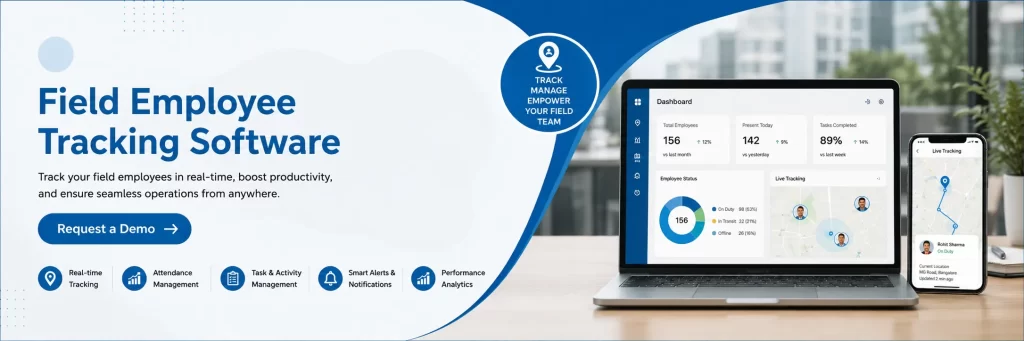
A GPS employee tracking system provides real-time visibility into employee movement throughout the day. Managers can instantly view employee locations, assigned tasks, visit history, and current work status from a single dashboard. This eliminates unnecessary follow-up calls and helps businesses coordinate field operations more efficiently.
For organisations using Sahaj GPS, this visibility improves planning, reduces communication gaps, and enables faster decision-making whenever unexpected changes occur.
2. Employee Accountability Improves Naturally
Performance discussions often become difficult when managers rely only on verbal explanations or manually submitted reports. Without accurate operational data, conversations about attendance, missed client visits, or delayed tasks frequently become subjective and uncomfortable.
Employee monitoring software creates objective performance records by automatically capturing attendance, visit timings, task completion, and travel routes. Because every activity is recorded consistently, accountability becomes part of the system rather than depending on individual reporting. Employees who consistently perform well also benefit, as their efforts are supported by verified data instead of assumptions.
This data-driven approach creates a fair working environment where decisions are based on facts rather than opinions, helping both managers and employees build stronger professional trust.
3. Productivity Improves Without Changing Existing Processes
One of the most noticeable benefits businesses experience after implementing field employee tracking software is improved productivity. Interestingly, these improvements often occur without changing work processes, introducing new policies, or increasing supervision.
When employees know that attendance, client visits, and assigned tasks are being recorded accurately, they naturally organise their schedules more efficiently. Sales representatives plan client visits better, service engineers reduce unnecessary travel, and delivery personnel follow planned routes more consistently. Small improvements in daily work habits gradually increase overall productivity across the organisation.
Instead of focusing on monitoring every movement, businesses gain valuable insights that help optimise workforce performance while allowing employees to work more independently.
4. Customer Disputes Become Easier to Resolve
Client complaints regarding delayed visits or missed appointments can be difficult to investigate when businesses depend only on verbal communication. Customers may report one version of events while employees provide another, leaving managers without reliable evidence to determine what actually happened.
Modern employee monitoring software records GPS location, visit time, check-in history, and proof of visit with timestamps. These records provide a clear history of every client interaction, allowing businesses to verify service delivery quickly and resolve disputes with confidence. Accurate documentation not only protects employees when complaints are incorrect but also helps managers address genuine service issues more effectively.
5. Better Route Planning and Workforce Efficiency
Employee monitoring does more than record attendance and location. It also helps businesses understand how field teams spend their working hours. By analysing travel routes, visit duration, and time spent between locations, managers can identify opportunities to improve scheduling and reduce unnecessary travel.
A field employee tracking system highlights inefficient routes, repeated detours, and excessive travel time that may affect daily productivity. Using these insights, businesses can optimise employee schedules, assign nearby tasks, and improve overall workforce efficiency. Businesses using Sahaj GPS can streamline field operations while helping employees complete more productive visits within the same working hours.
Common Challenges of Employee Monitoring
While employee monitoring offers significant operational benefits, businesses may face challenges if it is introduced without proper planning. Employees who are not informed about the purpose of tracking may feel uncomfortable or believe they are being monitored unnecessarily. Similarly, collecting excessive data without a clear objective can create confusion rather than improving productivity.
Another common challenge is relying entirely on tracking data without understanding the actual reason behind performance issues. Low productivity may sometimes result from poor route planning, unrealistic targets, or workload imbalance instead of employee performance. Monitoring should therefore support better decision-making rather than replace effective management.
Best Practices for Successful Employee Monitoring
Businesses that achieve the best results follow a transparent and employee-friendly approach when implementing employee monitoring software. Clearly communicating the purpose of monitoring helps employees understand that the system is designed to improve operational efficiency rather than invade personal privacy.
Some recommended practices include:
- Inform employees before implementing tracking.
- Monitor activities only during working hours.
- Use collected data for performance improvement and coaching.
- Maintain transparency about how information is stored and used.
- Allow employees to review their own attendance and activity records.
Following these practices builds trust while encouraging greater accountability across the workforce.
Why Transparency Creates Better Results
The success of employee monitoring depends less on the technology itself and more on how businesses introduce it. Organisations that communicate openly with employees usually experience better acceptance and stronger operational improvements. When everyone understands the purpose of monitoring, the focus shifts from supervision to productivity, accountability, and better teamwork.
Employees also benefit from accurate records that recognise completed tasks, verified attendance, and successful client visits. Managers, in turn, gain reliable operational data that supports fair performance evaluations and faster business decisions.
Is Employee Monitoring Right for Your Business?
Businesses that manage field sales representatives, delivery executives, technicians, healthcare professionals, maintenance teams, or service engineers often face challenges in maintaining operational visibility. Without accurate tracking, managers spend valuable time verifying attendance, confirming client visits, and resolving unnecessary disputes.
Implementing field employee tracking software allows businesses to monitor daily activities more efficiently while reducing manual reporting. Real-time location tracking, task management, attendance verification, and proof of visit features help organisations improve workforce productivity without increasing administrative effort. For businesses looking to strengthen field operations, employee monitoring has become an essential workforce management tool rather than an optional technology.
Final Thoughts
Employee monitoring is not about creating a culture of surveillance; it is about improving visibility, accountability, and operational efficiency through accurate business data. When implemented with transparency and clear communication, it helps businesses manage field teams more effectively while giving employees fair recognition for their work.
Modern employee monitoring software provides businesses with real-time workforce visibility, GPS attendance, task tracking, and performance insights that support better decision-making. With solutions from Sahaj GPS, organisations can simplify field workforce management, improve customer service, and build a more productive, accountable, and transparent work environment that supports long-term business growth.
FAQs
1. What is employee monitoring software?
Employee monitoring software helps businesses track attendance, employee location, task progress, and field activities in real time, improving workforce management and operational efficiency.
2. Is employee monitoring legal in India?
Yes. Businesses can monitor work-related activities during official working hours, provided employees are informed about the monitoring policy and data collection practices.
3. Can employee monitoring improve employee productivity?
Yes. By providing accurate attendance records, task tracking, and GPS-based activity monitoring, businesses can improve accountability, optimise field operations, and increase workforce productivity.
4. What industries benefit most from employee monitoring?
Employee monitoring is highly beneficial for field sales teams, delivery services, healthcare organisations, service providers, maintenance companies, logistics businesses, and any organisation managing employees outside the office.
5. Why should businesses choose Sahaj GPS for employee tracking?
Sahaj GPS offers advanced field employee tracking software with GPS attendance, geo-fencing, proof of visit, task monitoring, and real-time reporting, helping businesses improve workforce visibility, operational efficiency, and employee accountability..