

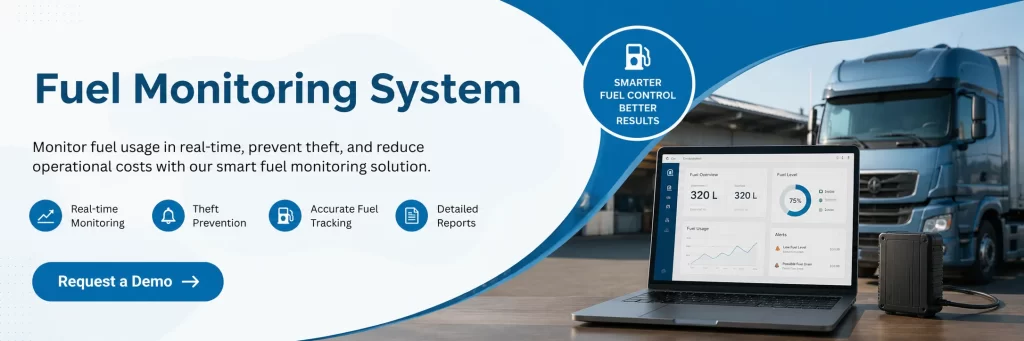
A fuel monitoring system uses GPS technology, fuel level sensors, and cloud-based software to track fuel consumption in real time. It detects fuel theft, monitors fill and drain events, identifies unusual fuel usage, and provides detailed reports that help fleet owners reduce operating costs and improve fleet efficiency.
Fuel is one of the largest operating expenses for businesses that manage commercial vehicles. Whether it’s a logistics company, construction business, mining operation, or transport fleet, even small fuel losses can gradually increase overall operating costs. Unfortunately, many businesses only notice the impact after monthly fuel bills continue rising despite no significant increase in vehicle usage.
One of the biggest challenges is that fuel loss often happens without obvious signs. Manual fuel records, driver logs, and mileage calculations provide only a partial picture, making it difficult to identify where fuel is actually being wasted or lost. A fuel monitoring system solves this problem by providing real-time visibility into fuel usage, allowing fleet managers to monitor every litre more accurately and make informed operational decisions.
Why Fuel Loss Often Goes Unnoticed
Many organisations still rely on fuel receipts, manual registers, and driver-reported information to manage fuel consumption. While these methods provide basic records, they cannot verify what actually happens inside the fuel tank during a journey.
Small incidents such as excessive idling, unauthorised fuel usage, inefficient routes, or fuel theft may remain unnoticed for weeks or even months. Individually these losses appear minor, but over time they can significantly increase operating expenses.
Without accurate fuel data, businesses often struggle to determine whether rising fuel costs are caused by vehicle performance, driving behaviour, or operational inefficiencies.
Common Reasons Behind Fuel Loss
Fuel wastage is rarely caused by a single factor. In most fleets, it results from multiple operational issues occurring simultaneously.
Some of the most common reasons include:
- Unauthorised fuel removal
- Excessive engine idling
- Poor route planning
- Aggressive driving behaviour
- Fuel theft
- Vehicle misuse
- Lack of maintenance
- Unplanned detours
Identifying these issues manually is difficult because there is very little real-time visibility into vehicle activity.
Why Traditional Fuel Monitoring Has Limitations
Conventional fuel management methods depend heavily on paperwork and manual reporting. Although fuel receipts and logbooks provide transaction records, they cannot confirm whether the reported fuel actually entered the vehicle or how it was used afterwards.
For example, fuel receipts may show the quantity purchased, but they cannot identify:
- Unexpected fuel drops
- Fuel theft during overnight parking
- Route-based fuel wastage
- Excessive idle fuel consumption
- Differences between fuel filled and fuel consumed
As a result, businesses often discover higher fuel expenses only after reviewing monthly reports, when the opportunity to investigate has already passed.
How a Fuel Monitoring System Works
A modern fuel monitoring system combines high-precision fuel sensors with GPS tracking technology to continuously monitor fuel levels and vehicle activity.
The system measures fuel inside the tank while simultaneously tracking vehicle location, ignition status, speed, and movement. All information is transmitted securely to a cloud-based dashboard where managers can monitor every vehicle in real time.
Instead of relying on assumptions, fleet managers receive accurate operational data that supports faster and more informed decisions.
Continuous Fuel Level Monitoring
Fuel level sensors measure the actual quantity of fuel inside the tank throughout every journey. Unlike manual readings, these measurements are automatic and continue even while the vehicle is moving.
This provides complete visibility into:
- Current fuel level
- Fuel consumption
- Fill events
- Fuel drain events
- Sudden fuel changes
Because monitoring takes place continuously, unusual fuel activity becomes much easier to identify.
Detecting Fuel Theft in Real Time
One of the most valuable capabilities of modern fuel monitoring technology is its ability to identify unexpected fuel loss immediately.
If fuel levels suddenly decrease while the vehicle is stationary or parked, the system records the event and generates an instant notification. Managers receive information including the vehicle location, time of the event, and the estimated quantity of fuel lost.
Instead of discovering shortages days later, businesses can respond while the incident is still fresh, making investigation and corrective action much easier.
Monitoring Fuel Filling Events
Fuel monitoring technology also records every refuelling activity. Whenever fuel is added to the tank, the system measures the actual quantity received and stores the information automatically.
These records help businesses:
- Verify refuelling activity
- Compare filled quantity with purchase records
- Improve fuel accountability
- Maintain accurate operational history
Accurate fuel records reduce dependence on manual reporting while improving transparency across the fleet.
Route-Based Fuel Analysis
Fuel consumption is closely linked to vehicle routes. Congested roads, unnecessary detours, and inefficient route planning often increase diesel usage without managers realising the actual reason.
By combining GPS tracking with fuel monitoring, businesses can analyse how different routes affect fuel consumption and identify opportunities to improve efficiency.
Over time, this information helps reduce unnecessary travel, improve planning, and lower overall operating costs.
Driver Behaviour Directly Affects Fuel Consumption
Fuel efficiency is influenced not only by the condition of the vehicle but also by how it is driven. Frequent acceleration, harsh braking, excessive speeding, and prolonged idling can significantly increase fuel usage over time.
A modern fuel monitoring platform combines GPS and vehicle data to analyse driving patterns and identify behaviours that lead to unnecessary fuel consumption.
Businesses can monitor:
- Harsh acceleration
- Sudden braking
- Over-speeding
- Excessive idling
- Long engine running time
- Route deviations
Using these insights, fleet managers can guide drivers towards safer and more economical driving practices, helping reduce both fuel expenses and vehicle wear.
Detailed Reports Support Better Decisions
Collecting data is only useful when it helps improve operations. Modern fuel monitoring solutions generate detailed reports that transform raw information into meaningful insights.
Common reports include:
- Daily fuel consumption
- Vehicle-wise fuel usage
- Fuel filling history
- Fuel drain reports
- Idle time analysis
- Trip-wise fuel consumption
- Driver performance reports
These reports allow businesses to compare vehicle efficiency, identify unusual trends, and make data-driven decisions that improve long-term fleet performance.
Better Fleet Control Through Accurate Data
Managing a growing fleet becomes much easier when accurate information is available from a single platform. Instead of depending on manual records, fleet managers can monitor fuel usage across every vehicle through one dashboard.
Better visibility helps businesses:
- Improve operational planning
- Reduce unnecessary fuel expenses
- Increase accountability
- Identify inefficient vehicles
- Optimise fleet utilisation
This level of control supports smoother day-to-day operations while reducing hidden operational losses.
Industries That Benefit from Fuel Monitoring
Almost every business that depends on commercial vehicles can benefit from fuel monitoring technology.
It is widely used in:
- Logistics and transportation
- Construction companies
- Mining operations
- Agriculture
- Oil and gas
- Public transport
- School transportation
- Delivery services
- Infrastructure projects
Regardless of fleet size, better fuel visibility helps organisations improve operational efficiency while controlling one of their largest recurring expenses.
Why Fuel Monitoring Is Becoming Essential
As fuel prices continue to fluctuate and operating costs increase, businesses are placing greater importance on improving fuel efficiency. Monitoring systems help organisations shift from reactive management to proactive decision-making by providing continuous operational visibility.
Instead of investigating fuel losses after monthly reports are generated, businesses can detect unusual activity immediately and respond before small issues become expensive problems.
This proactive approach supports better financial planning, improved fleet discipline, and stronger operational performance.
How Sahaj GPS Supports Smarter Fuel Management
Managing fuel efficiently requires more than basic tracking. Sahaj GPS combines GPS technology with advanced fuel monitoring capabilities to provide real-time visibility into fuel consumption, vehicle movement, fill events, drain events, and operational performance.
The platform helps businesses monitor fleet activity through a single dashboard, making it easier to detect fuel theft, analyse driver behaviour, improve route efficiency, and reduce unnecessary operating costs. With detailed reporting and instant alerts, Sahaj GPS enables organisations to manage fuel resources with greater accuracy and confidence.
Final Thoughts
Fuel costs have a direct impact on the profitability of every fleet-based business. Without accurate monitoring, small losses caused by theft, inefficient driving, unnecessary idling, or poor route planning can gradually become significant operational expenses.
A modern fuel monitoring system provides the visibility needed to identify these issues early and make informed decisions based on real-time data rather than assumptions. By monitoring fuel usage continuously, businesses can improve efficiency, strengthen accountability, and optimise fleet performance over the long term.
Solutions like Sahaj GPS make it easier to gain complete control over fuel management while supporting smarter, more efficient fleet operations.
Frequently Asked Questions
What is a fuel monitoring system?
A fuel monitoring system uses GPS technology, fuel sensors, and cloud-based software to monitor fuel levels, vehicle movement, and fuel consumption in real time.
How does fuel monitoring help reduce operating costs?
It identifies fuel theft, excessive idling, inefficient routes, and poor driving behaviour, allowing businesses to minimise unnecessary fuel expenses.
Can a fuel monitoring system detect fuel theft?
Yes. Modern systems monitor fuel levels continuously and generate instant alerts whenever unexpected fuel drops or suspicious activity is detected.
Which businesses should use fuel monitoring?
It is suitable for logistics companies, transport operators, construction businesses, mining companies, agriculture, public transport, delivery services, and any organisation managing commercial vehicles.
Why choose Sahaj GPS for fuel monitoring?
Sahaj GPS offers real-time fuel tracking, instant alerts, detailed reporting, GPS integration, and intelligent analytics that help businesses improve fuel efficiency, reduce operational costs, and manage fleets more effectively.