
Every school works hard to provide a safe learning environment, but safety doesn’t begin when students enter the classroom. It starts the moment they leave home and board the school bus. For many schools, managing dozens of routes, drivers, and pickup points every day without real-time visibility can be challenging. A school bus tracking system helps solve this by giving schools and parents complete visibility into daily transportation while making student travel safer, more organised, and easier to manage.
As schools continue to modernise their transport operations, GPS-based tracking has become more than just a convenience. It enables administrators to monitor buses in real time, keep parents informed automatically, improve route planning, and respond quickly whenever unexpected situations occur. Let’s explore the key benefits that make a school bus tracking system an essential part of modern school transportation.
What Is a School Bus Tracking System?
A school bus tracking system is a GPS-enabled transportation management solution that allows schools to monitor bus locations in real time while providing parents with live journey updates and automated notifications.
Instead of depending on phone calls or manual coordination, schools can manage their entire transport fleet through one platform. Parents receive timely updates about their child’s journey, while administrators gain complete visibility into daily bus operations.
Real-Time Tracking Improves Student Safety
Knowing the exact location of every school bus provides reassurance for both parents and school administrators. Rather than wondering whether the bus has reached its destination, they can monitor its movement throughout the journey.
Real-time tracking also enables schools to respond much faster if a vehicle is delayed, diverted, or experiences an unexpected issue. This improved visibility creates a safer transportation environment for students while reducing uncertainty for parents.
Some key advantages include:
- Live bus location tracking
- Accurate estimated arrival times
- Better pickup and drop-off coordination
- Faster response during unexpected situations
Instant Notifications Keep Everyone Informed
Communication becomes much easier when parents and schools receive important updates automatically.
Instead of making multiple phone calls, parents can receive notifications when the bus starts its route, approaches the pickup location, reaches school, or experiences traffic-related delays. Schools also benefit by reducing the time spent answering routine transport enquiries.
This creates a smoother experience for everyone involved while improving daily coordination.
Better Communication Between Schools and Parents
Transportation often becomes stressful when parents have limited information about their child’s journey. Delays or route changes can quickly create confusion if there is no reliable communication system.
A school bus tracking system closes this communication gap by providing continuous visibility throughout the journey. Parents remain informed without needing to contact the school, while administrators can share updates instantly whenever required.
Greater transparency helps build trust and improves the overall transport experience.
Smarter Route Planning Saves Time
Managing multiple school buses efficiently requires careful route planning. Traffic congestion, unnecessary travel, and poorly planned pickup sequences can increase journey times and operating costs.
GPS-based route optimisation helps schools analyse travel patterns and identify more efficient routes. Better planning reduces unnecessary travel, improves punctuality, and allows students to spend less time commuting.
Optimised routes also contribute to lower fuel consumption and smoother daily transport operations.
Driver Monitoring Encourages Safer Driving
Student safety depends not only on the vehicle but also on responsible driving behaviour.
A school bus tracking system helps administrators monitor important driving activities such as speeding, harsh braking, route deviations, and excessive idling. These insights allow schools to identify unsafe driving habits and provide additional training where needed.
When drivers know their performance is monitored fairly, they are more likely to follow safety guidelines consistently, creating a safer journey for students every day.
Prevents Unauthorized Vehicle Usage
School buses are assigned for specific routes and schedules, making it important to ensure they are used only for authorised purposes. Without proper monitoring, route deviations or unauthorised vehicle movements may go unnoticed.
A school bus tracking system continuously monitors every trip and immediately alerts administrators if a bus moves outside its planned route or operates during unexpected hours. This additional layer of visibility helps schools maintain better control over their transport operations while improving overall fleet security.
Simplifies Fleet Management
Managing multiple buses manually becomes increasingly difficult as student numbers grow. Monitoring routes, reviewing trip history, and tracking vehicle performance through paperwork consumes valuable administrative time.
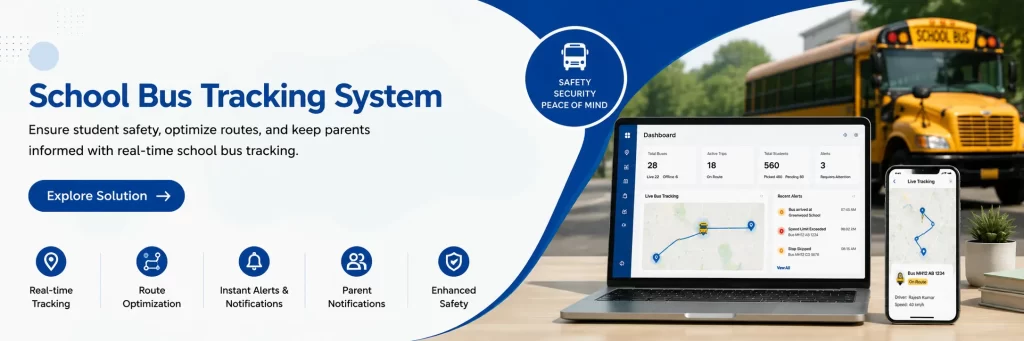
A centralized transport management platform allows school administrators to monitor every bus from a single dashboard. They can review historical trip data, evaluate fleet performance, monitor daily operations, and make informed decisions using real-time information instead of manual records.
This improves operational efficiency while reducing the workload associated with managing school transportation.
Faster Response During Emergencies
Unexpected situations such as vehicle breakdowns, road closures, or medical emergencies require immediate action.
A school bus tracking system helps administrators locate the affected vehicle instantly and communicate directly with the driver when necessary. Having access to real-time location information allows schools to coordinate support much faster and keep parents informed throughout the situation.
Quick access to accurate information helps minimise delays while improving overall student safety during emergencies.
Greater Peace of Mind for Parents
Beyond the technology itself, one of the biggest advantages is the confidence it provides to families.
Instead of waiting anxiously or calling the school for updates, parents can simply check the bus location through a mobile application and receive notifications about important milestones during the journey. Knowing when the bus is approaching or has safely reached school makes the daily routine much less stressful.
This transparency strengthens trust between parents and schools while improving the overall transportation experience.
Valuable Insights for Continuous Improvement
Every school transport operation generates useful information that can support better decision-making.
A school bus tracking system collects operational data that helps administrators analyse route efficiency, vehicle utilisation, driver performance, fuel consumption, and delay patterns over time. Rather than relying on assumptions, schools can use these insights to improve planning and optimise transport services continuously.
Regular analysis also helps schools identify recurring issues early and make adjustments before they begin affecting daily operations.
How Sahaj GPS Supports School Transportation
Managing student transportation becomes much easier when schools have complete visibility into their fleet. Sahaj GPS offers a comprehensive school bus tracking solution that combines live GPS tracking, automated parent notifications, route monitoring, driver behaviour analysis, attendance support, emergency alerts, and centralized fleet management through a single platform.
The system helps schools improve student safety, strengthen communication with parents, optimise routes, and manage transport operations more efficiently while reducing administrative effort.
Final Thoughts
Safe and reliable transportation plays an important role in every student’s school experience. As transport operations become more complex, schools need better visibility, faster communication, and smarter management tools to ensure students travel safely every day.
A school bus tracking system helps schools improve operational efficiency while providing parents with greater confidence throughout each journey. By combining real-time tracking, automated alerts, route optimisation, and fleet monitoring, schools can build a transportation system that is safer, more organised, and better prepared for future needs.
Frequently Asked Questions
What is a school bus tracking system?
A school bus tracking system is a GPS-enabled solution that allows schools and parents to monitor bus locations in real time while improving transport safety and operational efficiency.
How does a school bus tracking system improve student safety?
It provides live vehicle tracking, route monitoring, driver behaviour monitoring, and instant alerts, allowing schools to respond quickly to unexpected situations.
Can parents track the school bus in real time?
Yes. Parents can monitor the live location of the school bus through a mobile application and receive notifications about important journey updates.
Does a school bus tracking system help reduce delays?
Yes. Route optimisation and live traffic visibility help schools plan more efficient routes, reducing unnecessary delays and improving punctuality.
Is a school bus tracking system suitable for both small and large schools?
Yes. Schools of all sizes can benefit from improved transport visibility, better communication, enhanced safety, and more efficient fleet management.